Maliyo Games x ASU: Africa’s AI Game Dev Revolution?
Disclosure: As an Amazon Associate, Bytee earns from qualifying purchases.
When Maliyo Games and Arizona State University announced their partnership to train African youth in AI and game development, the internet did what it always does: it celebrated the headline without asking the hard questions. A Nigerian studio and a major American university joining forces to upskill the next generation of game developers sounds like a win-win. But here’s what matters: what are they actually teaching, and does it prepare developers for a gaming industry that’s increasingly fracturing over AI’s role?

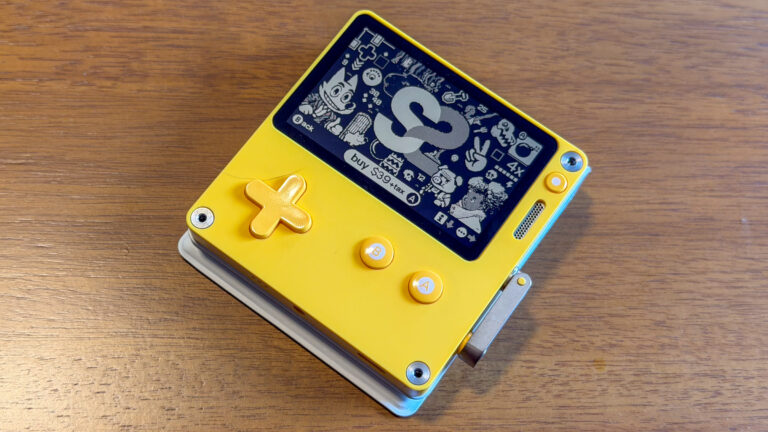
The announcement landed in the middle of a broader industry reckoning. Panic is rejecting generative AI games on Playdate. Capcom says no to generative AI in final products—but yes to AI for efficiency gains. Roblox is deploying “agentic AI” to automate development. And across Asia, gaming markets are embracing AI tools that Western studios are still wrestling with ethically. The Maliyo-ASU initiative isn’t just about teaching coding or 3D modeling anymore. It’s about preparing developers for a world where generative AI is a toolkit they can’t ignore—even if they’re deeply uncomfortable with it.
This is where things get interesting. And complicated.
The Partnership: What’s Actually Happening Here
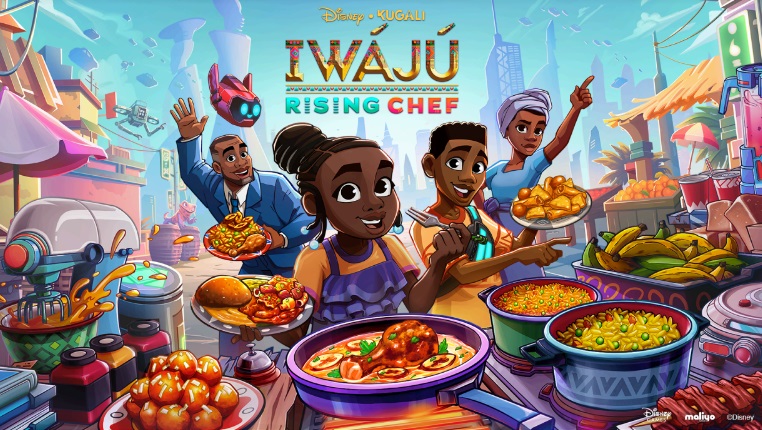
Maliyo Games, founded in 2015, is one of Africa’s most prominent independent game studios. They’ve built a reputation for authentic African storytelling in games—think Aurion: Legacy of the Kori-Odan, a gorgeous action RPG rooted in West African mythology. ASU’s partnership brings institutional backing, curriculum development, and access to cutting-edge AI research. The goal: train young African developers in both traditional game development and modern AI tools.
On the surface, this is exactly what the gaming industry needs. Africa has an estimated 272 million gamers but produces a fraction of the world’s game developers. Training local talent creates jobs, keeps intellectual property in the region, and brings diverse voices to games. That part is genuinely good.
But let’s be precise about what “AI and game development” means in 2024.
The Tech Breakdown: What AI Tools Are Actually in Play
When we talk about AI in game development, we’re usually talking about a few specific technologies:
Generative AI for Asset Creation
Large language models (LLMs) like GPT-4 and image generators like Midjourney or Stable Diffusion can create concept art, 3D models, textures, and even code snippets. These tools use neural networks trained on billions of images and lines of code. They don’t understand—they predict. They pattern-match at scale. Feed them a prompt like “dark elf warrior in cyberpunk Lagos,” and they’ll generate something visually coherent, fast. A junior concept artist that used to take two weeks to produce a character sheet? An AI can do rough iterations in hours.
The catch: these tools are trained on existing art and code, often without explicit creator consent. The quality ceiling is high, but the creative floor is weirdly homogeneous. Every AI-generated image carries subtle artifacts of its training data. Every AI-coded function carries the biases of its source material.
Procedural Generation & Machine Learning
This is older tech, but more relevant here. Procedural generation—algorithms that create game content algorithmically—has powered games for decades. Minecraft’s terrain, No Man’s Sky’s planets, Spelunky’s dungeons. Machine learning is now turbocharging this. Neural networks can learn patterns from hand-crafted levels and generate new ones that feel intentional, not random. This is less ethically fraught than generative AI because it’s not mimicking artists—it’s learning rules and extrapolating.
AI for Development Workflow (The Quiet Revolution)
GitHub Copilot, Unreal Engine’s Blueprints AI, and proprietary AI coding assistants are reshaping how developers actually work. These aren’t generating entire games—they’re accelerating repetitive tasks. A junior programmer spends 40% of their time writing boilerplate code, debugging, and searching Stack Overflow. AI coding assistants cut that to maybe 20%. That’s not negligible. That’s a 2x productivity gain on the boring stuff, freeing developers to focus on game design, optimization, and creative problem-solving.
This is where Maliyo-ASU probably should focus. It’s less controversial, more immediately useful, and doesn’t require developers to argue with artists about whether their job is obsolete.
The Core Impact: What Changes in the Development Workflow
Here’s what actually matters for a developer learning AI in game development:
Speed to prototype. An indie developer working solo or in a small team can now conceive, design, and build a vertical slice (a playable proof-of-concept) in weeks instead of months. AI asset generation, procedural level design, and coding assistants compress the timeline. For African studios competing globally, this is a significant advantage. They can iterate faster, fail cheaper, and reach market quicker.
Democratization of tools. A developer in Lagos no longer needs a team of 50 to create AAA-quality assets. Generative AI levels the playing field between well-funded studios and scrappy indie teams. This should theoretically mean more diverse games reaching players. In practice, it means more games that look like they were made by the same AI. (See: the recent flood of indie games with identical Midjourney-style art.)
But also: the skills gap. Teaching developers to use AI tools is different from teaching them to build them or to understand their limitations. An ASU partnership should ideally cover both. You need developers who understand neural networks, training data, fine-tuning, and how to recognize when an AI tool is producing plausible-but-wrong output. That’s harder to teach in a semester. It requires math, data science, and hands-on experimentation.
The Reality Check: Is This Actually Good for the Industry?
Here’s where the journalism gets honest.
The Maliyo-ASU partnership is well-intentioned, but it exists in a industry that’s deeply divided on AI’s role. That division isn’t just philosophical—it’s about power, economics, and what makes a game feel alive.
The Optimism Camp
Fallout creator Tim Cain is bullish on generative AI in games. He sees it as a tool that frees up human creativity, the same way Photoshop freed artists from manual color correction. In this view, AI handles the grunt work, and humans do what they do best: make intentional, meaningful choices. A game designer uses procedural generation to create a million unique encounters; an AI generates dialogue variations; human writers ensure the core story hits. This is plausible and probably inevitable for certain genres (roguelikes, open-world games, live-service titles).
The Skepticism Camp
Panic’s rejection of generative AI games on Playdate isn’t a technical decision—it’s a values decision. They’re saying: “We want handmade games, made by humans who chose every pixel.” Capcom’s approach is more pragmatic: use AI for efficiency (animation rendering, asset processing) but not in the final creative product. This preserves the human touch where it matters.
The uncomfortable truth? Both camps are right, and both are fighting a losing battle.
Generative AI tools are too useful to ignore, and too imperfect to rely on entirely. The future of game development isn’t “AI-made” or “human-made”—it’s hybrid. Developers who can fluently use AI tools while maintaining strong creative vision will have an advantage. Developers who reject AI entirely will face pressure to match the productivity of teams that embrace it.
For Maliyo and African game studios specifically, this is both opportunity and threat. Opportunity: AI tools democratize access to AAA-quality asset creation, letting smaller teams punch above their weight. Threat: as AI tools become commodified and easier to use, the competitive advantage shifts to game design, storytelling, and cultural authenticity—which can’t be generated. If Maliyo’s curriculum teaches developers to use AI but not to think critically about it, they’re just creating more generic games faster.
The Uncomfortable Question About Training Data
Here’s something nobody in the AI cheerleading squad talks about: generative AI models are trained on existing creative work. When you use Midjourney to generate concept art, you’re using a model trained on millions of images, including work by professional artists who didn’t consent and aren’t compensated. As courts continue to litigate this (see: the ongoing lawsuits against OpenAI and Stability AI), developers using these tools are in a legally gray area.
For African developers, this is especially thorny. If the Maliyo-ASU curriculum teaches students to rely on generative AI trained primarily on Western art and code, they might inadvertently reinforce Western aesthetic and technical standards. That’s the opposite of what Maliyo’s mission—authentic African storytelling—should accomplish.
Why This Matters Now
The gaming industry is bifurcating. In Asia, studios are aggressively adopting AI tools. Seoul’s government is using AI to feature landmarks in video games. Roblox is deploying agentic AI to automate development. Meanwhile, in Western markets, there’s growing pushback: Panic’s stance, Capcom’s caution, and a vocal segment of the gaming community that values “handmade” games.
Africa’s gaming industry is still nascent enough that it can choose its own path. The Maliyo-ASU partnership could either reinforce African developers as users of Western AI tools (a dependent position) or help them develop the critical skills to build and customize AI tools for their own creative needs (an independent position).
Which path does this partnership take? The announcement doesn’t say. That’s the detail worth watching.
The Bottom Line
Training African youth in AI and game development is objectively good. The global gaming industry needs more diverse voices, and AI tools can help smaller teams compete. But there’s a difference between teaching people to use tools and teaching them to master tools. A difference between learning AI as a productivity shortcut and learning it as a creative medium you can shape and critique.
If Maliyo and ASU go deep—teaching students neural networks, fine-tuning models, understanding bias in training data, and the ethics of generative content—this could be genuinely transformative. It would produce developers who aren’t just adopting AI, but shaping it.
If they treat AI as a checkbox skill—”here’s how to use ChatGPT for dialogue, here’s how to use Midjourney for art”—then it’s just accelerating the homogenization of global gaming. More games, faster, that look and feel the same.
The difference is everything.
FAQ: AI in Game Development, Explained
How does generative AI actually create game assets?
Generative AI models (like Stable Diffusion or Midjourney) are trained on billions of images. They learn statistical patterns: “pixels that look like trees usually appear near pixels that look like grass.” When you give them a prompt, they generate new pixels that follow those patterns. It’s not magic—it’s pattern prediction at scale. The results look coherent because the model learned what coherence looks like. The results often look similar because the patterns are similar across the training data.
Can indie developers use these tools right now?
Yes. Midjourney, Stable Diffusion, and ChatGPT are all available to indie devs. Some require payment or subscriptions, but they’re accessible. The legal gray area is whether you can commercially use assets generated from models trained on copyrighted work without permission. Courts are still deciding this, so there’s risk. But practically speaking, hundreds of indie games are already using AI-generated assets.
Will AI replace game developers?
Not in the next 5-10 years. AI will replace repetitive tasks (boilerplate coding, asset variations, background art) but not creative decisions. A game still needs someone to decide what the core gameplay loop is, what the story means, what the player should feel. That’s human work. What will change: a solo developer can now do what used to take a team of five. That’s not replacement—it’s amplification. For developers who embrace it, that’s powerful. For developers who don’t, it’s pressure.
Does game development with AI require internet connection?
Depends. If you’re using cloud-based AI tools (ChatGPT, Midjourney, cloud-hosted Stable Diffusion), yes. If you’re running open-source models locally (like Llama or local Stable Diffusion), no. For a game studio in Africa with inconsistent internet, this is a real constraint. That’s another reason the Maliyo-ASU partnership should teach students to run models locally, not just rely on cloud services.
Is AI-generated game content copyrightable?
This is unsettled law. In the US, the Copyright Office is taking the position that AI-generated work without significant human input isn’t copyrightable. But if a human artist significantly modifies AI output, it probably is. The safe assumption: AI as a tool (like Photoshop) is fine; AI as the sole creator is legally risky. For game studios, this means using AI for iteration and efficiency, then having humans make intentional creative choices on top.
What’s the difference between procedural generation and generative AI?
Procedural generation uses algorithms and rules to create content (like Minecraft’s terrain generator). Generative AI uses trained neural networks to create content that mimics patterns from training data. Procedural generation is deterministic and rule-based; generative AI is probabilistic and pattern-based. For game development, procedural generation is often better because it’s more controllable and doesn’t have copyright baggage.
Can developers in Africa use the same AI tools as developers in the US?
Mostly, yes. Maliyo and other African studios can access the same cloud-based AI services. But there are constraints: cost (subscriptions add up), internet reliability (cloud tools need consistent connection), and regional restrictions (some services aren’t available in all countries). This is why a strong university partnership matters—ASU can provide compute resources, cloud credits, and local infrastructure that individual studios might not afford.
What to Watch
Keep an eye on what Maliyo and ASU actually teach in this program. If the curriculum includes machine learning fundamentals, data science, and model fine-tuning, this could be genuinely transformative. If it’s just “here’s how to use these tools,” it’s good but not revolutionary. The difference determines whether African developers are shaping the future of AI in gaming or just adopting tools designed elsewhere.