Levelling Up: How AI is Gutting the Old Game Dev Playbook
Disclosure: As an Amazon Associate, Bytee earns from qualifying purchases.
The video game industry is at an inflection point. For decades, game development has been a brutal slog of handcrafted assets, frame-by-frame animation, and hardcoded NPC dialogue trees. But over the past two years, generative AI has crashed the party—and it’s fundamentally rewiring how games get made. The question isn’t whether AI will transform game development anymore. It’s already happening. The real question is whether the industry will use it to make better games faster, or whether it’ll become another cost-cutting mechanism that hollows out what makes gaming special.
Let’s cut through the hype and talk about what’s actually happening under the hood, how it’s reshaping both the creative and technical sides of development, and why some of the most forward-thinking studios are both excited and terrified about what comes next.
The Tech Breakdown: What’s Actually Powering AI Game Development
When people talk about “AI in game development,” they’re usually conflating three distinct technologies that are being weaponized in very different ways. It’s important to understand the difference, because each has wildly different implications.
First, there’s generative AI for asset creation: This is the stuff getting the most press. Tools like Midjourney, Stable Diffusion, and proprietary systems built by studios are generating 2D art, 3D models, and animations from text prompts. Under the hood, these are large language models (LLMs) and diffusion models trained on billions of images. A diffusion model works by learning to reverse a process of adding noise to images—essentially learning the statistical patterns of visual data so thoroughly that it can reconstruct images from pure noise. When you prompt it with “fantasy warrior in full armor,” the model generates pixel-by-pixel output based on patterns it learned during training. The catch? These models are fundamentally probabilistic—they’re generating plausible outputs, not “understanding” what they’re creating in any meaningful sense.
Second, there’s procedural generation on steroids: This isn’t new—games have been using procedural algorithms to generate terrain and dungeons for years. But AI is supercharging this. Studios are now using neural networks trained on level design patterns to generate not just random geometry, but actually playable, balanced level layouts. These systems learn from thousands of hand-crafted levels what makes a space engaging, then generate new variations that hit similar design principles. Roblox has deployed what they call “agentic AI” to help automate parts of game development—AI agents that can understand design briefs and generate content autonomously.
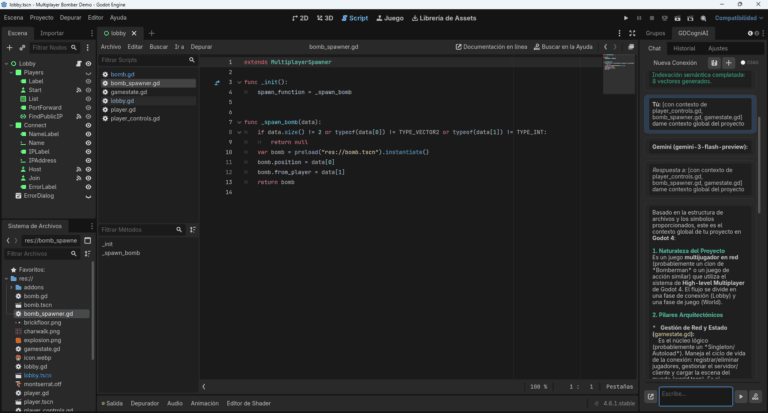
Third, and most overlooked, there’s AI for game logic and NPC behavior: This is where things get genuinely interesting. Rather than writing thousands of lines of dialogue and manually choreographing NPC responses, developers are experimenting with large language models that can generate contextually appropriate NPC dialogue on the fly. Some studios are building “AI companions” that can adapt their behavior based on player interactions, creating the illusion of genuine unpredictability without the developer having to script every possible scenario.
The Core Impact: How AI is Actually Changing the Development Workflow
Here’s where it gets real: AI isn’t magically making game development faster or cheaper in the way executives want to believe. What it’s actually doing is shifting where human effort gets invested.
Asset Creation Gets Faster, But Requires New Skillsets
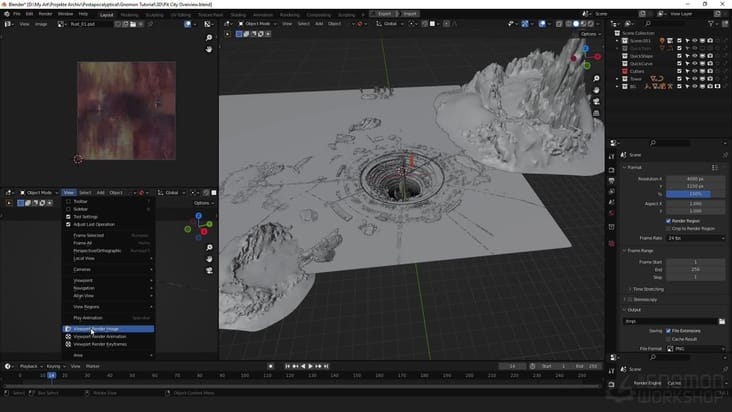
A 3D artist who used to spend two weeks hand-modeling and texturing a fantasy castle can now generate 20 variations in an afternoon using AI tools, then spend time refining the best outputs. The time savings are real—but it’s not 2 weeks to zero. It’s 2 weeks to 3 days. The artist’s job hasn’t disappeared; it’s mutated. They’ve become a curator and art director rather than a pure creator. Some artists see this as liberation. Others see it as their expertise being devalued.
This is where we’re seeing real generational splits in the developer community. Younger developers who grew up with AI see it as a natural extension of their toolkit. Established artists and programmers who built their reputations on craft are rightfully concerned about commodification. The Panic developer collective made waves by explicitly refusing to accept games built with generative AI for their Playdate platform—a principled stance that acknowledges the philosophical question underlying all of this: if a game is largely AI-generated, who actually made it?
Dialogue and NPC Behavior Get Dynamic (With Caveats)
Imagine an NPC that can actually respond to player actions in contextually appropriate ways, rather than playing one of five pre-recorded dialogue trees. Early experiments with language models handling NPC dialogue are genuinely impressive. But—and this is a massive but—there are serious problems. LLMs hallucinate. They generate grammatically correct nonsense. They can spit out dialogue that contradicts the game’s narrative. They’re also computationally expensive to run locally, which means many “AI NPC” systems currently require constant internet connectivity.
This creates a fundamental tension: the technology that makes dynamic dialogue possible also introduces unpredictability that can break immersion rather than enhance it. Fallout’s creator, Todd Howard, has publicly expressed optimism about generative AI in games, but even he’s dancing around the fundamental challenge: how do you make AI-generated content reliable enough to not destroy player experience?
The Production Pipeline Gets Restructured
The most under-discussed impact is how AI is reshaping who does what in game studios. A developer using AI coding assistants (like GitHub Copilot fine-tuned for game engines) can write more code faster, but that code still needs rigorous testing and refinement. A concept artist using generative tools can produce more variations, but someone still needs to curate, iterate, and ensure visual cohesion. The net effect isn’t fewer jobs—at least not yet—but different jobs. Some roles are becoming more technical. Others are becoming more editorial. Studios that can’t figure out how to restructure their pipelines around AI are finding it creates bottlenecks rather than efficiencies.
The Reality Check: Will This Make Games Better or Just Cheaper?
This is where the journalism gets uncomfortable, because the honest answer is: it depends entirely on how the industry chooses to use it.
The Optimistic Scenario
AI genuinely could democratize game development. Right now, creating a AAA game requires hundreds of millions of dollars and teams of hundreds. If AI tools can meaningfully reduce the cost of asset creation and accelerate iteration, smaller studios could punch above their weight. We could see a renaissance of experimental, weird indie games that previously would’ve been financially impossible. Educational institutions like Arizona State University are partnering with companies like Maliyo to train African developers in AI game development—potentially creating new talent pipelines in regions that have historically been locked out of the industry due to resource constraints.
The Pessimistic Scenario
Publishers use AI as a cost-cutting hammer. They lay off artists, animators, and junior programmers, then use AI to fill the gaps with mediocre, procedurally-generated content. Games become cheaper to produce but also more homogenous, less innovative, less human. The Guardian recently reported on the industry’s cost explosion, and some analysts are pointing to AI as a potential answer—but not in a good way. It could become a tool for extracting more profit from fewer human workers rather than creating better experiences.
The Most Likely Scenario
Both. Some studios will use AI intelligently as a creative accelerant. Others will use it as a cost-cutting tool. We’ll see a bifurcation: high-end studios creating more ambitious games faster, and a flood of lower-quality AI-assisted content from studios trying to maintain quarterly earnings. The Korea Times reported on Seoul’s government and NC partnering to use AI for featuring landmarks in video games—practical, specific applications that enhance rather than replace human creativity.
The real concern isn’t whether AI will replace developers. It’s whether the financial incentives of the industry will push toward using AI in ways that degrade the medium rather than elevate it. GamesIndustry.biz reported that developer use of generative AI may actually be declining among some studios—suggesting that the initial hype is colliding with practical reality. When developers actually try to ship games with AI-generated content, they’re discovering that the technology creates as many problems as it solves.
Here’s what we’re not talking about enough: efficiency isn’t inherently good for art. The constraint of limited resources, limited time, and limited assets has driven enormous creativity. Some of the best games ever made emerged from developers being forced to do more with less. AI removes those constraints—but it also removes the creative pressure that often produces magic.
What Actually Matters Going Forward
The 2026 game development landscape will likely look like this: AI tools will be standard parts of most major studios’ pipelines, but they’ll be carefully controlled and integrated rather than acting as wholesale replacements for human creativity. We’ll see more dynamic content generation in live-service games (where proceduralism already dominates). We’ll probably see less of the “fully AI-generated game” hype as developers realize the quality bar for shipping a game hasn’t dropped—it’s just shifted where the work is concentrated.
The studios winning this transition are the ones treating AI as a tool to amplify human creativity, not replace it. They’re using it to generate variations and options that humans then refine. They’re using it to automate tedious technical work so artists can focus on the stuff that actually requires vision. They’re not trying to ship games that are 80% AI-generated and calling it innovation.
The industry’s soul—if games have one—lies in that distinction. AI in game development isn’t inherently good or bad. It’s a tool whose impact depends entirely on how it’s wielded. The next few years will determine whether the industry uses this moment to create more ambitious experiences, or to squeeze more profit from fewer resources. Based on current trends, I’m not entirely optimistic. But there are enough thoughtful developers out there that it’s not a forgone conclusion either.
FAQ: AI in Game Development
Q: If I’m an indie developer, can I actually use these AI tools right now?
A: Yes, but with limitations. Tools like Midjourney and Stable Diffusion for art generation are publicly available. Some game engines (Unity Muse, for example) are integrating AI assistants directly. The catch is that many of these tools operate on subscription models, and quality control is still manual. You’re getting faster iteration, not automated game creation.
Q: Does AI-generated content require internet connectivity to work in a shipped game?
A: It depends. Asset generation (art, 3D models) happens in development; the final game just contains the generated assets. But dynamic dialogue or behavior systems might require cloud connectivity, which introduces latency and always-online requirements—not ideal for all game types.
Q: Will my favorite game developer lay me off if they adopt AI?
A: Probably not immediately. But workflow disruption is real. Junior roles in asset creation are most vulnerable. Senior roles focused on direction and curation are more secure. The industry will likely shrink slightly while restructuring around AI-integrated workflows.
Q: Is there actually a legal/ethical framework around AI in games yet?
A: Not really. Training data for generative AI often includes copyrighted work without explicit permission. Some artists are pursuing legal action. The industry is still figuring out copyright, credit attribution, and consent. Expect regulation to tighten significantly in the next 2-3 years.
Q: Can AI actually make better gameplay, or just faster asset generation?
A: Primarily the latter, currently. Procedural generation can create better level variety, but it’s not solving the core game design problems (fun, pacing, narrative coherence). AI is best at automating the commodity work. Making actually better games still requires human creativity and iteration.