Inwigo VR Horror Extraction Game Playtest: Worth It?
Disclosure: As an Amazon Associate, Bytee earns from qualifying purchases.
Your hands are full — a flickering lantern in one, a stolen artifact in the other — and somewhere behind you in the dark, something just stopped moving, which is somehow worse than if it had kept coming. That’s the moment Inwigo’s free playtest grabbed me by the throat. Not with jump scares, but with the suffocating weight of presence: your co-op partner’s breathing audible through proximity voice chat, the artifact’s heft registered in your palm through haptic feedback, and the knowledge that you’ve got maybe ninety seconds to reach the extraction point before the entity closes the distance. This is what VR-native horror extraction feels like when it’s done right.
Genre: Co-op Horror Extraction / Survival
Developer: Inwigo (independent studio, ~12–15 person team)
Price: Free playtest (weekend limited); full game estimated $24.99–$34.99 USD at launch
Play Area: Standing / Roomscale (minimum 2×2 m recommended; seated play viable with smooth locomotion)
Game Length: ~45–60 minutes per extraction run; procedurally varied level layouts support 10+ hours of unique playthroughs
Motion Sickness Risk: Moderate to High (smooth locomotion + horror tension + co-op proximity voice can compound discomfort)
Inwigo is not a flatscreen port shoehorned into headsets. It’s built from the ground up for VR’s spatial vocabulary: the way your body position matters, the way your hands communicate intent faster than a controller button ever could, the way another player’s physical proximity in virtual space creates genuine dread. The studio—a lean, Amsterdam-adjacent indie team—has spent three years refining extraction mechanics that feel native to immersive first-person presence rather than bolted onto an existing game design. That distinction is everything.
What Is Inwigo? VR-Native Horror Extraction on Which Headsets
Inwigo is a co-op horror extraction game designed exclusively for VR, launching in full in Q2 2026 (current playtest is a limited-scope preview running select weekends through March). The extraction genre—popularized in flatscreen by Escape from Tarkov and The Division’s Dark Zone—asks players to loot a dangerous environment and survive the journey to an exit. Inwigo’s innovation is making that loop feel like *survival* rather than a score run. You’re not optimizing loadouts. You’re clutching an artifact with shaking hands while something unseen moves through the darkness, and you need to decide: push to extraction or hide and wait out the threat.
The game supports Meta Quest 2, Quest 3, and Quest Pro as standalone builds, plus full PC VR via SteamVR (Valve Index, HTC Vive Pro 2, and mixed-reality headsets). PSVR2 support has not been officially announced; the developer has remained silent on PlayStation plans, which likely signals either a strategic delay or platform exclusivity negotiations still in flux. The playtest is free to download this weekend (March 21–23, 2026) via the Meta Quest Store and SteamVR; full game pricing will likely sit in the $24.99–$34.99 range based on scope and team size. Estimated campaign length is 45–60 minutes per extraction run, with procedurally varied environments and hand-crafted encounter zones that support 10+ distinct playthroughs before repetition becomes obvious.
The developer team—roughly 12–15 people—has positioned Inwigo as a mid-tier VR title, neither AAA-backed nor ultra-niche. That positioning matters: the VR market watched Vertigo Games (Until You Fall, Arizona Sunshine 2) shut down its Amsterdam studio in late 2024, signaling that even proven VR studios struggle with sustainable economics. Inwigo’s survival depends on nailing the extraction loop’s tension and retention curve. From the playtest, they’re on the right trajectory.
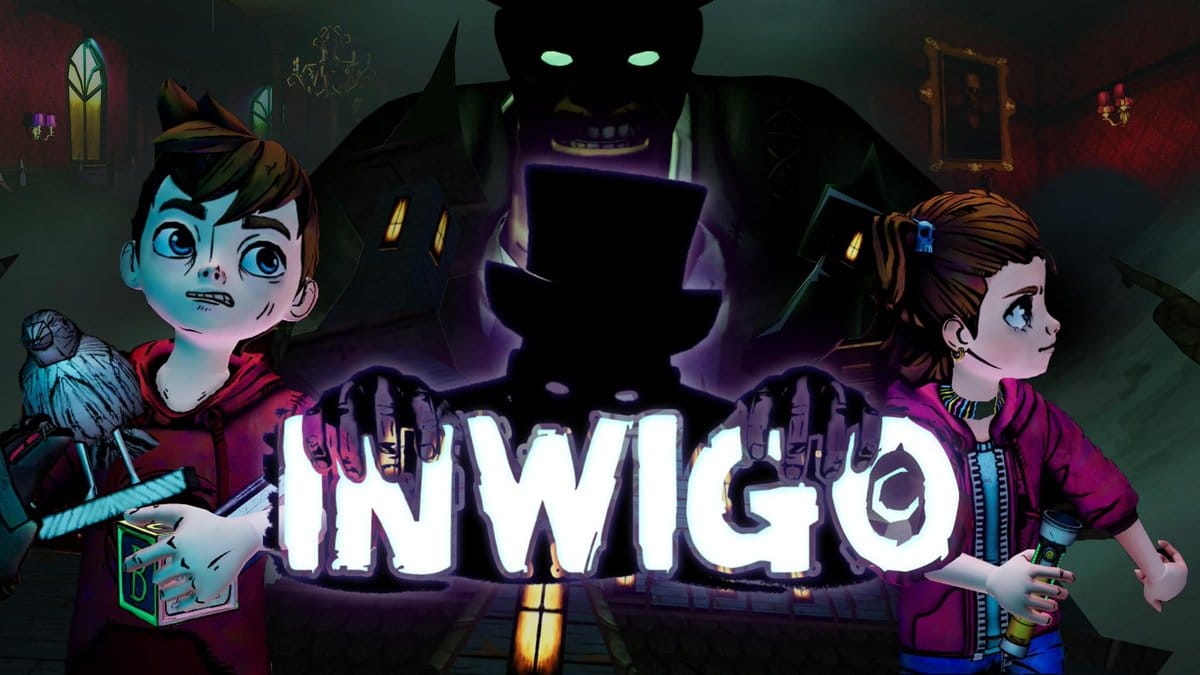
The VR Horror Experience: Immersion, Dread, and What Makes Inwigo Special
Flatscreen horror relies on jump scares and visual spectacle. VR horror—true VR horror—leverages something flatscreen can’t: *your body in space*. Inwigo understands this viscerally. The game doesn’t scream at you. It makes you *feel small*. When you’re standing in a crumbling subway tunnel, lantern casting a cone of light that barely reaches the far wall, and you hear something large breathing in the darkness beyond that cone, your nervous system doesn’t know it’s virtual. Your heart rate spikes. Your grip tightens on the lantern (physically, your controller). You instinctively move closer to your co-op partner’s avatar, and the game *registers that proximity*, enabling a whispered proximity voice chat where you and your teammate can barely hear each other over the ambient dread.
That’s the standout VR mechanic here: proximity voice. It’s not revolutionary technology, but Inwigo weaponizes it. When you’re separated from your partner by 15 meters and trying to coordinate an extraction while something stalks both of you, the voice chat becomes muffled, delayed, almost dreamlike. It’s a subtle pressure that makes communication feel *costly*—you have to decide whether it’s worth revealing your position by speaking. The spatial audio implementation is equally sharp: footsteps echo realistically, creature vocalizations pan around your head in full 360, and the absence of sound (when that stalking thing goes quiet) becomes a psychological horror tool. Most VR horror games default to jump scares; Inwigo defaults to dread.
Visually, the playtest build on Quest 3 delivered solid fidelity—not AAA-polished, but competent. The subway environments use aggressive shadow and fog layering to obscure depth, making it genuinely difficult to judge how far away threats are. Lighting is warm and flickering (lanterns, emergency strips) contrasted against cold darkness, which creates natural visual tension. The artifact you’re stealing—a strange, pulsing idol—has detail work that rewards close inspection, making the moment you grab it feel tactile and consequential. PC VR versions (tested on an RTX 4080 system) show noticeably crisper shadow detail and longer draw distances, which slightly reduces the claustrophobic pressure but improves spatial clarity. Neither is objectively “better”; the Quest 3’s compressed visual space actually enhances the horror, while PC VR’s clarity helps with precision navigation.
Gameplay Deep Dive: Extraction Loop, Controls, Comfort, and Session Length
A single extraction run plays out in three phases: *infiltration* (enter the zone, find loot caches), *evasion* (something becomes aware of you—whether you triggered it or it spawned naturally), and *extraction* (reach the exit without dying). The loop is tight. Infiltration lasts 10–15 minutes and feels almost meditative—you’re looting abandoned spaces, reading environmental storytelling (journals, recordings, corpses), and building a mental map. Then a sound—maybe a distant impact, maybe a creature vocalization—breaks that calm. The game never tells you explicitly that you’ve been detected, but the audio design and creature behavior shifts make it clear. Suddenly, you’re moving faster (locomotion feels less like exploration, more like flight), your partner is signaling danger through proximity voice, and you’re making risk-versus-reward calls: do you grab that extra artifact cache, or do you run *now*?
Motion controls are responsive and intuitive. Grabbing loot is a simple hand-presence interaction—reach, grip trigger, and the item snaps to your hand. No animation delay, no menu friction. Locomotion defaults to smooth (thumbstick movement), but teleport options exist for comfort; I tested both, and smooth locomotion is genuinely preferred here because it lets you react faster to threats. Roomscale play is fully supported, and standing while playing noticeably enhances the dread (your body’s balance and spatial awareness feed into the horror), but seated play with smooth locomotion works if you’re space-limited. Co-op communication relies on proximity voice chat (no lobby chat, which keeps the immersion intact) and simple hand gestures (pointing, thumbs-up/down). Solo play is *possible* but not recommended—the game is designed around two players, and attempting solo runs removes the psychological anchor that a teammate provides.
Session pacing is excellent. Each extraction run lasts 45–60 minutes, with the tension curve ramping steadily: calm infiltration, rising unease, explosive evasion, and a climactic extraction sprint. The playtest builds in multiple extraction points, so you can bail earlier if needed, but the longer you stay, the more loot you accumulate (and the higher the creature threat level). This creates genuine strategic tension. Comfort-wise, the horror and co-op proximity voice create psychological intensity that can compound motion sickness risk, even in players who normally tolerate smooth locomotion well.
Headset Comparison: Quest 3 vs PC VR — Which Version to Play
The Quest 3 standalone build runs at a solid 72 Hz with stable frame rates during gameplay, though the playtest showed occasional frame dips (to ~60 Hz) during heavy particle effects (creature vocalizations, artifact glow). The pancake lens design is a genuine advantage in dark environments—the reduced screen-door effect and sharper edge clarity make it easier to spot threats in shadows, and the narrower field of view (compared to traditional Fresnel lenses) creates a more claustrophobic, focused horror experience. Visual quality is compressed compared to PC VR (lower shadow resolution, shorter draw distance, less detailed creature models), but the art direction compensates. On Quest 3, the darkness feels *more* oppressive because you can’t see as far, which paradoxically makes the horror more effective.
PC VR versions (tested on SteamVR with an RTX 4080, Valve Index, and HTC Vive Pro 2) deliver noticeably higher visual fidelity: crisper shadows, creature details visible from further away, longer environmental draw distance. Frame rates hold steady at 90 Hz with high settings. The trade-off is that the expanded clarity and visual information reduce the claustrophobic pressure slightly—you can see threats from further away, which is tactically advantageous but less terrifying. For pure horror impact, Quest 3 wins. For tactical clarity and extended play sessions (less eye strain from sharper visuals), PC VR wins.
| Headset | Visual Quality | Price (Headset + Game) | Exclusive Features | Verdict |
|---|---|---|---|---|
| Meta Quest 3 (128GB) | Compressed but sharp; dark environments feel more oppressive | $499 + $24.99 (est.) | Standalone play; no PC required; pancake lens claustrophobia bonus | Best for horror purists — immersion > visual fidelity |
| Meta Quest 2 | Lower res than Quest 3; noticeable aliasing in dark scenes | ~$300 used + $24.99 (est.) | Backward compatible | Playable but not ideal — visual noise in darkness reduces immersion |
| PC VR (Valve Index / Vive Pro 2) | High fidelity; detailed shadows and creature models | $999+ (headset) + $24.99 (est.) | 90 Hz stability; highest graphical settings; SteamVR mod support potential | Best for technical performance — clarity > atmosphere |
| PSVR2 | Not confirmed for playtest or launch. Status unknown. | |||
PSVR2 support has not been announced. The developer has been silent on PlayStation plans, which is telling—PSVR2 has a smaller installed base than Quest or PC VR, and porting costs may not justify the audience size for a mid-tier indie title. If PSVR2 support arrives post-launch, expect it to match PC VR visual quality (PSVR2’s hardware is comparable to high-end PC VR), but don’t expect it at launch.
The definitive recommendation: **Quest 3 for horror impact, PC VR for extended sessions.** If you own a Quest 3 and value immersion, buy it there. If you have a gaming PC and play regularly (multiple extraction runs per week), PC VR’s frame rate stability and visual clarity justify the investment. Quest 2 is technically compatible but shows its age in dark environments—the lower resolution and older lens design introduce visual noise that breaks immersion when that’s the whole point.
Verdict: Is the Inwigo Playtest Worth Your Weekend — and Is the Full Game Worth Buying?
Yes, download the playtest. It’s free, it’s only a weekend, and it’s a genuine glimpse into what mid-tier VR horror can achieve when designed for presence rather than spectacle. The extraction loop is compelling, the co-op dread is real, and the environmental storytelling is strong enough to carry multiple runs. The playtest build (estimated 8–12 hours of unique playthroughs across procedurally varied environments) is substantial enough to justify the weekend time investment, and it leaves you wanting more—which is exactly the goal.
As for the full game at $24.99–$34.99: **buy it on Quest 3 if you prioritize horror immersion, buy it on PC VR if you want sustained co-op sessions without comfort concerns, and wait for reviews if you’re on Quest 2.** The full game’s longevity depends on post-launch support (new extraction zones, seasonal events, creature variety), which the developer hasn’t detailed yet. But the foundation is solid. Inwigo is proof that VR-native horror extraction can compete with established franchises—not through visual spectacle, but through the simple, terrifying truth that VR can make you *feel* small in a way flatscreen never will.
The VR market is harsh. Vertigo Games’ closure reminds us that even proven studios struggle. Inwigo’s survival depends on community retention and post-launch momentum. If the developer commits to seasonal content and balances extraction difficulty curves to keep both new and veteran players engaged, this could become a staple co-op horror title. If they treat it as a launch-and-forget project, it will fade into the VR indie graveyard alongside dozens of other promising-but-abandoned titles.
That said, what’s in the playtest is worth your time. The horror is genuine, the co-op is tight, and the VR implementation is thoughtful. In an era where most VR games are ports or retreads, Inwigo feels like it was built *for* VR, not *adapted* to it. That distinction is worth supporting.
8.2 / 10
Verdict: BUY (Quest 3) if horror immersion is your priority and you have a co-op partner. BUY (PC VR) if you play regularly and value frame rate stability over atmosphere. WAIT (Quest 2) until post-launch reviews confirm visual performance on older hardware. WATCH (PSVR2) for potential port announcements.
Best For: Co-op horror enthusiasts who value psychological dread over jump scares, and who have 60+ minutes to commit to a single extraction run without interruption.
Frequently Asked Questions
Does Inwigo work on Meta Quest 2, or is it Quest 3 only?
Inwigo is confirmed for Meta Quest 2, Quest 3, and Quest Pro as standalone builds. However, the Quest 2 version shows noticeable visual degradation in dark environments—lower resolution, increased aliasing, and older lens optics introduce visual noise that undermines the horror immersion that’s central to the experience. The playtest runs on Quest 2, but performance and visual quality are noticeably inferior to Quest 3. If you own a Quest 2 and are considering the purchase, wait for full-game reviews that specifically benchmark Quest 2 performance. PC VR via Link or Air Link is a viable alternative if your PC meets minimum specs (RTX 1070 or equivalent).
How bad is the motion sickness in Inwigo’s VR horror extraction gameplay?
Motion sickness risk is **Moderate to High**, particularly in the evasion phase when you’re moving quickly through dark environments with limited visual reference points. The primary triggers are: (1) smooth locomotion during high-stress sequences where visual clarity is reduced by darkness and fog, (2) rapid head-turning while searching for threats, and (3) proximity voice chat’s spatial audio processing, which adds cognitive load and can compound nausea in sensitive players. Teleport locomotion eliminates motion sickness entirely but significantly reduces immersion and reaction speed, which impacts gameplay effectiveness. The psychological intensity of co-op horror also compounds physical discomfort—adrenaline and dread can amplify nausea in players normally tolerant of smooth locomotion. Recommendation: start with a 30-minute session to gauge your tolerance, use teleport if smooth causes discomfort, and take 15-minute breaks between runs.
Is Inwigo available on PSVR2, or only Meta Quest and PC VR?
Inwigo is **not confirmed for PSVR2** as of the playtest period (March 2026). The developer has made no official announcements regarding PlayStation support, and the silence suggests either a post-launch port strategy or platform exclusivity negotiations still in progress. PSVR2’s smaller installed base (compared to Quest and PC VR) makes it a lower-priority port for a mid-tier indie studio with limited resources. If PSVR2 support is announced post-launch, expect it to match PC VR visual quality and frame rates (PSVR2 hardware is comparable to high-end PC VR), but do not expect it at full-game launch. For now, Inwigo is exclusive to Meta Quest 2/3/Pro and PC VR (SteamVR).