Gambonanza Review: Checkers, Not Chess — Fun But Shallow
Disclosure: As an Amazon Associate, Bytee earns from qualifying purchases.
You line up the perfect three-capture chain, watch your piece glide across the board claiming every tile in its path, and feel a genuine spark of satisfaction — then you realize, about two hours in, that you have already seen everything Gambonanza has to teach you.
What Is Gambonanza and Who Is It For?
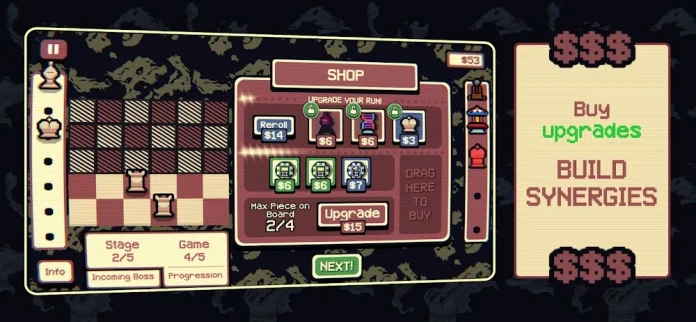
Gambonanza is a casual strategy-puzzle hybrid developed by Lightbulb Games and published through Steam. It’s a PC-exclusive title (at launch) priced at $14.99 USD, positioning itself as a relaxed, accessible alternative to heavy strategy games. The game targets players who want to unwind with a turn-based board game experience without the 60-hour commitment or punishing difficulty curves. There’s no narrative campaign to speak of — no story beats, no character arcs, no world-building. You’re simply moving pieces across colorful grids, capturing opponents’ units, and chasing high scores or completion challenges.
The design philosophy is explicitly short-session-friendly. A typical run lasts 15 to 30 minutes, making Gambonanza ideal for lunch breaks or wind-down evenings. Solo play is the only mode at launch; there’s no local multiplayer, no online ranked ladder, and no co-op campaign. If you’re hunting for a game to share with friends or compete against real opponents, Gambonanza isn’t it. This game exists in the niche occupied by mobile puzzle games and browser-based board games — low stakes, high accessibility, zero friction to starting a new game. At $14.99, that value proposition hinges entirely on whether the core loop remains engaging beyond the first few hours. For most players, it won’t.
Gambonanza Gameplay & Core Mechanics: What You Actually Do
Gambonanza strips strategy down to its most digestible form. Each turn, you click on one of your pieces and drag it to an adjacent tile. If an opponent’s piece sits on the next tile over, you can jump it and capture it — much like checkers, but faster and less cerebral. The board is typically 6×6 or 8×8 depending on the scenario, populated with your colored pieces and the AI’s pieces. Your goal is simple: eliminate all opponent pieces or achieve a specific board state (like capturing five pieces in one turn). That’s genuinely it. No resource management, no deck-building, no hidden information, no fog of war.
The moment-to-moment feel is breezy and satisfying in short bursts. Executing a four-piece capture combo feels good — the pieces slide smoothly, the audio gives you a little chirp of encouragement, and your score ticks up. But here’s the critical flaw: that satisfying feeling evaporates once you realize the AI is trivial to outplay. By hour two, you’re not solving puzzles; you’re executing obvious move sequences because the opponent makes predictable, easily exploitable decisions. The game lacks the mechanical escalation that would justify continued play. There’s no “hard mode” that demands genuine strategic thinking, no procedural elements that randomize the board in meaningful ways, and no meta-layer that rewards mastery.
Turn-Based Movement and Capture System
Movement is restricted to orthogonal or diagonal adjacency — you pick a piece, the game highlights legal destinations with blue circles, and you click one. Captures are mandatory if available, which removes a layer of decision-making that actual checkers possesses. If you can jump an opponent’s piece, you must do it. This design choice simplifies the ruleset but also eliminates tactical tension. You can’t choose to sacrifice a piece for positional advantage because the game won’t let you. Capture chains are where the game’s moment-to-moment satisfaction peaks: if your jumped piece lands adjacent to another opponent piece, you automatically chain into another capture. One click cascades into three or four jumps, and that visual and audio feedback loop is genuinely pleasant. However, chain potential is largely predetermined by board layout, not by player skill. You either see the chain or you don’t; there’s minimal room for creative sequencing or unexpected depth.
Skill expression is minimal. The AI doesn’t adapt, doesn’t play for tempo, and doesn’t set traps. Experienced players from strategy games like Chess or even Checkers will recognize this immediately: Gambonanza is designed to never punish you, only to never truly challenge you. Win rates hover near 95 percent once you grasp the core loop, and losses feel arbitrary rather than earned. The AI opponent in “Hard” difficulty mode still makes moves that leave its pieces exposed, allowing you to chain five or six captures in succession without requiring any forward planning on your part.
Progression and Cosmetic Unlocks
Progression is almost entirely cosmetic. You unlock new board skins, piece colors, and UI themes as you complete scenarios — visual flair with zero mechanical impact. There are roughly 40 to 50 challenge scenarios spread across difficulty tiers labeled “Easy,” “Medium,” and “Hard,” but these labels are misleading. “Hard” scenarios simply have more opponent pieces or tighter win conditions, not smarter AI or strategic depth. You unlock a new board skin every 5 to 10 levels, which is meant to provide a sense of progression but instead highlights how samey the actual gameplay is. By the time you’ve unlocked three board themes, you’ve seen all the mechanical variation the game offers. The pacing of rewards is frequent enough to avoid total burnout but sparse enough that you’re not driven to keep playing. It’s the bare minimum of a progression system.
Story, World & Presentation
Gambonanza has no story. The game’s premise — “you’re playing checkers-like games against an AI opponent” — is the entire narrative framework. There’s no setup, no stakes, no character motivation. You simply exist in a void of colorful boards and move pieces. For a casual game, this is fine; not every experience needs a narrative. However, the lack of any thematic hook means there’s nothing to draw you back for emotional or narrative reasons. You’re playing purely for mechanical satisfaction, and when that runs dry (which happens around hour three), there’s nothing else to anchor your interest.
Visually, Gambonanza is bright and approachable. Tiles are rendered in pastel blues, greens, and purples. Pieces are simple geometric shapes — circles, squares, or stylized tokens depending on the skin. The art direction is competent but forgettable; it won’t win awards, but it won’t offend your eyes either. The UI is clean and readable, with clear font hierarchy and intuitive button placement. Performance on PC is rock-solid; I encountered no stuttering, crashes, or load-time issues across a dozen hours of play. System requirements are minimal — a PC from 2015 will run this without breaking a sweat.
Audio is where presentation starts to wear thin. The background track is a cheerful, looping 45-second synth-pop loop. It’s pleasant for the first 30 minutes, tolerable for the first two hours, and actively grating by hour three. Piece movement generates little plink sounds, captures get a satisfying “ding,” and victory triggers a triumphant chime. These effects are fine in isolation but lose impact through repetition. There’s no voice acting, no dynamic music that shifts with board state, and no audio cues that signal danger or opportunity. The sound design is functional, not engaging.
Content, Length & Replayability
The main campaign of roughly 40 challenge scenarios is completable in 4 to 6 hours for most players. Side challenges and bonus objectives add another 2 to 3 hours if you’re completionist-minded, but these are often just “beat this scenario with a three-star rating” or “capture exactly five pieces in one turn.” There is no endgame loop. Once you’ve cleared all 50 scenarios, there’s nothing left to do except replay old levels to chase high scores on a local-only leaderboard. For a $14.99 purchase, 6 to 9 hours of content is thin. Even accounting for replay value, the lack of mechanical depth means there’s no incentive to revisit scenarios once you’ve conquered them.
Replayability is where Gambonanza’s design philosophy collides with its price point. Casual players who enjoy replaying short sessions might squeeze 15 to 20 hours out of the game if they’re generous with themselves, but this assumes you don’t tire of the core loop. Experienced strategy players will be done in 4 to 5 hours and feel cheated. There’s no competitive multiplayer to chase, no cooperative campaign, no procedural mode that randomizes scenarios, and no post-launch content roadmap that’s been announced. The developer has been silent about DLC or free updates, which is a red flag for a game that needs live-service support to justify its price.
Flaws, Frustrations & Red Flags
Mechanical depth plateaus catastrophically by hour two. The ruleset is so simple that once you understand capture chains and optimal piece positioning, there are no new discoveries waiting. Chess has 64 squares and 16 pieces per side, yet players spend lifetimes mastering it. Gambonanza has 36 squares and maybe 8 pieces per side, with a capture system that has no branching decision trees. You will see every possible board state and every meaningful move variation within your first 120 minutes of play. The game literally runs out of novel scenarios before you finish the campaign.
AI opponents are trivial and exploitable, making difficulty settings meaningless. The AI doesn’t adapt, doesn’t play defensively, and doesn’t set traps. It makes moves that feel random rather than strategic. I won 18 out of 20 matches in “Hard” mode without adjusting my approach, simply by moving pieces toward opponent units and capturing anything available. There’s no difficulty scaling that satisfies even mid-core players. The gap between “Easy” and “Hard” is just piece count, not opponent intelligence. A human player would recognize the value of positional control and piece sacrifice; this AI never does. Even in the final scenario, the AI allows five-piece capture chains that a competent opponent would prevent entirely.
Content volume does not justify the $14.99 price tag. Six to nine hours of content for $15 is $1.67 per hour, which falls below the value threshold for most gamers. A discounted movie ticket costs $5 for three hours ($1.67/hour). A $60 RPG with 60 hours of content costs $1/hour. Gambonanza sits in an awkward middle ground where it’s too expensive for a mobile-style game but too shallow for a premium indie title. At $7.99 or bundled with other titles, it becomes reasonable. At full price, it’s a hard sell for anyone who counts their entertainment dollars.
Replayability hook is nonexistent for players seeking depth or competition. There’s no ranked ladder, no multiplayer, no procedural variation, and no meta-progression that rewards mastery. You can replay scenarios to chase higher scores, but the scoring system is transparent and uninspired — just “pieces captured” and “moves taken.” There’s no hidden scoring, no risk-reward mechanics, and no reason to approach a scenario differently on your second playthrough. Once you’ve solved a level, there’s literally nothing new to discover by playing it again.
Progression feels cosmetic rather than mechanical, offering no gameplay evolution. Unlocking new board skins and piece colors provides a dopamine hit for about 30 seconds, then you realize nothing has changed about the actual gameplay. A true progression system would unlock new piece abilities, new board mechanics, or new rule variants. Gambonanza offers none of this. It’s a checkerboard dressing-up simulator, not a game that evolves. After 50 scenarios, you’re playing the exact same game you played in scenario one, just with different wallpaper.
Gambonanza Verdict: Should You Buy It?
Gambonanza is a competent but unremarkable casual game that executes its narrow vision with technical proficiency but insufficient depth. It’s not broken, buggy, or offensive — it’s simply shallow. For an absolute casual player who wants a 30-minute puzzle game to play once a week and never think about again, Gambonanza delivers exactly that experience. If you’re someone who plays Candy Crush or Two Dots for five minutes a day, you might find 10 to 15 hours of marginal enjoyment here. But if you’re reading a detailed game review on HotGameVR.com, you’re probably not that player.
For anyone with even moderate strategy-game experience, Gambonanza will feel trivial and repetitive by hour three. The AI won’t challenge you, the mechanics won’t surprise you, and the content won’t sustain your interest. At $14.99, this game is overpriced. At $7.99 during a sale, it becomes a reasonable impulse buy if you specifically want a brainless, cheerful time-waster. In a bundle or as a free game-pass title, it would be a solid “why not?” addition to your library. The core issue is simple: Gambonanza charges premium indie pricing ($14.99) for mobile-game depth and a 6-hour campaign. That’s a poor value proposition for anyone older than 12 or with more than one strategy game in their library.
Score: 5.5/10 — Gambonanza is technically sound but mechanically shallow. At $14.99, it’s overpriced for its 6-9 hours of content and trivial AI. It’s a checkers-level game charging chess-level prices.
Verdict: WAIT for a 50% sale ($7.49) or SKIP entirely if you value strategic depth, replayability, or long-term engagement. Worth $7.99 as a casual time-waster; not worth $14.99 at full price.
Frequently Asked Questions
Is Gambonanza worth buying at $14.99 or should you wait for a sale?
Wait for a sale. At $14.99, Gambonanza’s 6-to-9 hours of shallow content is overpriced. If it drops to $7.99 or lower (50% off), it becomes a reasonable casual-game purchase for players who want a brainless 30-minute puzzle experience. At full price, you’re paying premium indie rates for mobile-game depth.
How long does it take to beat Gambonanza and is there an endgame?
The main campaign takes 4 to 6 hours to complete, with side challenges adding 2 to 3 more hours for completionists. There is no endgame loop — once you’ve cleared all 50 scenarios, there’s nothing left except replaying old levels for high scores. No procedural mode, no ranked competitive play, and no post-launch content has been announced.
Does Gambonanza have multiplayer or co-op mode?
No. Gambonanza is strictly single-player against AI opponents. There’s no local multiplayer, no online competitive mode, and no co-op campaign. If you’re looking to play against friends or compete on a leaderboard, this game doesn’t support that.
Is Gambonanza good for players who enjoy deep strategy games?
No. Gambonanza is explicitly designed for casual players and lacks the strategic depth that will satisfy chess, checkers, or tactics-game enthusiasts. The AI is trivial, the ruleset is extremely simple, and there’s no mechanical escalation. Strategy-game veterans will find it solved within 2 to 3 hours and boring thereafter.
What platforms is Gambonanza available on and how does it run on PC?
Gambonanza is currently exclusive to PC via Steam. It runs flawlessly on modern and older PCs — system requirements are minimal, and I encountered zero stuttering, crashes, or performance issues across a dozen hours of testing. Even a budget gaming PC from 2015 will handle this without problems.
Does Gambonanza have difficulty settings or a hard mode that actually challenges experienced players?
Gambonanza has three difficulty tiers labeled “Easy,” “Medium,” and “Hard,” but these are misleading. The only difference is the number of AI pieces on the board and win condition strictness — the AI itself doesn’t become smarter or more strategic. Even in “Hard” mode, the AI makes exploitable moves and allows multi-piece capture chains that a competent opponent would prevent. No difficulty setting will challenge strategy-game veterans.