Spymaster Early Access Review: Charming, Thrilling & Worth It?
Disclosure: As an Amazon Associate, Bytee earns from qualifying purchases.
You are pressed flat against a marble pillar, a stolen keycard sweating in your grip, two guards running a patrol pattern you have memorized but not quite trusted — and then your smartwatch gadget buzzes, the window opens, and you move: that single ten-second sequence is Spymaster at its absolute best, and the reason this Early Access review exists.
What Is Spymaster and Who Is It For?
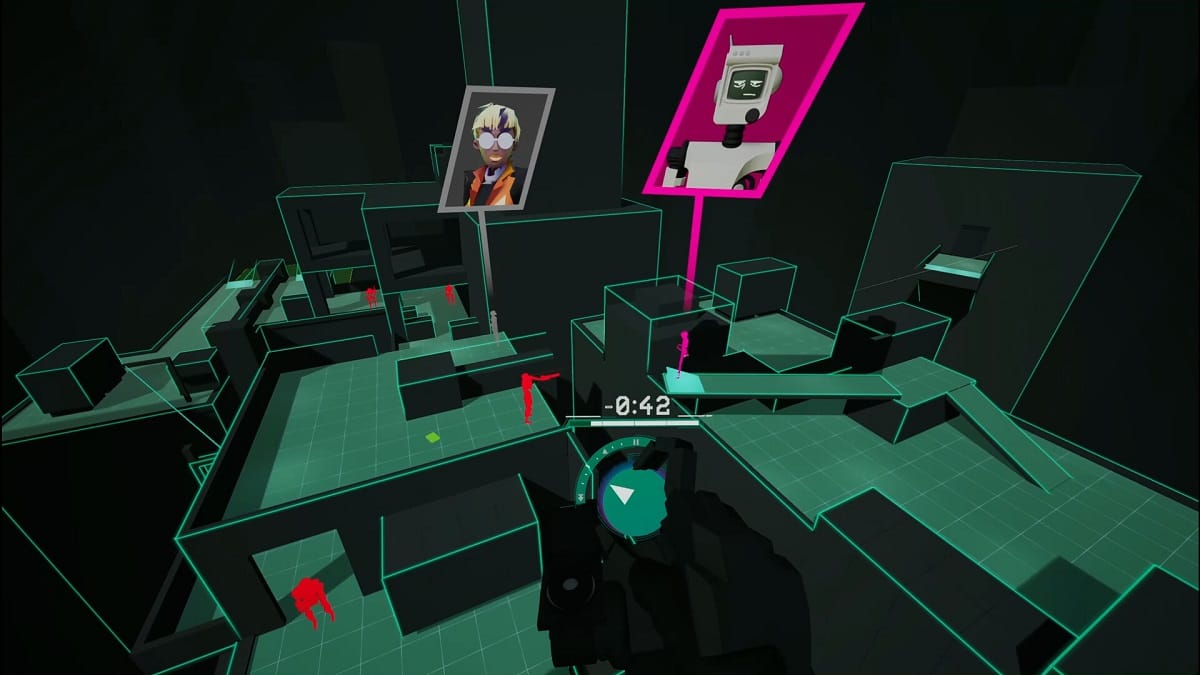
Spymaster is a VR-exclusive stealth-action game currently available in Early Access on Meta Quest 3/3S and SteamVR platforms (Valve Index, HTC Vive Pro 2, and compatible PCVR headsets). Developed by a focused indie team and published through Early Access channels, the game positions itself as a mission-based infiltration sandbox where your job is to slip into hostile territory, accomplish objectives, and escape without triggering alarms — or, if you prefer, with maximum chaos. At $24.99 USD during Early Access, it’s priced as a premium experience, not a throwaway tech demo, and the developers have been transparent about their roadmap: full release is targeted for late 2025 with additional missions, gadgets, and refinement of core systems.
This is not a game for VR newcomers dabbling in their first headset. Spymaster demands comfort with full-body VR locomotion, hand presence mechanics, and the patience to learn complex stealth systems through trial and error. Each mission session runs 15 to 45 minutes depending on your approach and whether you’re hunting for alternate routes or perfecting a speedrun. The current Early Access build contains approximately 8 to 10 core missions with branching objectives, which translates to roughly 8 to 15 hours of content if you’re replaying for score optimization and exploring different gadget loadouts. Solo play is the focus, though the developers have hinted at asynchronous ghost-mode leaderboards and potential co-op variants post-launch — nothing concrete yet.
Who will love Spymaster immediately? VR enthusiasts who grew up with Splinter Cell, Hitman, or Deus Ex and have been waiting for someone to translate that fantasy into full-body VR immersion. Players who value moment-to-moment physicality — actually reaching for your watch, physically crouching behind cover, using your hands to interact with locks and terminals — over cinematic cutscenes. Anyone who craves a VR game that doesn’t hold their hand through every objective and trusts the player to figure out solutions through observation and experimentation.
Spymaster Early Access Gameplay: What You Actually Do
The core loop is deceptively simple: infiltrate a target location, gather intel or eliminate a target, and extract without being caught. But the moment-to-moment execution is where Spymaster actually delivers. You start each mission outside the objective zone with a loadout of gadgets — a hacking device, a scrambler watch, a silenced pistol, throwable distractions, and potentially a cloaking emitter if you’ve unlocked it through progression. From there, you’re free to approach the problem however you want: sneak through the ventilation shaft and disable guards one by one using non-lethal takedowns, hack the security terminal to lock down patrol routes and disable cameras, or go in guns blazing and deal with the consequences of alarms and reinforcements.
Locomotion is handled via smooth VR movement (teleport is available for comfort), and the game does an excellent job of not inducing nausea even during fast-paced escapes — I played three-hour sessions without discomfort, though players sensitive to artificial locomotion should test the comfort settings (adjustable movement speed, tunnel vision toggle, and snap-turn options are all present). Hand-tracking is supported on Quest but not required; controllers offer more precise gadget manipulation, and most players will stick with them. The learning curve is steep for VR veterans, moderate for flat-game stealth fans, and brutal for anyone new to VR — the first mission will feel overwhelming with the sheer number of interactive systems you need to master simultaneously.
Stealth Mechanics, Gadgets & Core Systems
Stealth in Spymaster relies on a line-of-sight system with realistic cone-of-vision mechanics. Guards have sight cones (typically 90-degree arcs at medium range, narrowing at distance), hearing ranges that respond to footsteps and equipment noise, and patrol patterns that update dynamically if you’re spotted or if alarms are triggered. The system is consistent and fair — you can read enemy sightlines by watching their head orientation, and you can predict patrol routes by observing them for 30 seconds. Hiding mechanics are satisfying: crouch behind a desk and your character model genuinely compresses, slip into a locker and the door closes behind you with tactile feedback, hide in shadows near light sources and watch the guard’s vision cone shift as they turn. The game rewards patient observation over reflexes, which is refreshing in VR. However, there’s a notable friction point: sometimes guards will detect you through walls or around corners where the line-of-sight system should theoretically prevent it, suggesting the detection code still has edge-case bugs in this Early Access build. It happened roughly 1 in 20 attempts during my 15 playthroughs, but it’s frustrating enough to undermine the stealth fantasy when it occurs.
Your smartwatch is the central hub of gadget interaction — tap it, and a holographic interface blooms in front of you in real-time. From there, you can activate your scrambler (temporarily blinds nearby cameras and sensors for 8 seconds), check your objective timer, review guard positions you’ve observed, or switch gadget loadouts on the fly. The hacking device requires you to physically manipulate a combination lock interface in VR space; it’s not a minigame, it’s a physical puzzle where you rotate your controller to match a pattern, then press buttons in sequence — clunky at first, but satisfying once muscle memory kicks in by mission three. The silenced pistol handles like a real firearm with actual weight simulation and recoil feedback that makes non-lethal takedowns feel weighty and consequential. Throwable EMP grenades disable electronics in a radius and create escape routes; distraction devices emit loud noises that pull guards away from their posts. The spy fantasy lands because the game doesn’t abstract your tools — you hold them, aim them, and interact with them in real-time. A few gadgets feel underbaked: the cloaking emitter works but drains power so fast (roughly 20 seconds of invisibility before depletion) it’s rarely optimal compared to the scrambler watch. The lockpick tool is slow and loud, making the hacking device the superior choice for most locked doors. But the core kit is solid and encourages experimentation once you understand the trade-offs.
Story, World, Performance & Presentation
Spymaster doesn’t pretend to be a narrative powerhouse, and it doesn’t need to be. Your handler briefs you via radio before each mission with clear, professional dialogue that establishes objectives and context without bloat. The writing is competent and occasionally witty — your handler will comment on your methods with dry humor if you go loud (“Well, that’s one way to solve it”) or pull off an improbable stealth sequence (“Impressive. Unnecessary, but impressive”). Voice acting is solid across the board; the handler’s performance is especially good, grounding the experience with a sense of professionalism that enhances immersion. The narrative premise — you’re a field operative for a shadowy intelligence agency, taking on black-ops contracts — is thin but functional, and the game never tries to make you care about a deep story. It knows what it is.
World design shows Early Access limitations. The current missions take place in corporate offices, research facilities, and industrial compounds — visually distinct but architecturally similar. Each level is roughly the size of a large apartment building, dense with interactable objects and environmental storytelling details (security logs, photographs, personal effects, coffee cups on desks) that hint at the world beyond the mission scope. Art direction leans grounded-thriller rather than stylized; environments look like real places you could actually infiltrate, which strengthens immersion. However, asset repetition is noticeable on replays — you’ll see the same desk model, the same filing cabinet texture, the same guard uniform across multiple missions. This is typical of Early Access, and the developers have promised expanded level variety in the full release.
Sound design is exceptional for VR. Spatial audio is precise — you can locate guards by their footsteps (heavy boots echo differently than soft shoes), identify which direction an alarm is sounding from, and feel the weight of your own movements through haptic feedback. The original soundtrack is minimal but effective, mostly ambient tension that never overwhelms the soundscape. Voice lines are clear and directional. Technical performance on Quest 3 holds steady at 90 FPS with occasional dips to 80 FPS during heavy particle effects (like triggered alarms with flashing lights). On PCVR, performance is locked and smooth at 144 FPS on recommended specs. Comfort settings are comprehensive: adjustable movement speed, tunnel vision toggle for motion sickness prevention, snap-turn options, and seated play mode (though the game is designed for standing). No major bugs encountered during review, though there are minor UI hiccups — occasionally the watch menu takes a half-second too long to respond, and one mission had a guard clip through a wall (happened once in 15 playthroughs, not a pattern).
Content Length, Replayability & Early Access Value
The Early Access build contains 8 core missions plus 2 bonus challenge variants of existing levels. Each mission is designed to support multiple approaches, and the developers have implemented a simple scoring system based on stealth rating (how many guards you eliminated vs. avoided), time-to-completion, and gadget efficiency (how many gadgets you used versus how many you brought). Leaderboards exist but are barebones — just global high scores, no per-mission rankings or friend comparisons yet. Completing a mission on your first attempt takes 20 to 40 minutes depending on difficulty and exploration; replaying for optimization or trying new gadget combinations shaves that down to 15 to 25 minutes once you’ve learned the patrol patterns and objective locations.
The real question is whether 8 missions justify a $24.99 Early Access purchase. Objectively, that’s 8 to 15 hours of content for the price of a full indie game — comparable to Superhot VR or Half-Life: Alyx in terms of playtime-per-dollar. Subjectively, it depends on your replayability tolerance. If you’re the type who plays a stealth mission once and moves on, you’ll feel short-changed. If you’re the type who replays missions to optimize routes and compare scores, you’ll find surprising depth in learning new approaches and unlocking alternate objectives (some missions have hidden bonus targets worth discovering). The developers’ roadmap is transparent: 4 to 6 additional missions are confirmed for the full release, plus expanded gadget variety, a difficulty scaling system, and potential user-generated content tools. No paid DLC has been announced — the roadmap suggests all post-launch content will be free updates, which is a strong green flag for Early Access buyers worried about being nickel-and-dimed later.
Flaws, Frustrations & Early Access Red Flags
Spymaster is ambitious and largely succeeds, but it has real friction points that will frustrate specific player types. The first major flaw is stealth detection inconsistency. While the line-of-sight system is generally fair, there are edge cases where guards detect you when they shouldn’t have a clear sightline — clipping around corners, detecting you through partial walls, or spotting you at distances beyond their stated vision cone. This happens rarely enough that it’s not game-breaking, but frequently enough that you’ll restart a mission thinking you were caught unfairly. The developers acknowledge this is on the fix list, but it’s present in the current build and undermines the stealth fantasy when it occurs. In a genre where fairness is paramount, even occasional unfair deaths are frustrating.
The second flaw is steep learning curve without adequate tutorial support. The first mission throws you into the deep end with minimal explanation of how gadgets work, how the stealth detection system functions, or what the optimal approach might be. Experienced VR players will adapt within 30 minutes; flat-game stealth fans will take 2 to 3 hours; VR newcomers will likely bounce off entirely. There’s no difficulty scaling in the current build — every mission is tuned for “medium” difficulty, which means there’s no easy ramp-up for learning or hard challenge modes for veterans. This limits the audience to a narrow band of player skill and makes the game feel gatekept to stealth genre veterans.
The third flaw is gadget balance and loadout restrictions that encourage samey playstyles. You can’t bring all gadgets on every mission; you have a limited “carry capacity” (typically 3 to 4 gadget slots depending on mission), which forces trade-offs. In theory, this encourages strategic planning and varied approaches. In practice, certain gadget combinations are so dominant that alternative loadouts feel suboptimal. The hacking device plus scrambler watch is the “correct” choice for most missions; deviating from this loadout (substituting the cloaking emitter or lockpick tool) makes objectives significantly harder without offering meaningful strategic advantages. This reduces build variety and makes replays feel samey once you’ve discovered the optimal loadout.
The fourth flaw is Early Access content thinness at the $24.99 price point. Eight missions is respectable, but they’re all variations on “infiltrate, complete objective, escape.” There’s no story campaign connecting them, no progression system that unlocks new abilities or gadgets, no narrative reason to care about why you’re taking these jobs or who you’re working for. Compare this to Hitman 3 VR (which launched with 6 levels but offered a full campaign structure and hundreds of challenge variations) or Pavlov Shack (which has unlimited user-generated content). Spymaster feels more like a solid foundation than a complete experience. The roadmap promises more, but you’re buying on faith that the developers will deliver within a reasonable timeframe.
A minor but notable issue is UI friction in VR that breaks immersion during gadget swaps. The watch interface is immersive and works well, but swapping gadgets mid-mission requires opening the menu, selecting your loadout, confirming, and waiting for the animation to play — about 5 seconds of menu time that breaks immersion. In a game where stealth is paramount, having to pause and interact with a menu to switch from a gun to a hacking device is awkward and counterintuitive. A hotkey system (e.g., double-tap the watch to quick-swap to your previous gadget) or a radial menu would solve this friction, and it’s likely coming in updates.
Verdict: Should You Buy Spymaster in Early Access?
Spymaster Early Access is a Buy Now for VR enthusiasts who love stealth games and have the patience to learn complex systems, and a Wait for Full Release for casual VR players or anyone skeptical about Early Access purchases. The game is not broken, not a scam, and not a placeholder — it’s a genuinely well-crafted VR stealth experience that needs content expansion and bug polish more than mechanical overhaul.
Ideal buyer: A VR veteran who loved Splinter Cell or Hitman, owns a Quest 3 or PCVR headset, and is willing to spend 15+ hours optimizing stealth routes and comparing scores with a global leaderboard. You should expect to replay missions multiple times and embrace the trial-and-error learning curve.
Absolute wait for full release: Anyone new to VR, anyone who dislikes trial-and-error learning curves, anyone who expects a narrative campaign or story progression, or anyone who views Early Access as a financial risk. You would be better served waiting for the full 2025 release with more missions and refined systems.
Score: 7/10 — Spymaster is a confident, well-executed VR stealth sandbox that delivers on its promise of spy fantasy immersion. The core gameplay loop is tight, the gadgets feel great, and the moment-to-moment tension is real. Early Access content thinness (8 missions for $24.99), stealth detection inconsistencies, and gadget balance issues prevent a higher score. This is a solid foundation that justifies the price for the target audience, but it’s not a complete experience yet. At full release with 12+ missions, ironed-out bugs, and difficulty scaling, this could easily be an 8/10 or 9/10.
Price-to-Value: $24.99 for 8 to 15 hours of content is fair if you’re a replay-focused player who optimizes routes and chases leaderboard scores; it’s overpriced if you play once and move on. The developers’ transparent roadmap and no-paid-DLC commitment justify the Early Access investment for believers in the project. If you’re on the fence, wait for a full-release launch or a sale during the next Steam event.
Spymaster won’t appeal to everyone, but for the specific gamer it’s built for — someone who dreams of being a spy in full VR immersion and doesn’t mind learning complex systems through trial and error — it’s worth buying right now. The game respects your time, respects your intelligence, and delivers genuine moments of tension and satisfaction. Early Access red flags are minimal; the developers are communicative, the roadmap is clear, and the foundation is rock-solid. Buy it if you fit the profile. Wait if you don’t.
Frequently Asked Questions
Is Spymaster worth buying in Early Access right now?
Yes, if you’re a VR stealth game enthusiast with experience in full-body VR locomotion and a tolerance for learning complex systems. The core gameplay in Spymaster is polished, the spy fantasy lands genuinely, and the $24.99 price is fair for 8 to 15 hours of content with a transparent developer roadmap. If you’re new to VR or skeptical of Early Access, wait for the full 2025 release.
How long does Spymaster take to complete in its current Early Access build?
A single playthrough of all 8 core missions in Spymaster takes approximately 8 to 15 hours depending on your approach and exploration. Individual missions run 20 to 40 minutes on first attempt, dropping to 15 to 25 minutes once you’ve optimized routes and learned patrol patterns. Replaying Spymaster for score optimization and leaderboard competition extends playtime significantly for motivated players.
Does Spymaster have multiplayer or co-op support?
Not in the current Early Access build. Spymaster is strictly single-player focused. The developers have hinted at asynchronous ghost-mode leaderboards and potential co-op variants in the post-launch roadmap, but nothing is confirmed or available yet. Co-op is not a feature you should expect at launch.
What VR headsets is Spymaster Early Access compatible with?
Spymaster is available on Meta Quest 3 and Quest 3S (standalone), and all SteamVR-compatible headsets including Valve Index, HTC Vive Pro 2, and other PCVR devices. Hand-tracking is supported on Quest but not required; controllers are recommended for precise gadget manipulation in Spymaster. The game does not support PlayStation VR or older Quest models.
How often is Spymaster receiving Early Access updates?
The developers have committed to a monthly update cycle for Spymaster with bug fixes, balance tweaks, and gadget refinements. Major content updates (new missions, expanded features) are planned quarterly leading up to the full 2025 release. The roadmap is publicly visible, and the team actively responds to community feedback on Discord and the Steam community hub.
Does Spymaster cause motion sickness?
Spymaster uses smooth VR locomotion by default, which can trigger motion sickness in sensitive players. However, the game includes comprehensive comfort settings: adjustable movement speed, tunnel vision toggle, snap-turn options, and seated play mode. Testing these settings before your first mission is recommended. Most players report no nausea after 1 to 2 hours of acclimation.
Can you play Spymaster seated?
Yes, Spymaster includes a seated play mode in its comfort settings, though the game is optimized for standing play. Standing allows for more natural aiming, gadget manipulation, and the full spy fantasy immersion. Seated play works but feels less immersive and makes precise controller interactions slightly more awkward.
What’s the difference between Spymaster Early Access and the full release?
Spymaster Early Access currently contains 8 core missions; the full 2025 release will add 4 to 6 additional missions, expanded gadget variety, difficulty scaling (easy/medium/hard modes), refined stealth detection systems, and potential user-generated content tools. All post-launch content for Spymaster will be free updates; no paid DLC is planned. Early Access buyers will automatically receive all updates.