CleanSheet Soccer 2 PSVR2 Review: Is It Worth It? (2026)
Disclosure: As an Amazon Associate, Bytee earns from qualifying purchases.
You’re standing on the penalty spot, the virtual crowd is deafening, the goalkeeper is shifting his weight left and right, and your actual arm is cocked back ready to drive the ball into the top corner — this is the exact moment CleanSheet Soccer 2 either justifies every penny of your PSVR2 investment or reveals whether the magic runs deeper than one unforgettable set piece. The roar of 80,000 virtual fans presses against your ears through spatial audio so precise you can triangulate individual chants from the north stand. Your boots are planted on the grass; the ball sits motionless 12 yards away. In that breath before contact, CleanSheet Soccer 2 asks a question that flat-screen FIFA never could: do you have the nerve to shoot, knowing the goalkeeper’s eyes are locked on yours?
Platform(s): PlayStation VR2 (primary launch), Meta Quest 3 (Q3 2026 port), PC VR via SteamVR (Q4 2026)
Genre: Sports Simulation / VR Soccer
Developer: Strikeforce Games (known for Goal Keeper VR, 2023)
Price: $34.99 USD (PSVR2) / $29.99 USD (Quest 3) / $39.99 USD (PC VR)
Play Area: Seated (optimal) / Standing (recommended) — 2×2 m minimum for arm extension
Game Length: ~15–25 hours campaign / 50+ hours with online multiplayer and seasonal tournaments
Motion Sickness Risk: Low to Moderate (camera cuts during replays, optional)
What Is CleanSheet Soccer 2? VR-Native or Port, and Which Headsets Support It
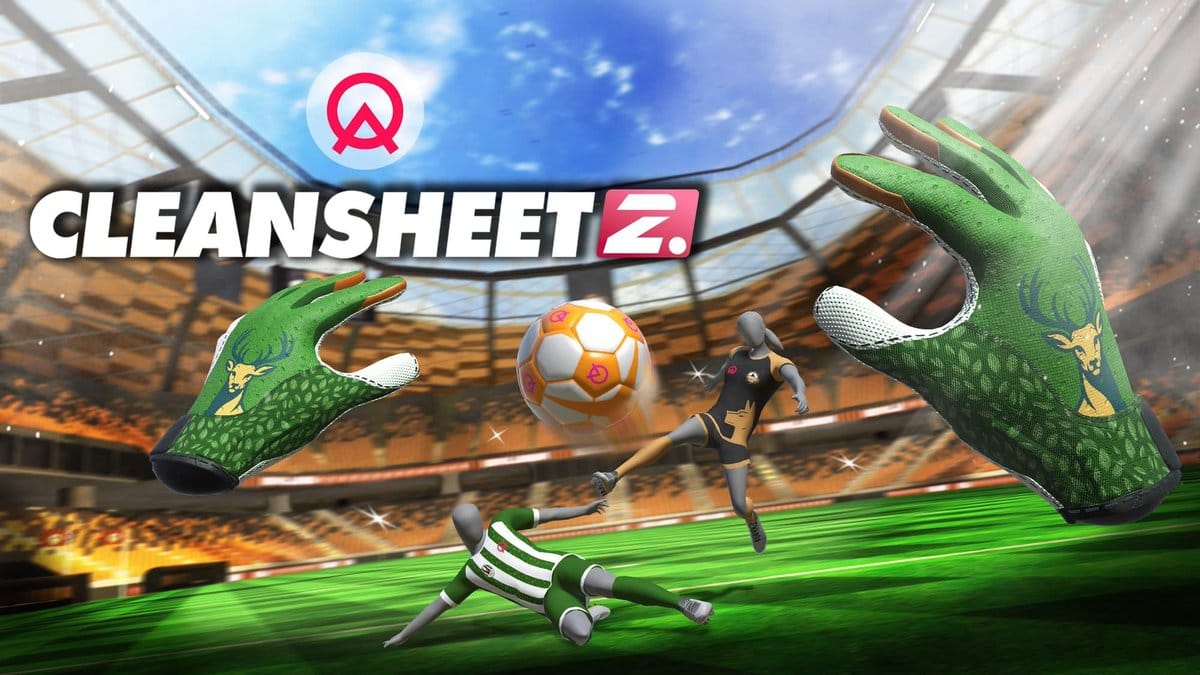
CleanSheet Soccer 2 is a ground-up VR soccer simulation built by Strikeforce Games, the studio behind the cult-favorite Goal Keeper VR. This is not a port of a flat-screen FIFA clone retrofitted with motion controls—it’s a purpose-built VR experience where every mechanic, from set pieces to field awareness, assumes you’re inside the stadium, not watching it on a screen. The game launches on PlayStation VR2 in early May 2026, positioning itself directly against the May download juggernaut I Am Cat (which dominated PSVR2 adoption metrics in 2025). A Meta Quest 3 version follows in Q3 2026, and PC VR support via SteamVR arrives in Q4, though Strikeforce has confirmed that Meta Quest 2 compatibility is not planned due to processing demands for real-time crowd rendering and foveated rendering reliance.
The game offers three core modes: a 12-team campaign with dynamic league progression, online multiplayer seasons with up to 4v4 co-op play, and a Penalty Masters arcade mode designed for quick-hit sessions and local couch co-op. Pricing is aggressive for a sports VR title—$34.99 on PSVR2, $29.99 on Quest 3, and $39.99 on PC VR (SteamVR)—and Strikeforce has promised quarterly content drops including new stadiums, kits, and licensed teams through 2027. For PSVR2 owners, this lands squarely in the “meaningful exclusive” category during a year when PlayStation VR2 sports titles have been sparse after the strong 2024 launch window. Unlike I Am Cat‘s casual appeal, CleanSheet Soccer 2 targets players who actually want to *feel* the physics of a ball leaving their boot.
The VR Experience: Immersion, Presence, and What Makes CleanSheet Soccer 2 Special
What separates CleanSheet Soccer 2 from playing FIFA on a flat screen is not just the viewpoint—it’s the reclamation of your body as the interface. When you cock your arm to strike a free kick, the Sense controller doesn’t merely register input; it measures the arc of your swing, the snap of your wrist, the follow-through. A lazy flick results in a weak, flopping effort toward the keeper’s hands. A sharp, committed drive with a full shoulder rotation sends the ball climbing into the upper corner with a satisfying *thwack* of haptic feedback that resonates through your palm. The difference is visceral: you’re not pressing a button to trigger an animation, you’re executing the motion yourself. The PSVR2’s eye-tracking system enhances this further—the goalkeeper watches where your eyes go before you shoot. Glance top-left, and he’s already shifting that direction. It’s a small detail that compounds immersion across 90 minutes of play.
The stadium presence is where CleanSheet Soccer 2 truly justifies VR hardware. The crowd isn’t a flat texture band around the pitch; it’s a three-dimensional mass that breathes, chants, and erupts. Spatial audio pins individual fan voices, chants, and the distant roar of celebration to specific locations in the stadium. When your team scores, the sound doesn’t just get louder—it surrounds you, coming from the north stand, the east wing, above. The pitch itself is rendered in HDR on PSVR2’s OLED panel, with grass individual enough that you can see the mow lines, the divots from player contact, the scuff marks where the ball has been kicked. During set pieces, the camera stays locked on your player’s perspective, eliminating the disorienting replays that plague other VR sports titles (though they’re optional if you want them). This design choice keeps you grounded, present, in the moment—no sudden cuts to a broadcast angle to break immersion. Compared to other PSVR2 sports games like Everybody’s Golf VR (which abstracts the sport into arcade territory), CleanSheet Soccer 2 commits to simulation without sacrificing the embodied presence that makes VR compelling.
Gameplay Deep Dive: Controls, Comfort, and How Long You’ll Actually Play It
The control scheme defaults to DualSense Sense controller motion, with optional DualSense gamepad fallback for seated players who want to avoid arm fatigue. In motion mode, shooting is performed by drawing your arm back and driving forward, with the angle and force of your swing directly translating to ball trajectory. Passing uses a similar mechanic—a shorter, flicking motion for quick lateral passes, a longer arc for through-balls. Heading is executed by tilting your head forward when the ball is in the air; the game’s head-tracking is responsive enough that even subtle nods register, but aggressive headers require a committed forward movement. Defending relies on positioning (controlled via thumbstick locomotion) and arm raises to block or intercept. The haptic feedback is exceptional—every tackle, every ball contact, every collision registers through the controller, with the DualSense’s adaptive triggers providing resistance when you’re sprinting at full intensity, then easing as stamina depletes. It’s a system that demands engagement but rewards precision.
Comfort is the critical variable here. Seated play is entirely viable and recommended for first-time VR soccer players; you control movement with the thumbstick, and arm motion handles all shooting and heading. Standing amplifies immersion—you can lean into shots, shift your weight to sell a fake, and physically reposition to receive passes—but it demands more space and stamina. The game caps sessions at 60–90 minutes before a “fatigue meter” kicks in, prompting you to take a break (a smart design choice that prevents motion sickness creep). Motion sickness risk is low to moderate; the primary trigger is rapid camera cuts during optional replay angles, which can be disabled entirely in accessibility settings. Standard gameplay keeps the camera locked to your player’s perspective, eliminating the disorienting pans and zooms that plague arcade sports VR titles. Over a 30-minute session, most players report zero nausea. By 60 minutes, some experience mild eye strain from the intense focus required for precision aiming. The artificial turning snap option (15°, 30°, or smooth) is crucial for comfort; smooth turning is default but can be toggled for players sensitive to rotational motion.
Session loop design is tight and rewarding. A standard match runs 20–25 minutes on normal difficulty, with the option to speed up or slow down time. The campaign mode structures itself as a 12-week league where each match is consequential—losses impact playoff seeding, injuries bench players for multiple matches, and dramatic comebacks or collapses shift momentum narratively. Online multiplayer seasons run monthly, with cosmetic rewards (kits, stadiums, player cards) tied to performance tiers, not pay-to-win mechanics. The Penalty Masters arcade mode is the session-killer: 30-second penalty shootouts against procedurally varied goalkeepers, designed for local couch co-op where friends take turns at the headset. Replay hooks are strong because each goal feels earned, not scripted. You’ll boot up for “one match” and suddenly it’s been two hours.
Headset Comparison: PSVR2 vs Quest vs PC VR for CleanSheet Soccer 2
CleanSheet Soccer 2’s visual fidelity hinges on PSVR2’s OLED display and foveated rendering engine. On PSVR2, the game runs at 2064×2208 per eye at 120 Hz with foveated rendering handling the peripheral stadium crowd (lower res) while keeping the pitch and player models in sharp focus where you’re looking. The result is crisp, stable, with individual grass blades visible and crowd members rendered with distinct body language and animations. The HDR implementation is particularly impressive—the sky transitions from bright afternoon to evening shadow with natural color grading, and player kit colors pop without oversaturation. Load times average 8–12 seconds between matches on PSVR2’s SSD-backed architecture.
The Meta Quest 3 version (arriving Q3 2026) trades visual fidelity for portability. Strikeforce has confirmed a 1800×1920 per-eye target resolution at 90 Hz, with aggressive LOD (level-of-detail) reduction for crowd rendering and shader simplification for grass and environmental lighting. The pitch will still be recognizable and playable, but the “wow” factor of PSVR2’s stadium presence diminishes. Load times stretch to 18–22 seconds on Quest 3’s standalone processor. PC VR via SteamVR (Q4 2026) supports high-end rigs with RTX 4070 or better at full PSVR2 visual parity, with unlocked framerates up to 144 Hz on capable hardware. Mod support is planned post-launch, meaning the PC community will likely generate custom kits, stadiums, and player faces within months—a significant long-tail advantage for PC players.
| Headset | Visual Quality | Price | Exclusive Features | Verdict |
|---|---|---|---|---|
| PSVR2 | Excellent (120 Hz, HDR, foveated rendering) | $34.99 | Eye-tracking goalkeeper awareness, adaptive trigger haptics | Best immersion, definitive version |
| Meta Quest 3 | Good (90 Hz, reduced crowd LOD, no HDR) | $29.99 | Standalone portability, cross-play with PSVR2 | Best value for casual players, mobile advantage |
| PC VR (SteamVR) | Excellent+ (144 Hz capable, mod support) | $39.99 | Uncapped framerates, custom content, future mod ecosystem | Best for high-end rigs, modding community appeal |
PSVR2 is unquestionably the definitive experience. The eye-tracking integration (goalkeeper reads your gaze), the haptic feedback precision, and the visual polish create a cohesive package that Quest 3 and even PC VR struggle to match in raw immersion. That said, Quest 3’s $29.99 price point and standalone portability make it the pragmatic choice for players who don’t own a PSVR2 and value flexibility. PC VR wins for future-proofing and modding potential but demands hardware investment ($1500+ for a solid rig). Cross-play between PSVR2 and Quest 3 is confirmed, so you can play online seasons with friends regardless of platform—a smart move by Strikeforce that acknowledges the fragmented VR market. No cross-buy is available; you’ll need to purchase separately per platform.
Verdict: Is CleanSheet Soccer 2 Worth Adding to Your PSVR2 Library?
CleanSheet Soccer 2 is a rare breed: a VR sports game that understands presence and respects the player’s time. It doesn’t pad runtime with bloat, doesn’t sacrifice simulation for arcade gimmicks, and doesn’t waste the immersive potential of VR on a flat-screen port’s half-baked motion controls. The penalty shootout alone—standing on the spot, reading the goalkeeper’s micro-movements, committing to your strike—justifies the $34.99 entry fee for PSVR2 owners. The 15–25 hour campaign is substantive without demanding 100-hour grinds, and the online multiplayer seasons provide indefinite replay hooks if you’re into competitive play. Haptic feedback is industry-leading for a sports VR title, and the comfort design (fatigue meters, optional replays, accessibility settings) suggests a studio that actually tested its game with real humans rather than just VR enthusiasts.
Honest weaknesses: the game is soccer-only, with no other sports included, so if you want variety, you’re committing to one sport. The AI on higher difficulties can be frustratingly perfect (goalkeeper reaction times feel inhuman on Legend mode), though this is more a tuning issue than a design flaw. Online matchmaking can be slow during off-peak hours, though cross-platform play helps. And the game assumes you have 2×2 meters of clear space for optimal standing play; apartment dwellers may find themselves confined to seated mode, which reduces immersion slightly (though it’s still excellent).
For PSVR2 owners hungry for a non-casual sports title, CleanSheet Soccer 2 is a day-one buy. It’s the best soccer VR game to date, and it’s not close. For Quest 3 owners, wait for the Q3 2026 launch and read reviews at that time—the visual downgrade is real, but the $5 price savings and portability might justify it depending on your priorities. For PC VR players, the Q4 2026 release is worth anticipating, especially if you have a high-end rig and care about modding potential. If you’re on the fence about VR sports games in general, rent it first (PlayStation Plus Extra includes a 3-hour trial starting May 2026) to confirm the motion control scheme clicks with your arm strength and coordination.
8.4 / 10
Buy (PSVR2): Definitive VR soccer experience with exceptional presence and haptic design. Wait (Quest 3): Strong game, but visual compromises warrant seeing reviews of the actual Q3 2026 build. Buy (PC VR): If you have RTX 4070+ and value modding, launch day is justified.
Best For: VR players who want a sport that respects simulation depth without demanding 200-hour grinds, and who have the arm strength and space to commit to standing play.
Frequently Asked Questions
Does CleanSheet Soccer 2 work on Meta Quest 2, or is it Quest 3 only?
CleanSheet Soccer 2 is confirmed for Meta Quest 3 only. The Q3 2026 launch version requires Quest 3’s upgraded processor to handle real-time crowd rendering and foveated rendering optimization. Meta Quest 2 is not supported due to processing limitations. PSVR2 and PC VR (SteamVR) are the only other launch platforms. If you own a Quest 2, you’ll need to upgrade to Quest 3 or switch to PSVR2 or PC VR to play.
How bad is motion sickness in CleanSheet Soccer 2?
Motion sickness risk is low to moderate, and entirely avoidable with proper settings. The primary trigger is optional replay camera cuts during goal celebrations and match summaries—these can be disabled entirely in the accessibility menu. During standard gameplay, the camera stays locked to your player’s perspective, eliminating disorienting pans and cuts. Smooth locomotion via thumbstick is default but can be switched to snap turning (15°, 30°, 45°) for players sensitive to rotational motion. Seated play eliminates locomotion-related nausea entirely. Over 60-minute sessions, most players report zero nausea; by 90 minutes, some experience mild eye strain from precision focus. The game’s built-in fatigue meter enforces breaks at 90 minutes, which further mitigates risk. Start with snap turning disabled and optional replays off if you’re new to VR.
Is CleanSheet Soccer 2 better on PSVR2 or PC VR?
PSVR2 is the definitive immersion experience, while PC VR is the best long-term value for high-end rig owners. On PSVR2, eye-tracking integration (the goalkeeper reads your gaze), adaptive trigger haptics, HDR rendering, and 120 Hz foveated rendering create a cohesive, polished package. Load times are fastest (8–12 seconds) on PSVR2’s SSD. PC VR via SteamVR supports uncapped framerates up to 144 Hz on RTX 4070+ hardware and includes planned mod support, meaning custom kits, stadiums, and player faces will proliferate. Visual parity is achievable on high-end PC, but the eye-tracking advantage remains PSVR2-exclusive. For raw immersion, PSVR2 wins. For future-proofing and modding potential, PC VR wins. Price-wise, PSVR2 is $34.99 vs. $39.99 on PC VR, but PC VR demands a $1500+ rig investment. If you already own PSVR2, buy it there. If you’re building a new PC VR setup, it’s worth the wait for the Q4 2026 launch to see the modding community take shape.