Little Nightmares VR Altered Echoes Review: Worth It?
Disclosure: As an Amazon Associate, Bytee earns from qualifying purchases.
You are six inches tall, crouched behind a rusted tin can, and something enormous is breathing in the dark three feet above your head — except in VR, three feet feels like thirty, and your hands are actually shaking. Your breath fogs the inside of your headset. The spatial audio places that wet, labored breathing directly above you, closing in. You know it’s a game. Your body doesn’t care. Welcome to Little Nightmares VR: Altered Echoes, where the horror isn’t jump-scares or gore—it’s scale, presence, and the primal terror of being small and hunted in a world built for giants.
Platform(s): Meta Quest 2 / Quest 3 / PSVR2 / PC VR (SteamVR)
Genre: VR Horror Platformer-Puzzle Hybrid
Developer: Tarsier Studios
Price: $29.99 (Quest 2/3), $34.99 (PSVR2), $34.99 (PC VR)
Play Area: Seated / Standing / Roomscale (min 1.5×1.5 m)
Game Length: ~4–6 hours main story
Motion Sickness Risk: Moderate (pre-update) → Low-Moderate (post-update)
Little Nightmares began as a critically acclaimed 2D side-scroller (2017). Altered Echoes is built ground-up for VR, not a lazy port, but the puzzle-platformer DNA of the original remains. This is a deliberate expansion into three dimensions, and the results are genuinely unsettling in ways the flat version never achieved.
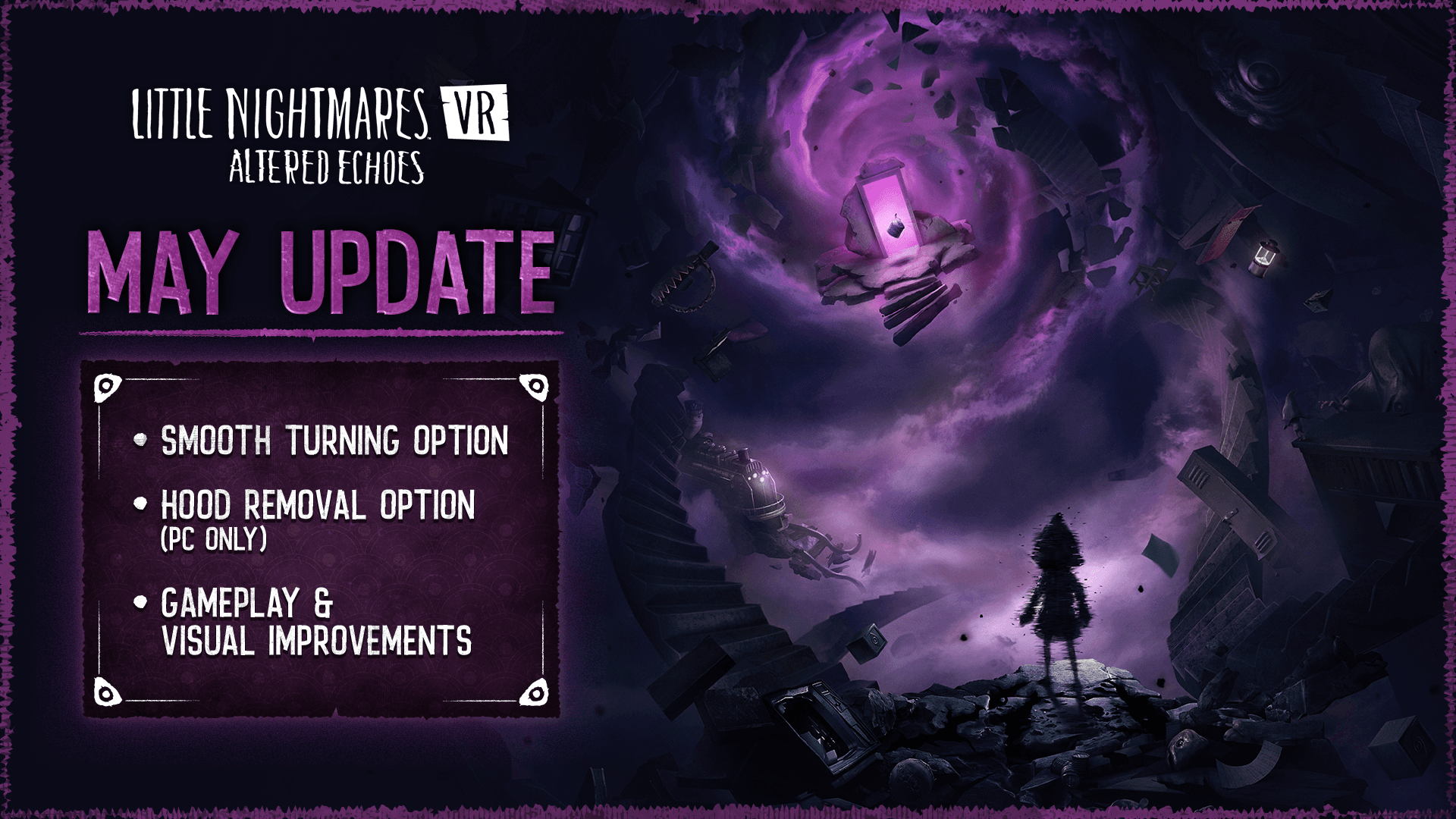
What Is Little Nightmares VR Altered Echoes — Port or VR-Native, and Which Headsets Get It?
Little Nightmares VR: Altered Echoes is a VR-native title developed by Tarsier Studios, the Swedish studio behind the original Little Nightmares franchise. This isn’t a flat-screen port shoehorned into VR—it’s a ground-up rebuild designed to exploit the unique horror potential of virtual reality. The game launched in early access and received a significant comfort-settings overhaul in early 2025 based on player feedback, making it substantially more accessible than its launch version.
Platform support spans Meta Quest 2, Meta Quest 3, PlayStation VR2, and PC VR (SteamVR for Valve Index, HTC Vive, and Windows Mixed Reality headsets). Quest 2 players get a functional but visually compromised experience—expect resolution scaling and simplified lighting. Quest 3 delivers the sweet spot: native resolution, sharp text readability, and stable 90 Hz performance in most scenes. PSVR2 pushes the fidelity ceiling with enhanced haptics and eye-tracking integration, though at a $5 premium. PC VR offers the graphical ceiling but demands a solid mid-range GPU (RTX 2080 or equivalent). Estimated playtime sits at 4–6 hours for the main story, with minimal replay incentive beyond achievement hunting.
The VR Experience: What Altered Echoes Does That a Flat Screen Never Could
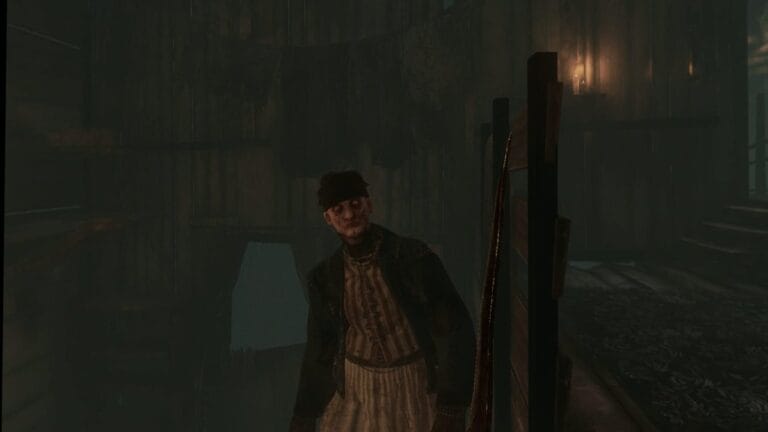
The core horror mechanic of Little Nightmares has always been scale—you play as a small child in a world of grotesque, oversized entities. In VR, this translates to visceral, near-paralyzing dread. When you’re physically six inches tall and a seven-foot-tall hunter rounds a corner, your lizard brain doesn’t register “game asset.” It registers threat. The spatial audio design amplifies this: footsteps approach from specific points in 3D space, breathing echoes from above, and the scrape of metal on stone surrounds you in stereo. You don’t just hear danger—you feel where it is.
Standout set pieces include a sequence where you navigate a massive kitchen while a grotesquely elongated cook searches for you—the tension builds not from scripted scares but from the constant awareness of her towering silhouette visible through gaps in furniture. Another involves navigating a flooded basement where you must hold your breath (the game uses haptic feedback to simulate lung pressure on supported headsets), and the oxygen meter creates genuine physiological stress. Environmental storytelling shines: you piece together the world’s lore through found objects, journals, and the architecture itself. The visual fidelity varies by headset—Quest 3 handles dynamic lighting and shadow-casting well, while PSVR2’s superior screen-door reduction and deeper blacks elevate atmosphere. The post-update comfort settings, particularly the optional vignette mode and snap-turn toggles, allow players to experience these moments without the nausea that plagued early adopters.
Gameplay Deep Dive: Controls, the New Comfort Settings, and Motion Sickness Reality Check
Motion controls are responsive and intuitive—grabbing, climbing, and manipulating objects feel natural without the “floaty hand” syndrome that plagues some VR platformers. The puzzle design leans toward environmental manipulation rather than combat; you’re solving your way past threats, not fighting them. Locomotion defaults to smooth movement with optional snap-turn, but the real game-changer came with the post-update comfort settings overhaul.
Pre-update, motion sickness complaints centered on two issues: the smooth-locomotion-plus-head-turn combination triggered nausea in sensitive players within 30 minutes, and certain platforming sequences involved disorienting camera angles. The February 2025 update introduced a vignette toggle that darkens your peripheral vision during movement—this is a game-changer for VR sickness sufferers. It reduces the sensation of self-motion without breaking immersion. The snap-turn option eliminates head-rotation nausea entirely. Seated mode is now fully supported, and the developers optimized camera movement during climbing sequences to minimize vestibular conflict. Honest assessment: if you’re prone to VR sickness, the updated comfort settings make Altered Echoes playable. If you’re sensitive to horror atmospherics, the 45–60 minute session limit is psychological, not physical—the relentless dread is exhausting.
Headset Showdown: Quest 3 vs PSVR2 vs PC VR — Which Version Should You Buy?
| Headset | Visual Quality | Price | Exclusive Features | Verdict |
|---|---|---|---|---|
| Meta Quest 3 | Sharp native resolution, stable 90 Hz, solid shadow detail | $29.99 | Standalone convenience, no PC required | Best Overall — Best price-to-experience ratio |
| Meta Quest 2 | Resolution-scaled, occasional frame drops in dense scenes, washed-out blacks | $29.99 | None | Playable but compromised — upgrade to Quest 3 if possible |
| PSVR2 | Highest fidelity, superior contrast and color depth, eye-tracking integration | $34.99 | Haptic feedback for breathing sequences, adaptive trigger resistance | Best Immersion — Worth the $5 premium if you own PSVR2 |
| PC VR (SteamVR) | Graphical ceiling (4K+ at 120 Hz on high-end rigs), maximum draw distance | $34.99 | Ultra settings, advanced FXAA, uncapped framerate | Best for perfectionists — requires RTX 2080+ and significant desk space |
The Real Talk: Quest 3 is the sweet spot. It delivers 90% of the visual fidelity of PSVR2 at a lower price point, with zero setup friction. Load times are swift (under 10 seconds), and the standalone convenience means you can play anywhere. PSVR2 edges ahead in black levels and haptic immersion—the breathing mechanic where your chest tightens during oxygen-deprivation sequences is genuinely unsettling—but the $5 difference doesn’t justify the upgrade unless you already own the headset. PC VR is overkill for a narrative-driven horror game; the visual bump from ultra settings to high settings is negligible in low-light scenes, and the performance overhead isn’t worth the cost of entry. Quest 2 owners will feel the compromise immediately: textures blur at distance, blacks crush to dark gray, and frame pacing stutters during dense scenes. If you’re on Quest 2, either upgrade to Quest 3 or play on PC VR if your rig supports it.
Verdict: Is Little Nightmares VR Altered Echoes Worth Adding to Your VR Library Right Now?
Little Nightmares VR: Altered Echoes is a genuinely unsettling horror experience that justifies VR’s existence. It does something that flat-screen games cannot: it weaponizes your own sense of scale and presence against you. The post-update comfort settings are substantial enough that motion-sensitive players can now experience the game without significant discomfort. At 4–6 hours of story content, the price-per-hour ratio sits at roughly $5–7 per hour, which is fair for a narrative-driven indie title but not exceptional. Replay value is low—once you’ve solved the puzzles and experienced the scares, there’s little incentive to return, though achievement hunting and optional collectibles add a few hours for completionists.
Comparable Alternatives: If you’re torn between Altered Echoes and other VR horror titles, consider Lone Echo 2 (a sci-fi horror-adjacent experience with superior atmosphere and longer playtime) or Five Nights at Freddy’s: Secret of the Mimic (jump-scare horror with more replayability). Altered Echoes occupies a unique space: psychological dread over cheap scares, atmosphere over action. If that appeals to you, it’s essential.
8.2 / 10
BUY NOW on Quest 3 or PSVR2. WAIT FOR SALE on PC VR (unless you have a high-end rig and want maximum visuals). SKIP on Quest 2 unless you’re desperate for VR horror—the compromises are too significant.
Best For: VR enthusiasts who value atmospheric horror over action, players with updated comfort-settings tolerance, and anyone curious about what presence-based dread feels like in virtual reality.
Frequently Asked Questions
Does Little Nightmares VR Altered Echoes work on Meta Quest 2, or is Quest 3 required for the best experience?
Little Nightmares VR: Altered Echoes runs on both Meta Quest 2 and Quest 3, but Quest 3 is strongly recommended. Quest 2 receives resolution scaling, reduced shadow detail, and occasional frame drops in dense scenes—the black levels also crush, losing important visual atmosphere in dark corridors. Quest 3 maintains native resolution, stable 90 Hz performance, and superior contrast, making it the minimum recommended platform. If you own Quest 2, the experience is playable but visibly compromised. Upgrading to Quest 3 or playing on PSVR2/PC VR is worthwhile if visual fidelity matters to you.
How bad is the motion sickness in Little Nightmares VR Altered Echoes before and after the comfort settings update?
Pre-Update: Motion sickness was a significant issue. The combination of smooth locomotion with head-relative turning triggered nausea in sensitive players within 30 minutes, particularly during escape sequences with rapid camera pans. Reports of moderate-to-high discomfort were common on community forums. Post-Update (February 2025): The comfort settings overhaul substantially reduced motion sickness risk. The vignette toggle (darkening peripheral vision during movement) is a game-changer—it reduces vestibular conflict without breaking immersion. Snap-turn (45° or 90° increments) eliminates head-rotation nausea. Seated mode is now fully viable for most sequences. Specific Triggers: Heights and ledge-walking still cause mild disorientation in sensitive players; the breathing oxygen-deprivation mechanic causes psychological (not physical) stress. Verdict: If you’re mildly sensitive to VR sickness, the updated comfort settings make Altered Echoes playable at 45–60 minute sessions. If you’re highly sensitive, the horror atmosphere itself may still cause fatigue.
Is Little Nightmares VR Altered Echoes better on PSVR2 or PC VR for visual quality and immersion?
Visual Quality Winner: PSVR2 — Superior contrast, deeper blacks (critical for horror), and eye-tracking integration that enhances immersion. The haptic feedback during breathing sequences and adaptive trigger resistance on the controller add tactile immersion that PC VR cannot match at the same price point. PC VR Advantage: Graphical ceiling is higher—ultra settings at 4K+ resolution and 120 Hz framerate deliver the sharpest visuals, but the performance overhead is overkill for a narrative-driven game. The visual bump from high to ultra settings is negligible in low-light scenes. Price and Practicality: PSVR2 is $5 more ($34.99 vs. $29.99 on Quest 3) but offers the best immersion-per-dollar if you already own the headset. PC VR requires a high-end GPU (RTX 2080+) and significant desk space, making it the choice only for visual perfectionists with existing hardware. Definitive Recommendation: If you own PSVR2, buy it there for the haptic immersion. If you’re choosing between platforms, Quest 3 offers 90% of the experience at the lowest price and highest convenience. PC VR is worth it only if you already have a high-end rig and value graphical fidelity above all else.