Space Explorers The Infinite VR Review: Worth It?
Disclosure: As an Amazon Associate, Bytee earns from qualifying purchases.
You’re floating 400 kilometers above Earth, tethered only by a single cable, and the station is burning behind you — the only sound your own breathing inside the helmet and the subtle hiss of thruster gas. This is what Space Explorers The Infinite does that no flat-screen game ever could. The void doesn’t just surround you; it *owns* the space inside your headset. Your inner ear feels the microgravity. Your hands instinctively grip the controllers tighter as you watch the planet rotate beneath your boots. For the first time in a VR space sim, you aren’t controlling an avatar on a screen — you *are* the astronaut, and the silence of orbit is deafening.
Platform(s): Meta Quest 3 / PSVR2 / PC VR (SteamVR)
Genre: Space Simulation / Exploration / Survival
Developer: Infinite Studios (indie)
Price: $39.99 (Quest 3) / $49.99 (PSVR2) / $44.99 (PC VR)
Play Area: Seated or Standing / Roomscale optional (2×2 m minimum for standing)
Game Length: ~8–12 hours main campaign / 40+ hours sandbox exploration and mission randomization
Motion Sickness Risk: Low
What Is It? VR-Native or Port, and Which Headsets Support It
Space Explorers The Infinite is a rare breed: a VR-native space simulation built from the ground up for headsets, not retrofitted from a flat-screen predecessor. Developed by the small but ambitious Infinite Studios, this title launched in early access two years ago and has matured into a polished, feature-complete experience. It’s available now on Meta Quest 3, PSVR2, and PC VR via Steam — notably *absent* from Quest 2, which lacks the processing headroom for the game’s density and draw distance. The $39.99 Quest 3 version remains the most accessible entry point, while PSVR2 and PC versions command modest premiums of $49.99 and $44.99 respectively, reflecting platform-specific optimization and haptic enhancements.
The campaign spans 8–12 hours for a first playthrough, with a robust sandbox mode that extends playtime to 40+ hours or more if you’re the type to lose yourself in open-ended orbital mechanics and procedural mission generation. Post-launch roadmap updates have added EVA suit customization, new station modules, and a cooperative multiplayer framework (still in beta). This isn’t a quick VR novelty; it’s a commitment to long-form immersion that respects your time and your investment.
The VR Experience: Immersion, Presence, and What Makes It Special
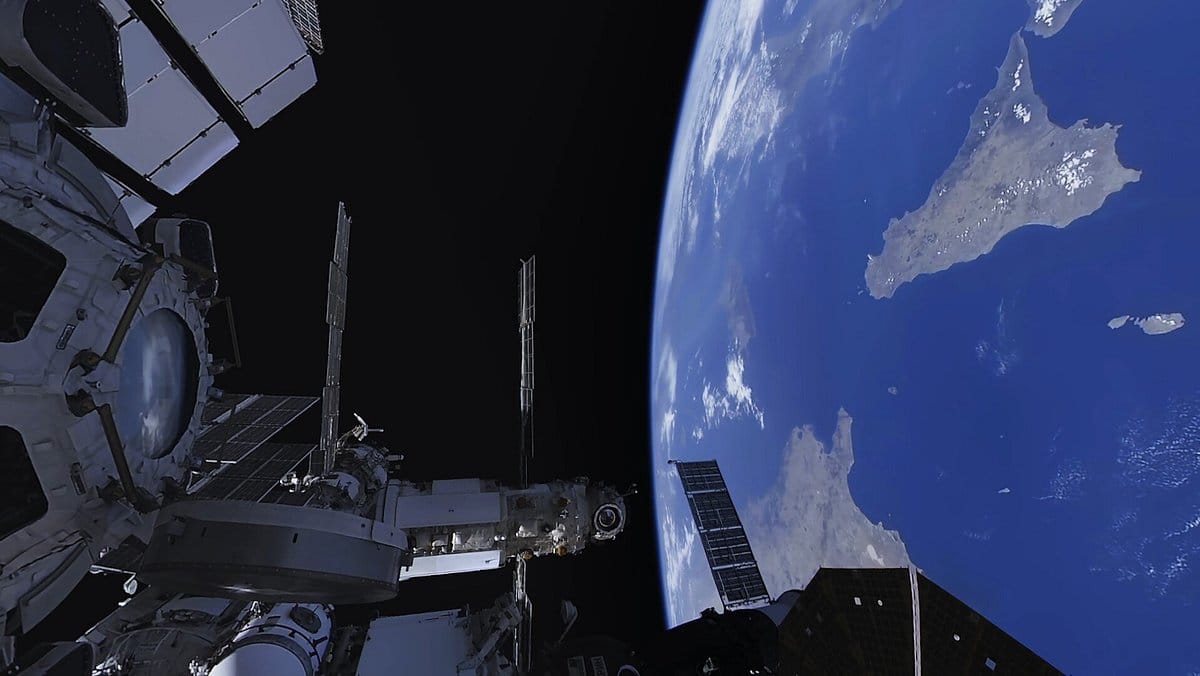
The moment you undock from the station for your first untethered spacewalk, Space Explorers The Infinite achieves something that decades of flat-screen space sims have chased but never captured: *true orbital presence*. The scale is vertiginous and real. Earth hangs beneath you, rotating with glacial slowness. Your station shrinks as you drift away. There’s no HUD border, no cockpit frame — just your hands, the void, and the knowledge that one mistake in thruster timing means tumbling into infinity. The spatial audio is surgical; you hear your own breath cycle, the muffled crackle of radio chatter from mission control, and the precise *tick-tick-tick* of RCS thrusters firing in 3D space around your head. When a solar flare warning blares, it feels like it’s screaming directly into your cochlea.
Haptic feedback in the controllers sells the illusion of real physics. Each thruster pulse registers as a micro-vibration that syncs perfectly with the visual animation — not aggressive enough to distract, but present enough that your hands *feel* the mass you’re manipulating. Standing or seated, your vestibular system buys into the weightlessness. Unlike flat-screen space games, where scale is a number on a HUD, here scale is *felt* in your body’s resistance to believing you’re truly floating. The visual fidelity varies by platform (more below), but even on Quest 3’s slightly compressed textures, the environmental storytelling — scarred hull panels, frost-covered viewports, tethers coiled like snakes — creates a tactile sense of a real, worn space station that’s been through hell.
Gameplay Deep Dive: Controls, Comfort, and Session Length
Space Explorers uses dual-controller thruster manipulation that feels unintuitive for the first 15–20 minutes, then becomes second nature. Your left hand controls pitch and roll; your right controls thrust vector and main engine burn. It’s not HOTAS (stick-and-throttle), and it’s not the simplified “point and go” of casual VR games — it sits in an uncomfortable middle ground that, paradoxically, is exactly where it should be. The learning curve is real, but not punishing. The tutorial mission walks you through EVA basics with patience, and by mission three, your muscle memory has locked in. Muscle memory is crucial here because the game demands precision; a botched docking maneuver costs you suit oxygen, and oxygen is a resource you *feel* ticking away.
Comfort is excellent across the board. The game offers both smooth locomotion (for drifting in zero-g) and teleport options (for those sensitive to continuous movement). Seated play is fully viable — in fact, recommended if you’re planning 60+ minute sessions — though standing adds physical immersion when you’re doing repairs or extravehicular work. No artificial vignetting, no artificial gravity, no cheating: if you feel motion sickness in Space Explorers, it’s legitimate vestibular feedback, not a lazy VR design. Most players report zero nausea in standard play mode. Fast spins and rapid rolls can trigger mild discomfort in sensitive players, but the game telegraphs these moments and lets you dial down difficulty accordingly.
Headset Comparison: Quest 3 vs PSVR2 vs PC VR Version
All three versions are feature-complete, but the experience diverges in fidelity and haptic richness. The Quest 3 build maintains a solid 90 fps with minor texture pop-in in dense station interiors — noticeable if you’re scrutinizing, invisible if you’re focused on the mission. PSVR2 elevates haptics significantly; the controller feedback is richer and more nuanced than Quest 3’s vibration, making thruster manipulation feel tangibly more responsive. It also targets 120 fps and delivers sharper visuals across the board, though you’re tethered to the console. The PC VR version (Steam) is the visual showcase: unlimited draw distance, optional ray-traced reflections on helmet visors, and zero texture compromise. If your GPU can handle it (RTX 3070 or better recommended), PC VR is the definitive pick for visual immersion. However, it demands a dedicated play space and a beefy rig.
| Headset | Visual Quality | Price | Exclusive Features | Verdict |
|---|---|---|---|---|
| Meta Quest 3 | Good (90 fps, minor pop-in) | $39.99 | Standalone portability | Best Value |
| PSVR2 | Excellent (120 fps, sharp) | $49.99 | Superior haptic feedback | Best Haptics |
| PC VR (Steam) | Outstanding (unlimited fidelity) | $44.99 | Ray-tracing, max draw distance | Visual Showcase |
The Quest 3 offers the best price-to-immersion ratio by a significant margin. PSVR2 is the sweet spot if you value haptic feedback and don’t mind being tethered to a console. PC VR is non-negotiable if you have the hardware and want the definitive visual experience. None of these versions feel compromised; they’re all honest adaptations of the same core design, optimized for their respective platforms.
Verdict: Is It Worth Adding to Your VR Library?
Space Explorers The Infinite earns a solid 8.5 / 10. It’s a VR-native space sim that respects the medium and doesn’t waste your time with filler or lazy design. The 8–12 hour campaign is paced well, with narrative beats that land emotionally (a marooned colleague, a sabotaged airlock, a race against decompression). The sandbox mode, with its mission randomization and open-ended orbital mechanics, adds another 40+ hours of engagement. At $39.99–$49.99, you’re looking at a $2–$3 per hour engagement ratio, which is solid for indie VR. Replay value is high; no two sandbox runs are identical, and the cooperative multiplayer (still beta) promises even more longevity once it’s fully baked.
How does it compare to the competition? No Man’s Sky VR offers broader planetary exploration but sacrifices the intimate, high-stakes tension of spacewalks. Elite Dangerous goes deeper into sim complexity but can feel overwhelming for newcomers. Space Explorers The Infinite hits the sweet spot: accessible enough for VR newcomers, deep enough for sim enthusiasts, and immersive enough that you’ll still be thinking about it a month later. The month-from-now prediction: you’ll boot it up weekly, at least to run a quick sandbox mission or show a friend the EVA sequence that made you realize VR isn’t just a gimmick — it’s a fundamentally new way to experience space.
8.5 / 10
Buy on Quest 3 if you want the most accessible entry point and don’t mind minor visual compromise. Buy on PSVR2 if haptic feedback matters and you’re invested in PlayStation’s VR ecosystem. Buy on PC VR if you have the hardware and want the visual showcase. All versions are worth your money.
Best For: VR enthusiasts who want a meaty, single-player space experience that respects immersion over gimmickry; astronaut simulation fans tired of flat-screen compromises; players ready to commit 15+ hours to a single game.
Frequently Asked Questions
Does Space Explorers The Infinite work on Meta Quest 2, or only Quest 3?
Space Explorers The Infinite is exclusive to Quest 3 and is not available on Quest 2. The game’s draw distance, physics simulation, and station density exceed Quest 2’s processing capabilities. If you’re on Quest 2, you’ll need to upgrade to Quest 3 or play on PSVR2 or PC VR to experience this title. This is a hard requirement, not a performance setting you can dial back.
How bad is motion sickness in Space Explorers The Infinite?
Motion sickness risk is low across all versions. Most players report zero nausea, even during extended play sessions. The primary trigger is fast rotational maneuvers (rapid pitch or roll), which can cause mild discomfort in motion-sensitive players. The game offers a comfort mode that slows rotation speed, and using smooth locomotion instead of teleport actually *reduces* sickness risk because your inner ear adapts to consistent, predictable movement. If you’re prone to VR motion sickness, start with comfort mode and 30-minute sessions; most players find they acclimate within 2–3 sessions.
Is Space Explorers The Infinite better on PSVR2 or PC VR?
PC VR is the visual showcase: unlimited draw distance, ray-traced reflections, and zero texture compromise. PSVR2 offers superior haptic feedback and cleaner frame rates (120 fps capable) without requiring expensive hardware. If visual fidelity is your priority and you have an RTX 3070 or better, PC VR wins. If haptic immersion and console convenience matter more, PSVR2 is the better choice. Both are definitively better than Quest 3, but the Quest 3 version remains the best value-to-immersion ratio. There’s no wrong choice here; it depends on your priorities and platform loyalty.