Pokémon TCG Pocket iOS Review: Worth Your App Store Budget?
Disclosure: As an Amazon Associate, Bytee earns from qualifying purchases.
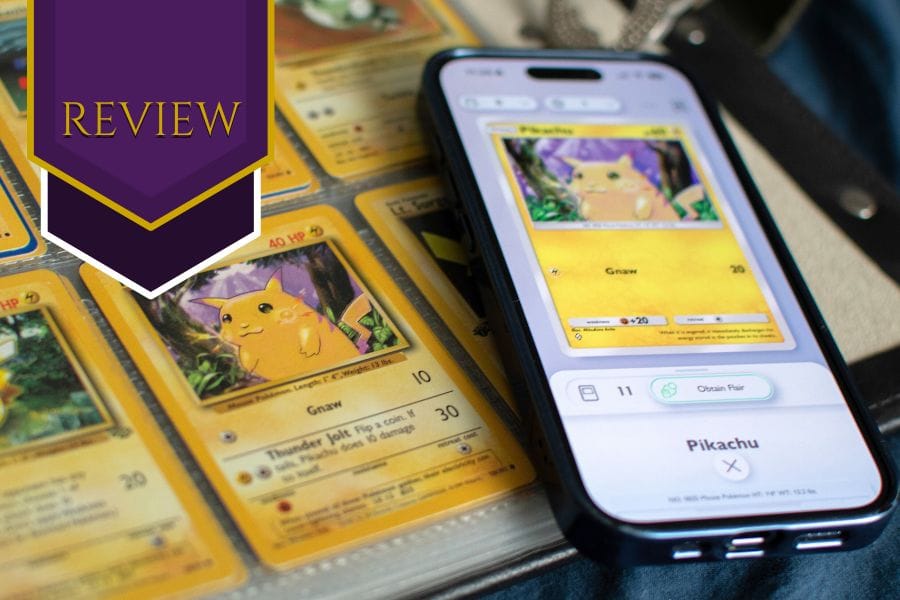
The satisfying crack of a booster pack opening on your iPhone screen feels like magic for exactly 30 seconds, then the monetization reality hits. Pokémon TCG Pocket wraps itself in the warm nostalgia of collecting cards as a kid, complete with pixel art charm and tactile touch feedback that makes flipping virtual cards genuinely pleasurable. But beneath that polished surface lies a gacha machine engineered to extract $10–$50 monthly from anyone who wants to complete their collection. The question isn’t whether Pokémon TCG Pocket is fun—it absolutely is—but whether it’s worth the App Store real estate and your wallet.
Developer: The Pokémon Company / DeNA
Price: Free (with in-app purchases)
Size: ~480 MB
Requires: iOS 13.0 or later
App Store Rating: 4.6 / 5 ⭐
First Impressions: What Kind of Game Is This on iPhone?
Pokémon TCG Pocket is a digital card-collecting simulator first and a competitive card game second. When you launch it, you’re greeted with a smooth onboarding sequence that teaches you how to open booster packs in under five minutes—and it’s genuinely satisfying. The pixel art aesthetic, reminiscent of classic Game Boy Pokémon games, translates beautifully to iPhone screens, creating an immediate sense of charm that feels intentional rather than cheap. This is a game designed for 15–20 minute daily sessions, perfect for commutes or those moments when you’re waiting in line, not for deep strategic gameplay sessions.
The target audience is crystal clear: Pokémon fans and TCG nostalgia players who loved collecting cards in the ’90s and early 2000s. The App Store listing promises “free-to-play” prominently, but that’s technically true only if you’re willing to grind aggressively or accept a glacial progression pace. The game hooks you immediately by letting you pull your first booster pack within seconds of installing, then systematically dangles rarer cards and cosmetic variants just beyond the reach of free players. It’s a masterclass in gacha design—which is exactly the problem.
Gameplay: Does It Play as Good as It Looks?
Here’s the honest truth: Pokémon TCG Pocket’s gameplay depth is intentionally limited compared to the physical TCG or competitors like Magic: The Gathering Arena. You’re not building complex 60-card decks with intricate synergies. Instead, you’re assembling simple 20-card decks and battling opponents in turn-based matches that typically last 5–10 minutes. The touch controls are responsive and well-implemented—flipping cards, selecting attacks, and dragging cards into play all feel native to iPhone rather than ported from another platform. This is design work worth praising. The game supports no MFi controller input, which is appropriate for a touch-first experience, and there’s no mention of landscape-mode optimization on iPhone, so portrait play dominates the experience.
Where Pokémon TCG Pocket genuinely shines is in card collection and visual rarity tiers. Opening a booster pack and seeing a holographic rare card animate on screen creates a dopamine hit that the game deliberately amplifies with sound effects and screen animations. Progression is paced to encourage daily return visits—you earn a limited number of free booster packs daily, and the collection completion loop becomes hypnotic. Replay value is tied almost entirely to collecting cards and battling friends rather than improving your skills at a complex game system. For collectors, this is perfect. For competitive players, it’s shallow.
Pricing and Monetization: Is It Worth the Cost?
Let’s not dance around this: Pokémon TCG Pocket is aggressively monetized. The game generated $1.6 billion in revenue within its first 1.5 years of operation, and that number didn’t come from players who opened free booster packs once daily. Booster packs are the currency of progression, and while you can earn a handful free each day, the “good stuff”—meta-competitive cards, cosmetic variants, and complete collection entries—requires spending real money through Pocket Coins, the premium currency. A single booster pack costs 200 Pocket Coins; a 10-pack bundle costs 1,800 coins, which translates to roughly $10–$15 USD depending on your region.
Beyond booster packs, there’s a battle pass system (another $10 seasonal purchase) and cosmetic card sleeves and deck boxes that add up quickly. The game has minimal ads, which is admirable, but an energy system gates your progression—you earn a limited number of battles and collection interactions per day unless you spend premium currency to refresh. For completionist collectors willing to spend $20–$50 monthly, Pokémon TCG Pocket delivers value in the form of Pokédex completion and rare card ownership. For everyone else, the value-per-hour diminishes sharply after the first month when the novelty of the collection loop wears off.
IAP Present: Yes (Pocket Coins for booster packs, battle pass, cosmetics)
Ads: None (optional rewarded ads for minor bonuses)
Value Rating for Collectors: Fair ($20–$50/month for meaningful progression)
Value Rating for Casual Players: Poor (glacial free progression, spending pressure constant)
iPhone vs iPad Experience and Technical Performance
Pokémon TCG Pocket is optimized for both iPhone and iPad with responsive UI scaling that adapts intelligently to screen size. The iPad experience is notably superior for deck-building and card browsing thanks to the extra screen real estate—you can see more cards simultaneously and navigate your collection without excessive scrolling. On iPhone, the same interface works but feels cramped during deck construction; notably, there’s no split-view multitasking support mentioned in the current version, so you’re locked into full-screen play. Neither version takes advantage of ProMotion 120Hz displays, despite the visual polish suggesting it could; the game runs at a standard 60Hz, which is perfectly adequate for a card game but leaves performance optimization on the table for newer iPad Pro and iPhone 15 Pro models.
Battery impact is moderate for a mobile game—an hour of play drains roughly 8–12% on an iPhone 14 Pro, which is acceptable. iCloud save integration works reliably, so your collection syncs across devices seamlessly; if you play on both iPhone and iPad, your deck progress and card inventory stay synchronized without manual intervention. There’s no MFi controller support needed or offered, which makes sense for a touch-first game. Performance is stable across iPhone 12 and newer models; older devices may experience occasional frame drops during booster pack animations, but nothing game-breaking. The offline experience is limited to viewing your collection—actual gameplay requires a network connection, which is standard for online-competitive games but worth noting if you’re planning airplane play.
Verdict: Should It Be on Your iPhone Right Now?
Pokémon TCG Pocket earns a strong 7.2 / 10 for Pokémon fans and 5.5 / 10 for general TCG players. If you grew up collecting Pokémon cards and have $10–$50 monthly to spend on a hobby, this is an excellent way to recapture that nostalgia in your pocket. The art direction, sound design, and tactile feedback of opening packs are genuinely excellent. But if you’re looking for deep strategic gameplay, fair monetization, or a game that respects your time, look elsewhere.
For gameplay depth and fairer pricing, Magic: The Gathering Arena on iOS delivers a more complex card game with a less predatory monetization model—you can be competitive without spending money. If you want a more competitive TCG experience, Yu-Gi-Oh Master Duel leans harder into tournament-viable decks and strategic play. Skip Pokémon TCG Pocket entirely if you dislike gacha mechanics or prefer gameplay over collecting. Try it if you loved Pokémon cards as a kid and can afford the monthly spending without regret.
Recommendation: GET (Collectors) / SKIP (Casual Players)
Best For: Pokémon nostalgia collectors with disposable income and tolerance for gacha progression gates.
App Store Action: Download and try the first week free. If you’re not compelled to spend money by day 7, uninstall and save your wallet. If you’re opening your first booster packs with a smile, budget $20–$30 monthly and commit to the collection grind. If you loved Magic: The Gathering Arena on iPhone but want a lighter, more collection-focused experience, Pokémon TCG Pocket delivers—but expect significantly higher spending pressure and less strategic depth than MTG Arena’s skill-based progression.
Frequently Asked Questions
Is Pokémon TCG Pocket available on Apple Arcade?
No, Pokémon TCG Pocket is not available on Apple Arcade. The game is exclusively free-to-play with in-app purchases on the App Store. Apple Arcade does not offer the game, and there are no plans for it to join the subscription service given the Pokémon Company’s aggressive monetization strategy with premium currency.
Does Pokémon TCG Pocket play better on iPhone or iPad?
Pokémon TCG Pocket plays better on iPad due to the larger screen real estate, which makes deck-building, card browsing, and collection management significantly more comfortable. The iPhone version works perfectly fine and is optimized for one-handed play, but you’ll do less scrolling and see more cards at once on iPad. Both versions sync seamlessly via iCloud, so you can play on either device interchangeably.
Is Pokémon TCG Pocket worth the money compared to Magic: The Gathering Arena?
It depends on your priorities. Pokémon TCG Pocket is better for collecting and casual play but significantly more expensive if you want to complete your collection—expect $20–$50 monthly. Magic: The Gathering Arena on iOS offers deeper strategic gameplay and fairer monetization; you can be competitive without spending money. If collecting is your goal, Pokémon TCG Pocket wins. If you want a skill-based TCG experience, Magic: The Gathering Arena is the better value on iOS.