Synth Riders Dua Lipa Review: New Rules for Your VR Cardio
Disclosure: As an Amazon Associate, Bytee earns from qualifying purchases.
Let’s be real for a second — when Synth Riders dropped the news that a Synth Riders Dua Lipa music pack was officially available, half the VR fitness community immediately started stretching their arms and the other half started Googling “how many calories does ‘Levitating’ burn in a rhythm game.” Both are valid responses. Dua Lipa in a VR rhythm game is genuinely one of those crossover events that makes you feel like the future is actually pretty great, even if you’re still sweating through a foam face gasket that costs $30 to replace.
So is this pack worth dropping your hard-earned cash, or is it just a flashy celebrity name slapped on some orbs you punch to the beat? Buckle up, because we’re going full deep-dive on this one.
What Exactly Is the Synth Riders Dua Lipa Music Pack?
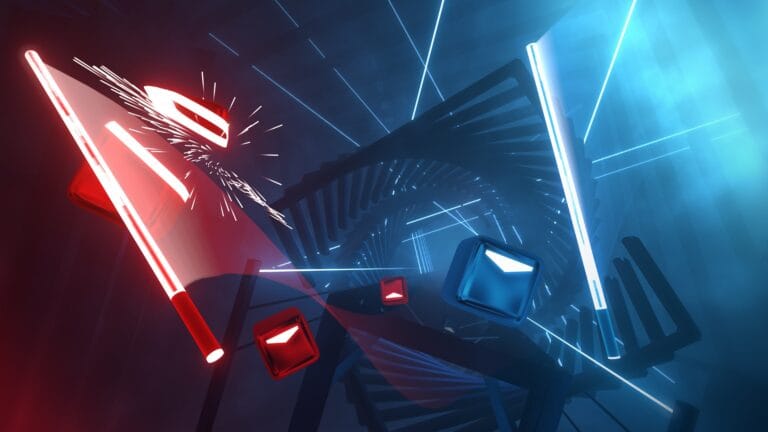
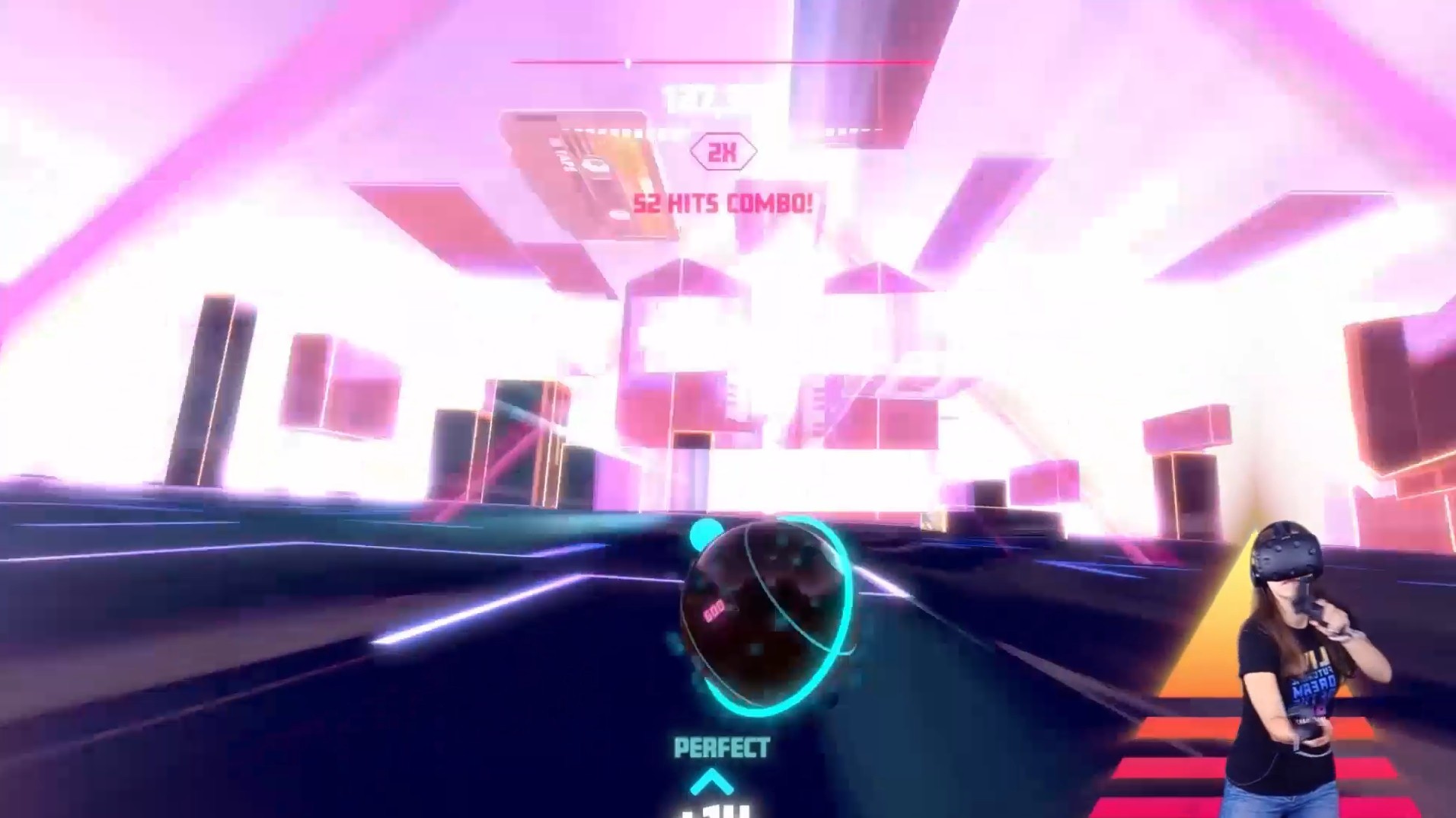
Synth Riders, if you somehow don’t know it yet, is the rhythm VR game that decided Beat Saber’s “slash boxes with lightsabers” energy was cool but maybe they wanted to do something a little more… fluid. Instead of chopping blocks, you’re guiding glowing orbs along rails using your hands in a flowing, almost dance-like motion. The result is something that feels halfway between a rave, a workout, and a very colorful fever dream. It’s available on Meta Quest 2, Meta Quest 3, PSVR2, and PCVR via SteamVR, making it one of the more widely accessible rhythm titles in the VR space right now.
The Dua Lipa Music Pack is a premium downloadable content bundle priced at $7.99 USD at launch. For that price, you’re getting a curated selection of Dua Lipa tracks officially licensed and mapped specifically for Synth Riders’ unique gameplay style. We’re talking proper, label-approved audio — not some cover band knockoff that sounds like it was recorded in a Walmart bathroom. Real songs. Real pop banger energy. The exact track listing at launch includes hits that’ll have you simultaneously embarrassed and exhilarated that you’re dancing alone in your living room at 11pm on a Tuesday.
The Music Selection: Does Dua Lipa Actually Work in VR Rhythm?
Here’s the thing about licensing pop music for VR rhythm games — not every artist translates well. Some tracks are too slow, too lyrically dense, or just feel weird when you’re flailing your arms at neon orbs. Dua Lipa, however, is almost engineered for this format. The woman makes music that is structurally built on driving beats, punchy synth drops, and relentless forward momentum. “Levitating,” “Don’t Start Now,” “Physical,” “Break My Heart” — these songs have the kind of BPM architecture that Synth Riders’ mappers absolutely feast on.
The official maps provided in this pack are genuinely well-crafted. On Normal difficulty, they feel accessible enough that newcomers won’t immediately dislocate a shoulder. On Expert and Master difficulties, the maps start mirroring the actual musical complexity — you’ll find yourself reaching across your body during those synth runs in “Physical” in a way that feels almost choreographed. It’s not just “hit orb at beat.” The arm paths genuinely reflect the music’s energy, which is exactly what separates good rhythm game mapping from lazy rhythm game mapping.
VR Immersion: The Part Where We Get Nerdy
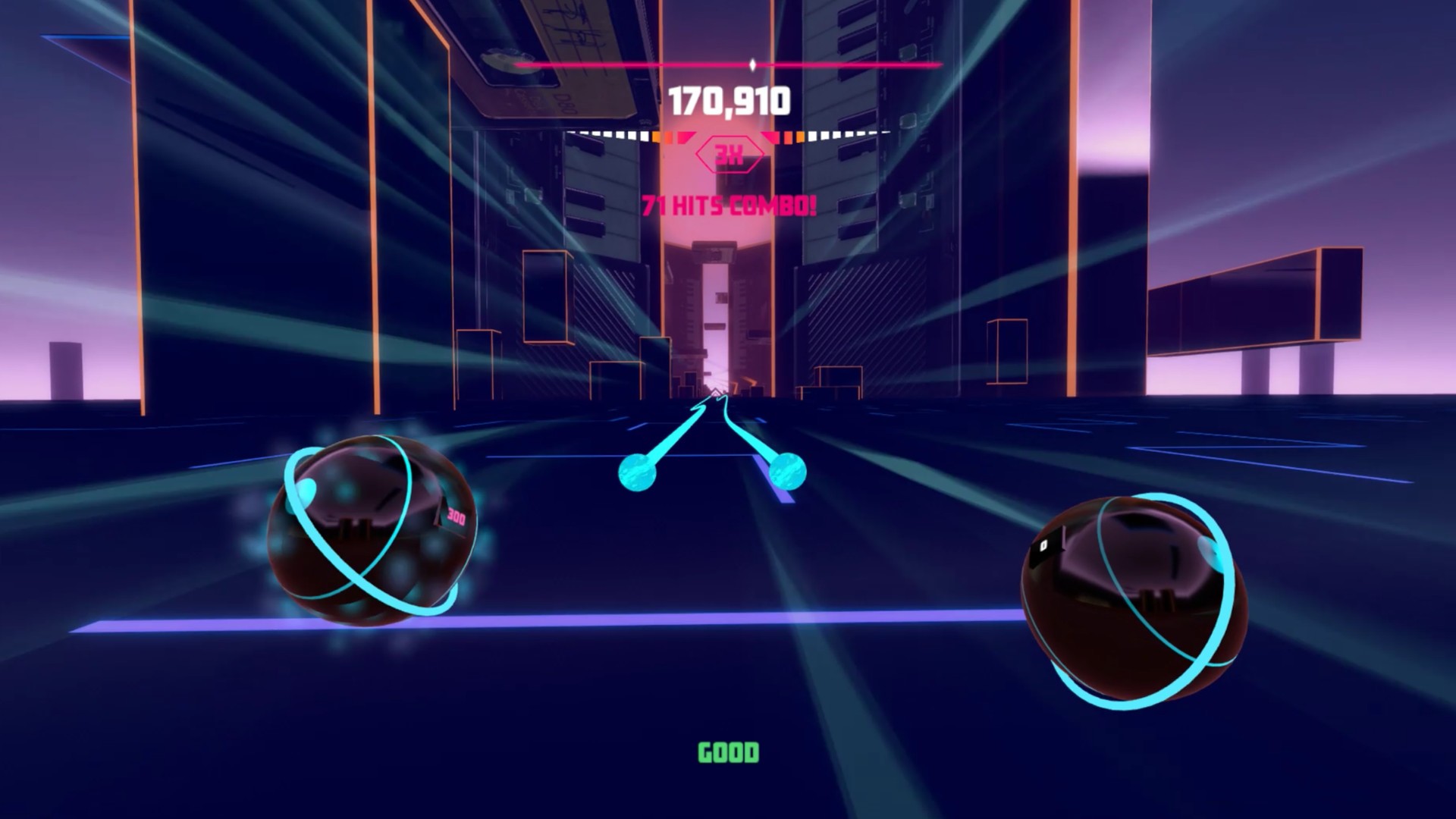
Synth Riders doesn’t use weapon handling or reloading mechanics — this isn’t Pistol Whip — but the physical interaction design is still worth talking about in detail, because it’s doing something quietly impressive. Your hands are represented as glowing energy spheres (no controllers visible, which is a smart design choice), and the game uses a “ride the rail” mechanic where you’re not just tapping orbs but guiding them along curved paths. This means your arm movements need to be continuous rather than punctuated, which changes the physical feel entirely.
The hand tracking here uses standard Quest Touch controllers or PSVR2’s Sense controllers, and the tracking is tight enough that you’ll feel the difference between a clean sweep and a sloppy one. There’s a satisfying haptic pulse when you nail a note cleanly, and on Quest 3 with its improved controller tracking, the precision feels noticeably better than older hardware. Is it hand tracking in the literal finger-detection sense? No. But the controller-based interaction is so well-tuned that you won’t miss it.
The visuals during gameplay are where Synth Riders earns its “immersive” badge. Neon environments pulse in sync with the music, particle effects bloom around your hands as you hit notes, and the entire world feels like it’s breathing with the track. During the Dua Lipa songs specifically, the aesthetic skews toward that glossy, Studio 54-meets-synthwave palette that feels appropriately on-brand for her music. Someone on the art team definitely has a “Future Nostalgia” poster in their office.
VR Comfort Check: Will You Survive the Workout?
Let’s talk comfort, because in VR, this is the difference between “I played for an hour” and “I’m lying on my kitchen floor wondering what went wrong.” The good news: Synth Riders is one of the most motion-sickness-friendly VR experiences available. The game is stationary — you don’t move through space, the world moves toward you. Your physical body stays in one spot while the notes come to you. This eliminates the primary cause of VR nausea, which is visual-vestibular conflict from locomotion.
There are no teleportation options or smooth movement toggles because you simply don’t need them. You stand (or sit — more on that in a second) in place and the entire game comes to you. Vignettes are available in the settings for those who still feel a little woozy from the environmental motion, and the game lets you adjust the speed of the tunnel/world movement to dial down intensity. For new VR users, I’d actually recommend Synth Riders as a gateway drug to VR precisely because it’s so gentle on the stomach.
Can you play seated? Yes, with caveats. The game has a seated mode, and for Normal and Hard difficulties, it’s genuinely playable. At Expert and Master, some note placements require overhead reaching that’s awkward while seated, but it’s not impossible. For the Dua Lipa pack specifically, the maps are energetic enough that standing gives you a dramatically better experience — you’ll want the full range of motion for “Physical” because the irony of playing that song while sitting in a chair is too painful to endure.
Room-scale requirements are minimal. A roughly 2×2 foot play space is technically sufficient, though you’ll want a little more elbow room at higher difficulties. No need to rearrange your entire apartment like you’re setting up for PCVR full-body tracking. Your coffee table is probably safe. Probably.
Performance: Quest Standalone vs. PCVR
Performance in rhythm games is non-negotiable. A single dropped frame in a precision timing game isn’t just annoying — it breaks the entire experience in a way that a dropped frame in, say, a walking simulator does not. I’m happy to report that Synth Riders maintains a rock-solid framerate across platforms, which is the single most important thing I can tell you in this section.
On Quest 3 standalone, the game runs at a smooth 90Hz with no perceptible hitching, even during the most particle-heavy moments of the Dua Lipa tracks. The visuals are clean and colorful — not photorealistic, but the art style doesn’t demand photorealism. The neon aesthetic actually looks better at lower fidelity because it leans into the synthwave abstraction. Quest 2 users will see slightly less environmental detail and some reduced particle density, but the core gameplay experience is identical and the framerate remains stable.
On PCVR via SteamVR, the visual fidelity bumps up noticeably — more detailed environments, crisper particle effects, and smoother anti-aliasing on the neon edges. If you have a capable PC rig, PCVR is the premium experience. But honestly? The gap is smaller here than in most VR titles because the art direction works so well on both platforms. You’re not losing a meaningful gameplay advantage by going standalone.
PSVR2 users get haptic feedback through the Sense controllers and headset, which adds a genuinely nice tactile layer to hitting notes. The OLED display on PSVR2 also makes those neon colors absolutely pop in a way that’s almost unfair to Quest users. If you’re on Sony’s platform, the Dua Lipa pack looks and feels fantastic.
Value Breakdown: Is $7.99 Worth It?
At $7.99, this is not a “full game” purchase — it’s DLC, and we should evaluate it as such. You’re buying additional content for a game you presumably already own and enjoy. The question is whether this specific pack justifies the price versus other music DLC options available in Synth Riders’ catalog.
For Dua Lipa fans who also play VR rhythm games, this is an absolute no-brainer. The tracks are officially licensed (meaning they sound correct and complete, not like a Guitar Hero cover band situation), the maps are high quality, and the songs have exceptional replay value because they’re genuinely fun to listen to on loop. Rhythm game DLC lives or dies by two things: song quality and map quality. This pack delivers on both.
For players on the fence about Dua Lipa’s music specifically, try pulling up a YouTube playlist of “Don’t Start Now” and “Levitating” right now. If your foot starts tapping within 10 seconds, buy the pack. If you feel nothing, maybe wait for the next drop. Synth Riders has an extensive catalog with something for nearly every taste — no shame in skipping a pack that doesn’t match your musical preferences.
In terms of replayability: rhythm game DLC has theoretically infinite replay value because you’re chasing high scores, perfecting streaks, and climbing leaderboards. The Dua Lipa tracks will slot directly into your regular rotation alongside whatever other packs you own. There’s no “campaign length” to speak of — it’s DLC tracks, not a narrative experience. What you’re buying is workout fuel and score-chasing content, and for that purpose, $7.99 is fair.
The Bigger VR Picture
It’s worth noting that the timing of this release drops into a VR landscape that’s genuinely buzzing right now. Meta just announced price increases for the Quest 3 and Quest 3S (great timing, Meta, really appreciate that), Microsoft Flight Simulator just launched PSVR2 support in beta, and there are whispers of psychological horror and stylish sword action games incoming. In the middle of all this hardware drama and genre diversification, Synth Riders just quietly keeps doing what it does best: making you sweat to great music while feeling cooler than you actually look. That consistency deserves respect.
Final Verdict
The Synth Riders Dua Lipa music pack is exactly what good rhythm game DLC should be — well-mapped, officially licensed, musically cohesive, and priced fairly. It doesn’t reinvent Synth Riders, it doesn’t need to. It gives you more reasons to strap on your headset, clear your living room, and embarrass yourself in the best possible way. Dua Lipa’s discography is genuinely well-suited to this gameplay style, and the maps reflect real craft and care. If you’re already a Synth Riders player, this is an easy add to your library. If you’ve been sleeping on Synth Riders entirely, this pack is as good a reason as any to finally take the plunge.
Score: 8.5/10 — Great DLC doing exactly what DLC should do. Minus 1.5 points because I still can’t explain to my neighbors why I’m aggressively waving my arms at 11pm on a weeknight.
FAQ: Synth Riders Dua Lipa Music Pack
Does the Synth Riders Dua Lipa pack cause motion sickness?
Almost certainly not. Synth Riders is a stationary rhythm game — you don’t move through virtual space, so the primary trigger for VR motion sickness (locomotion-based visual-vestibular conflict) is absent. The game does have environmental movement (the world rushes toward you), but this is mild and can be further toned down in settings using vignette options. It’s genuinely one of the most comfortable VR titles available, and a solid recommendation for VR newcomers who are motion-sickness-prone.
Can you play the Dua Lipa pack seated?
Yes, Synth Riders supports a seated play mode. On Normal and Hard difficulties, the Dua Lipa maps are fully playable while seated. At Expert and Master difficulty, some note placements require overhead arm movements that are less comfortable from a seated position, but still technically achievable. For the full energy of tracks like “Physical” and “Levitating,” standing is strongly recommended — your arms will thank you, and your score will too.
Is the Synth Riders Dua Lipa pack enhanced for Quest 3?
Synth Riders on Quest 3 runs at a smooth 90Hz with improved tracking precision via the updated Touch Plus controllers. The Dua Lipa pack benefits from this like all content in the game — cleaner visuals, more stable framerate, and tighter note detection. Quest 3 doesn’t have a specific “enhanced” patch exclusive to this DLC, but the hardware improvements of Quest 3 over Quest 2 are tangible across the entire Synth Riders experience. PSVR2 owners also get a visual and haptic treat thanks to the OLED display and Sense controller feedback.
How much does the Synth Riders Dua Lipa music pack cost, and where can I buy it?
The pack is priced at $7.99 USD and is available directly through the in-game store in Synth Riders on Meta Quest (Quest 2 and Quest 3), PSVR2, and PCVR via SteamVR. It can also be purchased through the respective platform storefronts (Meta Store, PlayStation Store, Steam).
What platforms support the Synth Riders Dua Lipa music pack?
The Dua Lipa music pack is available on Meta Quest 2, Meta Quest 3, PSVR2, and PCVR via SteamVR. Cross-buy availability varies by platform, so check your specific storefront for details before purchasing.