
Can Apple Immersive Video Bottle NYC? | VR Review
Disclosure: As an Amazon Associate, Bytee earns from qualifying purchases.
Apple just threw its shiny, minimalist hat into the VR ring with Apple Immersive Video, and naturally, the first question everyone’s asking is: Can Apple Immersive Video convey the spirit of New York? Spoiler alert: it’s complicated—like trying to fit the Empire State Building into a Vision Pro headset. But we’re getting ahead of ourselves. Let’s talk about what Apple’s actually trying to do here, because it’s neither a game nor a traditional video experience. It’s something weirder, and honestly, kind of brilliant in its own peculiar way.
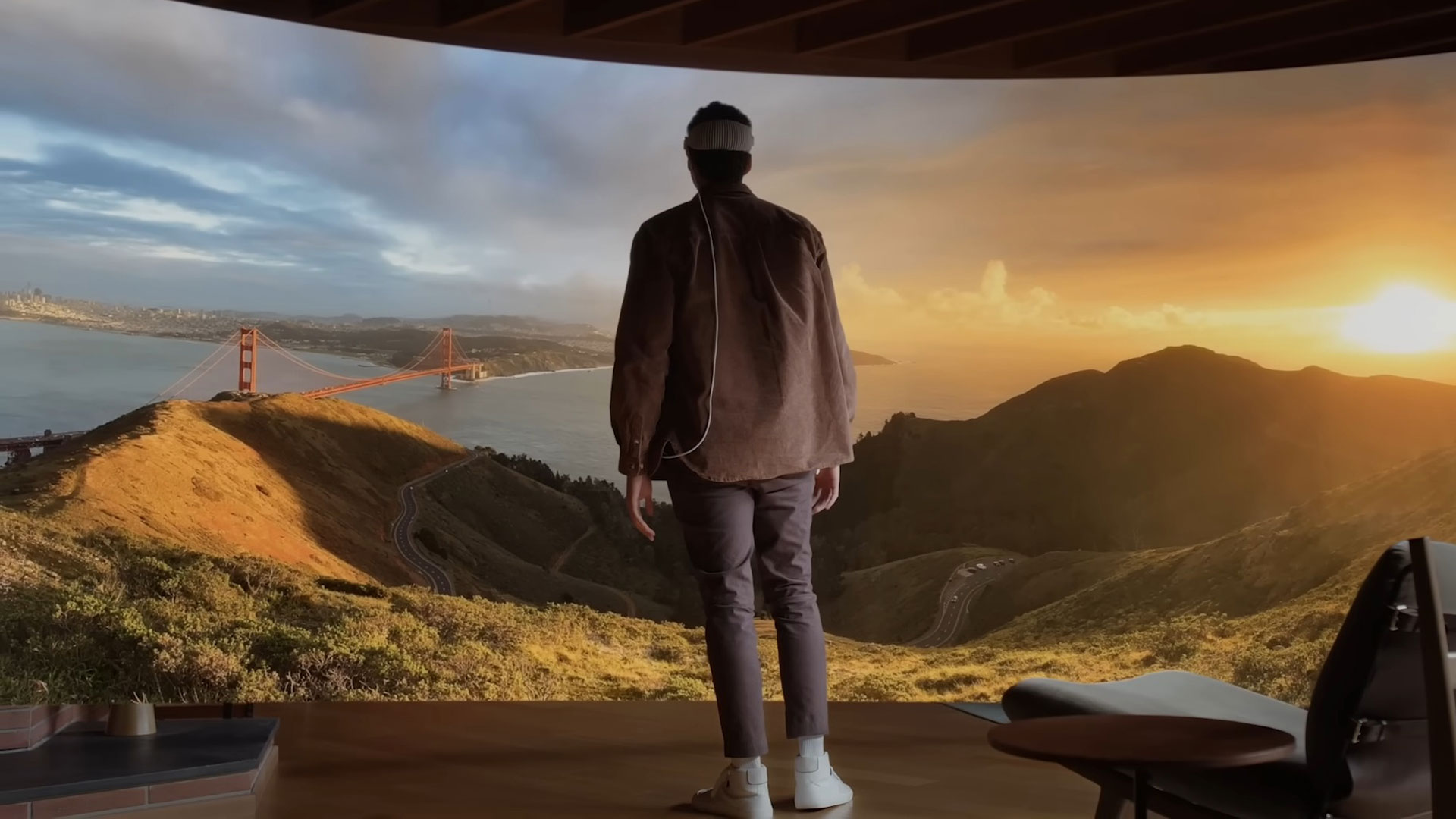
In a VR landscape dominated by frantic gameplay (shout-out to BlackGate‘s new unlockable alien for keeping things spicy in the 4v1 horror realm), Apple’s immersive video approach feels like showing up to a rave in pajamas. But that’s not necessarily a bad thing. While everyone else is busy dodging bullets and reloading weapons in elaborate VR physics sandboxes, Apple’s betting that people actually want to experience places rather than just shoot things in them. Revolutionary? Maybe. Boring? Absolutely not—if you approach it with the right headset.
What Exactly Is Apple Immersive Video?
First, let’s be crystal clear: this isn’t a game. There’s no combat, no HUD, no achievement hunting, and definitely no risk of you accidentally punching your TV (though you might still punch the air dramatically when you see Times Square in 180-degree immersive glory). Apple Immersive Video is essentially premium, professionally-shot video content captured specifically for spatial computing—designed to make you feel like you’re actually there, not watching a flat screen.
The launch includes several immersive experiences, with New York City being the marquee title everyone wants to dissect. We’re talking sweeping aerial shots of Manhattan, intimate street-level moments, and “you are here” immersion that makes traditional travel documentaries look like you’re watching them through a keyhole.
Platform Support & Launch Price: Apple Immersive Video is exclusive to Apple Vision Pro. Yes, you read that right—it’s not coming to Meta Quest 3, Meta Quest 2, PlayStation VR2, or any SteamVR headset. The Vision Pro starts at $3,499 for the 256GB model, making this the most expensive entry point into VR since… well, since the last time someone asked why they paid that much for a headset. The immersive video experiences themselves? Free with Apple TV+. That’s the silver lining in this expensive cloud.
The NYC Experience: Does It Actually Capture The Spirit?
Here’s where things get philosophically messy. New York’s “spirit” isn’t just about the sights—it’s the chaos, the noise, the sensory overload of 8 million people bumping into each other while yelling about everything. Can a 180-degree immersive video truly convey that?
Short answer: partially. Long answer: it depends on what you’re seeking.
The cinematography is genuinely stunning. Watching sunrise over the Manhattan skyline with the spatial audio design making you feel like you’re standing on a rooftop is legitimately moving. The details are obsessive—you notice the way light hits the Chrysler Building, how pedestrians move with purpose, the texture of the pavement. It’s the closest you’ll get to actually being in New York without the $200 airport ticket and the aggressive taxi driver.
But—and this is a crucial but—immersive video lacks interactivity. You’re essentially a ghost floating through predetermined camera paths. You can look around in 180 degrees (or 360 degrees depending on the specific content), but you can’t walk into that bodega, grab that coffee, or experience the authentic New York tradition of being yelled at by a stranger for standing in the wrong subway door. It’s tourism as a spectator, not as a participant.
Compare this to gameplay-heavy experiences like Microsoft Flight Simulator (which just got PS VR2 support in beta), where you’re actively engaging with a virtual environment. Or even narrative-driven games that let you inhabit spaces with agency. Immersive video is beautiful, but it’s passive—like being a very well-dressed voyeur with excellent taste in sightseeing.

The Immersion Factor: Hand Tracking, Physics & Interactions
Unlike traditional VR games where hand tracking lets you grab objects, reload weapons (looking at you, Payday: Aces High, which just revealed PS VR2 port details), or manipulate the environment, Apple Immersive Video offers zero physical interactions. Your hands are decorative. You’re not tracking your fingers to open doors or experience haptic feedback from catching virtual objects. You’re just… existing in a space.
This sounds limiting, and it is—if you’re expecting game-like immersion. But it’s also liberating. There’s no “VR jank” to ruin the moment. You won’t experience terrible hand-tracking bugs mid-emotional scene. The physics are real-world physics because you’re literally watching real-world footage. No weird clipping, no objects falling through the floor, no “why is that NPC walking through that wall?” moments that plague even the best VR games.
The Vision Pro’s spatial audio is where the immersion really lands, though. Directional sound design makes you feel surrounded—the rumble of the subway, street musicians, traffic. It’s sophisticated stuff, and it does more heavy lifting for the “spirit of NYC” than the visuals alone could ever achieve.
Comfort Check: Motion Sickness & Locomotion
This is where Apple Immersive Video absolutely crushes it compared to most VR experiences. Since you’re not moving through space (the camera is), there’s virtually zero motion sickness risk. You’re not using artificial locomotion, so there’s no conflict between what your eyes are seeing and what your inner ear is sensing.
Can you play seated? Yes. Absolutely. You can sit on your couch and experience New York in full immersive glory. No room-scale required, no risk of tripping over your furniture or discovering that your living room is apparently a minefield. This is actually one of Apple Immersive Video’s biggest advantages over action-oriented VR games.
Vignette/comfort features: The Vision Pro doesn’t need them because there’s no artificial movement. You’re not getting tunnel vision from motion sickness prevention—you’re getting the full, comfortable experience.
Performance & Visual Fidelity
The Vision Pro’s optics are excellent, and the video quality is professional broadcast standard. We’re talking properly color-graded, stabilized footage shot with cinema-grade equipment. There’s no “Quest 3 vs PCVR” discussion here because this is exclusive hardware with exclusive content.
Frame rate consistency isn’t even a concern because you’re watching video, not rendering real-time 3D graphics. No frame drops, no stuttering, no sudden dips to 45fps that make you nauseous. It’s smooth, stable, and exactly what you’d expect from Apple’s production standards.
The 180-degree field of view is actually a design choice, not a limitation. It creates intentional framing—you’re not swimming in a full 360-degree bubble, you’re being shown what the director wants you to see. There’s something refreshingly cinematic about that constraint.
Content Length & Replayability: The Tech Demo Question
Here’s the uncomfortable truth: each immersive video experience is relatively short. The NYC experience runs roughly 15-20 minutes depending on which segments you watch. That’s not a lot of content for a $3,500 headset investment.
Is this a “glorified tech demo”? Technically, yes. But it’s a really, really well-executed tech demo. The production values rival anything Netflix would commission. It’s not like those early VR launch titles that felt like interactive wallpaper designed to show off tracking capabilities.
Replayability exists, but it’s different from games. You might revisit specific segments for the cinematography or to show friends what spatial immersion feels like. You won’t be chasing high scores or unlocking new levels like in Synth Riders (which just dropped its Dua Lipa music pack, because apparently VR rhythm games are the gift that keeps giving).
For context on the broader VR landscape: BlackGate‘s recent alien unlock adds gameplay variety; FlatOut 4: Total Insanity VR got delayed to May (suggesting developers are taking their time with quality); Evil Inside is coming to VR in May with psychological horror depth. Meanwhile, Apple’s immersive videos are content, not games. Different beast entirely.
Value Assessment: Is This Worth Your Money?
If you already own a Vision Pro and have Apple TV+, the immersive videos are essentially free. You’re getting museum-quality cinematography and spatial design at zero additional cost. That’s genuinely excellent value.
If you’re considering buying a Vision Pro specifically for immersive videos? Stop. The headset costs $3,500. You could buy a Meta Quest 3 (which Meta just increased prices on, by the way), a PS VR2, and a high-end gaming PC for less money. Immersive videos are a compelling use case, not a justification for the purchase.
The real value proposition is this: if you own a Vision Pro and want to experience something completely different from the action-game-heavy VR landscape, immersive videos offer respite. They’re meditative, beautiful, and occasionally awe-inspiring. That’s worth something, even if it’s not worth the full headset price.
Does Apple Immersive Video Convey The Spirit of New York?
The honest answer: it conveys the visual and sonic spirit of New York beautifully. You’ll see the architecture, the light, the movement. You’ll hear the ambient soundscape. You’ll feel like you’re there in a way flat media simply cannot achieve.
But the cultural spirit of New York—the confrontational energy, the diversity of lived experiences, the genuine human chaos—that requires interaction and agency. You can’t truly understand New York’s spirit by watching it. You have to be in it, moving through it, choosing your own path.
Apple Immersive Video gets you 80% of the way there. It’s an exceptional travel experience, not a simulation of life in the city. If you want actual gameplay immersion with New York settings, you’re looking at different titles entirely.
Final Verdict
Rating: 8/10 (for Vision Pro owners with TV+)
Apple Immersive Video is a legitimately impressive achievement in spatial cinematography. The New York experience is gorgeously shot, thoughtfully designed, and genuinely immersive in ways that flat video simply cannot match. The lack of motion sickness risk and seated-play compatibility make it accessible to people who can’t handle intense VR experiences.
The critical caveat: this is exclusive to Apple’s most expensive headset, and the content library is still limited. If you own a Vision Pro and have Apple TV+, you absolutely should experience this. It’s what that headset was designed for.
If you’re a VR enthusiast expecting gameplay depth like Just One Man‘s stylish sword action or Squingle Arcade‘s puzzle mechanics, you’ll be disappointed. This isn’t a game; it’s an experience. And experiences, by definition, are more about reflection than action.
Does it capture NYC’s spirit? Mostly. It captures the postcard version, the Instagram-ready version, the version you tell friends about. The real spirit? That requires you to actually be there, sweating in a New York summer, arguing with a subway conductor about the express train schedule.
But if you can’t afford that trip, Apple Immersive Video gets you startlingly close.
Frequently Asked Questions
Will Apple Immersive Video come to Meta Quest 3?
No. Apple’s made it clear this is Vision Pro-exclusive content. That’s both a strength (exclusive selling point) and a weakness (limits audience significantly). Meta isn’t happy about it, but that’s tech competition for you.
Can I experience Apple Immersive Video seated?
Yes, absolutely. No room-scale required, no standing necessary. Sit on your couch, prop up your feet, and enjoy. This is one of the biggest comfort advantages over action-oriented VR games.
Will this make me motion sick?
Extremely unlikely. Since you’re not artificially moving through space, the motion sickness risk is nearly zero. This makes it one of the most accessible VR experiences available.
How long are the immersive video experiences?
The New York experience runs approximately 15-20 minutes depending on which segments you explore. It’s not a massive time commitment, but the quality is high.
Do I need Apple TV+ to watch these?
Yes. The immersive videos come with an Apple TV+ subscription. If you already subscribe, they’re free. If not, you’re adding another subscription to your growing list.
Is this better than visiting New York in person?
Absolutely not. It’s a supplement to actual travel, not a replacement. But if you can’t afford the trip (or the Vision Pro), at least you’re getting something genuinely impressive.
Can I use hand tracking to interact with objects?
No. This is passive viewing, not interactive gameplay. Your hands are for removing the headset when you get bored, which is perfectly valid.
Does the Quest 3 have comparable immersive video experiences?
Not yet. Meta’s been focused on games and social experiences. Apple’s betting on premium cinematography as a differentiator. Time will tell if that strategy pays off.