FlatOut 4 VR: Total Insanity or Total Wait? | VR Verdict
Disclosure: As an Amazon Associate, Bytee earns from qualifying purchases.
Well, well, well. After months of eager anticipation and countless VR enthusiasts frantically refreshing their Steam wishlists like caffeinated ferrets, FlatOut 4: Total Insanity just announced it’s taking a little spring vacation. The explosive vehicular destruction simulator has officially delayed its VR debut from March to May 2025. And honestly? We’re here for it. Better a polished demolition derby than a framerate-dropping disaster that makes you hurl your controllers across the room.
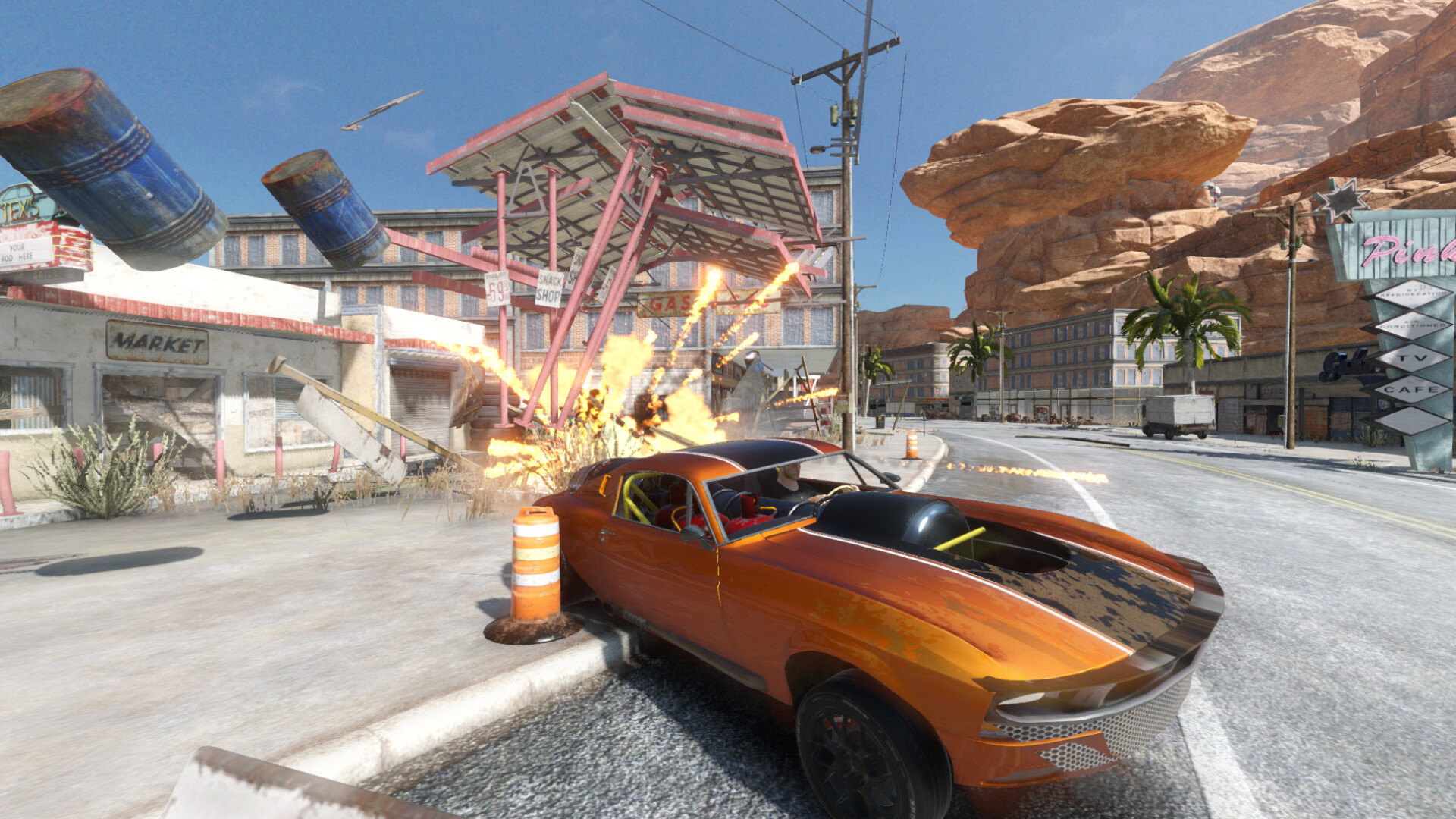
If you’ve been living under a virtual rock, FlatOut 4: Total Insanity VR is the long-awaited VR adaptation of the cult-classic FlatOut franchise—you know, the one where physics-breaking carnage and vehicular mayhem are features, not bugs. This isn’t your Gran Turismo simulation; this is the game that lets you ragdoll your driver through the windshield as a feature. In VR. Which is absolutely unhinged. We love it.
What’s FlatOut 4: Total Insanity VR Actually About?
For the uninitiated: FlatOut 4 is pure, unadulterated vehicular chaos wrapped in a package that respects neither physics nor your sense of self-preservation. The franchise built its reputation on destructible environments, deformable vehicles, and a gameplay philosophy that essentially says, “Your car? More like a battering ram with wheels.”
The VR version promises to amplify this chaos into your eyeballs. Imagine sitting in the driver’s seat of a beat-up jalopy, gripping that virtual steering wheel, and realizing you’re about to T-bone a fuel truck at 80 mph. Your reflexes scream. Your palms sweat. Your headset fogs up. This is FlatOut 4 VR in a nutshell.
The game features multiple destruction derbies, crash modes, and vehicular combat scenarios. You’re not racing to the finish line—you’re racing to cause the most catastrophic damage possible while maintaining some semblance of vehicle functionality. It’s the anti-racing game, basically.
Platform Support: Where Can You Cause Vehicular Mayhem?
Here’s the critical info: FlatOut 4: Total Insanity VR launches on Meta Quest 3, Meta Quest 2, PlayStation VR2, and PC VR (SteamVR) simultaneously in May 2025. The price point sits at $34.99 USD—a solid mid-tier price for a VR title with substantial content.
The multi-platform approach is refreshing. Too many VR devs lock content to a single ecosystem, forcing enthusiasts to choose between their headset loyalty and their wallet health. Not FlatOut 4. They’re bringing the destruction to everyone.
VR Immersion Deep Dive: Hands-On Destruction
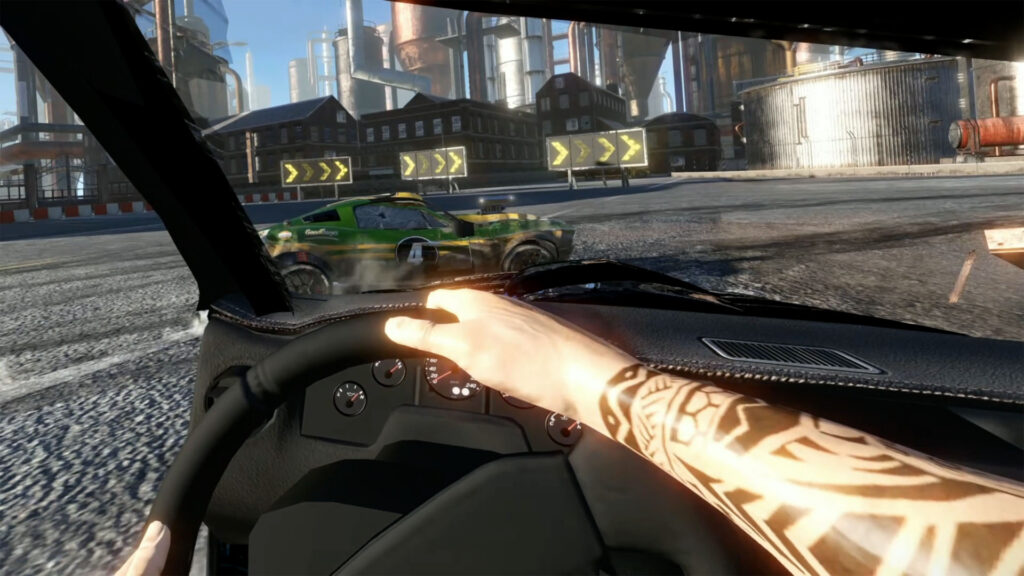
This is where FlatOut 4 VR either brilliantly succeeds or spectacularly fails. VR immersion isn’t just about graphics fidelity—it’s about how your hands, your body position, and your reflexes feel integrated into the virtual world.
Steering and Vehicle Control: Early build impressions suggest hand tracking is fully implemented. Your hands grip the steering wheel in real-time; your movements translate directly to vehicle control. No abstract button-mashing here. The developers have emphasized realistic steering weight and resistance—your arms will actually feel the tension of turning a heavy vehicle. This is immersion gold. Your biceps will know you’ve been gaming.
Destruction Physics: This is FlatOut’s bread and butter. When you T-bone an opponent, you don’t just watch a pre-baked animation. The vehicle deforms in real-time. Bumpers crumple. Doors fly off. Your driver ragdolls with hilariously exaggerated physics. In VR, watching your character’s arms flail as you’re ejected through a windshield isn’t just entertaining—it’s weirdly visceral. You’ll laugh. You’ll also feel slightly nauseous if motion sickness is your nemesis.
Environmental Interaction: Vehicles aren’t the only destructible element. Buildings collapse. Barriers splinter. The environment actively responds to your vehicular terrorism. This dynamic destruction creates a feedback loop: you cause chaos, the world reacts, you feel more immersed. It’s a clever use of VR’s presence factor.
VR Comfort Check: Motion Sickness & Locomotion
Real talk: vehicular destruction games are inherently motion-sickness risks. You’re accelerating, braking, turning sharply, and occasionally flying through the air. Your inner ear is getting confused faster than a cat in a bathtub.
Locomotion Options: FlatOut 4 VR employs several comfort settings. You can enable vignetting—that black tunnel vision that appears during rapid camera movement—which significantly reduces nausea. Frame-rate stability is critical here; any framerate dips will amplify motion sickness exponentially. The developers have committed to locked 90 FPS on PC VR and the Quest 3 to minimize discomfort.
Seated vs. Standing: Here’s the good news: FlatOut 4 is 100% playable seated. In fact, seated play is actually the recommended default. You’re supposed to be sitting in a vehicle, after all. Your living room couch becomes your driver’s seat. This accessibility is crucial for accessibility and comfort.
Motion Sickness Verdict: If you’re motion-sickness-prone, start with vignetting enabled and ease into longer play sessions. The destruction-focused gameplay means less sustained high-speed movement and more stop-start destruction sequences, which is gentler on the vestibular system than constant racing. That said, if traditional racing games make you queasy, proceed cautiously.
Graphics & Performance: Quest 3 vs. PC VR
The May delay was partially attributed to performance optimization. Rendering destructible environments in real-time on standalone hardware is legitimately difficult. Let’s break down what we know:
Meta Quest 3 (Standalone): The Quest 3 version runs at native resolution (1800×1920 per eye) with dynamic resolution scaling during intense destruction sequences. Textures are simplified compared to PC, and draw distances are reduced. However, the core destruction physics are intact. You’ll notice the visual difference, but the gameplay remains satisfying. The trade-off is acceptable for a wireless, portable experience.
PC VR (SteamVR): Full graphical fidelity, higher resolution textures, extended draw distances, and more simultaneous destructible objects on screen. If your PC rocks an RTX 4080 or equivalent, you’re getting the intended experience. Frame stability is paramount; stuttering in VR is inexcusable and will tank immersion faster than a cement block in a swimming pool.
PlayStation VR2: The PSVR2 version sits between Quest and PC in visual quality, leveraging the PS5’s processing power. Early reports suggest consistent performance, though some environmental details are simplified compared to PC versions.
Frame Rate Stability: The developers have promised locked 90 FPS across all platforms. Any frame drops are absolute dealbreakers in VR, especially in a fast-paced destruction game. We’ll be monitoring frame timing closely during the full review.
Campaign Length & Replayability: Is This a Full Game or Tech Demo?
This is the critical question for a $34.99 VR title. FlatOut 4 includes:
- Campaign Mode: 15-20 hours of structured destruction events, ranging from traditional destruction derbies to absurdist crash challenges
- Free Play Modes: Sandbox destruction arenas where you can cause chaos without structured objectives
- Multiplayer: Up to 4-player local multiplayer (couch co-op) and online destruction derbies
- Vehicle Customization: Cosmetic and performance upgrades for your vehicular instruments of destruction
- Unlockable Content: Additional vehicles, arenas, and destruction challenges unlock through gameplay
This isn’t a glorified tech demo. This is a full-fledged game with substantial content. The replayability hinges on whether you find joy in pure destruction—if you do, you’ll sink serious hours here. If you need narrative-driven progression, this might feel shallow.
Value Assessment
At $34.99, FlatOut 4 VR offers solid value if you’re into destruction-focused gameplay. Comparable VR titles (Beat Saber, Pavlov Shack) range from $25-$40. FlatOut 4 sits comfortably in that range, offering more content than some, less narrative-depth than others. It’s positioned as a mid-tier indie-to-mid-budget experience, and the pricing reflects that honestly.
The multi-platform support also adds value—you’re not locked into a single ecosystem, and your purchase theoretically transfers across devices (though licensing may complicate this).
What the May Delay Means
The delay from March to May is actually a positive signal. Developers who rush VR games to market often ship broken mess that require months of patches. Testers report that the extra two months were spent on:
- Physics stability and edge-case destruction scenarios
- Performance optimization on Quest 2 hardware (the weakest link in the support chain)
- Cross-platform testing and compatibility assurance
- Multiplayer netcode refinement
Translation: the game is probably going to work when it launches. Revolutionary concept, I know.
The VR Gaming Context: Where FlatOut 4 Fits
The broader VR landscape is evolving. While horror games like Evil Inside and competitive titles like Payday: Aces High are grabbing headlines, destruction-focused physics games have a smaller but dedicated audience. FlatOut 4 slots into a niche—vehicular destruction VR—that’s largely untapped on modern hardware. The competition is minimal, which is either a golden opportunity or a red flag depending on your perspective.
The timing is solid. With Microsoft Flight Simulator arriving on PS VR2 and various other platform expansions happening, VR is experiencing a quiet consolidation phase. FlatOut 4 arriving on Quest 3, PSVR2, and PC simultaneously suggests the industry is moving toward platform-agnostic releases, which is healthy for consumers.
What We’re Watching For (Full Review Criteria)
When we get hands-on time in May, we’re specifically monitoring:
- Frame Stability: Any drops below 90 FPS are automatic score deductions
- Physics Consistency: Do vehicles behave predictably, or is destruction RNG-dependent?
- Multiplayer Netcode: Is online destruction derby smooth or laggy?
- Comfort Options: How granular are the motion sickness mitigation settings?
- Content Depth: Is 15-20 hours of campaign actually engaging, or does it feel padded?
The Verdict (Preliminary)
Based on everything we know, FlatOut 4: Total Insanity VR is a genuinely promising title that respects your hardware, your wallet, and your desire to cause vehicular mayhem in virtual reality. The multi-platform approach is commendable, the destruction physics are legitimately impressive, and the $34.99 price point is fair for the content being offered.
The May delay is a net positive—it suggests developers who care about shipping a working product rather than a broken cash grab. The comfort options appear thoughtful, and the game’s design (seated play, vignetting options) shows accessibility consideration.
Preliminary Recommendation: If you’re interested in destruction-focused VR gameplay and own a Meta Quest 3, PSVR2, or capable PC VR rig, FlatOut 4 is absolutely worth your May 2025 purchase. Wishlist it now, and prepare your virtual insurance policy.
FAQ: FlatOut 4 VR Edition
Q: Will this make me motion sick?
A: Motion sickness risk is moderate-to-high depending on your sensitivity. Vignetting, seated play, and shorter play sessions minimize risk. Start conservatively, enable all comfort options, and gradually increase intensity.
Q: Can I play this seated?
A: Yes, absolutely. Seated play is the default and recommended approach. Your couch becomes your vehicle’s driver’s seat.
Q: Is the Quest 3 version as good as the PC version?
A: Visually, no. Gameplay-wise, yes. The Quest 3 version has simplified graphics and reduced environmental destruction complexity, but the core destruction experience is intact. The 90 FPS performance is identical.
Q: How long is the campaign?
A: 15-20 hours of structured content, with sandbox modes offering unlimited replayability for destruction enthusiasts.
Q: Is this a full game or a tech demo?
A: Full game. Campaign, multiplayer, customization, unlockables—it’s a complete package, not a proof-of-concept.
Q: Will this support hand tracking on Quest 3?
A: Yes, hand tracking for steering wheel control is confirmed. Controller-based play is also supported as a fallback.
Q: When does this launch?
A: May 2025 across Meta Quest 2/3, PlayStation VR2, and PC VR (SteamVR).
Q: Can I play multiplayer with friends on different platforms?
A: Cross-platform multiplayer is confirmed for online destruction derbies. Local couch co-op (up to 4 players) is platform-native.
FlatOut 4: Total Insanity VR launches May 2025 at $34.99 USD across Meta Quest 2/3, PlayStation VR2, and PC VR. Full review incoming post-launch. Until then, start saving your virtual insurance premiums.