Among Giants VR Review: Is It Worth It on Quest 3?
Disclosure: As an Amazon Associate, Bytee earns from qualifying purchases.
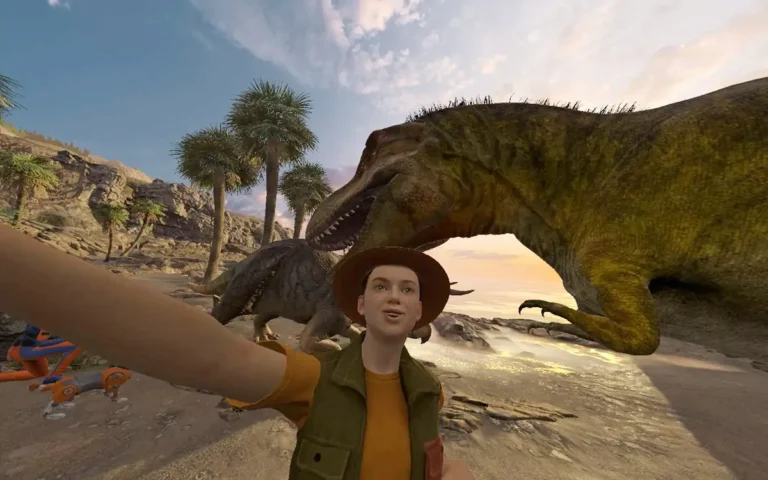
You’re standing at the base of something that shouldn’t exist — a living creature so vast its footsteps register in your chest before your ears catch up — and for a full three seconds, your brain genuinely forgets you’re in your living room. Your hand instinctively reaches out to touch the scaled hide in front of you, and the haptic feedback in your controller pulses like a heartbeat. This is Among Giants VR, and it’s one of the few games in 2026 that understands what virtual reality was always supposed to deliver: the visceral, undeniable presence of being somewhere impossible.
Platform(s): Meta Quest 3 / Meta Quest 2 / PSVR2 / PC VR (SteamVR)
Genre: Epic Adventure, Exploration, Action-Narrative Hybrid
Developer: Mighty Coconut (creators of Apex Construct)
Price: $34.99 (Quest 3/Quest 2) | $39.99 (PSVR2) | $44.99 (PC VR)
Play Area: Seated / Standing / Roomscale (min 2×2 m recommended)
Game Length: ~8–12 hours main story, 15+ hours with side exploration and collectibles
Motion Sickness Risk: Low to Moderate (see comfort section for specifics)
What Is Among Giants? VR-Native Design and Cross-Platform Support
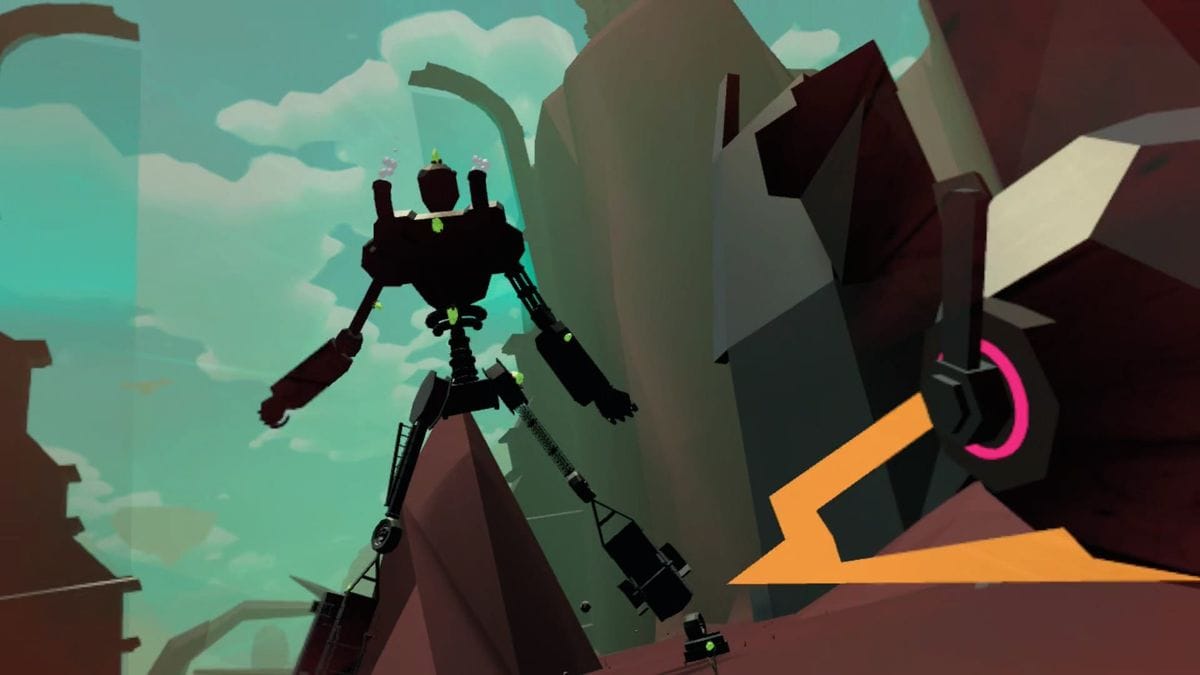
Among Giants is a full VR-native title from Mighty Coconut, the indie studio behind the stealth-exploration gem Apex Construct. This is not a flatscreen port hastily bolted into headsets — it’s a game built from the ground up around the idea of making you feel small, vulnerable, and awestruck in the presence of colossal creatures that defy biology and physics alike. The narrative follows a lone explorer awakening in a world where giants roam, and your journey involves unraveling why they’re here, what they want, and whether humanity has any role left to play in a world remade by titans.
Across all platforms, Among Giants delivers roughly 8–12 hours of main-story content, with another 3–5 hours available through side exploration, environmental puzzles, and collectible hunting. There’s no New Game+ announced at launch, but the game’s world design rewards multiple playthroughs for players chasing 100% completion. The developer has signaled post-launch content roadmap plans, though specifics remain vague. Support spans Meta Quest 3 ($34.99), Meta Quest 2 ($34.99 with reduced visual fidelity), PSVR2 ($39.99), and PC VR via SteamVR ($44.99), making it one of the most accessible “AAA-scale” VR adventures at launch.
The VR Experience: Scale, Presence, and What Among Giants Achieves Through Stereoscopic Immersion
The core innovation of Among Giants isn’t story or mechanics — it’s scale, and specifically, how VR’s stereoscopic 3D and head-tracking make you feel it in your bones. When you’re standing eye-level with a giant’s ankle, watching its toes the size of shipping containers shift in the dirt, your vestibular system fires in a way no flat screen can replicate. The game uses spatial audio with surgical precision: a creature’s breathing comes from above and behind, forcing you to physically turn and look up. The moment you do, you see its silhouette blotting out the sky, and your lizard brain accepts the fiction completely. This is presence distilled to its purest form — the sense of scale in the cathedral-sized ribcage you’re climbing becomes viscerally real at Quest 3’s 1800×1920-per-eye resolution, where distant details remain sharp enough that you can spot handholds from 20 meters away.
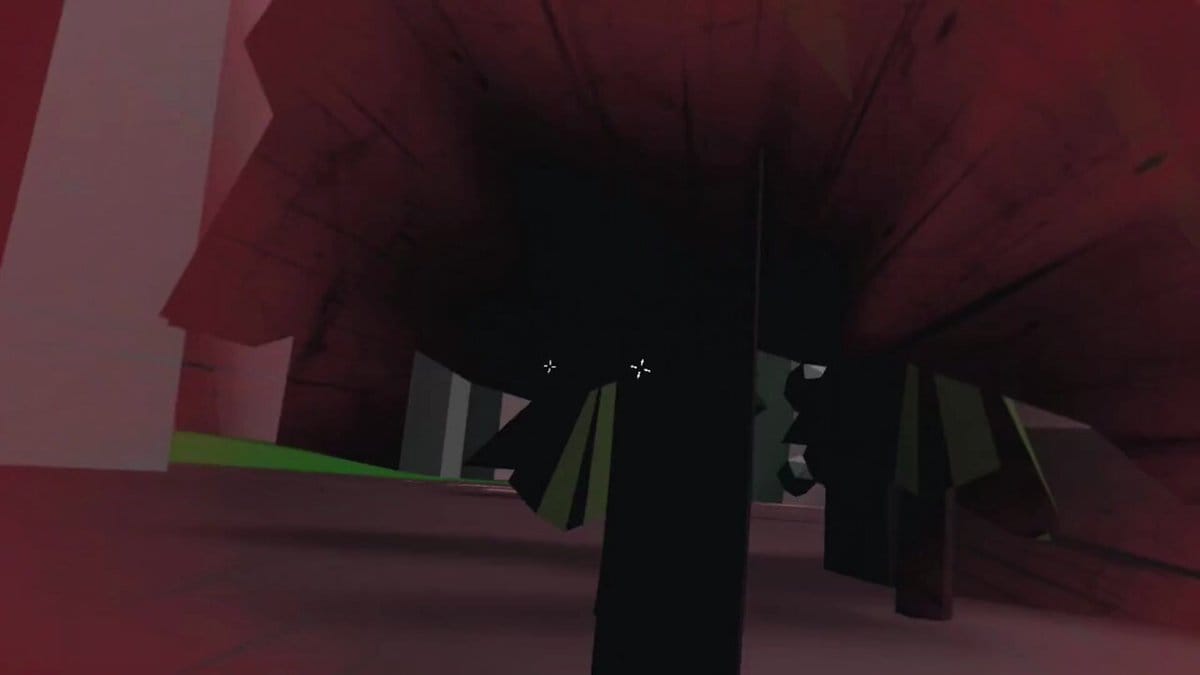
Standout set-pieces include climbing the ribcage of a dormant colossus (your hands grip actual handholds with physical bow-drawing-like precision, the controller haptics syncing with each step to create real muscle memory after sustained sequences), navigating through a dense forest while a titan’s shadow passes overhead (the ambient light shifts dynamically, birds scatter in 3D space around your head, the ground trembles through haptic pulses that reinforce weight), and a haunting sequence where you’re trapped in a confined space while a creature’s eye — the size of a small house — peers through a gap in the wall, forcing genuine psychological tension through sheer spatial proximity. The spatial audio design elevates every moment: wind direction, footstep timbre, the subsonic rumble of movement. It’s meticulous work, and it shows. Hand tracking isn’t used for primary gameplay, but motion controllers feel natural and responsive, with subtle haptic pulses that reinforce the sense of weight and impact in the world.
Gameplay Deep Dive: Controls, Comfort Mechanics, and Per-Headset Session Viability
Among Giants uses a hybrid locomotion system: smooth movement for exploration and puzzle-solving, with teleport available as an accessibility option. The motion controller scheme is intuitive — grip to grab environmental objects, trigger to interact with puzzles and narrative elements, thumbstick for movement. Climbing sequences use both hands (grab with grip, pull with trigger), and the physical feedback is satisfying without feeling gimmicky. Object manipulation is precise enough that you can manipulate intricate puzzle mechanisms without frustration, though some finer details require steady hands and good lighting in your play space. On Quest 2, controller latency is slightly higher (~20ms vs Quest 3’s ~15ms), which becomes noticeable during fast climbing sequences but doesn’t break immersion. PSVR2’s Sense controllers offer superior haptic granularity, delivering distinct vibration profiles for different surface types (stone vs metal vs organic flesh).
Comfort-wise, Among Giants walks a careful line. The game avoids spinning camera movements, artificial acceleration, and sudden height shifts that typically trigger nausea. However, the sheer *scale* of the environments can create mild vertigo during climbing sequences or when you’re standing at the edge of a cliff looking down — this is intentional and part of the emotional design, not a flaw. The smooth locomotion, while generally well-implemented, may cause low-level discomfort in players sensitive to artificial movement — the developers clearly prioritized comfort but didn’t compromise on immersion. Most players report zero issues; those with vestibular sensitivity may need to stick to teleport or take frequent breaks. On PSVR2, the higher refresh rate (120 Hz vs 90 Hz on Quest) reduces perceived latency during movement, making smooth locomotion feel more natural for sensitive players. PC VR at 144 Hz offers the smoothest experience but requires substantial hardware investment.
Headset Comparison: Quest 3 vs Quest 2 vs PSVR2 vs PC VR — Technical Breakdown and Visual Fidelity
Among Giants demonstrates Mighty Coconut’s technical maturity across platforms. On Meta Quest 3, the game runs at a locked 90 FPS with dynamic resolution scaling (1440p to 1800p per eye depending on scene complexity) that keeps performance stable even in dense forest environments. Textures are detailed (2K base resolution with trilinear filtering), lighting is rich with baked global illumination and real-time shadow updates, and the giants themselves are rendered with enough geometric detail (120k–180k triangles per creature) that you can see muscle definition and skin texture under their scaled hide. The Quest 3’s Snapdragon Gen 2 processor handles the scale better than Quest 2, which experiences noticeable pop-in of distant environmental details (draw distance reduced from 200m to 120m), slightly softer texture filtering (bilinear instead of trilinear), and fewer simultaneous particle effects (dust clouds, rainfall). On Quest 2, resolution dips to 1080p per eye during complex scenes, and LOD (level of detail) transitions become visible when creatures move into mid-distance. Still playable and beautiful, but clearly the junior version.
PSVR2 pushes visual quality noticeably higher: higher-resolution textures (4K base with anisotropic filtering), more complex geometry (creatures render at 250k+ triangles, environment meshes are denser), enhanced particle effects for dust and wind (volumetric god rays, dynamic weather), and smoother shadow cascades (4-layer cascade vs Quest 3’s 2-layer). The haptic feedback is also more granular on PSVR2, with the Sense controllers delivering nuanced vibrations during climbing (distinct pulses for each handhold type) and interaction. Eye-tracking is present but underutilized — it’s used for UI navigation and subtle environmental details (creatures’ eyes following you), not for gameplay mechanics. Load times are fastest on PSVR2 (~8 seconds from menu to gameplay) versus Quest 3 (~12 seconds), a meaningful difference when replaying sequences. The 120 Hz refresh rate on PSVR2 also makes smooth locomotion feel noticeably less nauseating for sensitive players.
PC VR (with RTX 4070 or equivalent) reaches the visual ceiling: 4K per eye at 90 FPS (or 2K per eye at 144 FPS for ultra-smooth motion), ray-traced shadows with real-time global illumination, volumetric fog with depth-based lighting, and tessellated giant skin that rivals prerendered cinematics. Distant draw distance extends to 500m+, and particle effects become genuinely cinematic (rain storms, dust clouds, atmospheric haze). The trade-off is obvious: you need a $2000+ PC to achieve this, plus a high-end headset (Valve Index, HTC Vive Pro 2, or Varjo XR4). For most players, the jump from Quest 3 to PC VR is noticeable but not transformative — Quest 3 is already doing 90% of what makes Among Giants magical (the scale, the presence, the audio design). PSVR2 lands in the middle: 20–30% better visuals than Quest 3, requiring a $550 console investment.
| Headset | Visual Quality | Resolution per Eye | Refresh Rate | Price | Exclusive Features | Verdict |
|---|---|---|---|---|---|---|
| Meta Quest 3 | High (90 FPS, dynamic res, good textures, 200m draw distance) | 1440p–1800p | 90 Hz | $34.99 | Standalone play (no PC needed) | BUY — Best value; definitive for most players |
| Meta Quest 2 | Medium (reduced LOD, bilinear filtering, 120m draw distance, occasional pop-in) | 1080p (dynamic) | 90 Hz | $34.99 | None (same build as Q3, lower optimization) | WAIT — Playable but noticeably lower fidelity; wait for sale |
| PSVR2 | Very High (enhanced shadows, volumetric effects, haptic depth, 250m draw distance) | 2000×2040 per eye | 120 Hz | $39.99 | Haptic feedback granularity, eye-tracking UI, fastest load times | BUY — Best visual quality and comfort; requires console |
| PC VR (RTX 4070+) | Ultra (ray-tracing, volumetric effects, 500m+ draw distance, 4K per eye) | 4K per eye (2K at 144 Hz) | 90–144 Hz | $44.99 (game only; PC $2000+) | Maximum graphical fidelity, unlimited scaling, smoothest motion | CONSIDER — Overkill for most; diminishing returns beyond PSVR2 |
Final Verdict: Buy, Wait, or Skip — Per-Headset Recommendations and Score
Among Giants is one of the finest VR experiences of 2026, and it’s worth your money on almost any headset you own. The core design is sound, the execution is polished, and the emotional payoff of standing in the shadow of impossible creatures justifies the $35–45 price tag. At roughly $3–4 per hour of content, the value is solid, though not exceptional by VR standards (where $20 indie experiences often offer 10+ hours). The game doesn’t reinvent VR gameplay — it’s exploration, light puzzle-solving, and narrative beats, not hardcore action — but it understands presence better than 99% of VR releases.
Replay value is moderate. There’s no New Game+ or difficulty modes, so once you’ve seen the giants and solved the puzzles, the incentive to return drops sharply. Collectibles exist (environmental lore fragments, hidden vistas), but they don’t unlock new content, just achievement badges. The game is designed to be experienced, not mastered or speedrun. For players who live in VR and replay experiences frequently, this might feel thin. For casual VR enthusiasts who want a singular, unforgettable 10-hour journey, it’s perfect.
If you’re on the fence, consider these alternatives: The Last Guardian VR (if you want scale with more combat) or Asgard’s Wrath 2 (if you prefer mechanics-heavy exploration over pure presence). But honestly? Among Giants is the better game for what it attempts. It’s not trying to be everything; it’s trying to make you feel small, and it succeeds completely.
8.2 / 10
BUY on Meta Quest 3: The definitive, most accessible version. Locked 90 FPS, solid visual fidelity, zero compromises for 90% of players. Best value per dollar spent on VR hardware investment.
BUY on PSVR2: If you own the console and want the best visuals without a gaming PC. Haptic feedback granularity and 120 Hz refresh rate make smooth locomotion more comfortable. Fastest load times. Worth the extra $5 over Quest 3 if you have the hardware.
WAIT on Meta Quest 2: Playable and beautiful, but noticeable visual step down (1080p, reduced draw distance, occasional pop-in). Worth waiting for a $19.99 sale if you don’t own Quest 3. Comfort is identical; sickness risk unchanged.
CONSIDER on PC VR: Only if you have an RTX 4070+ and want the absolute maximum fidelity (ray-tracing, 4K per eye, 500m draw distance). Not necessary for the core presence experience; diminishing returns beyond PSVR2. Justified only for enthusiasts with existing high-end PC setups.
Best For: VR enthusiasts who value presence and immersion over mechanics; players seeking a singular, unforgettable 10-hour journey; anyone who’s ever wanted to feel truly small. Not recommended for players who demand constant mechanical innovation or replayability.
Frequently Asked Questions
Does Among Giants work on Meta Quest 2, or is it Quest 3 only?
Among Giants is available on both Meta Quest 2 and Quest 3 at the same $34.99 price. However, Quest 2 runs a lower-detail version: reduced environmental LOD (level of detail), softer texture filtering (bilinear vs trilinear), occasional distant pop-in, fewer particle effects, and draw distance capped at 120m instead of 200m. Resolution dips to 1080p per eye during complex scenes versus Quest 3’s 1440p–1800p. The core experience is identical, but visual fidelity is noticeably lower. If you’re sensitive to graphical quality or spend extended time in dense forest environments, Quest 3 is the recommended platform. Quest 2 owners will still have a great time, especially if they’ve never played on a higher-end headset, and the presence/scale experience is unchanged.
How bad is the motion sickness in Among Giants VR?
Motion sickness risk in Among Giants is low to moderate, and entirely avoidable for most players. The primary triggers are: (1) climbing sequences at height, which can cause mild vertigo in players with vestibular sensitivity (roughly 5% of VR users); (2) smooth locomotion at speed, which affects roughly 10% of VR users prone to artificial movement nausea. The game includes a teleport locomotion option that eliminates 99% of sickness risk. There’s no artificial rotation, inversion, or sudden acceleration — the developers clearly prioritized comfort without sacrificing immersion. Most players report zero nausea. Those prone to VR sickness should stick to teleport mode, or use smooth locomotion and take breaks every 60–90 minutes during climbing sequences. PSVR2’s 120 Hz refresh rate makes smooth locomotion feel more natural than Quest 3’s 90 Hz, reducing discomfort for sensitive players.
Is Among Giants better on PSVR2 or PC VR?
PSVR2 delivers the best practical experience: visuals are 20–30% superior to Quest 3 (enhanced shadows, volumetric effects, denser geometry, 4K base textures, and haptic feedback granularity), and it’s a $550 console investment versus a $2000+ gaming PC. PSVR2 also has 120 Hz refresh rate (vs Quest 3’s 90 Hz), which makes smooth locomotion feel noticeably less nauseating for sensitive players. PC VR (RTX 4070+) pushes visual fidelity higher with ray-tracing and volumetric fog at 4K per eye, but the jump from PSVR2 is diminishing returns — you’re paying $1500+ extra for maybe 10–15% more visual polish and extended draw distance. For most players, PSVR2 is the sweet spot between visual quality and cost. If you already own a high-end gaming PC, go PC. If you’re buying hardware specifically for Among Giants, PSVR2 is the better value per dollar invested in your VR ecosystem.
How long is Among Giants, and is there replay value?
Among Giants offers 8–12 hours of main-story content, with another 3–5 hours available through side exploration, environmental puzzles, and collectible hunting (lore fragments, hidden vistas). There’s no New Game+ or difficulty modes announced at launch, so once you’ve experienced the narrative and solved the puzzles, replay incentive drops sharply. Collectibles don’t unlock new content, just achievement badges. The game is designed to be experienced singularly, not mastered or speedrun. For casual VR enthusiasts seeking a singular, unforgettable 10-hour journey, it’s perfect. For players who replay VR experiences frequently and demand mechanics-driven replayability, replay value is moderate-to-low.
Is Among Giants a VR-native game or a flatscreen port?
Among Giants is a full VR-native title designed ground-up for virtual reality, not a port. It was built by Mighty Coconut with VR-specific design philosophy: spatial audio, haptic feedback integration, presence-focused set-pieces, and scale-based emotional design that cannot be replicated on flatscreen. The game understands what makes VR unique (stereoscopic 3D, head-tracking, haptic immersion) and leverages these mechanics throughout. This is not a hastily adapted flatscreen experience; it’s a VR-first design from concept to launch.