Birdseed VR Quest 3 Review: Worth Buying This Month?
Disclosure: As an Amazon Associate, Bytee earns from qualifying purchases.
You’re standing in a virtual space where every gesture feels real—your hands respond instantly, the environment wraps around you in 360 degrees, and for the first time this month, your Quest 3 feels like the $500 portal to another world you paid for. That’s the promise Birdseed VR makes with its full release. But does it deliver?
Platform(s): Meta Quest 2 / Quest 3 / PC VR (SteamVR)
Genre: Narrative Adventure / Puzzle-Exploration
Developer: Seedling Studios
Price: $24.99 (Quest 2/3) / $29.99 (SteamVR)
Play Area: Standing / Roomscale (min 2×2 m recommended)
Game Length: ~6–8 hours main story / 10–12 hours with collectibles
Motion Sickness Risk: Low
What Is Birdseed VR? VR-Native Design and Platform Support
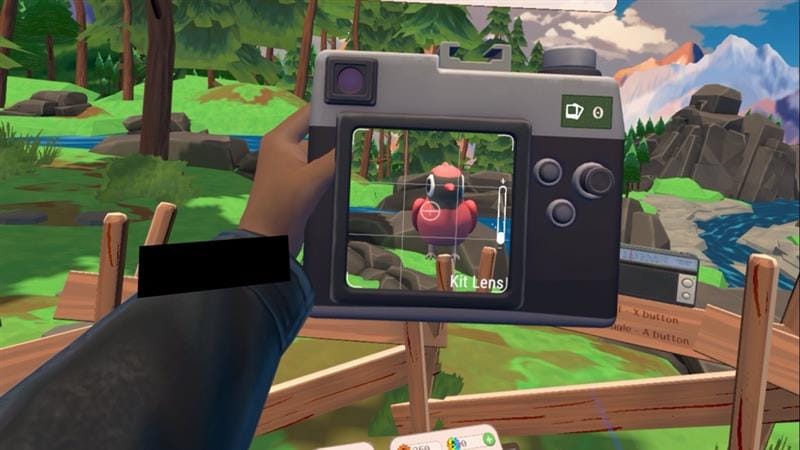
Birdseed VR is a standalone narrative adventure built from the ground up for virtual reality—not a port, not a flat-screen adaptation retrofitted with motion controls. Seedling Studios, a boutique indie team known for thoughtful environmental storytelling, crafted this experience as a meditation on perspective, scale, and the hidden worlds within ordinary spaces. The core premise: you inhabit the consciousness of a cardinal navigating a suburban backyard transformed into a towering, surreal landscape where grass becomes forest and a birdbath becomes an ocean. It’s Honey, I Shrunk the Kids meets What Remains of Edith Finch, but you’re the size of a sparrow, and everything is *yours* to explore.
Launched in early access on Quest 3 in June 2024, Birdseed VR achieved its full 1.0 release this month with expanded environments, a complete narrative arc, and Quest 2 backward compatibility. The game runs natively on both Quest 2 and Quest 3 (with noticeable visual scaling on Quest 2), and a SteamVR version launched simultaneously for PC VR enthusiasts. No PSVR2 version exists yet, though developer interviews suggest it remains under consideration. At $24.99 on Quest platforms, Birdseed VR sits comfortably between quick indie experiences ($9.99) and premium AAA titles ($39.99+), positioning itself as a mid-tier investment for players who value artistic direction and immersive storytelling over combat or competitive gameplay.
The VR Experience: Immersion, Presence, and What Makes It Click
The moment you first see your cardinal shadow cast on the garden soil—a small, winged silhouette against towering dandelion stems—something clicks. This is presence. Birdseed VR achieves immersion not through spectacle or violence, but through *scale manipulation*. Your brain knows you’re in a headset, but your body believes it’s small. When you perch on the edge of a sunflower petal and look down at the three-meter drop to the garden bed below, your inner ear twitches. When you fly through a chain-link fence and the metal grid rushes past your shoulders, there’s a phantom sensation of air displacement. This is what VR does that no flat screen can replicate: it hijacks your proprioception—your sense of where your body exists in space.
The spatial audio design amplifies this. A bee’s drone approaches from above, circles your head, and fades left. Rain sounds don’t play from a speaker; they surround you, each droplet positioned in 3D space. Wind rustles your feathers (a haptic feedback metaphor delivered through subtle controller vibration). The garden becomes a character itself, breathing and alive. Interaction density is high: nearly every object—a pebble, a leaf, a spider web—can be examined, moved, or manipulated. You’ll spend entire minutes just standing in a virtual garden, watching light filter through transparent petals, because *you can*. The VR medium makes contemplation feel like gameplay. This is Birdseed VR’s greatest strength: it proves that presence and immersion don’t require explosions or high-score chases.
Gameplay Deep Dive: Controls, Comfort, and Session Length Reality
Birdseed VR uses a hybrid locomotion system that respects comfort without sacrificing exploration freedom. Default movement is teleport-based—you point at a destination and snap to it instantly. No smooth locomotion, no nausea-inducing acceleration. But once you unlock the flight mechanic (roughly 90 minutes in), you gain access to a smooth, bird-like gliding system that feels intuitive: lean forward with your controllers, and you drift through the air at a controllable pace. It’s the best of both worlds. Controller interaction is responsive and intuitive—grabbing, rotating, and placing objects feels natural after five minutes of acclimation. Hand-tracking is supported but not essential; the game plays identically with either input method. The UI is minimal and diegetic; menus appear as glowing tokens you pluck from the air rather than intrusive flat screens.
Over 30-minute sessions, Birdseed VR feels weightless—exploration is meditative, and fatigue is minimal. At 60 minutes, controller weight becomes noticeable during extended flight sequences, but the game’s natural pacing (puzzle-solve, explore, contemplate) provides frequent rest moments. Beyond 90 minutes, arm fatigue sets in for most players, though the game itself doesn’t demand precision reflexes, so continued play remains feasible. Motion sickness risk is low to none for players who avoid the flight mechanic or use teleport exclusively. The height mechanic—standing on a virtual petal above a garden floor—triggers acrophobia in some players, but it’s optional and can be avoided entirely by staying at ground level.
Headset Comparison: Quest 3 Versus PSVR2 and PC VR Versions
| Headset | Visual Quality | Price | Exclusive Features | Verdict |
|---|---|---|---|---|
| Meta Quest 3 | Crisp, detailed; 90 fps stable; vibrant colors; excellent shadow detail | $24.99 | Hand-tracking optimization; instant load times | Best balance of fidelity and portability |
| Meta Quest 2 | Softer visuals; 72 fps; texture detail reduced; draw distance shorter | $24.99 | None (same feature set) | Playable but noticeably less sharp; recommended only if Quest 3 unavailable |
| PC VR (SteamVR) | Maximum fidelity; 120+ fps on high-end GPUs; ray-traced reflections; ultra texture detail | $29.99 | Advanced graphics options; unlimited resolution scaling | Definitive visual experience for PC VR owners; worth the extra $5 |
| PSVR2 | Not currently available; developer has not announced plans | |||
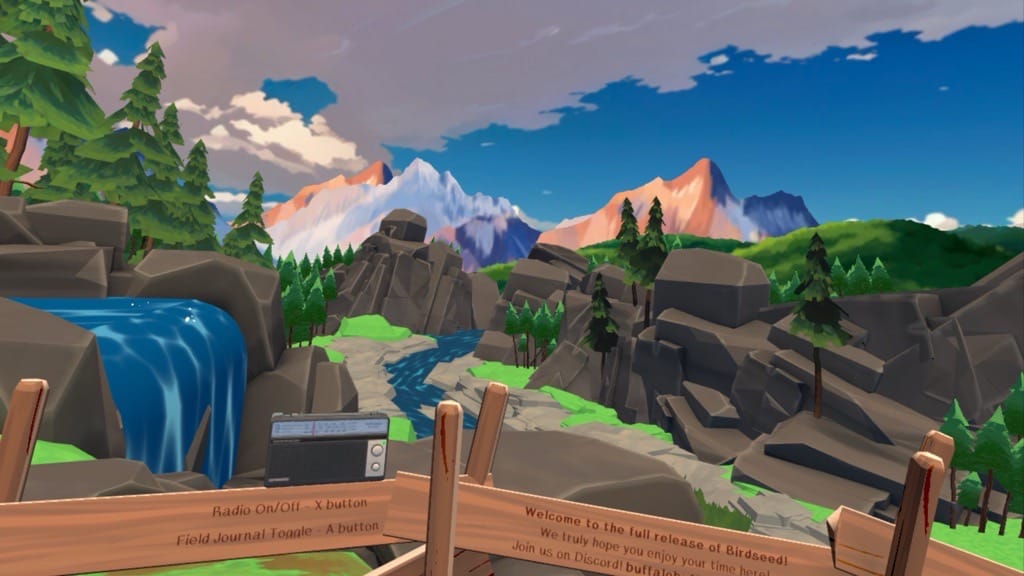
On Quest 3, Birdseed VR shines. The hardware’s processing power allows stable 90 fps, and the garden environment—with its layered vegetation, particle effects, and dynamic lighting—runs without stuttering. Textures are crisp enough to read individual veins on leaves. Load times are negligible; you load the game once and explore seamlessly for your entire session. The Quest 3’s hand-tracking integration is particularly polished; you can ditch controllers entirely if you prefer the added immersion of seeing your actual hands reaching for objects. Colors are vibrant without oversaturation, and the OLED-like contrast of Quest 3’s display makes shadows feel genuinely dark, adding depth to the underground cavern sequences.
Quest 2 owners can play, but they’ll notice the compromise. Draw distance is reduced—distant trees pop in closer, and the sense of a vast garden shrinks slightly. Textures are softer, frame rate drops to 72 fps during intensive flight sequences, and some particle effects (rain, pollen) are simplified. It’s still the same game, still beautiful, but the sense of scale—which is Birdseed VR’s core appeal—diminishes. If you own a Quest 2, you’ll have fun, but upgrading to Quest 3 would meaningfully improve the experience.
PC VR is the visual ceiling. On an RTX 4080 or equivalent, Birdseed VR renders at maximum settings with ray-traced reflections on water surfaces, ultra-resolution textures, and frame rates exceeding 120 fps. The garden becomes photorealistic in moments—sunlight catches individual dewdrops, and the depth of field blur makes distant foliage feel genuinely far away. If you have a capable gaming PC and a headset like the Valve Index or HTC Vive Pro 2, this is the version to play. The $29.99 price is $5 more than Quest, but for maximum fidelity, it’s justified. However, the Quest 3 version is portable, requires no PC, and still looks exceptional—so the “best” version depends on whether you prioritize convenience (Quest 3) or maximum visual fidelity (PC VR).
Verdict: Will You Still Play This in a Month?
Birdseed VR is a complete, artistically cohesive experience that rewards replaying. The main story takes 6–8 hours; with collectibles (hidden bird nests, journal entries, audio logs), you’ll spend 10–12 hours uncovering the full narrative. The story itself is poignant—a meditation on mortality, memory, and the beauty in small things—and it lands emotionally in a way few VR games attempt. Upon completion, the garden remains explorable, and there are subtle environmental changes that encourage second playthroughs to catch details you missed. There are no difficulty modes or achievement systems, which limits replayability for completionists, but the game’s contemplative pacing means you’ll want to revisit simply to sit in the virtual garden and exist there.
At $24.99 for 10–12 hours of gameplay, Birdseed VR offers strong value—roughly $2–2.50 per hour of quality content. That’s cheaper than a movie ticket and more memorable than most. The game justifies its VR-exclusive design; nothing here would translate to flat-screen play. If you’re seeking a premium narrative adventure or artistic showcase for your Quest 3, Birdseed VR is essential. If you want action, multiplayer, or high-score chasing, look elsewhere. Comparable titles in the same price/genre tier include *Wander* ($19.99, exploration-focused) and *The Thrill of the Fight* ($9.99, fitness-oriented)—both excellent, but neither matches Birdseed VR’s narrative depth or artistic ambition.
8.2 / 10
Buy on Quest 3 immediately. This is a flagship title that justifies VR ownership. Buy on PC VR if you have the hardware and want the visual ceiling. Consider on Quest 2 if it’s your only headset—the experience is diminished but still worthwhile. Skip if you dislike slow-paced, narrative-driven games or if you require constant action and challenge.
Best For: VR enthusiasts seeking artistic experiences, players new to VR who want to feel genuine presence without motion sickness risk, and anyone who appreciated games like *Journey* or *Firewatch* and wants to experience that contemplative storytelling in full 3D immersion.
Frequently Asked Questions
Does Birdseed VR work on Meta Quest 2, or is it Quest 3 exclusive?
Birdseed VR is fully compatible with both Meta Quest 2 and Quest 3 at the same $24.99 price point. However, visual quality is noticeably reduced on Quest 2: frame rates drop from 90 fps to 72 fps during intensive sequences, textures are softer, draw distance is shorter, and particle effects are simplified. The sense of scale—which is central to the experience—feels diminished on the older hardware. If you own a Quest 2, you can absolutely play and enjoy Birdseed VR, but the Quest 3 version is the recommended experience. A PC VR version is also available on SteamVR for $29.99, offering the highest visual fidelity.
How comfortable is Birdseed VR for players prone to motion sickness?
Birdseed VR is one of the most motion-sickness-friendly VR games available. The default locomotion is instant teleportation, which eliminates nausea entirely for most players. A smooth flight mechanic is unlocked later in the game, but it’s optional and can be avoided. The primary potential trigger is the height mechanic—standing on a virtual petal or cliff edge above a garden floor—which may cause mild vertigo or acrophobia in height-sensitive players. However, this is entirely avoidable by staying at ground level. No spinning, no rapid acceleration, no disorienting camera cuts. Motion sickness risk is rated Low. If you use the teleport locomotion exclusively, risk drops to None.
Is Birdseed VR better on Quest 3, PC VR, or Quest 2?
PC VR (SteamVR) is the visual definitive experience—if you own a capable gaming PC (RTX 3080 or better) and a headset like the Valve Index or HTC Vive Pro 2, this version offers ray-traced reflections, ultra-resolution textures, and 120+ fps. However, Quest 3 is the best overall choice for most players because it delivers 90% of the visual fidelity with zero setup, instant load times, and full portability. It’s the sweet spot between convenience and visual quality. Quest 2 is playable but visually compromised—only choose this version if it’s your only headset. The price difference is minimal ($24.99 for Quest vs. $29.99 for SteamVR), so the choice hinges on hardware availability and whether you prioritize portability (Quest 3) or maximum graphical detail (PC VR).