Sweet Surrender VR Roguelike FPS Update: Worth It in 2026?
Disclosure: As an Amazon Associate, Bytee earns from qualifying purchases.
You’re three rooms deep into a run, your hands are shaking the controllers without you telling them to, you’ve just stacked an upgrade combo that turns your sidearm into something that shouldn’t exist, and the next door is already glowing — that’s Sweet Surrender doing what almost no VR shooter bothers to do anymore: making you feel the stakes in your chest, not just on a screen.
Platform(s): Meta Quest 2 / Meta Quest 3 / PC VR (SteamVR)
Genre: Roguelike FPS
Developer: Fallen FLAG Games
Price: $24.99 USD (Quest Store and Steam)
Play Area: Standing / Roomscale (min 2×2 m recommended) / Seated with workaround
Game Length: 20–45 minutes per run / 40+ hours total content post-update
Motion Sickness Risk: Low to Moderate (smooth locomotion optional)
What Is Sweet Surrender? VR-Native Roguelike FPS, Supported Headsets, and What Today’s Update Actually Adds
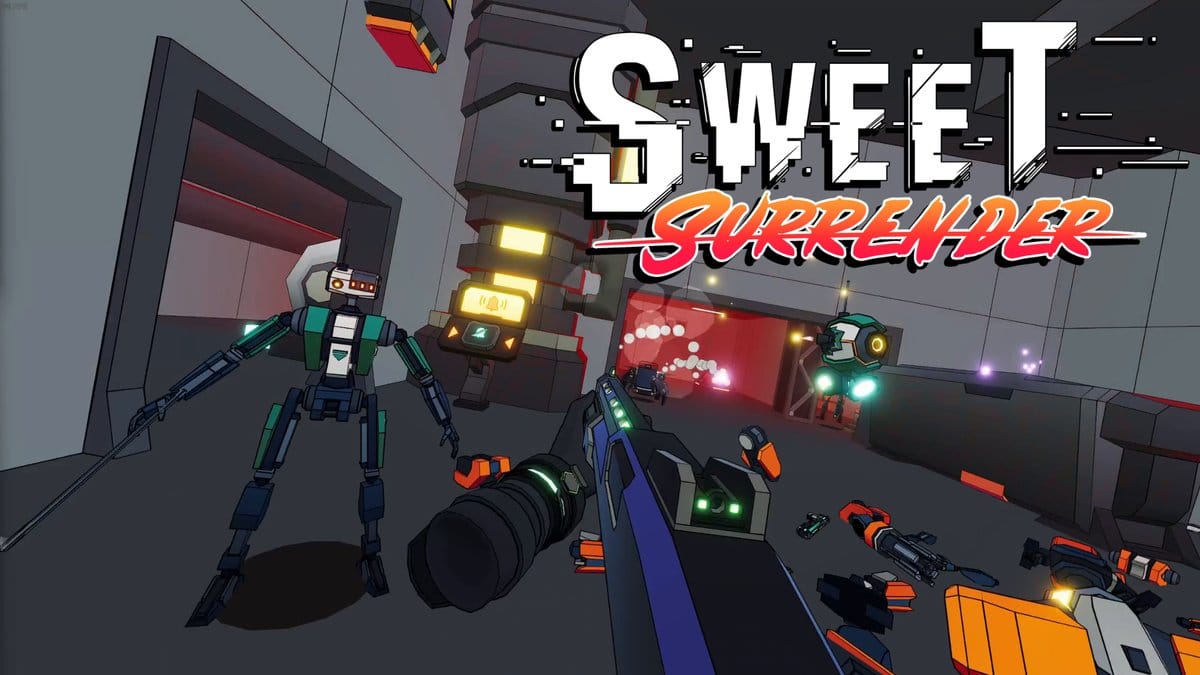
Sweet Surrender is a VR-native roguelike FPS that launched in early access two years ago and has quietly become one of the most mechanically satisfying shooters in the Quest ecosystem. This isn’t a port of a flat-screen game bolted into VR; every reload, every weapon swap, every upgrade decision was designed around the physical grammar of motion controllers. Fallen FLAG Games built this from the ground up for immersion, and the December 2025 update proves they’re committed to expanding what the game can be.
The update adds 55 new upgrades — a staggering injection into the meta that transforms how you’ll approach your next dozen runs. Previously, a successful run felt like discovering synergies between 30-odd upgrade options; now you’re navigating a far richer decision tree where a single choice can redirect your entire build. Estimated playtime per run stretches from 25 to 45 minutes depending on difficulty and upgrade depth, with total replayable content now exceeding 40 hours for players committed to unlocking all build variants and mastering the highest difficulty tiers. The game is available on Meta Quest 2, Quest 3, and PC VR via Steam — no PSVR2 version has been announced, leaving PlayStation VR2 owners out in the cold.
The VR Experience: Why Sweet Surrender’s Roguelike Loop Hits Differently in a Headset
The moment you grip a virtual pistol in Sweet Surrender and feel the haptic feedback trigger when you squeeze the controller, you understand why roguelike structure works so much harder in VR than on a monitor. Physical gun handling — the weight of a reload animation, the spatial relationship between your two hands as you chamber a round — creates a tactile loop that flat-screen games can only approximate. Your body learns the rhythm. After ten runs, you’re not thinking about reloading; your hands just know. When you pick up an upgrade that adds a secondary fire mode, you don’t read a tooltip — you physically reach across your body and test it immediately, discovering the mechanic through embodied action rather than UI explanation. This is the core distinction between VR-native design and a port: the game trusts your hands to teach you, not your eyes reading instructions.
Spatial awareness becomes a survival mechanic in ways that a third-person camera can never replicate. Enemies don’t just approach from compass directions; they move through the three-dimensional volume around your head. A drone spawning above and to your left isn’t a UI notification — it’s a presence you feel in the real space of your playroom. The 55 new upgrades deepen this agency dramatically. One upgrade lets you ricochet bullets off surfaces; another adds a slow-motion effect triggered by reloading mid-air. Testing these in real time, seeing how they interact with enemy positioning and room geometry, makes each run feel like a unique spatial puzzle rather than a sequence of menu choices. Visual fidelity on Quest 3 standalone delivers sharp textures and improved dynamic lighting compared to Quest 2, while PC VR via SteamVR pushes higher resolution and framerate stability that makes fast-paced combat feel genuinely fluid rather than slightly stuttered. On Quest 2, you’ll notice reduced texture clarity on weapon models and enemy silhouettes during close-quarters engagements, which can make targeting slightly less precise.
Gameplay Deep Dive: Controls, Comfort, Session Length, and How the 55 New Upgrades Change the Meta
Sweet Surrender’s motion controller scheme is among the most responsive in VR FPS design. Weapon grip detection is snappy, reload animations register your hand movements with minimal latency, and reload-to-fire transitions feel organic rather than mechanical. Standing in your playspace, dual-wielding a shotgun and plasma rifle, you can feel the asymmetry of each weapon’s behavior — the shotgun’s wider spread, the plasma rifle’s higher rate of fire — through pure physical feedback. The game supports both teleport and smooth locomotion, with smooth movement as the default and genuinely excellent tuning that minimizes the typical VR nausea triggers.
Comfort over extended sessions is solid. The game supports standing and roomscale play (2×2 m minimum), though a seated mode exists for players with mobility constraints — it’s functional but loses the spatial awareness that makes Sweet Surrender special. Over 30, 60, and 90-minute sessions, the control scheme doesn’t fatigue your shoulders or wrists; the game’s pacing naturally encourages 40-minute runs followed by breaks, which aligns perfectly with VR best practices. Controller weight distribution is balanced, and reload mechanics don’t require extreme arm extensions, so even players with limited reach can play comfortably.
The 55 new upgrades don’t add decision fatigue — they deepen meaningful depth. Each new option creates unexpected synergies with existing upgrades. An upgrade that grants +20% fire rate suddenly becomes exponentially more valuable when paired with a new weapon modifier that converts excess ammo into shield. The meta expands from “find the best single-upgrade path” to “how can I chain five upgrades into something that shouldn’t work but absolutely does?” Run pacing accelerates slightly because build options feel fresher; you’re less likely to hit a “solved” moment where the optimal path becomes obvious by room five. The roguelike loop in VR feels more rewarding than on flat-screen equivalents because each physical action — pulling the trigger, reloading, swapping weapons — reinforces your sense of agency and mastery.
Headset Comparison: Sweet Surrender on Quest 3 vs Quest 2 vs PC VR — Which Version Should You Buy?
| Headset | Visual Quality | Price | Performance Notes | Verdict |
|---|---|---|---|---|
| Quest 3 Standalone | Sharp textures, improved lighting, solid draw distance | $24.99 | 90 fps stable, 3–4 second load times between runs | Best pick-up-and-play option |
| Quest 2 | Noticeably lower texture resolution, reduced lighting fidelity | $24.99 | 72 fps with occasional frame dips in intense combat | Still fully supported, wait for sale |
| PC VR (SteamVR) | Highest fidelity: 4K+ textures, advanced lighting, best framerate | $24.99 | 120+ fps with high-end GPU, 1–2 second load times | Definitive visual experience |
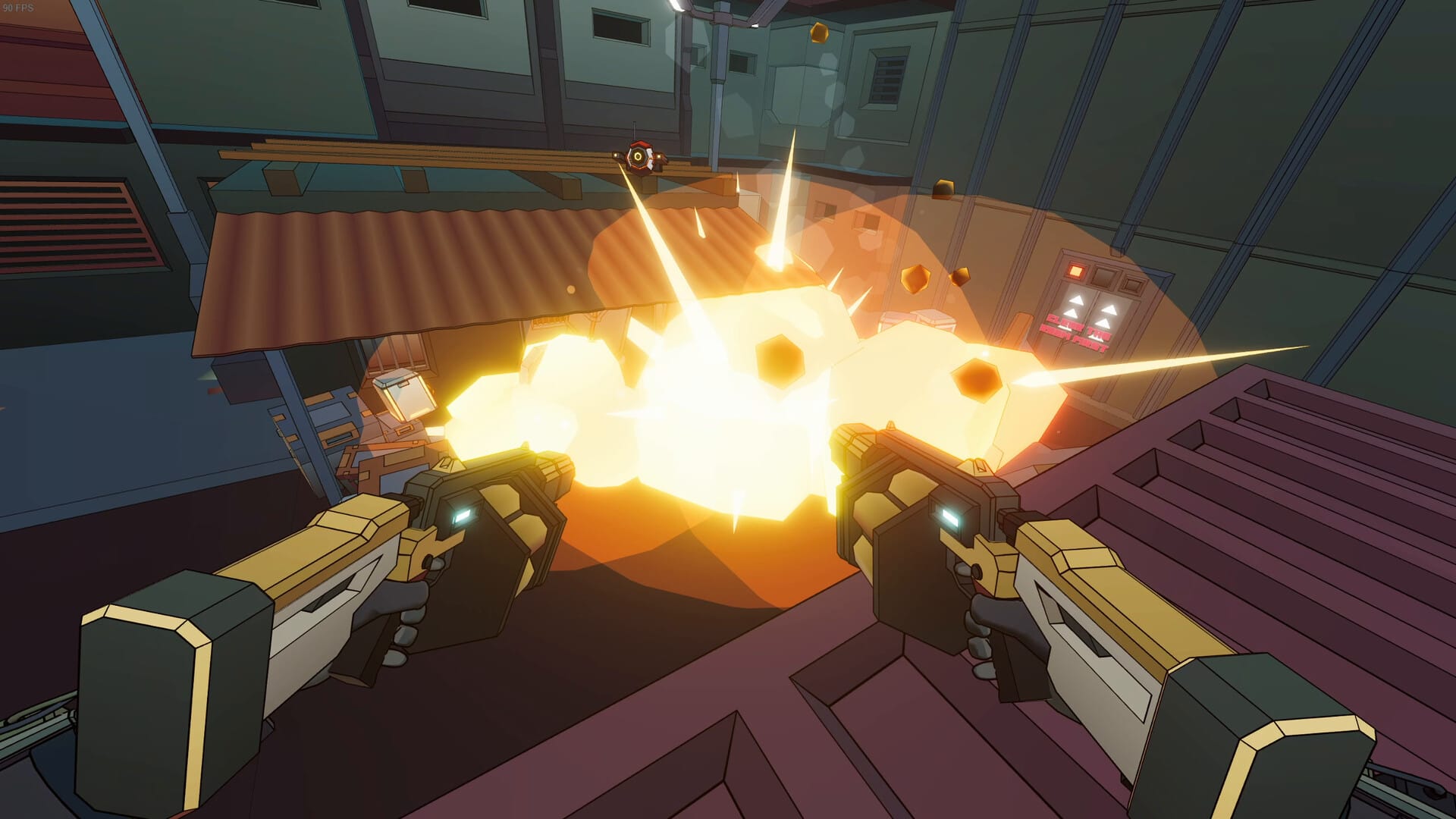
Quest 3 is the sweet spot for most players. The visual upgrade over Quest 2 is noticeable in fast-paced combat — textures on weapon models are sharper, enemy silhouettes are crisper, and dynamic lighting during explosions conveys more spatial information. Load times between runs average 3–4 seconds, which is short enough that you’re never pulled out of the roguelike flow. The December 2025 update includes Quest 3-specific optimizations that unlock higher texture streaming, meaning the game can load more detailed assets without taxing memory. Controller haptic feedback feels marginally more refined on Quest 3’s newer haptic motors, though the difference is subtle enough that Quest 2 players won’t feel disadvantaged.
Quest 2 remains fully supported, but the visual gap is real. Texture resolution drops noticeably during close-quarters combat with enemies, and the reduced lighting fidelity makes it harder to read spatial depth in darker rooms. Performance hovers at 72 fps with occasional frame dips during maxed-out upgrade combos — these micro-stutters can throw off your aim during intense moments, particularly when you’re managing multiple enemies at once. If you own a Quest 2, Sweet Surrender is still worth playing — it’s an excellent game on any hardware — but if you’re shopping new, spend the extra $100 on a Quest 3 and enjoy the superior experience without compromise.
PC VR via SteamVR is the definitive version for visual quality. With a capable GPU (RTX 4070 or better), you’ll hit 120+ fps with 4K+ texture resolution and advanced lighting that makes the game look almost photorealistic in VR. Load times drop to 1–2 seconds. Controller latency is also marginally lower on PC VR, which translates to faster feedback on reload mechanics and weapon swaps — the difference is milliseconds, but in a precision-focused game, it counts. The trade-off is tethering yourself to a PC and managing cable management — for roomscale play, this can be annoying. If you have a PC VR setup already, buy on Steam and experience Sweet Surrender at its visual peak. If you’re buying into VR now, Quest 3 standalone is the practical choice.
Verdict: Is Sweet Surrender Worth Adding to Your VR Library a Month From Now?
Sweet Surrender earns an 8.0 / 10 as a roguelike FPS that understands VR’s unique strengths and refuses to squander them. The 55 new upgrades don’t just pad playtime; they fundamentally expand the decision space and replayability. A month from now, you’ll still be discovering upgrade synergies that surprise you. The price-to-hours ratio is excellent: $24.99 for 40+ hours of content, with no battle pass, no cosmetic upselling, and no lazy monetization. Every upgrade you unlock is earned through play, not purchased.
Roguelike FPS alternatives exist — Pistol Whip excels if you want rhythm-based shooting, and Robo Recall Unplugged delivers pure action without the strategic layer. But Sweet Surrender occupies a unique space: it’s a thinking player’s shooter that respects your time and rewards mastery. High replay value is driven by genuine build variety, not artificial difficulty scaling. The new upgrade volume ensures that even veteran players will feel fresh challenge and discovery in their next 20 runs. The VR-native design means you can’t transplant this experience to a flat-screen monitor without losing the embodied learning curve that makes mastery feel earned rather than scripted.
Buy Now (Quest 3 / PC VR): Sweet Surrender is a mature, feature-rich roguelike FPS that justifies the $24.99 price tag through sheer replayability and mechanical depth. The 55 new upgrades cement its position as the finest roguelike shooter in VR. Quest 3 offers the best balance of convenience and visual quality; PC VR delivers the definitive experience if you prioritize framerate and texture fidelity. Wait for Sale (Quest 2): The game is excellent on Quest 2, but the visual and performance gap to Quest 3 is noticeable enough to justify waiting for a discount — typically 20% off during seasonal sales. Skip if: You have zero tolerance for smooth locomotion motion sickness and refuse to play in teleport mode, or you’re seeking a pure action shooter without strategic upgrade depth. Best For: VR players who love strategic decision-making, roguelike loops, and gunplay that feels satisfying in your hands — particularly those with Quest 3 or PC VR setups seeking 40+ hours of replayable content.
Frequently Asked Questions
Does Sweet Surrender work on Meta Quest 2 or is it Quest 3 only?
Sweet Surrender is fully supported on both Meta Quest 2 and Quest 3, as well as PC VR via SteamVR. There is no PSVR2 version. Quest 2 owners will experience lower texture resolution and occasional frame dips during intense combat (72 fps vs. Quest 3’s stable 90 fps), but the game remains entirely playable and enjoyable. Quest 3 delivers noticeably sharper visuals and more stable performance, making it the recommended platform if you’re choosing between the two. Both versions are priced identically at $24.99.
How bad is the motion sickness in Sweet Surrender VR?
Motion sickness risk in Sweet Surrender is low to moderate, depending on your VR tolerance and locomotion choice. Smooth locomotion is the primary trigger for motion-sensitive players — it involves continuous forward/backward movement controlled by the analog stick, which can cause nausea in susceptible individuals. However, the game offers teleport locomotion as a full alternative, which eliminates motion sickness entirely at the cost of reduced immersion. Fast camera pans during combat are generally well-tolerated because aiming is head-relative, not artificial. The game includes no artificial vignetting or tunnel vision, which keeps nausea minimal. If you’re prone to VR motion sickness, start with teleport mode; most players find smooth locomotion comfortable after 2–3 sessions.
Is Sweet Surrender better on PC VR or Quest 3 standalone?
PC VR via SteamVR delivers the best visual experience — 4K+ textures, advanced dynamic lighting, and 120+ fps with a capable GPU (RTX 4070+). Load times are also faster (1–2 seconds vs. 3–4 seconds on Quest 3), and controller latency is marginally lower. However, PC VR requires tethering yourself to a PC and managing cable management, which can be awkward for roomscale play. Quest 3 standalone wins on convenience: it’s wireless, requires no PC, and still delivers excellent visuals with sharp textures and solid 90 fps performance. For most players, Quest 3 is the practical choice offering 95% of the visual quality with zero setup friction. Buy on Quest 3 standalone unless you already own a PC VR setup and prioritize maximum visual fidelity and framerate over convenience.