Squingle Arcade: This Indie MR Puzzle Game is a Total Trip
Disclosure: As an Amazon Associate, Bytee earns from qualifying purchases.
There’s a special kind of magic that happens when indie developers crack open the VR toolbox and decide to build something genuinely clever. While the mainstream VR scene continues churning out big-budget action games and tech demos designed to flex Meta’s latest hardware, a scrappy little indie project called Squingle Arcade is quietly opening its doors for public playtesting—and frankly, it might be the most refreshingly original thing to hit the mixed reality puzzle space in months. This isn’t another beat-matching rhythm game or a spiritual successor to some 1990s puzzle franchise. No, Squingle Arcade is doing something delightfully weird: it’s taking spatial puzzle design, marinating it in playful physics, and wrapping it all in a quirky arcade aesthetic that feels like it belongs in a neon-soaked dream you had after eating too much pizza.
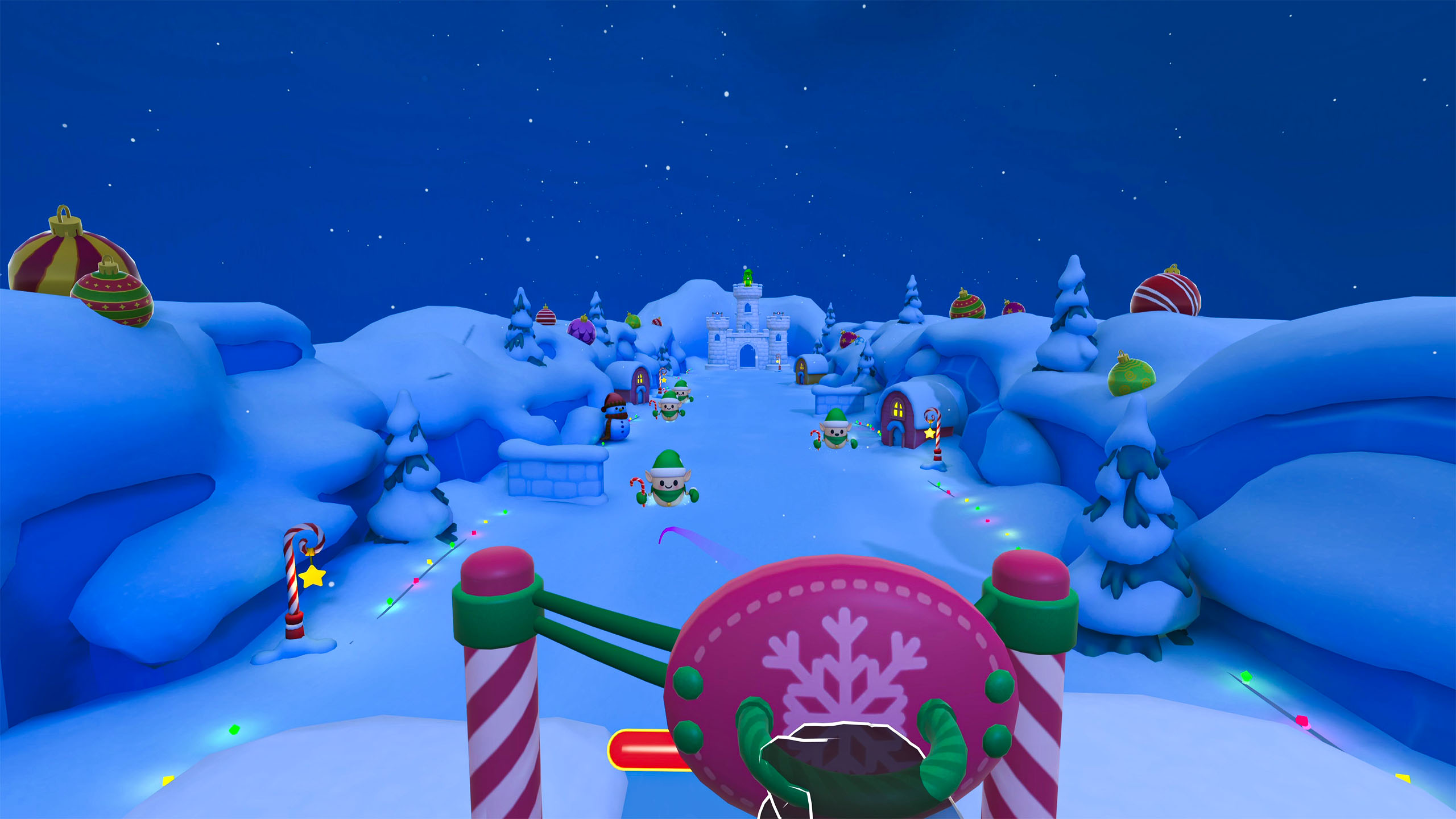
What Is Squingle Arcade, Anyway?
Let’s cut to the chase: Squingle Arcade is an indie mixed reality (MR) and VR puzzle game that’s currently in its first public playtest phase. The core concept is deceptively simple—you’re manipulating colorful, bouncy “squingles” (yes, that’s the actual name, and yes, it’s growing on me) to solve increasingly complex spatial puzzles. Think of it as if Portal and Tetris Effect had a baby in a dimension where gravity works differently and everything jiggles.
The game is being developed by a small indie team that clearly understands one critical truth: VR puzzle games don’t need explosions or cinematic storytelling to be engaging. They need solid mechanics, clever level design, and enough personality to make you want to keep playing “just one more puzzle” at 2 AM on a Tuesday night.
Platform Support & Pricing
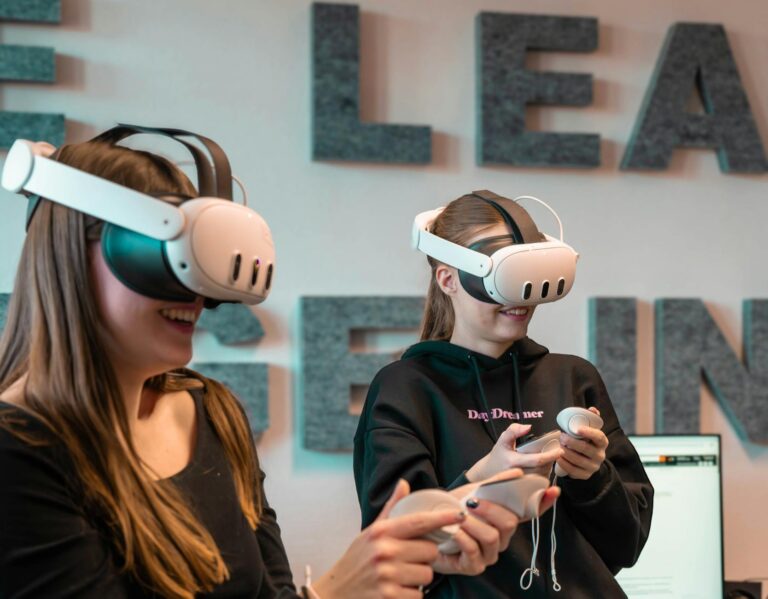
Here’s the beautiful part: the developers are being smart about distribution. Squingle Arcade is launching with support for Meta Quest 2, Meta Quest 3, and Meta Quest 3S as the primary standalone platforms, with confirmed PCVR/SteamVR support for those of us who want to crank the graphics up to “make my RTX 4090 sweat” levels. PSVR2 support hasn’t been officially announced yet, but given the game’s focus on hand interactions and spatial design, it’s a natural fit down the road.
Pricing for the full release is expected to land in the $14.99–$19.99 range, which is exactly where indie VR puzzle games should live. Not so cheap that you suspect it’s a tech demo, not so expensive that you feel like you’re buying a full AAA experience (because, let’s be real, this isn’t Half-Life: Alyx).
Immersion & Physical Interaction: Where Squingle Shines
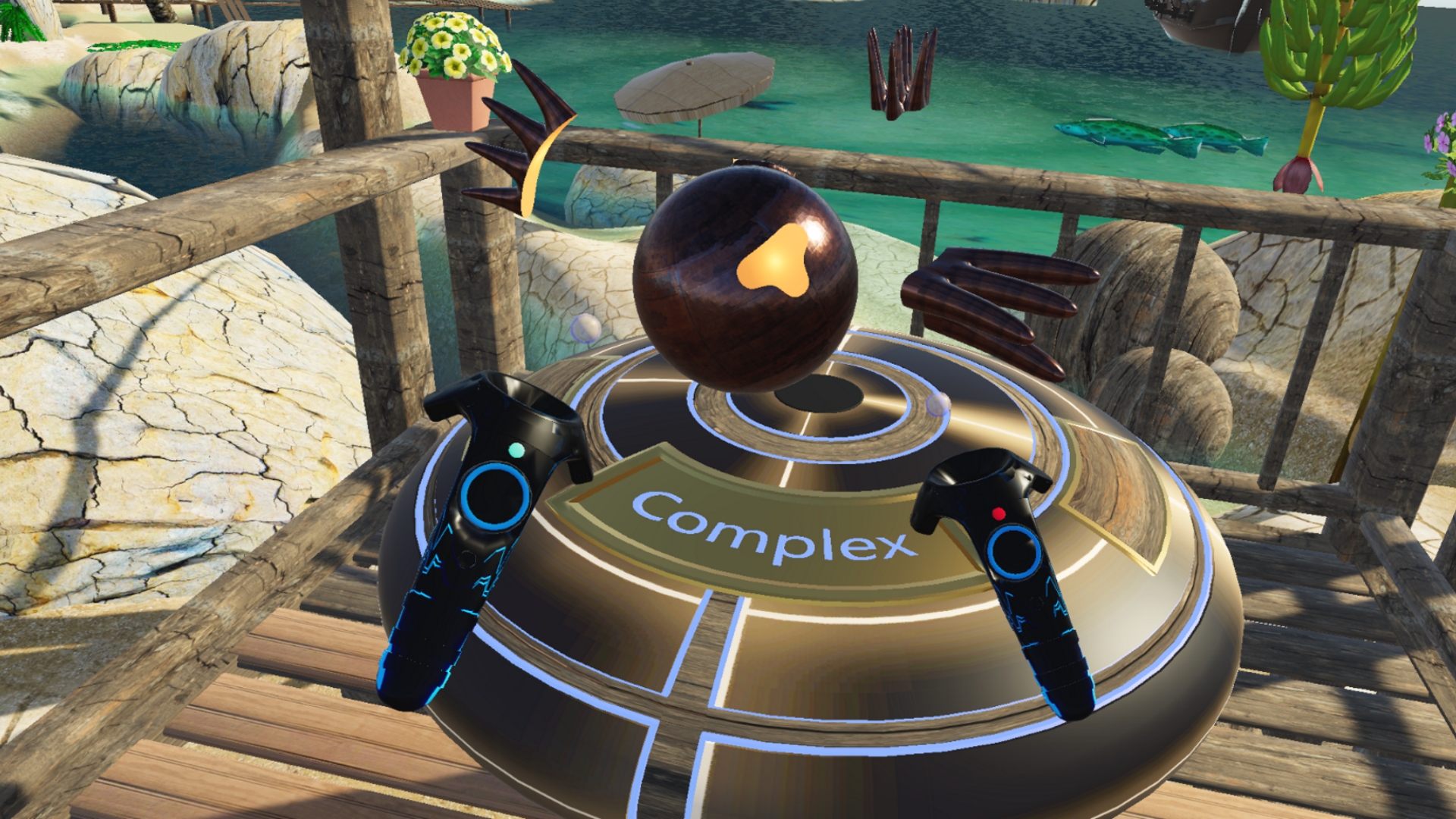
The real appeal of Squingle Arcade lies in how it leverages VR’s greatest strength: making your hands feel like they’re actually doing something in a digital space. The game uses hand tracking and controller-based input interchangeably, which is clutch because it means you can play comfortably whether you prefer the tactile feedback of holding something or the freedom of pure hand presence.
When you grab a squingle, it doesn’t just teleport into your hand like some clunky VR game from 2016. No—there’s actual physics feedback. The objects have weight, momentum, and that satisfying “thunk” when they collide with environmental objects. You’re not just waving your hands around pretending; you’re genuinely manipulating objects in three-dimensional space. It’s the kind of thing that makes you involuntarily smile the first time you nail a puzzle solution because the interaction felt real.
The hand tracking implementation is particularly impressive during the playtest build. Gesture recognition is snappy, there’s minimal hand jitter (a common problem in early VR titles), and the game doesn’t force you into awkward hand positions to interact with objects. This is important because nothing kills immersion faster than having to contort your arm into a pretzel shape just to press a virtual button.
Comfort Check: Motion Sickness & Locomotion
Here’s where I have to give Squingle Arcade major props: it’s inherently designed to be comfortable. Since the core gameplay revolves around solving puzzles from a stationary or room-scale perspective, there’s zero artificial locomotion causing motion sickness. You’re not flying through tunnels or running at 60 mph like you’re in Beat Saber on Expert Plus. You’re standing (or sitting, more on that in a moment) and manipulating objects in your immediate play space.
The camera stays fixed relative to your position unless you physically move, which means motion sickness risk is minimal to nonexistent for most players. Even people who get queasy in VR within five minutes of booting up Half-Life: Alyx should be fine here.
Seated Play: Yes, absolutely. Since hand tracking and controller-based interaction work equally well, you can comfortably solve puzzles while sitting down. The game adapts to your play space, so whether you’re standing in a massive 4×4 meter play area or awkwardly crouched in a studio apartment, the level design scales accordingly.
Room-Scale Potential: The game supports room-scale exploration, but it’s not required. Some of the more complex puzzles benefit from being able to walk around your play space to get different angles on the spatial challenge, but the core experience works fine in a smaller space.
Performance: Standalone vs. PCVR
On Meta Quest 3, Squingle Arcade runs buttery smooth at 90 FPS (assuming you’re not in some weird edge case scenario). The graphics are stylized rather than hyper-realistic, which is a smart design choice for an indie title and also means the performance is rock-solid. There are zero frame drops in the playtest build, which is absolutely essential in VR—a frame drop in a puzzle game might not make you nauseous, but it will make you miss your grab, miss your throw, and suddenly you’re staring at a puzzle solution that didn’t work because the game stuttered.
Quest 2 performance is also solid, though the graphics are noticeably scaled back compared to Quest 3. If you’re on a Quest 2, expect slightly lower poly counts, simpler textures, and a more minimalist visual style. It’s not a dealbreaker, but it’s noticeable if you’ve played the Quest 3 version.
On PCVR (tested on SteamVR with a mid-range RTX 3080 setup), the game absolutely sings. Sharper visuals, better lighting, more particle effects, and the kind of visual polish that makes you wonder why anyone ever thought the indie VR scene was limited. We’re talking consistent 144 FPS on high settings, which means VR enthusiasts with higher refresh rate headsets can push it even further.
Level Design & Puzzle Complexity
The playtest build includes approximately 20 levels, ranging from “warm-up” tutorials to genuinely head-scratching spatial puzzles that require you to think in three dimensions. This is where the game really flexes. Early levels teach you basic manipulation, but by level 12 or so, you’re dealing with multi-stage puzzles that require sequencing, timing, and an understanding of how physics interact with your environment.
One particularly clever puzzle involves stacking squingles of different sizes through a narrow opening while a moving platform threatens to knock them over. Another requires you to use momentum and gravity to solve what is essentially a 3D Rubik’s cube. These aren’t just “match three colors” puzzles—they’re legitimately creative uses of VR’s spatial capabilities.
Replayability & Campaign Length
Here’s the honest truth: the current playtest build offers roughly 2–3 hours of content for a casual player, maybe 30–45 minutes if you’re a puzzle genius. That’s not a massive amount of content, but for an indie puzzle game, it’s respectable. The developers have mentioned that the full release will include additional challenge modes, time-attack variants, and community-created puzzle packs, which could extend playtime significantly.
Replayability exists in the form of optional challenge objectives for each level (solve it in under 60 seconds, use fewer than five moves, etc.), but the core experience is solving each puzzle once and moving on. This is perfectly fine for a puzzle game—not every VR title needs 40 hours of content. Sometimes you just want a well-crafted 3–4 hour experience that respects your time and doesn’t pad itself with busywork.
The Indie VR Puzzle Game Landscape
To put Squingle Arcade in context: the indie MR/VR puzzle game space is experiencing a bit of a renaissance right now. We’ve got everything from abstract puzzle games like I Expect You To Die 3 to spatial manipulation games that push the boundaries of what VR can do mechanically. Squingle Arcade fits snugly into this ecosystem by offering something that feels fresh without completely reinventing the wheel.
Compared to bigger-budget puzzle games, Squingle Arcade lacks the polish and voice acting of a AAA title, but it more than compensates with clever design and a genuine sense of personality. The UI is clean, the tutorials are intuitive, and the difficulty curve feels carefully calibrated to avoid frustration.
Value Assessment
At the projected $14.99–$19.99 price point, Squingle Arcade offers solid value for VR puzzle enthusiasts. You’re getting a well-designed, mechanically sound puzzle game that respects your intelligence and doesn’t waste your time. It’s not a glorified tech demo—there’s genuine gameplay substance here. The question is whether you value a 3–4 hour focused experience over a 10-hour game padded with filler.
For most VR enthusiasts, this feels like a worthwhile purchase. For casual players or people looking for something to play for weeks, maybe wait for a sale or check out gameplay videos first.
Verdict
Squingle Arcade is exactly the kind of indie VR puzzle game that reminds you why VR is special. It’s not trying to be a AAA blockbuster. It’s not trying to make you nauseous or pump your adrenaline through the roof. It’s simply offering clever puzzle design, solid mechanics, and the kind of physics-based interaction that only VR can deliver.
The playtest build is polished, the performance is flawless, and the gameplay is engaging. If you’re into spatial puzzles, hand interaction, and indie games that respect your intelligence, Squingle Arcade deserves your attention when it launches.
FINAL SCORE: 8.5/10 — A smart, well-crafted indie puzzle game that proves you don’t need a massive budget to create something genuinely innovative in VR.
FAQ: Your Burning Squingle Questions Answered
Is Squingle Arcade going to make me motion sick?
Nope. The game is designed specifically to avoid artificial locomotion and disorienting camera movement. Even VR motion sickness sufferers should be fine here. The only way you’re getting nauseous is if you spin yourself around really fast while trying to solve a puzzle, which is a you problem, not a game problem.
Can I play this sitting down?
Yes, absolutely. The game adapts to seated play without any issues. Your play space automatically calibrates, and hand tracking works equally well whether you’re sitting or standing.
Will this run on Quest 2?
Yes, with slightly reduced graphics compared to Quest 3. Performance is still solid at 90 FPS, and the gameplay experience is essentially identical. If you’re on Quest 2, you’re not missing out on anything critical.
How long is the full game going to be?
The developers are targeting 3–4 hours of main campaign content, with additional challenge modes extending playtime for completionists. Think quality over quantity.
Is hand tracking required, or can I use controllers?
You can use either. The game supports both hand tracking and traditional controllers, so play however feels most comfortable to you.
When is the official release date?
As of the playtest announcement, the full release hasn’t been officially dated, but the developers are targeting mid-2024 for a formal launch. The playtest is currently accepting signups on the official website.
Will this come to PSVR2?
Not officially announced yet, but given the game’s mechanics and the natural fit with PSVR2’s capabilities, it’s a reasonable expectation for a post-launch port.