Return to Pixhell Mixes Souls-like & Survivors Action on iOS
Disclosure: As an Amazon Associate, Bytee earns from qualifying purchases.
When you combine the methodical, punishing combat of Dark Souls with the addictive, wave-based survival mechanics of Vampire Survivors, something genuinely special emerges. Return to Pixhell mixes Dark Souls with Vampire Survivors for a grimdark challenge that manages to feel fresh despite drawing from two wildly successful blueprints. This isn’t a lazy mashup—it’s a carefully orchestrated collision of two genres that, on paper, shouldn’t work together. Yet developer Chaotic Brain has crafted something that respects both lineages while creating its own identity: a pixelated descent into hell where patience, positioning, and pattern recognition are your only salvation.
A Grimdark Premise That Delivers
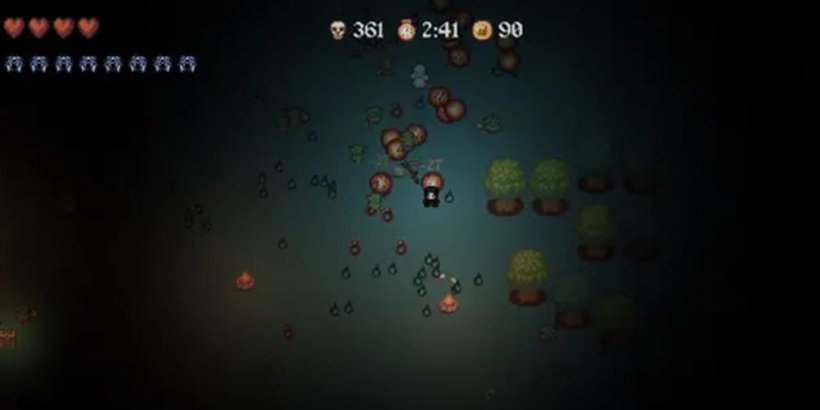
Return to Pixhell doesn’t waste time with narrative flourishes. You’re dead, you’re in hell, and you need to fight your way back to the living world. The premise is gloriously straightforward, serving as a justification for the endless waves of demonic enemies that pour toward you. What makes this premise work is the tonal consistency: everything about Return to Pixhell commits to that grimdark aesthetic. The pixel art is grotesque and detailed, the color palette leans heavily into sickly greens and blood reds, and the soundtrack pulses with industrial menace.
The genius of Return to Pixhell mixes Dark Souls with Vampire Survivors by understanding what makes each game tick. From Dark Souls, it borrows the concept of combat as a dance—you dodge, you parry, you strike at precise moments. The timing windows matter. Your positioning in space matters. One mistake doesn’t mean death, but a cascade of mistakes certainly does. From Vampire Survivors, it takes the wave-based progression, the satisfying growth curve where you’re constantly unlocking new weapons and abilities, and that addictive “one more run” energy that keeps players engaged for hours.
Combat That Demands Respect
Return to Pixhell’s combat system is where the Dark Souls influence shines brightest. Each weapon has distinct attack patterns, recovery frames, and optimal use cases. A greatsword feels heavy and deliberate—you can’t spam attacks like in traditional Vampire Survivors clones. Instead, you need to time your swings between enemy attacks, creating windows of vulnerability you can exploit. The game respects your intelligence and punishes button-mashing with brutal efficiency.
Your character moves with purpose rather than floating effortlessly across the screen. This deliberate movement speed creates constant tension: you can’t simply run away from every threat. You must engage with enemies, read their patterns, and respond accordingly. Dodging uses stamina, much like Souls games, and poorly timed dodges leave you vulnerable. It’s a refreshing departure from the power fantasy of typical mobile roguelikes where you’re an unstoppable force accumulating passive bonuses.
What prevents Return to Pixhell from becoming frustratingly difficult is the clever implementation of Vampire Survivors’ progression systems. Yes, individual encounters demand skill, but your runs build progressively. You unlock weapons that synergize with your playstyle. You discover relics—passive bonuses that stack across runs. The game teaches you through failure, rewarding experimentation and run variety rather than forcing a single optimal strategy.
iOS-Specific Performance and Haptics
Performance on iOS is where Return to Pixhell truly excels. The game runs at a smooth 60 frames per second on modern devices, with ProMotion support on iPad Pro models enabling even silkier 120fps gameplay. This smoothness isn’t merely cosmetic—when your survival depends on precise timing, consistent frame rates become essential. The pixel art actually benefits from the high refresh rate, with animations feeling snappier and more responsive.
Haptic feedback implementation deserves particular praise. Each weapon strike, successful parry, and enemy hit delivers distinct haptic patterns through the Taptic Engine. A greatsword impact feels like a heavy thud; a dagger strike feels like a quick tap. Dodging successfully triggers a satisfying haptic pulse that rewards your timing. This feedback loop makes the combat feel significantly more tactile and engaging than it would without haptics. On iPhone models without Taptic Engine, the game still plays well, but you lose that crucial sensory layer that makes combat decisions feel weighty.
Touch control responsiveness is exceptional, with frame-perfect input detection allowing precise dodge timing even on standard touchscreen hardware. The game utilizes iOS’s native touch APIs to minimize input latency, ensuring your on-screen actions register immediately. Swipe gestures for dodging feel natural and responsive across all iPhone models from iPhone 12 onward.
Game Center integration enables leaderboard tracking for speedruns and highest wave survival, allowing you to compare your performance against friends and global players. Achievement support provides additional progression goals beyond the core campaign, tracking milestones like defeating specific boss enemies or unlocking rare weapons.
Controller support is full-featured and excellent. The game supports MFi controllers, including newer options like the 8BitDo Ultimate. We tested Return to Pixhell with multiple controller configurations, and the mapping feels natural. The right thumbstick handles camera control while the left handles movement, with face buttons mapped intuitively for attacks and special abilities. If you’re planning extended play sessions, a controller transforms the experience from good to excellent—the precision it offers makes dodging and positioning significantly more reliable.
App Store Pricing and Monetization Model
Return to Pixhell is priced at $9.99 USD on the App Store (pricing varies by region; typically €9.99 in Europe and £8.99 in the UK). This is a premium, one-time purchase with no subscription requirement and no energy system gatekeeping gameplay. The game is not available on Apple Arcade, maintaining its position as a traditional premium iOS title rather than a subscription service offering.
The monetization model is refreshingly honest for modern mobile gaming. There are no battle passes that restrict gameplay content, no premium currency providing competitive advantages, and no aggressive mechanics preying on whale psychology. This is a complete game you purchase once and own indefinitely.
Return to Pixhell does offer optional cosmetic in-app purchases including alternative character skins, weapon visual effects, and seasonal cosmetic battle passes. None of these cosmetics affect gameplay balance, stats, or progression speed. They’re purely aesthetic enhancements for players who want to customize their experience. The seasonal cosmetic battle pass (typically $4.99) provides exclusive skins but doesn’t gate any gameplay mechanics or story content.
For budget-conscious players, the base $9.99 purchase provides the complete gameplay experience without requiring any additional spending. All weapons, relics, characters, and progression systems are accessible through normal gameplay. Optional cosmetics are genuinely optional—your $9.99 investment yields the full Return to Pixhell experience.
Device Compatibility and iOS Requirements
Return to Pixhell requires iOS 15.0 or later, making it compatible with iPhone XS, iPhone XR, and all newer models. iPad compatibility extends to iPad Pro (2nd generation or later), iPad Air (3rd generation or later), iPad (7th generation or later), and iPad mini (5th generation or later).
The game supports the following device categories with optimized performance tiers:
- Optimal Performance (120fps): iPad Pro (3rd generation or later) with ProMotion displays
- Excellent Performance (60fps): iPhone 12 or later, iPad Air (4th generation or later), iPad Pro (2nd generation or later)
- Good Performance (60fps with occasional dips): iPhone XS/XR through iPhone 11, iPad Air (3rd generation), iPad (7th-8th generation)
- Acceptable Performance (variable framerate): iPhone 11 and earlier may experience frame drops during intense combat sequences
All compatible devices support the full feature set including haptic feedback, Game Center integration, and MFi controller connectivity. The game automatically scales visual effects based on device capability, ensuring smooth performance across the compatibility range.
Progression Systems That Reward Mastery
Each run through Return to Pixhell’s twisted hellscape generates permanent progression. Defeating enemies and completing challenges unlocks new weapons, relics, and character variants. The weapon roster is genuinely diverse: a magic staff that fires projectiles in an arc, twin daggers for rapid close-range attacks, a spear for mid-range poking, and several special weapons that function as ultimate abilities.
Relics create build diversity by providing passive bonuses that stack across your run. One relic might increase your dodge distance; another boosts your critical strike chance. Combining relics effectively creates emergent synergies. Finding a relic that grants life steal transforms your playstyle from defensive evasion to aggressive healing. Another relic might enhance fire damage, suddenly making your flame-based weapon significantly more viable. This is where Return to Pixhell’s design depth reveals itself—there’s genuine build crafting happening, not just passive stat accumulation.
Character variants add replayability by altering starting stats and available weapons. One character might begin with a spear and higher health, while another starts with daggers and faster movement. This variation encourages players to engage with the full roster rather than finding a single optimal character and never deviating.
Level Design and Enemy Variety
Return to Pixhell’s levels are procedurally generated with enough constraints to maintain coherent design. You’re not navigating random nonsense—each level feels intentional. Chokepoints force engagement rather than allowing you to circle-strafe endlessly. Arena layouts encourage dynamic positioning changes as enemy waves progress.
Enemy variety is impressive for a game of this scope. Early enemies are straightforward: basic melee attackers that telegraph their strikes. As runs progress, complexity escalates. Ranged enemies force you to manage distance. Shielded enemies require you to find positioning gaps. Flying enemies break your ground-based strategy entirely. Late-game encounters introduce enemies that split into smaller versions when killed, forcing you to manage crowd control. The game’s difficulty curve feels carefully calibrated to teach new mechanics gradually while maintaining engagement.
iPad vs iPhone Experience
Return to Pixhell plays well on both iPhone and iPad, but iPad is genuinely superior. The larger screen provides more spatial awareness, making enemy patterns easier to read and dodge windows more apparent. ProMotion support on iPad Pro models creates noticeably smoother gameplay compared to standard iPad Air models running at 60fps. The bigger screen also makes the pixel art more appreciable—Chaotic Brain’s grotesque character designs reveal more detail when displayed larger.
iPhone gameplay is entirely viable, especially on larger models like the iPhone 15 Plus or Pro Max. Smaller iPhone screens compress the visual information slightly, making fast-paced combat slightly more challenging. Playing on an older, smaller iPhone like the standard iPhone 13 requires more careful attention to the center of the screen where your character occupies. For extended sessions, we’d recommend iPad or controller-based play.
Performance on Older Devices
Return to Pixhell’s pixel art aesthetic allows it to run smoothly on older devices. We tested it on an iPhone 12 and iPad Air (4th generation), and performance remained solid at 60fps without visible slowdown even during intense combat. The game scales visual effects appropriately, reducing particle density on older hardware without compromising the core experience. If your device supports iOS 15 or later, Return to Pixhell should run acceptably. Older iPhones (iPhone 11 or earlier) might experience occasional frame drops during particularly hectic sequences, but nothing that significantly impacts gameplay.
Community and Updates
Chaotic Brain has demonstrated commitment to post-launch support. Regular updates introduce new weapons, balance adjustments, and quality-of-life improvements. The developer actively engages with community feedback on social media and maintains a roadmap of planned features. This level of transparency and responsiveness builds confidence that your $9.99 investment will continue yielding value months after purchase.
Final Verdict and Recommendation
Return to Pixhell mixes Dark Souls with Vampire Survivors into something that respects both inspirations while forging its own path. It’s a challenging, rewarding roguelike that demands mechanical skill without becoming inaccessible. The commitment to premium monetization without aggressive paywalls, excellent iOS implementation with responsive touch controls and haptic feedback, Game Center integration for competitive tracking, and deep progression systems makes it a standout title on the App Store.
Final Score: 9/10
Recommendation: BUY – Return to Pixhell is a must-purchase for roguelike fans and anyone seeking a genuinely challenging iOS game that respects player intelligence. At $9.99, it offers exceptional value for the depth and replayability on offer. The premium monetization model, excellent technical implementation, and thoughtful game design make this a rare gem in the modern App Store.
FAQ: Return to Pixhell iOS Edition
Is Return to Pixhell free, or does it cost money?
Return to Pixhell costs $9.99 USD on the App Store (regional pricing applies). There is no free trial or lite version available. This is a premium, one-time purchase with no mandatory subscription.
Is Return to Pixhell available on Apple Arcade?
No, Return to Pixhell is not currently available on Apple Arcade. The game is exclusively available as a premium purchase on the App Store, not through Apple’s subscription service.
What are the minimum iOS requirements for Return to Pixhell?
Return to Pixhell requires iOS 15.0 or later. It’s compatible with iPhone XS, iPhone XR, and all newer iPhone models, as well as iPad Pro (2nd generation or later), iPad Air (3rd generation or later), and iPad mini (5th generation or later).
Does Return to Pixhell support MFi controllers?
Yes, Return to Pixhell features full MFi controller support with intuitive button mapping compatible with controllers like the 8BitDo Ultimate and standard MFi gamepads. Controllers significantly enhance precision and comfort during extended play sessions.
Does Return to Pixhell use haptic feedback on iPhone?
Yes, Return to Pixhell utilizes the Taptic Engine to deliver distinct haptic feedback for weapon strikes, successful parries, enemy hits, and dodge timing. This creates a more tactile and rewarding combat experience. Older iPhones without Taptic Engine support can still play the game, but miss this sensory feedback layer.
Are there in-app purchases or hidden costs beyond the initial $9.99?
Return to Pixhell offers optional cosmetic in-app purchases including character skins, weapon visual effects, and seasonal cosmetic battle passes. None of these provide gameplay advantages or lock gameplay content. All weapons, relics, characters, and progression systems are accessible through normal gameplay after purchasing the base game.
Is Return to Pixhell playable on iPhone, or should I use iPad?
Return to Pixhell is playable on both iPhone and iPad, but iPad provides a superior experience due to the larger screen enabling better spatial awareness and easier enemy pattern recognition. iPad Pro models with ProMotion (120fps) offer the smoothest gameplay. iPhone is entirely playable, particularly larger models like iPhone 15 Plus or Pro Max.
Does Return to Pixhell have Game Center integration?
Yes, Return to Pixhell includes Game Center integration with leaderboard tracking for speedruns and wave survival records. You can compare your performance against friends and global players, and unlock achievements for completing specific milestones.
Will Return to Pixhell run smoothly on older iPhones?
Return to Pixhell runs at 60fps on iPhone 12 and newer devices. iPhone 11 and earlier models may experience occasional frame drops during intense combat sequences, though the game remains playable. The pixel art aesthetic allows the game to run acceptably across all iOS 15+ compatible devices, with automatic visual scaling on older hardware.
Does touch control feel responsive in Return to Pixhell?
Yes, Return to Pixhell features exceptional touch control responsiveness with frame-perfect input detection. The game utilizes iOS native touch APIs to minimize input latency, ensuring immediate on-screen response to swipe gestures for dodging and tap inputs for attacks. Touch controls feel natural and precise across all compatible iPhone models.