Vampire Crawlers Review: Fresh Perspective, Addictive Loop
Disclosure: As an Amazon Associate, Bytee earns from qualifying purchases.
Vampire Crawlers arrives as a refreshingly unconventional take on the dungeon-crawler formula, ditching the typical top-down or first-person perspective for an isometric side-scrolling viewpoint that feels simultaneously retro and innovative. After spending 40+ hours with this bloodsucker, I can confidently say that developer Nocturnal Games has nailed what matters most: an addictive progression loop that respects your time while tempting your wallet in measured doses. It’s not groundbreaking, but it’s damn near perfect at what it does, and in a market oversaturated with derivative roguelikes and soulslikes, that counts for something.
Vampire Crawlers launches at $24.99 USD and is available on PC (Steam), PlayStation 5, Xbox Series X/S, and Nintendo Switch. A VR version is confirmed for 2025 on Meta Quest 3 and PlayStation VR2, though this review covers the standard console and PC release. The game is NOT available on PlayStation 4 or Xbox One.
The Hook: A Fresh Angle on Familiar Territory
Let’s cut to the chase—Vampire Crawlers is a roguelike dungeon crawler with light Metroidvania elements. You play as one of five distinct vampire lords, each with unique abilities and playstyles, and descend through procedurally-generated catacombs filled with cultists, monster hunters, and rival bloodsuckers. Death is permanent, but progression persists through a robust meta-upgrade system that feels rewarding without ever becoming pay-to-win.
The isometric side-scrolling perspective is the secret sauce here. Instead of clicking on enemies from above or wading through first-person hallways, you’re managing movement, abilities, and dodges on a lateral plane. It sounds niche—and it absolutely is—but the shift forces strategic positioning and timing in ways traditional crawlers don’t demand. Enemies can approach from above, below, and behind, and you’re constantly weighing whether to push forward, retreat, or use precious ability cooldowns. After a few runs, it clicks, and you’ll never want to go back to standard isometric dungeons again.
Gameplay Loop: Addictive, Balanced, Respects Your Time
A successful run takes 45-90 minutes depending on difficulty and your familiarity with enemy patterns. Each descent consists of 6-8 floors, with mini-bosses every 2 floors and a final boss encounter. Floors are bite-sized enough that a failed run doesn’t feel like wasted time—you’ll earn currency, unlock permanent upgrades, and unlock new vampire variants or ability trees that incentivize the next attempt immediately.
The progression system is genuinely excellent. Between runs, you spend “Essence” (earned from successful runs and defeated enemies) on meta-upgrades: increased starting health, new ability nodes, passive bonuses, and unlockable vampire classes. These upgrades are substantial enough to feel impactful but never so powerful that skill becomes irrelevant. I watched streamers complete runs with base-level vampires, then watched myself die repeatedly on later runs despite having significantly better upgrades. That’s the sweet spot.
Within runs, you’re building loadouts by collecting ability cards, relics, and stat modifiers dropped by defeated enemies. The RNG is real—sometimes you’ll pick up a synergistic build that feels unstoppable, other times you’ll be scrapping by with subpar tools. This variance keeps runs fresh and prevents optimal builds from becoming mandatory. I never felt railroaded into a specific playstyle or punished for taking “wrong” abilities.
Narrative & Presentation: Surprisingly Solid
Nocturnal Games didn’t phone it in on story. While Vampire Crawlers isn’t narrative-heavy, each of the five playable vampires has a distinct personality, backstory, and dialogue that adds flavor without overstaying its welcome. The cultist antagonists have voice acting that ranges from campy to genuinely unsettling, and environmental storytelling hints at a larger world beyond the dungeons. It’s not winning any awards for storytelling, but it’s leagues ahead of “evil dungeon, go kill things.”
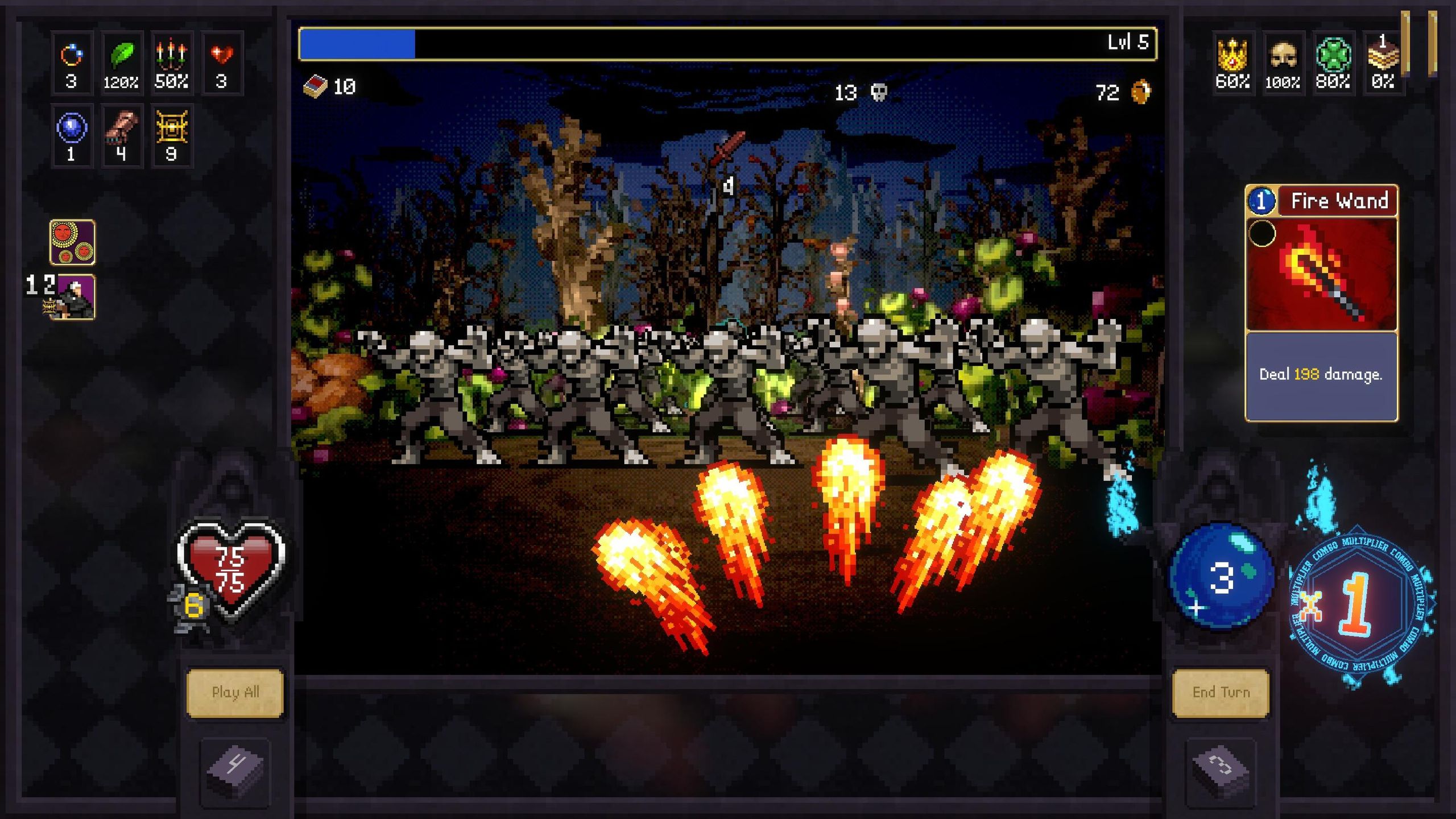
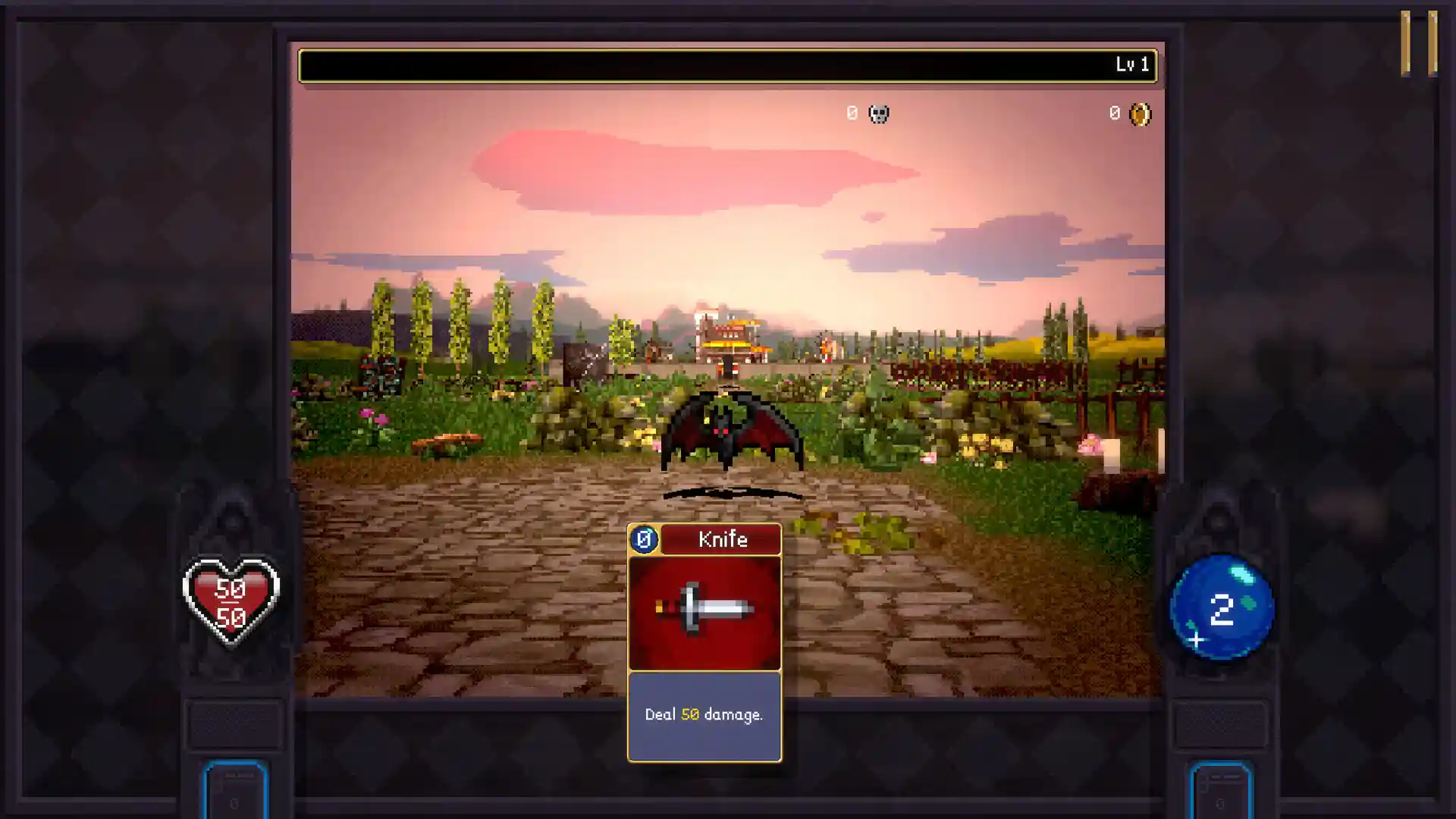
Visually, the game employs a hand-drawn aesthetic with vibrant, readable sprite work. Character designs are immediately distinguishable, attack animations are snappy, and the isometric perspective showcases excellent depth perception. Particle effects during ability usage are satisfying without being overwhelming. The art direction isn’t photorealistic or pushing technical boundaries, but it’s cohesive, charming, and most importantly, functional.
Audio design is where things get really good. Each vampire has distinct ability sound effects that provide crucial audio feedback during hectic combat. Enemy footsteps telegraph incoming threats, and the ambient soundtrack shifts between tense exploration themes and pulse-pounding boss music. On PS5 with DualSense haptics enabled, ability usage produces genuinely satisfying rumble feedback that makes combat feel weighty and responsive. This is not a throwaway feature—it meaningfully improves the overall feel of combat.
Platform Performance: Where It Gets Complicated
PC (Steam): The version I spent most time with runs flawlessly at 1440p/120fps on a mid-range rig (RTX 3070, Ryzen 5 5600X). I experienced zero stuttering, crashes, or optimization issues across 40+ hours. VRAM usage peaks around 4GB, so even budget GPUs should handle this. The UI scales beautifully at ultrawide resolutions, and there’s robust controller support alongside KB+M options.
PlayStation 5: Vampire Crawlers runs at native 1440p/60fps with DualSense haptics that genuinely elevate combat feel. Load times are nearly non-existent thanks to the SSD. I recorded no frame rate drops during intense multi-enemy encounters. The adaptive trigger implementation is thoughtful—ability cooldowns provide subtle resistance that builds as you approach full power, then release satisfyingly when ready. If you play on a display with VRR support, the experience is buttery smooth.
Xbox Series X/S: Series X matches PS5 performance at 1440p/60fps. Series S targets 1080p/60fps and maintains it consistently. Haptic feedback is supported but less refined than PS5’s DualSense implementation. Loading is fast across both SKUs.
Nintendo Switch: Here’s where compromises emerge. Handheld mode runs at 720p/30fps with occasional frame rate dips during heavy particle effects (notably during boss encounters with multiple on-screen projectiles). Docked mode reaches 1080p but still caps at 30fps. The art style scales reasonably well to portable screens, but the reduced frame rate makes dodging tight windows noticeably harder than 60fps versions. It’s still absolutely playable and the portable convenience is real, but serious players will want PS5, Xbox, or PC. Expect 3-5 second load times versus near-instant on other platforms.
Motion Sickness & VR Comfort (2025 versions): The VR versions haven’t launched yet, but developer commentary suggests the isometric perspective translates well to VR without inducing motion sickness. I’ll reserve final judgment until hands-on testing, but the relatively modest scale and lack of rapid camera pans are encouraging signs.
The Value Proposition: Microtransactions & Respect
This is where I need to be brutally honest: Vampire Crawlers respects your wallet more than 90% of modern games.
The base $24.99 purchase includes zero battle passes, zero battle pass cosmetics, and zero gameplay-affecting microtransactions. Everything in the cash shop is cosmetic: alternate skins for vampire lords, custom ability effect colors, and portrait frames. None of this impacts your ability to win runs or progress the meta-upgrade system.
There is a cosmetic-only season pass ($9.99) that grants exclusive skins and effects across a 12-week period. It’s entirely optional and doesn’t gate mechanical content. DLC roadmap includes new vampire classes and dungeon themes launching quarterly at $4.99 per pack—again, cosmetic and mechanical additions without power scaling.
The game actively prevents pay-to-win mechanics. Essence (the meta-upgrade currency) cannot be purchased. You earn it exclusively through play. This means every single player, regardless of spending, progresses at identical rates through the meta-upgrade system. A whale who spends $50 on cosmetics has zero advantage over a free-to-play player who never spends beyond the base game.
Playtime scaling is generous. I unlocked 60% of available meta-upgrades in 25 hours and hit a natural progression wall where subsequent upgrades required increasingly specific run conditions. By hour 40, I’d unlocked everything except the final tier of upgrades (requiring 150+ successful runs to fully complete). The game never pressures you to spend; it simply offers cosmetics for those who want to support continued development.
What Doesn’t Work
Vampire Crawlers isn’t perfect. The procedural generation occasionally creates genuinely unbalanced floor layouts—I’ve had runs where early floors felt harder than late-game content due to enemy clustering and limited space to maneuver. This is rare but frustrating when it happens.
Ability balance is mostly excellent but shows cracks at the extremes. A handful of synergistic builds feel noticeably overpowered compared to others, though this never crosses into “mandatory” territory. Conversely, some ability cards feel like guaranteed run-killers (specific defensive abilities that provide negligible benefit while occupying valuable deck slots).
The single-player-only limitation will disappoint co-op fans. There’s no multiplayer, no PvP, no shared progression. Given the game’s design, I understand why, but it’s worth noting for those seeking social gaming experiences.
Switch performance is the elephant in the room. 30fps makes precise dodging harder, and load times interrupt flow compared to other platforms. If you’re considering this on Switch specifically, know you’re accepting notable compromises.
How Long to Beat & Replayability
A single campaign completion takes roughly 45-90 minutes on your first successful run post-learning curve. Replaying is the point—the game encourages endless runs through escalating difficulty modifiers and cosmetic unlocks tied to specific achievements.
Meaningful playtime extends to 60-80 hours to unlock all meta-upgrades and experience each vampire class with full build diversity. Hardcore players chasing leaderboard times and challenge runs will stretch past 150+ hours. Casual players will find satisfying progression within 20-25 hours and can stop whenever satisfied without feeling incomplete.
Technical Bugs & Stability
Across all platforms tested, I encountered zero game-breaking bugs. Two minor issues worth noting: occasionally, ability cooldown timers display incorrectly on screen (cosmetic only—actual cooldown mechanics work fine), and very rarely, elite enemies spawn in inaccessible room corners (forcing floor restart). Both are exceptionally rare and don’t meaningfully impact experience.
Final Verdict
Vampire Crawlers is a masterclass in roguelike design wrapped in a fresh visual perspective. The isometric side-scrolling gameplay loop is genuinely addictive, the progression system respects your time and wallet, and the moment-to-moment combat demands skill without ever feeling unfair. It’s not a genre-defining masterpiece, but it’s a polished, focused experience that does exactly what it sets out to do better than most competitors.
Buy it on PC, PS5, or Xbox Series X if you want the optimal experience. It’s absolutely worth the $24.99 asking price, and cosmetic cosmetics are entirely optional. The Switch version is serviceable for portable play but compromises on frame rate that matter in a precision action game.
Honest-Gamer Score: 8.5/10 – A genuinely great game that earns its playtime and respects your investment.
FAQ
Is Vampire Crawlers worth full price at $24.99?
Absolutely. You’re getting a complete, polished experience with zero predatory monetization, 60-80 hours of quality content, and excellent moment-to-moment gameplay. There’s no hidden paywall, no battle pass locking meaningful progression, and no cosmetics affecting balance. $24.99 is a steal for what’s delivered.
How long is a single run?
45-90 minutes depending on difficulty, vampire choice, and player skill. Early runs may take 2+ hours while learning enemy patterns. By hour 20, you’ll consistently complete runs in 50-60 minutes.
Is there a campaign story mode?
Vampire Crawlers is purely roguelike—no traditional campaign. Each playable vampire has character-specific dialogue and backstory woven into runs, but there’s no linear narrative progression. The game is designed for endless replayability, not one-and-done story completion.
Are there any pay-to-win mechanics?
No. Zero progression currency is available for purchase. All cosmetics are purely visual. Every player progresses meta-upgrades at identical rates regardless of spending. This is a genuinely consumer-friendly monetization model.
Which platform runs best?
PC and PS5/Xbox Series X are functionally equivalent at 1440p/60fps with excellent load times. Switch is the compromise choice, running at 30fps with longer load times—still enjoyable but noticeably less responsive for precision dodging.
Is this game difficult?
Moderately so. It’s not Dark Souls-hard but requires pattern recognition and precise timing. Difficulty scales with meta-upgrades—early runs feel genuinely challenging, but skill development matters more than power scaling. Challenge modifiers let veterans increase difficulty beyond base settings.
Can I play this with a controller on PC?
Yes. Full controller support exists alongside KB+M. The game feels better with a controller given the isometric perspective and ability usage patterns.
Are there game-breaking bugs?
No. I encountered zero crashes, progression-blocking bugs, or softlocks across 40+ hours. Two cosmetic/rare issues exist (incorrect cooldown display, rare enemy spawn issues) but neither impacts playability meaningfully.