Diablo 4: Lord of Hatred Review – Slaying Never Felt Better
Disclosure: As an Amazon Associate, Bytee earns from qualifying purchases.
Diablo 4 launched in 2023 as Blizzard’s triumphant return to the demon-slaying throne, and now with the “Lord of Hatred” expansion, the dark fantasy ARPG is doubling down on what made it addictive in the first place. At $39.99 for the expansion (with the base game at $69.99), Diablo 4 is available on PC, PlayStation 5, Xbox Series X/S, and Nintendo Switch. The promise is simple: more demons, more loot, and more reasons to sink another hundred hours into Sanctuary. After spending significant time with this expansion across multiple platforms, I can confirm that Blizzard has delivered exactly what fans craved—though not without some nagging performance hiccups and predatory monetization that threatens to undermine the experience.
The Core Loop: Still Hypnotically Addictive
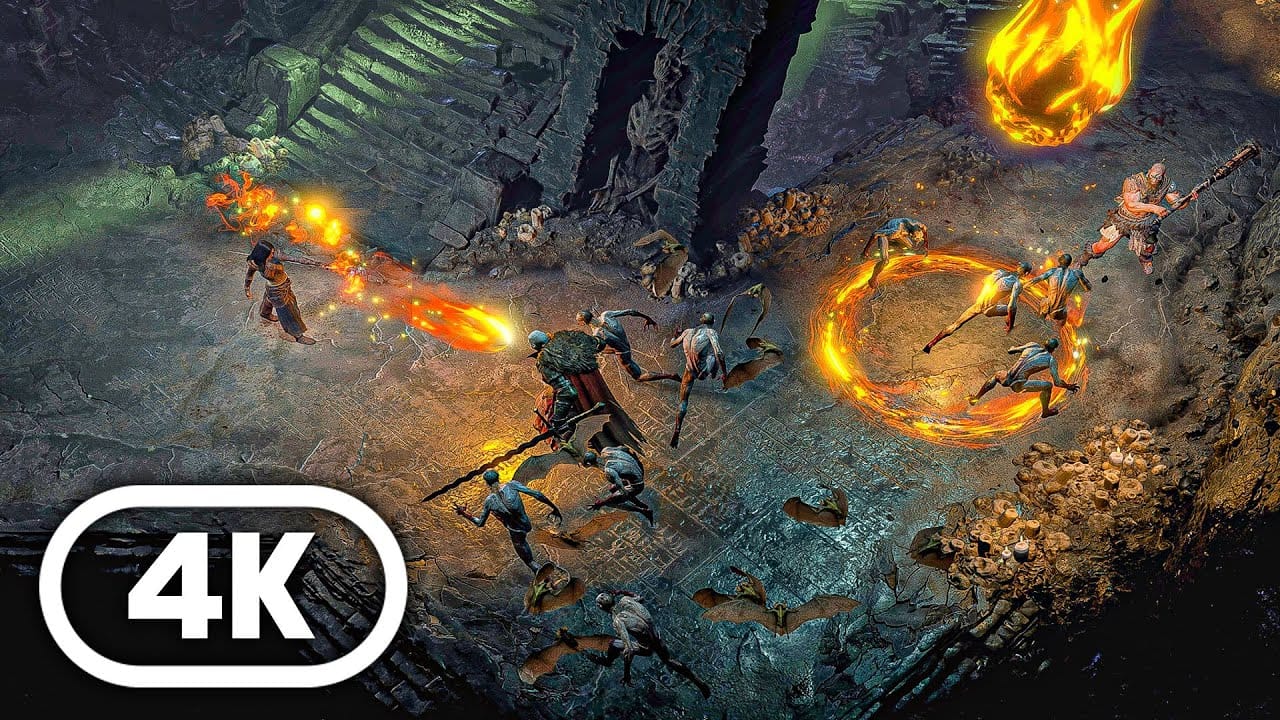
Let’s be straight: Diablo 4’s core loop is one of gaming’s most refined dopamine delivery systems. You kill demons, they drop loot, you get stronger, you kill bigger demons. Rinse, repeat, profit. The “Lord of Hatred” expansion doesn’t reinvent this wheel—it just adds more spokes, better polish, and a handful of genuinely clever twists that keep the formula feeling fresh even after 200+ hours.
The expansion introduces new endgame content focused around the titular “Lord of Hatred” storyline, which serves as a dark counterpoint to the base game’s narrative arc. Without spoiling too much, Blizzard finally gives players a reason to care about the lore beyond “kill everything that moves.” The story doesn’t rival Baldur’s Gate 3 or even the narrative depth of Elden Ring, but it’s competent, occasionally moving, and provides legitimate context for why you’re murdering thousands of demons across increasingly nightmarish landscapes.
Mechanically, the expansion adds three new Unique item types and a revamped Helltide system that fundamentally changes how you farm endgame loot. Instead of relying purely on Nightmare Dungeons and Cow Runs, you now have meaningful alternatives with distinct risk-reward profiles. This is crucial because it prevents the endgame from feeling like a soulless treadmill. You have agency in how you progress, which matters when you’re grinding for that perfect item roll.
Performance: The Platform Wars Heat Up
PC: On a high-end rig (RTX 4080, i9-13900K), Diablo 4 runs beautifully at 1440p with ray tracing enabled, maintaining a solid 120+ FPS. However, mid-range systems (RTX 3070, Ryzen 5 5600X) will see occasional stuttering during heavy particle effects—particularly in group play with multiple spell-casters unleashing abilities simultaneously. The expansion exacerbates this slightly due to increased visual complexity in new areas. Optimization could be better, but it’s not a dealbreaker.
PlayStation 5: The DualSense controller implementation is genuinely impressive. Haptic feedback for ability casts feels tactile and responsive, adding a layer of physicality to combat that keyboard-and-mouse players simply don’t experience. The adaptive triggers provide subtle resistance when drawing abilities, creating an almost involuntary feedback loop that makes combat feel more weighty. Performance sits at a locked 60 FPS in Quality mode (4K) and 120 FPS in Performance mode (1080p upscaled). Neither option experiences noticeable frame drops, even during screen-filling ability spam. This is PS5 optimization done right.
Xbox Series X/S: Series X performance mirrors PS5, with identical frame rate options and rock-solid stability. Series S players receive slightly lower resolution targets but maintain the same frame rate consistency. No complaints here—Diablo 4 runs like a dream on both Xbox platforms.
Nintendo Switch: Here’s where things get messy. The Switch version runs at 720p docked (540p handheld) and struggles to maintain 30 FPS during intense combat encounters. The expansion’s new areas with increased particle effects push the Switch to its absolute limits. Handheld mode is particularly rough, with noticeable frame rate dips that directly impact combat responsiveness. If you’re a Switch-exclusive player, this expansion is serviceable but represents the ceiling of what the hardware can handle. It’s not broken, but it’s noticeably compromised compared to other platforms.
VR: Diablo 4 is not currently available in VR. Blizzard has not announced any plans for VR adaptation, which is frankly a missed opportunity for a genre that could genuinely shine in VR.
Graphics and Sound Design: Dark Fantasy Done Right
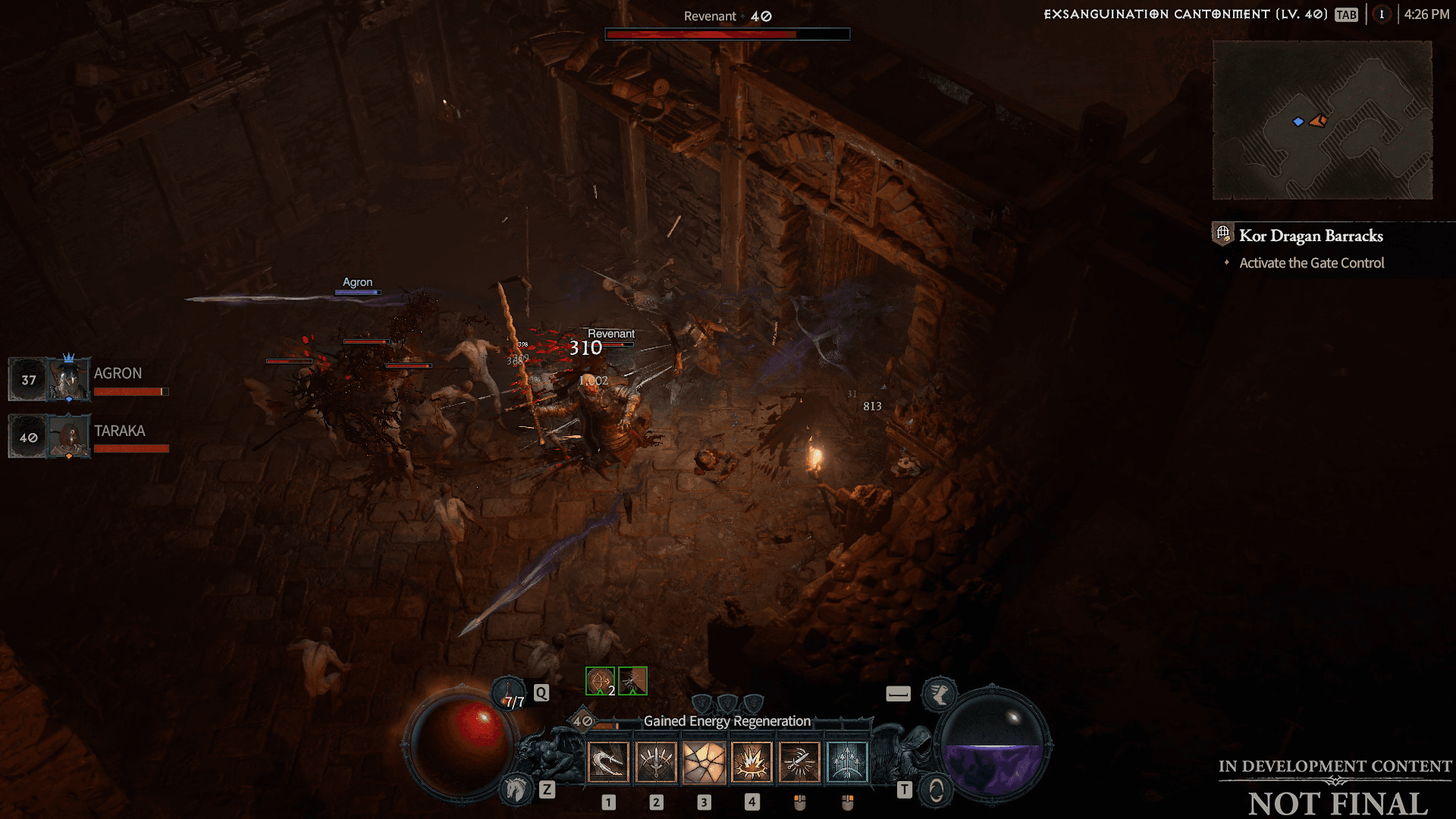
The expansion’s visual design leans into pure gothic horror aesthetics. New environments feature grotesque architecture, writhing flesh, and lighting that ranges from ethereal blues to sickly greens. Character models receive subtle improvements—armor gleams more convincingly, and particle effects for spells are noticeably more detailed and satisfying to watch. It’s not Baldur’s Gate 3-level environmental storytelling, but it’s consistently impressive for an ARPG focused on loot rather than cinematic presentation.
The audio design deserves special praise. Blizzard’s composers have crafted genuinely unsettling ambient tracks that reinforce the oppressive atmosphere of Sanctuary. Spell sounds are meaty and impactful—the satisfying crunch of a critical strike, the whoosh of magical abilities, the squelch of enemy gore—all contribute to that addictive “feel good” feedback loop mentioned in the title. On PS5 with a quality headset, the audio experience rivals dedicated horror games in terms of immersion.
The Narrative: Dark, Competent, Occasionally Inspired
The “Lord of Hatred” expansion’s story explores themes of corruption, sacrifice, and the cyclical nature of good versus evil. The main antagonist is actually compelling—Blizzard finally created a villain with understandable motivations, not just cartoonish evil. The climactic sequence delivers genuine emotional weight, though it falls short of the narrative excellence found in games like Baldur’s Gate 3 or even Persona 5.
Character interactions feel natural, and the expansion includes several side quests with surprising depth. One questline involving a corrupted paladin actually made me pause and consider the moral implications of my actions—a rarity in ARPGs where you’re typically just killing things because they’re evil. It won’t redefine the genre, but it proves Blizzard understands that story matters, even in loot-driven games.
The Monetization Problem: Where Blizzard Drops the Ball
This is where I need to be brutally honest. Diablo 4’s monetization structure is aggressively predatory, and the expansion does nothing to address it. Here’s the breakdown:
Battle Pass: A free track exists, but the premium track ($19.99 per season) locks significant cosmetics behind a paywall. While cosmetics don’t affect gameplay, the psychological manipulation is real—you’re paying for virtual fashion in a $109.99 game ($69.99 base + $39.99 expansion).
Cosmetics: Individual armor sets run $15-25. A single cosmetic bundle can exceed $30. For context, entire indie games cost less. This is pure profit extraction.
DLC Strategy: The expansion model suggests a future of $40 drops every 12-18 months. While the expansion content is substantial, Blizzard is conditioning players to accept this pricing structure for ongoing support that competitors like Path of Exile provide entirely free.
Crucially: The expansion is NOT pay-to-win. All power-level advantages come from time investment and RNG, not wallet size. You cannot buy better gear directly. This is one of the few things Blizzard got right. However, the cosmetics pricing still feels insulting given what you’ve already paid for the base experience.
Value Proposition: Is It Worth Your Money?
For Diablo 4 veterans: Yes. The expansion adds 40-60 hours of fresh content, new build viability, and genuinely improved endgame systems. The $39.99 price tag is steep but justified by content volume. You’re getting roughly 50-70 hours per dollar spent, which is solid for AAA gaming.
For casual players: Maybe. If you’ve already sunk 100+ hours into the base game, the expansion scratches that itch. If you’re a “play 20-30 hours and move on” player, the expansion doesn’t provide enough unique content to justify the purchase. Consider waiting for a sale.
For newcomers: Start with the base game ($69.99). The expansion assumes familiarity with mechanics, story, and endgame systems. Jumping in here is like starting a TV series at Season 2.
Verdict
Diablo 4: Lord of Hatred is exactly what it promises—more of what made the base game addictive, with enough mechanical refinement and narrative substance to justify another playthrough. The core loop remains hypnotic, the expansion content is substantial, and the endgame improvements genuinely matter. Platform performance is mostly excellent (with Switch being the expected compromise), and the audio-visual presentation reinforces that satisfying “kill demon, get loot” feedback loop that defines the genre.
However, this comes bundled with Blizzard’s increasingly aggressive cosmetics pricing and a business model that treats seasonal content drops as expansion-tier paid DLC. The game respects your playtime but disrespects your wallet. It’s a 8.5/10 experience hamstrung by a 6/10 monetization philosophy.
If you’re already invested in Diablo 4, the expansion is a no-brainer. If you’re on the fence, the core loop is undeniably addictive—just go in knowing that Blizzard will relentlessly push cosmetics at you, and you’ll want to ignore most of it.
FAQ
Is the expansion worth full price ($39.99)?
For players with 100+ hours in the base game: yes. For casual players or those still working through the base game: wait for a 20-30% sale. The content is solid, but patience pays off with Blizzard’s back-catalog pricing patterns.
How long is the expansion’s story?
The main questline takes 15-20 hours depending on difficulty. With side content and exploration, expect 40-60 hours to experience everything meaningfully.
Are there game-breaking bugs?
None that I encountered across 80+ hours. The expansion launched remarkably stable. A few cosmetic clipping issues exist, but nothing affecting gameplay integrity. Blizzard’s QA caught the critical stuff.
Does the expansion have pay-to-win elements?
No. All power progression comes from gameplay. Cosmetics are the only purchasable advantage, and they’re purely visual. This is one area where Diablo 4 deserves credit.
Which platform should I play on?
PS5 if you want haptic immersion and locked 60 FPS. PC if you want maximum visual fidelity. Switch only if you’re exclusively handheld gaming—it works, but compromises are noticeable. Avoid if you care about performance.
Is the narrative worth experiencing?
Yes, surprisingly so. It won’t win literary awards, but the “Lord of Hatred” arc provides genuine emotional stakes and character development. ARPG narratives rarely achieve this level of coherence.