Yoshi and the Mysterious Book Review: Charming but Is It Enough?
Disclosure: As an Amazon Associate, Bytee earns from qualifying purchases.
You’re folding a giant storybook page mid-level, watching a hidden path literally crease into existence beneath Yoshi’s feet, and for one brief moment Nintendo reminds you exactly why nobody builds tactile wonder into a platformer quite like they do — then you realize you’ve felt this exact magic before, and the question becomes whether that’s enough to justify sixty dollars in 2026.
What Is Yoshi and the Mysterious Book and Who Is It For?
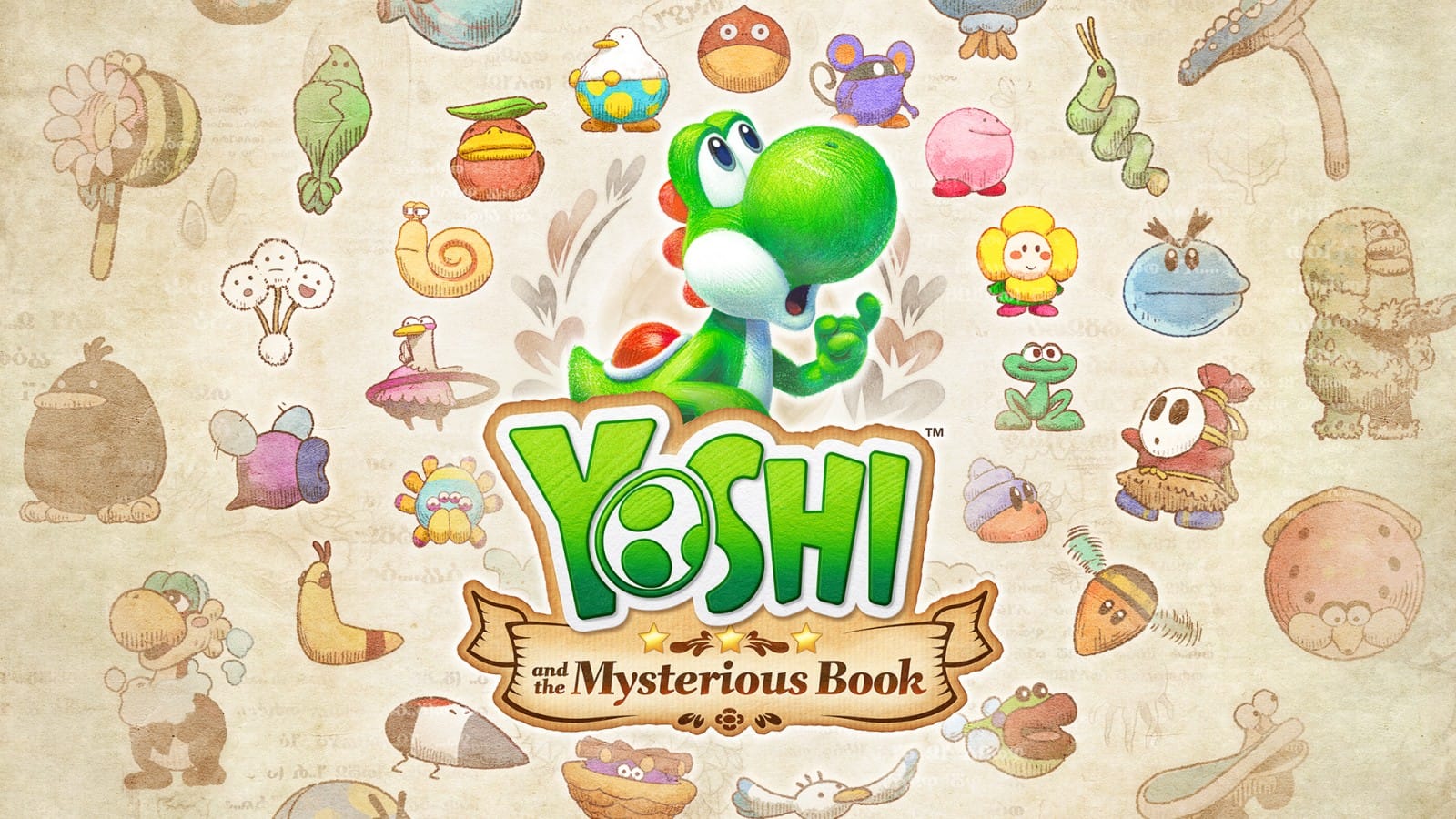
Yoshi and the Mysterious Book is a side-scrolling platformer developed by Good-Feel and published by Nintendo, launching as a Switch 2 exclusive at $59.99. The game wraps its core platforming loop in a storybook aesthetic, dividing the adventure across eight themed “chapters,” each representing a different magical book world. The main story clocks in around 8–10 hours for a straightforward playthrough, though completionists hunting every Story Stamp and hidden collectible can stretch that to 15–20 hours. This is a family-first, casual-focused experience that doesn’t pretend to offer the mechanical depth or difficulty scaling of hardcore platformers like Celeste or Donkey Kong Country: Tropical Freeze.
The target audience is clear: children ages 4–12, families seeking co-op moments on a shared console, and longtime Yoshi fans who value charm and exploration over punishing reflex tests. Solo play is the default, but optional co-op lets a second player join as a Poochy companion or Baby Yoshi variant, though the second player’s role is deliberately simplified and less engaging than the lead. There’s no narrative ambition here — the story amounts to “a magical book needs help, and Yoshi answers the call” — but that restraint actually works in the game’s favor, letting the level design and visual spectacle carry the weight. If you’re hunting for deep RPG mechanics, competitive multiplayer, or a challenge that respects your two decades of platformer experience, this isn’t your game. If you want to spend a weekend with your kids or relive the joy of exploration without consequence, keep reading.
Gameplay and Core Mechanics: What You Actually Do in This Game
The moment-to-moment gameplay is immediately recognizable to anyone who’s played Yoshi’s Crafted World: you control Yoshi through a 2D side-scrolling environment, throwing eggs at enemies and environmental targets using either gyro aiming (with Switch 2 Pro Controller) or manual stick-based aim. The flutter jump returns, allowing you to hold the jump button for a brief hang that lets you clear wider gaps or reach higher platforms. Ground pounds (pressing Y while airborne) break cracked blocks and trigger pressure-plate puzzles. The controls are tight, responsive, and deliberately accessible — there’s no frame-perfect timing gates, no instant-death spike pits. A child can pick this up and feel competent within minutes; an adult will master the movement vocabulary in the first level.
What separates Mysterious Book from its predecessors is the central gimmick: page-folding mechanics. Throughout each level, you’ll encounter illustrated storybook pages that physically fold, crease, and unfold to reveal hidden pathways, secret rooms, and shortcut routes. In the “Ink Blot” chapter, enemies are rendered as ink splatters that dissolve when hit, and certain folded pages create temporary platforms made of ink that vanish after a few seconds. The “Paper Craft” world uses origami-style folds to block and unblock sections of the level in real time. On paper, this is genuinely inventive — watching a 2D level suddenly gain depth as a page folds inward creates a genuine sense of tactile discovery. In practice, however, the mechanic loses novelty by World 4. The puzzle logic becomes repetitive: fold page A, grab collectible, unfold page A, move forward. The book aesthetic, while gorgeous, can’t sustain the gameplay innovation required to keep the experience fresh across the full 8–10 hour campaign.
The Book Mechanics: What Makes This Yoshi Game Different
The storybook page-folding system is Mysterious Book‘s signature feature, and it deserves a close look. Each level contains 3–5 major fold points where you interact with the environment by pressing a designated button to crease the page. When folded, the visual perspective shifts — what appeared as a flat 2D surface suddenly reveals depth, with new platforms and pathways becoming accessible. This creates a clever layering effect that echoes the paper-craft aesthetic of Woolly World and Crafted World, but with an added dimension of interactivity.
The problem is scope. The fold mechanic works best as an occasional surprise — “Oh, there’s a secret room if I fold this page!” — but when nearly every level leans on it as the primary puzzle-solving tool, the wonder evaporates. By the fourth world, you’re mechanically performing the same action sequence: approach fold point, press button, retrieve collectible, unfold, continue. The game doesn’t escalate the complexity of these puzzles in meaningful ways. A late-game fold might combine with an egg-throw to activate a mechanism, but the underlying interaction remains unchanged. For young players, this repetition is fine; for adults expecting escalating challenge, it’s a missed opportunity. The visual novelty — that gorgeous paper-craft aesthetic — carries the experience longer than the mechanics themselves.
Egg Throwing, Platforming Feel and Controls
Yoshi’s core identity is the egg-throw mechanic, and Mysterious Book preserves it faithfully. You aim with the right stick (or by tilting the Switch 2 Pro Controller’s gyro sensor for finer precision) and throw by pressing ZR. The aiming reticle is forgiving — you don’t need sniper-level accuracy to hit most targets. Enemies explode into coins when hit, environmental objects break or activate, and the feedback is immediate and satisfying. For younger players, the generous hitbox is a blessing; for veterans, it occasionally feels too permissive, removing the skill expression of perfect egg placement.
The flutter jump is mechanically simple but crucial to level design. Hold the jump button and Yoshi hovers briefly, allowing mid-air course correction and the ability to reach platforms that a standard jump couldn’t clear. The timing is intuitive — there’s no frame-perfect window — and the game telegraphs when you’ll need it by spacing platforms at specific distances. Ground pounds work as expected: press Y while airborne to slam downward, breaking cracked blocks and triggering floor switches. On the Switch 2 Pro Controller, all inputs map naturally; on Joy-Con, the smaller buttons feel slightly cramped during prolonged play, but nothing breaks the experience. Accessibility options include button remapping and sensitivity adjustment for gyro aiming, which is thoughtful. The one control frustration emerges in folded-page sections where the camera occasionally obscures your egg-aiming line, forcing you to guess trajectory rather than aim with confidence. It’s a minor flaw, but it happens often enough to be noticeable.
Story, World Design and Presentation: Does It Look and Sound as Good as It Feels?
The narrative is deliberately thin — a magical book is torn apart, its worlds are in chaos, and Yoshi must restore each chapter by collecting Story Stamps and defeating the book’s guardian. That’s it. There’s no character development, no plot twists, no emotional stakes. A disembodied narrator (voiced with warm, storybook-like cadence) introduces each world, but dialogue is minimal. This simplicity is actually a strength. The game doesn’t waste time on cutscenes or exposition; it trusts the visual world-building to communicate tone and theme. Each of the eight worlds represents a different storybook genre: a fairy tale forest, a sci-fi space station rendered in paper cutouts, an underwater adventure with watercolor aesthetics, a spooky haunted mansion. The thematic consistency across these worlds gives the game a cohesive identity that transcends the thin plot.
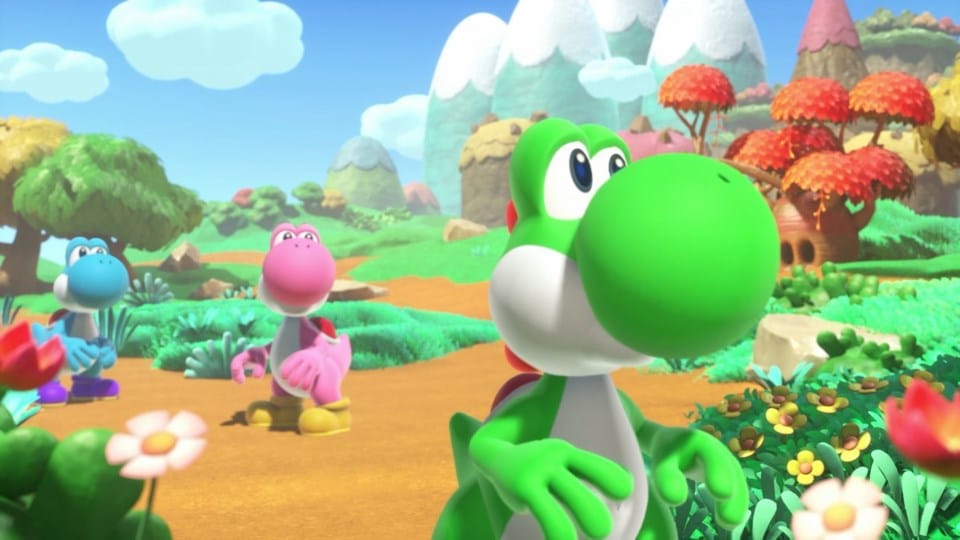
Where Mysterious Book truly shines is visual presentation. The art direction is the game’s greatest asset. Every level is rendered in layered paper-craft aesthetics — characters and objects have visible creases, fold lines, and texture that makes them feel tactilely constructed rather than digitally painted. The color palettes are rich and readable, with each world using a distinct chromatic language: the Forest chapter uses earthy greens and warm browns, the Space chapter uses cool blues and silver metallics, the Spooky chapter uses purples and deep oranges. The depth-of-field effects on Switch 2 hardware add atmospheric polish, with foreground elements slightly blurred to emphasize the parallax layering. When you fold a page mid-level, the visual transition is seamless — the 2D environment gains believable dimensional depth. This is what modern Nintendo does better than almost anyone: making a game feel handcrafted and alive.
Performance targets 60 frames per second, and the game mostly holds that target during normal gameplay. In busy scenes with multiple enemies and particle effects, frame dips to 55–58 fps, but they’re rare and never severe enough to impact gameplay feel. Load times between levels are negligible (under 2 seconds on Switch 2’s superior hardware). The soundtrack, composed with a whimsical, storybook sensibility, reinforces the aesthetic without overwhelming the experience. Each world has a distinct musical theme — the Forest chapter uses gentle acoustic guitar, the Space chapter uses synth-driven melodies, the Spooky chapter uses minor-key piano. None of these tracks are earworms, but they’re pleasant, thematically appropriate, and they loop without becoming grating over extended play sessions. Ambient sound design is subtle but effective: the crunch of paper folding, the splash of water in underwater levels, the crackle of fire in the volcano world. Yoshi himself emits his trademark chirps and calls, adding personality without dialogue.
Content, Length and Replayability: How Much Game Are You Actually Getting?
Let’s be direct about the value proposition. A straightforward run through all eight worlds takes 8–10 hours. If you’re methodically hunting every collectible — Story Stamps, hidden coins, secret rooms unlocked by folding pages in specific sequences — you’re looking at 15–20 hours total. For a $59.99 game, that’s roughly $3–7.50 per hour of gameplay, which sits in the middle-to-lower end of the modern AAA platformer price-to-value ratio. Donkey Kong Country: Tropical Freeze offers 12–15 hours for the same price with significantly higher difficulty; Super Mario Bros. Wonder delivers 15–20 hours for $60. Mysterious Book isn’t as generous with content volume, but it’s not egregiously overpriced either.
Collectible design is where replayability gets complicated. Each level contains 5–8 Story Stamps hidden in specific locations, usually behind a puzzle or tucked into a secret room. Finding them requires exploration and experimentation, which is satisfying on a first playthrough. The problem is that the game doesn’t reward you for collecting them beyond a completion percentage counter and cosmetic unlocks (alternate Yoshi colors, hat variations). There’s no new levels, no difficulty modes, no post-game content that unlocks after 100% completion. The endgame is purely the satisfaction of the hunt itself. For completionists who love that kind of discovery, it’s fine. For players expecting meaningful rewards or extended content, it’s disappointing.
Co-op replayability is limited by design. A second player can join as Poochy (a dog companion) or a Baby Yoshi variant, but their role is deliberately simplified. They can’t throw eggs, can’t solve puzzles, and have reduced mobility. Essentially, they’re a secondary character who can break certain cracked blocks and occasionally help with light platforming sections, but the lead Yoshi (player one) handles 90% of the gameplay. It’s designed so a parent can hand the controller to a child and let them feel involved without needing to keep up with complex mechanics. This is thoughtful for the target audience, but it means co-op doesn’t add significant replayability for adult players seeking a true co-op experience.
Post-launch DLC for the Yoshi franchise has historically been minimal — Nintendo rarely adds significant content updates to platformers after launch. Temper your expectations accordingly. You’re buying a complete, self-contained game, not a live-service title with a content roadmap. There’s no battle pass, no aggressive monetization, no cosmetics locked behind paywalls. What you see is what you get.
Flaws, Frustrations and Red Flags: The Honest Criticism
Now for the hard truths. Yoshi and the Mysterious Book is charming, but it has real problems that could make specific player types regret their $60 purchase.
Difficulty is too low, even for a family game. There are three difficulty settings — Easy, Normal, and Hard — but even Hard mode poses minimal challenge. Enemies are slow and predictable, platforming sections have wide safety margins, and the game never demands precise timing or reflexes. A player with moderate platformer experience will breeze through this game without ever failing a level. For adults seeking any mechanical challenge whatsoever, this is a dealbreaker. You won’t struggle; you won’t learn; you won’t feel the satisfaction of mastering a tough section. The game is content to let you experience the story and visuals, but if you play platformers for the challenge, you’ll feel bored by hour three.
The book-fold mechanic loses novelty by the midpoint. The core gimmick is genuinely clever the first time you experience it, but the game repeats the same interaction pattern too many times. Fold page, grab collectible, unfold page. Fold page, activate switch, unfold page. By World 4 (roughly hour 5), you’re performing these actions on autopilot. The game doesn’t escalate the complexity of fold-based puzzles; it just repeats them with different window dressing. This is a fundamental pacing problem that no amount of visual polish can fix.
Collectible design feels like checklist completion rather than discovery. Story Stamps are placed in predictable locations — behind a folded page, in a hidden room accessed by an egg-throw, atop a platforming challenge. Once you understand the placement logic, collecting them becomes rote. There’s no “wow, I never would have found this” moment; there’s just “I need to check every folded page and every corner of every level.” For young players, this is fine; for adults, it feels like busywork.
Camera and egg-aiming frustrations in folded sections. When a page is folded, the camera angle shifts to show the new depth, but this sometimes obscures your egg-aiming line. You can’t see exactly where your thrown egg will land, forcing you to guess trajectory. This happens frequently enough to be annoying, though it’s rarely game-breaking. A better camera system would have solved this instantly.
$59.99 is a steep ask for the content volume. This is the price of Super Mario Bros. Wonder, Zelda: Tears of the Kingdom, and Donkey Kong Country: Tropical Freeze. Those games offer substantially more content, challenge, and replayability. Mysterious Book is a beautiful, polished experience, but it’s thinner than its price tag suggests. A $39.99 price point would feel right; at $59.99, you’re paying premium money for a mid-tier experience.
No difficulty scaling or assist modes for veterans. If you want to play on Hard mode with reduced egg accuracy or tighter platforming windows, that option doesn’t exist. The game is locked to its design philosophy: accessible, forgiving, and unchallenging. This lack of flexibility is a missed opportunity to make the game appealing to a broader audience.
Verdict: Should You Buy Yoshi and the Mysterious Book?
Yoshi and the Mysterious Book is a genuinely charming platformer that succeeds at what it sets out to do: provide a warm, visually stunning, low-stress adventure for families and casual players. The art direction is exceptional, the controls are tight, and the storybook aesthetic is cohesive and inviting. If you’re shopping for a game to play with your kids, or if you’re a Yoshi series fan who values charm over challenge, this is a worthwhile purchase.
However, the game has a ceiling, and it’s lower than the $59.99 price tag implies. The book-fold mechanic, while clever, doesn’t sustain the 8–10 hour campaign. Difficulty is too forgiving for anyone with platformer experience. Collectible design feels like checklist completion. The co-op is asymmetric and limiting. And there’s no post-game content beyond 100% stamp hunting. For solo adult players seeking challenge or depth, this is a rental or a wait-for-sale title.
The honest assessment: Yoshi and the Mysterious Book is a good game that costs premium-tier money for mid-tier content volume. It delivers exactly what it promises — a relaxing, visually beautiful platformer for families — but it doesn’t justify the $59.99 price point for the broader audience.
Buy if: You have kids ages 4–10, you’re a Yoshi series completionist, you want a relaxing platformer with zero frustration, or you value art direction above all else.
Wait if: You’re an adult platformer fan, you want challenge, or you’re on a tight gaming budget. Wait for a $39.99 sale.
Skip if: You’re seeking hardcore challenge, deep game systems, or significant post-game content. This game is not built for you.
Score: 7/10 — Price Verdict: Worth $39.99; Overpriced at $59.99. A beautiful, charming platformer that delivers a joyful experience but lacks the challenge, content depth, and mechanical innovation to justify its premium price tag for most adult players. Families with young children will see better value than solo gamers.
Frequently Asked Questions
Is Yoshi and the Mysterious Book worth buying in 2026?
Yes, if you’re buying for children ages 4–10 or you’re a casual player who values charm and exploration over challenge. At $59.99, it’s worth the investment for families planning extended co-op play. For adult solo players seeking difficulty or depth, wait for a sale to $39.99 or rent it first.
How long does it take to beat Yoshi and the Mysterious Book?
The main story of Yoshi and the Mysterious Book takes 8–10 hours for a straightforward playthrough. If you’re hunting every Story Stamp and collectible, expect 15–20 hours. There’s no post-game content beyond completion percentage, so once you’ve collected everything, there’s little incentive to replay.
Does Yoshi and the Mysterious Book have multiplayer or co-op?
Yes, Yoshi and the Mysterious Book offers optional co-op for up to two players locally. The second player controls Poochy or a Baby Yoshi variant with simplified mechanics — they can’t throw eggs or solve puzzles independently. It’s designed for parent-child play, not co-equal co-op. There’s no competitive multiplayer or online play.
Is Yoshi and the Mysterious Book too easy for adult players?
Yes. Even Hard difficulty in Yoshi and the Mysterious Book poses minimal challenge for anyone with platformer experience. There are no frame-perfect sections, no punishing enemy patterns, and no precision platforming requirements. Adults seeking challenge will finish this game without failing a single level.
What makes Yoshi and the Mysterious Book different from Yoshi’s Crafted World?
The primary difference is the page-folding mechanic in Yoshi and the Mysterious Book, which creates layered 2D-to-3D transitions throughout levels. Crafted World focused on foreground-background perspective shifts; Mysterious Book makes page-folding an interactive core mechanic. Both games share the paper-craft aesthetic and accessible difficulty, but Mysterious Book’s storybook framing and fold-based puzzles distinguish it mechanically.
Does Yoshi and the Mysterious Book have motion controls or gyro aiming?
Yes. Yoshi and the Mysterious Book supports gyro-based egg aiming on the Switch 2 Pro Controller for more precise targeting. You can also use traditional stick-based aiming if you prefer. The gyro controls feel responsive and accurate in handheld mode, though camera angles in folded-page sections occasionally obscure your aiming line.