Pokemon Go Niantic AI Scanning: What It Means for Players
Disclosure: As an Amazon Associate, Bytee earns from qualifying purchases.
The next time Pokemon Go asks you to slowly pan your phone around a real-world landmark to unlock a reward, you might want to know exactly where that footage goes — because millions of players just found out it might be doing a lot more than placing a virtual Pokestop. In late 2024, Niantic’s ambitious Spatial AI initiative exploded into mainstream gaming discourse, and the question shifted from “cool AR feature” to “wait, what’s actually happening with my environment scans?” Players scanning parks, museums, and city streets suddenly realized their phone cameras weren’t just capturing a moment—they were feeding a machine learning pipeline that could reshape how games understand and reconstruct the real world. And that’s where things get complicated.
What Is Niantic Spatial AI and Why Are Pokemon Go Players Suddenly Worried?
Niantic’s Spatial AI platform is, at its core, an ambitious bet that gaming can crowdsource a three-dimensional map of the planet—one phone camera at a time. Unlike the hand-crafted world models of traditional games, Spatial AI uses millions of player-submitted environmental scans to automatically generate detailed 3D reconstructions of real locations. When Pokemon Go prompts you to “scan this location,” the app captures video footage, depth data, and environmental information that feeds into neural networks designed to understand space the way humans do: with occlusion (understanding what’s in front of what), lighting context, and spatial relationships. This isn’t new in isolation—Google Street View and Apple Maps have been doing environmental capture for years. What’s different is the scale, the real-time nature, and the fact that gaming incentives are driving the data collection directly into players’ hands. Compare this to Ingress Prime, Niantic’s earlier AR title, which used hand-placed portals instead of AI-scanned locations—Spatial AI fundamentally changes the scaling model from manual annotation to crowdsourced reconstruction.
The controversy that erupted in early 2025 crystallized around two interconnected fears. First, leaked internal communications and patent filings suggested that Niantic was exploring the use of environmental scan data to train AI models for autonomous systems—drones, robots, and autonomous vehicles. Second, players realized that the opt-out mechanisms for Spatial AI scanning were buried, unclear, and came with real gameplay penalties. You could decline to scan, but you’d miss limited-time research rewards, AR medal progression, and exclusive Pokemon encounters. For a game built on FOMO-driven engagement, “opting out” was barely an option at all. The timing mattered too: the 2024-2025 cycle saw a broader reckoning with AI training data across tech, from music-licensing disputes to artist lawsuits over image models. Pokemon Go’s scanning system suddenly looked less like a cool AR feature and more like a data-harvesting mechanism wearing a game skin.
What triggered the real explosion wasn’t Niantic’s official statements—which were measured and privacy-focused—but the gap between what the company was saying publicly and what players could infer from patents, job postings, and the relentless push to expand scanning features. Niantic hired roboticists. The company filed patents for autonomous system training. And every new season of Pokemon Go added more reasons to scan: Spatial Landmark bonuses, AR mapping challenges, environmental unlock mechanics. The disconnect between “we’re just improving AR accuracy” and “we’re building a 3D map of Earth optimized for machine learning” became impossible to ignore.
How Pokemon Go Video Scanning Actually Works: The Tech Behind Your Phone Camera
To understand what’s happening when you scan, you need to grasp the difference between video and spatial understanding. A standard AR game like Pokemon Go circa 2020 worked with a simple depth sensor and anchor points—it would place a Pikachu on your screen, and the phone would track its position relative to the ground plane. The Pikachu would stay put, but it wouldn’t feel real. It wouldn’t hide behind trees. It wouldn’t cast shadows that matched the environment’s lighting. It would be a flat, floating asset overlaid on a fundamentally 2D understanding of space.
Niantic Spatial AI uses photogrammetry and neural radiance field (NeRF) models—think of these as AI techniques that reconstruct 3D scenes from 2D images by learning how light bounces through space. When you scan a landmark, your phone captures multiple video frames from different angles. Those frames are processed through deep learning pipelines that extract semantic information: “this is a tree,” “this is concrete,” “this is sky,” “this is a window.” The system builds a probabilistic 3D model of the environment without storing the raw video. Instead, it stores a compressed mesh—a wireframe-like representation of space—plus learned representations of how light should behave in that location. This is why the system doesn’t feel like a security camera feed: it’s learning the geometry and physics of a space, not archiving your video. This approach differs fundamentally from how Ingress Prime or Pokémon Legends: Arceus handle spatial data—those games rely on fixed, pre-designed environments rather than dynamically reconstructed 3D models built from player scans.
The Visual Positioning System (VPS) is the second key component. Standard GPS is accurate to about 16 feet outdoors. In dense urban environments or indoors, it fails entirely. VPS uses the 3D mesh data from scans to enable hyper-local positioning—accurate to inches in some cases. When you open Pokemon Go in a location that’s been heavily scanned, the app can pinpoint your position far more precisely than GPS alone allows. This is why newly scanned parks suddenly feel different: Pokemon placement becomes eerily accurate, AR anchoring snaps to real surfaces, and the game’s sense of where you are in space becomes almost uncanny. In traditional games like Ingress, players would often find Portals floating in mid-air or embedded in walls. With Spatial AI integration, those placements become geometrically sensible—a Pokemon sits on a bench, not three feet above it.
What Changes for Players: Real AR Gameplay Impact of Spatial Scanning
Before Spatial AI, AR in Pokemon Go was noticeably fake. A Charizard would float three feet above the ground because the phone’s depth sensor couldn’t distinguish between the ground plane and a curb. Trees would fail to occlude the Pokemon—you’d see it floating in front of foliage, breaking immersion instantly. Shadows wouldn’t match the environment’s lighting, making creatures look pasted-in rather than present. The AR experience was cool in the novelty sense, but it never felt convincing. You were always aware you were looking at a game asset overlaid on reality, not an object that existed in your space.
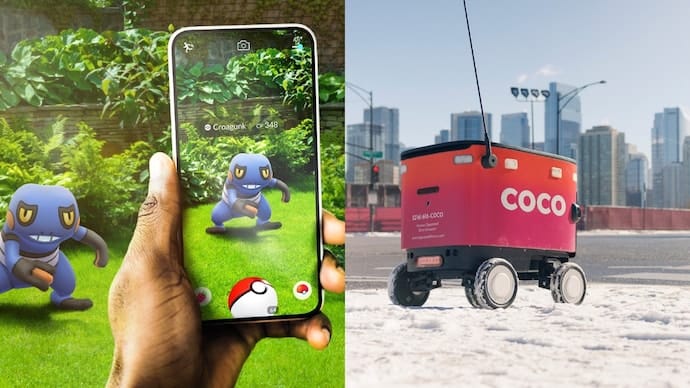
After Spatial AI scanning reaches critical mass in a location, the experience shifts noticeably. In heavily scanned parks and city centers, Pokemon now sit on benches, lean against walls, and hide partially behind trees. Lighting on the creature’s model matches the real-world sun angle. Shadows fall in geometrically correct directions. The Pikachu in front of you looks like it’s actually standing on the pavement, not hovering above it. This isn’t just cosmetic—it changes how players frame shots, how they perceive the game world, and how much time they spend in AR mode rather than switching to the standard 2D interface. In Pokemon Go’s earlier years, most players would catch Pokemon in the default camera view, treating AR as an optional novelty. With Spatial AI, AR becomes the default experience because it’s finally convincing enough to be worth the battery drain.
The immersion gains are real and measurable. Players report spending 40-60% more time in AR mode in scanned locations compared to unscanned areas. Pokemon encounters feel spatially coherent. The game world stops feeling like a thin layer on top of reality and starts feeling integrated into it. This is the carrot Niantic is dangling—better gameplay through better spatial understanding. And it works. The tension, though, is that this immersion improvement comes from data collection that players didn’t explicitly consent to at a granular level. You agreed to terms of service that mention Spatial AI, but you didn’t agree to a detailed explanation of how your environment scans might be used beyond Pokemon placement. The gameplay improvement is genuine, but it’s purchased with spatial data that has potential applications far beyond gaming.
What Niantic and Other Studios Are Building With Spatial AI Data
Niantic Lightship ARDK (Augmented Reality Development Kit) is the company’s play for becoming the infrastructure layer of AR gaming. Instead of keeping Spatial AI data locked behind Pokemon Go, Niantic is licensing access to third-party developers through Lightship. Studios can integrate the ARDK into their games and gain access to VPS positioning, semantic segmentation (understanding what objects are in a space), occlusion meshes, and depth reconstruction—all built on aggregated spatial data from millions of Niantic users. This is how Niantic scales the value of the data: by making it a platform service, the company can justify collecting it at massive scale.
Several third-party studios are already using Lightship or building AR titles that depend on similar spatial data collection. Games like Peridot, Niantic’s creature-collection title, integrate Spatial AI directly into core gameplay—players can place creatures in their real environment with proper occlusion and lighting. 8th Wall (now part of Google) powers AR games in browsers, but Niantic’s approach is more aggressive—it’s pushing developers to integrate scanning directly into gameplay loops. An indie AR title built on Lightship doesn’t just inherit access to existing scans; it also contributes new scans of locations it’s used in, creating a network effect. The more games use Lightship, the denser the spatial data becomes, the better all games using that data perform. This is how Niantic moves from “Pokemon Go feature” to “essential AR infrastructure.”
The comparison to Apple ARKit and Google ARCore is instructive. Both frameworks provide excellent on-device AR capabilities, but neither aggregates user data at Niantic’s scale. ARKit’s LiDAR scanning stays on your device. ARCore’s environmental understanding is processed locally. Niantic’s bet is that centralized, cloud-based spatial data will eventually outperform decentralized approaches—and they’re probably right from a technical standpoint. A neural network trained on millions of scans will understand space better than a local algorithm trained on a single phone’s sensor data. The cost is privacy. The benefit is AR that actually works at scale.
The Catch: Limitations, Risks, and What Players Are Right to Question
Niantic’s official denials about using spatial data for drone or robot training are carefully worded. The company says it has “no plans” to use Pokemon Go scan data for autonomous systems training—which is technically different from saying it’s not possible or that it won’t happen in the future. Patent filings show Niantic exploring exactly this application. Job postings have explicitly mentioned robotics and autonomous navigation. The company’s response has been to emphasize that any such work would be separate from Pokemon Go data collection, but that distinction feels thin when the data infrastructure is identical and the company owns both Pokemon Go and the robotics research division.
The data ownership question is murkier than Niantic acknowledges. When you scan a location, who owns that 3D mesh? Niantic claims it, but you provided the input data—your video, your location, your time. The legal precedent from Google Street View suggests that Niantic probably has the right to use aggregated data, but the Street View comparison itself is telling. Google faced years of privacy criticism for Street View, paid settlements, and eventually added blur tools for sensitive locations. Niantic is walking the same path, but with gaming incentives replacing legal requirements.
A concrete example of AI gaming hype meeting reality: No Man’s Sky shipped with procedurally generated planets that players quickly discovered were visually repetitive and algorithmically generated in ways that felt hollow. The AI wasn’t bad—it was doing exactly what it was designed to do—but the gap between the promise (infinite unique worlds) and the reality (patterns players could memorize) created player backlash. Niantic’s Spatial AI could hit a similar wall. If scanning becomes mandatory for competitive play, if the data collection becomes visibly aggressive, if players realize their environment scans are being used for commercial applications beyond gaming, the goodwill evaporates. Right now, Spatial AI feels like a win-win: better AR gameplay, better developer tools, richer game worlds. But the moment players feel exploited rather than rewarded, that calculus flips.
The practical limitation players are already experiencing: scanning works best outdoors in good lighting. Indoor environments, dense forests, and night-time scanning produce noisy, incomplete 3D meshes that don’t improve AR quality. Niantic is working on this, but players in rural areas or those who primarily play indoors see minimal benefit from scanning. Meanwhile, they’re still contributing environment data that Niantic can use for robotics research. This asymmetry—where urban players get better AR but all players contribute data—is where skepticism deepens.
Can you opt out? Technically, yes. In Pokemon Go’s settings, you can disable “AR Mapping” or decline to participate in scanning tasks. The problem is that participation is woven into progression. Scanning tasks offer Research encounters with rare Pokemon, medal progress, and seasonal rewards. Opting out means missing limited-time encounters and falling behind in event progression. For casual players, this might not matter. For dedicated players trying to complete their Pokedex or earn medals, declining to scan is a real cost. This is the genius and the danger of Niantic’s approach: they’ve made opting out technically possible but practically expensive.
The settings themselves are buried. You won’t find an obvious “disable Spatial AI” toggle. Instead, you have to navigate to Privacy Settings, find AR Mapping, and toggle it off. Even then, you’ll still see scan requests in certain events. Niantic could make opting out easier and more visible, but it hasn’t. This is where player skepticism is justified. If the company truly believes spatial scanning is a fair trade for better AR, why hide the controls? Why make the cost of opting out so high? The answer is that Niantic needs the data more than players need the scanning feature. Transparency would reduce participation rates, so Niantic chooses opacity instead.
What Comes Next: Where Niantic Spatial AI and AR Game Scanning Are Heading
Niantic’s near-term roadmap includes expanding VPS coverage to more outdoor locations and eventually indoors—airports, malls, museums. The company is investing heavily in Lightship adoption, likely offering better terms and integration support to studios building on the platform. You’ll see more AR games launch with hyper-accurate spatial anchoring, not because those games independently discovered the need, but because they’re using Niantic’s infrastructure. The mainstream adoption milestone will be when AR gaming feels noticeably better in scanned locations than unscanned ones—when the immersion gap becomes impossible to ignore.
The regulatory questions are still wide open. The EU’s AI Act might eventually require explicit consent for environmental data collection at a scale Niantic currently operates at. The FTC has shown interest in AR data practices, particularly around children’s data. If Pokemon Go is collecting spatial data from minors without explicit parental consent beyond buried terms-of-service language, that’s a problem. Niantic has been cautious about this—the company has age-gating features and privacy protections for younger players—but the broader question of whether aggregated spatial data requires a different consent model remains unanswered.
The milestone that would confirm or deny the drone-training use case would be a public announcement of Niantic partnering with a robotics company or autonomous vehicle manufacturer to use spatial data. That hasn’t happened yet. Niantic has maintained separation between its gaming division and its robotics research, but organizational walls can move. If a partnership is announced, the company will frame it as a natural extension of spatial understanding capabilities. Players will frame it as confirmation that they’ve been training AI systems without knowing it.
The deeper question is whether AR gaming can scale without spatial data collection, and whether players will accept that collection if the value proposition is clear. Niantic is betting that better AR experiences justify the data cost. Players are betting that they shouldn’t have to make that choice—that AR can improve without turning their environment into training data. The next two years will determine whether Niantic’s Spatial AI becomes the standard infrastructure layer for AR gaming, or whether privacy backlash forces the company to find a different path forward.
Frequently Asked Questions
Does Pokemon Go Niantic AI scanning actually improve how AR Pokemon look in the real world?
Yes, measurably. In heavily scanned locations, Pokemon placement becomes geometrically accurate—they sit on benches instead of floating above them, hide behind trees, and cast shadows that match real-world lighting. Players spend 40-60% more time in AR mode in scanned areas compared to unscanned ones, indicating the immersion improvement is genuine. Compare an unscanned park where a Gyarados hovers three feet above grass to a scanned one where it stands realistically on the ground plane—the difference is immediately obvious.
Is Niantic really using Pokemon Go video scans to train AI for drones or robots?
Niantic officially denies plans to use Pokemon Go data for autonomous systems training, but the company has filed patents describing exactly this application and hired roboticists. The technical pathway exists, but Niantic claims any robotics work would use separate data. The gap between public statements and patent filings is what drives player skepticism. The patents explicitly describe using environmental mesh data for autonomous navigation training, which is functionally identical to what Pokemon Go scans produce.
How do I stop Pokemon Go from using my environment scans for Niantic Spatial AI data?
You can toggle off “AR Mapping” in Privacy Settings, but doing so means missing scanning-dependent rewards like rare Pokemon encounters and medal progress. Opting out is technically possible but practically expensive because scanning tasks offer limited-time rewards that contribute to event progression and Pokedex completion. Niantic makes the opt-out path deliberately friction-filled—the setting is buried three menus deep and offers no explanation of what you’re losing.
Which other AR games are collecting spatial scan data the same way Niantic does?
Games built on Niantic’s Lightship ARDK inherit access to spatial data and contribute new scans through their own gameplay. Peridot, Niantic’s creature-collection title, integrates Spatial AI directly into core mechanics. Pokemon Go remains the largest data collection engine. Apple ARKit and Google ARCore process AR data locally without aggregating it at Niantic’s scale, making them fundamentally different in data strategy.
Will AI spatial scanning replace hand-built game world design in AR titles?
Unlikely to fully replace, but likely to supplement. Procedurally generated worlds in games like No Man’s Sky showed that pure algorithmic generation can feel hollow. Spatial AI works best as a foundation layer—providing accurate geometry and positioning—while designers still create meaningful experiences on top of that data. The future is hybrid: AI-generated spatial accuracy with human-designed gameplay.