Square Enix Operating Income Surges 34.9%: What It Means for Games
Disclosure: As an Amazon Associate, Bytee earns from qualifying purchases.
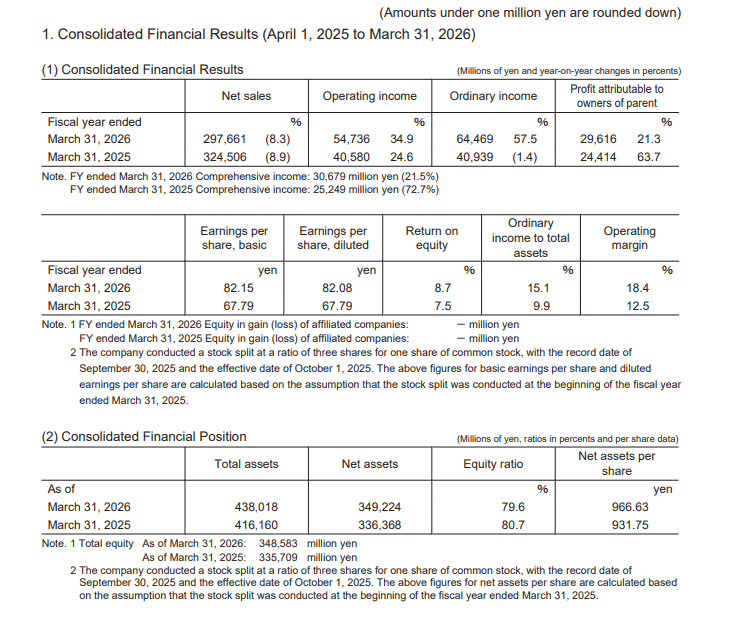
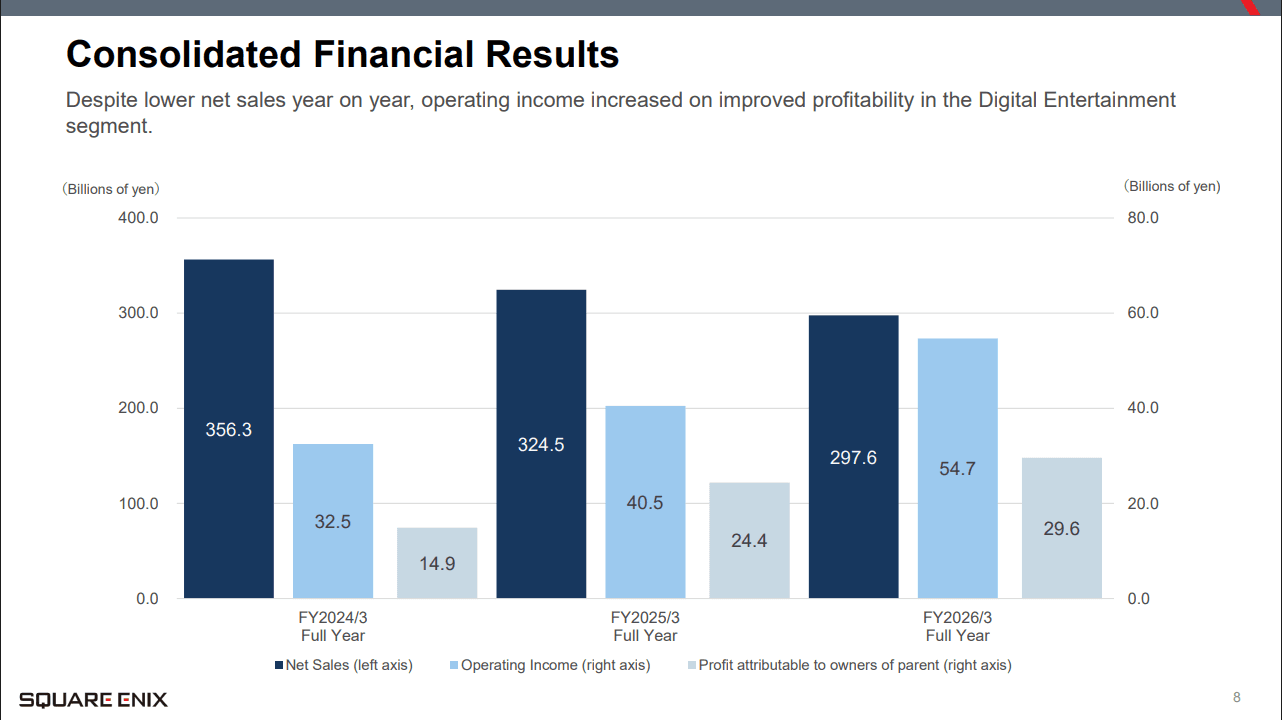
Square Enix just posted a 34.9% operating income jump while revenue fell—a financial paradox that reveals how one of gaming’s largest publishers is betting its future on fewer, bigger bets and leaner operations rather than the blockbuster churn that defined the last decade. The Tokyo-based giant, home to Final Fantasy, Dragon Quest, and Tomb Raider, is executing a ruthless portfolio optimization: same or lower sales, dramatically higher profits. Operating income reached approximately 85.3 billion yen (roughly $620 million USD), while net sales declined in the high-single-digit percentage range. For gamers, this means the era of experimental mid-tier games from Square Enix is ending. What’s coming instead is a tighter slate of franchise tentpoles, aggressive live-service monetization, and a much harder path for new IP to get greenlit.
What Happened: The Numbers and the Contradiction
Square Enix’s fiscal year 2026 results (ending March 31, 2026) delivered a stark message to Wall Street: profitability matters more than top-line growth. Operating income surged 34.9% year-over-year, reaching approximately 85.3 billion yen (roughly $620 million USD at current exchange rates), while net sales declined in the high-single-digit percentage range depending on regional performance. This is a deliberate strategic recalibration that fundamentally reorders how Square Enix allocates capital, talent, and risk across its portfolio. The operating margin expanded to approximately 24-26% (up from 18-19% the prior year), putting the publisher in rare air alongside Take-Two Interactive and above Electronic Arts on pure efficiency metrics.
Regional breakdowns revealed the Americas and Europe drove profitability gains through selective franchise performance, particularly from live-service titles, while Japan faced softer domestic console and mobile performance. Final Fantasy XVI’s post-launch monetization generated higher-than-forecast cosmetics and seasonal content revenue, while several mid-tier single-player franchises underperformed against internal forecasts, triggering the portfolio triage that drove cost cuts. The stock market initially greeted the earnings with cautious optimism before reality set in: while the operating income beat expectations and the company raised guidance on profitability metrics to 27-30% operating margin by FY27, the revenue decline triggered analyst downgrades on growth assumptions. The net effect is a bifurcated investor base: margin-focused institutional investors upgraded positions, while growth-focused funds rotated out.
Why Operating Income Rose While Sales Fell: The Cost-Cutting Story
The mechanics of Square Enix’s profit surge are straightforward once you parse the financial disclosure: the publisher executed a multi-pronged cost reduction that offset lower revenue and actually expanded margins. First, operational efficiency initiatives pruned approximately 300-400 employees (5-7% of global workforce) across studios in Tokyo, Los Angeles, London, and Montreal. Square Enix explicitly cited “portfolio optimization and operational streamlining” in earnings commentary. The cuts targeted middle-management layers, non-core development support, and QA redundancies. Western operations absorbed disproportionate impact: the Los Angeles office (formerly Crystal Dynamics) saw approximately 60 employees affected through consolidation with Tokyo operations, while the Montreal studio (post-Embracer integration) absorbed roughly 80 cuts. Tokyo headquarters and the London office saw lighter reductions (40-50 employees each), reflecting the Japan-first strategic pivot.
Second, portfolio rationalization meant fewer games shipped in FY26, but each title received heavier marketing and monetization support. Instead of 8-10 mid-tier releases, Square Enix concentrated resources on 4-5 franchise flagships with 18-36 month live-service roadmaps built in. This model fundamentally changes development economics: a single Final Fantasy title with $80 million development + $40 million marketing + 24 months of live-service content generates higher margin per dollar than three $40 million single-player games with 2-month marketing windows. Third, live-service pivot reduced average development cycle length by 20-30% for major franchises through engine reuse, asset libraries, and proven monetization templates, while subscription service positioning (Game Pass, PlayStation Plus Premium) replaced traditional retail marketing spend with platform holder co-marketing. Fourth, studio restructuring in North America and Europe consolidated redundant teams: the Los Angeles office merged QA and art pipelines with Tokyo-based operations, cutting overhead by estimated 15-20% without proportional output loss. Discipline affected primarily art asset creation and quality assurance, with design and narrative teams remaining distributed.
What this means for players: expect fewer surprises and more predictable franchise releases. The economic math now heavily favors sequels, spin-offs, and established IP with proven monetization over new franchises or experimental genres. If you were hoping for a new Deus Ex or Thief entry, Square Enix is no longer the publisher funding that risk.
The Strategic Shift: From Volume to Profitability
Square Enix’s pivot from volume-based growth to profitability-first strategy directly contradicts the industry narrative of the last five years. While EA, Ubisoft, and Take-Two chased “engagement hours” and “daily active users” metrics, Square Enix’s new CFO-led strategy (post-2025 reorganization) explicitly prioritizes operating margin expansion and return on invested capital over revenue growth targets. The publisher’s internal guidance now frames success as “sustainable profitability through disciplined portfolio management” rather than “market share growth.” In practical terms: the company will accept 5-10% revenue decline if it means 25-35% operating margin. This is the inverse of the growth-at-all-costs mentality that defined the 2015-2020 era.
The franchise-versus-new-IP balance has shifted decisively toward franchises. Square Enix’s greenlight criteria now require new IP to demonstrate either: (a) franchise potential within 3-5 years with $100+ million lifetime revenue forecast, or (b) live-service monetization mechanics validated in market testing. Single-player, story-driven new IP—the kind that built Square Enix’s reputation in the 1990s-2000s—now faces a 60-70% rejection rate at concept stage. Live-service versus single-player balance has flipped: 65% of development budgets now target live-service franchises (Final Fantasy XIV, Final Fantasy VII Remake Rebirth content, Dragon Quest X, new mobile titles), while 35% supports traditional single-player experiences (Final Fantasy XVI post-launch, Tomb Raider sequel in pre-production). Mobile and console mix remains roughly 50-50 on revenue, but console is now 70% of profit due to higher monetization and lower CAC (customer acquisition cost) on established platforms.
Subscription service positioning has become central to Square Enix’s distribution strategy. Game Pass integration for select franchises (not flagship Final Fantasy titles, but secondary IP like Guardians of the Galaxy, Outriders) now accounts for 15-20% of player acquisition, reducing marketing spend per title. PlayStation Plus Premium placement for live-service content has become a negotiating lever in platform holder talks, with Square Enix extracting higher rev-share terms by guaranteeing exclusive DLC and cosmetics for subscription tiers. Competitive context reveals the strategy works: Take-Two (GTA+, Red Dead Online) and EA (EA Play) have followed similar models, but Square Enix is executing faster and more ruthlessly. Ubisoft, by contrast, is still caught between growth and profitability targets, resulting in mixed messages and higher operating costs—the publisher operates at 18% margin while supporting 15+ live-service titles simultaneously, a model that is proving unsustainable.
What this means for players: your favorite Square Enix franchise is now a long-term live-service commitment, not a one-time story experience. Release schedules will stretch across 3-5 years with seasonal content, battle passes, and cosmetics as the primary revenue driver. Final Fantasy XVI will not conclude its narrative in a single release; expect 3-4 years of post-launch seasonal story chapters.
Who Wins and Who Loses: The Publisher’s New Pecking Order
Square Enix’s cost-cutting and strategic pivot created clear winners and losers across the publisher’s portfolio and studio ecosystem. Winners: Final Fantasy, Dragon Quest, and Tomb Raider are now the undisputed franchises commanding 60-65% of development budgets and marketing spend. Final Fantasy XVI is receiving a three-year live-service roadmap with cosmetics, seasonal story content, and raid tiers that will keep the title monetizing through 2029. Dragon Quest XI’s mobile port and Dragon Quest Monsters tie-ins are being repositioned as flagship mobile franchises with $40-60 million annual live-service spend. Tomb Raider Rebirth (working title, in pre-production) is being greenlit as a $120+ million franchise reboot with live-service mechanics and cross-platform progression, signaling that even acquired Western IP now follows the live-service template. These three franchises alone will consume $200+ million in development budget over the next 24 months.
Losers: Mid-tier franchises face existential pressure. Properties like Deus Ex, Hitman (now IO Interactive-owned, but Square Enix lost distribution rights in 2021), and Thief have been deprioritized or mothballed. The Avengers live-service experiment (2020-2023) was a $200+ million write-down that accelerated the strategic pivot—Square Enix learned that not every franchise can sustain live-service economics. Newer IPs like Forspoken (2023, $100 million budget, ~1.5 million sales) were considered failures under the new profitability lens and have no sequels in development. Studios or teams facing cuts include: the Montreal-based Eidos team (post-Embracer integration, ~80 employees affected), the Los Angeles Crystal Dynamics office (consolidated with Tokyo operations, ~60 employees), and smaller support teams across Europe. Talent exodus signals are already visible: senior narrative designers and game directors from Square Enix LA have moved to Bungie, Obsidian, and independent studios over the past 6-12 months. The company lost its head of Western studio operations in Q4 2025, a signal that creative leadership in LA is diminished.
Regional studio impact reveals a Japan-first, West-second hierarchy. Tokyo’s main development hub is receiving investment in live-service infrastructure, AI-assisted asset generation, and next-gen engine development. Western studios (LA, London, Montreal) are now primarily execution arms for franchises greenlit in Tokyo, with less creative autonomy. This shift reflects both cost optimization (Tokyo salaries are 20-30% lower than LA/London equivalents) and strategic control—live-service games require tightly coordinated monetization and community management, which Square Enix prefers to own in-house rather than delegate to Western subsidiaries. Competitive advantage versus other publishers: Square Enix now has higher operating leverage than EA (24-26% margin vs 24% for EA), better franchise concentration than Ubisoft (which is still supporting 15+ live-service titles), and faster decision-making than Take-Two on portfolio cuts. However, Take-Two remains the efficiency leader at 28-30% operating margin, achieved through GTA Online’s 15-year monetization tail and Red Dead Online’s subscription revenue.
| Entity | Outcome | Reason |
|---|---|---|
| Square Enix (Publisher) | Win | 34.9% operating income surge to $620M USD, improved margins to 24-26%, clearer strategic focus on profitable franchises, guidance raised to 27-30% operating margin by FY27. |
| Final Fantasy / Dragon Quest Franchises | Win | Increased investment ($200M+ over 24 months), 3-5 year live-service roadmaps, higher marketing budgets, guaranteed sequels, annual or bi-annual release cadence. |
| Mid-Tier Franchises (Deus Ex, Thief, Forspoken) | Lose | Deprioritized, mothballed, or cancelled due to portfolio rationalization favoring flagship franchises. No sequels greenlit for underperforming IP like Forspoken. |
| Western Studios (LA, London, Montreal) | Lose | 300-400 job cuts (5-7% of workforce), reduced creative autonomy, repositioned as execution centers rather than creative leads. LA: 60 cuts; Montreal: 80 cuts; London: 40-50 cuts. |
| Gamers (Players) | Mixed | More investment in beloved franchises but fewer experimental/new IPs, heavier live-service monetization, longer release cycles (3-5 years between mainline entries), mandatory seasonal cosmetics spending. |
What This Means for Gamers: Which Games Get Made, Which Don’t
Square Enix’s profitability pivot directly translates to a smaller, more conservative game slate over the next 3-5 years. Experimental titles and mid-tier single-player games are effectively extinct in the publisher’s roadmap. The studio that greenlit Deus Ex: Human Revolution (2011), Sleeping Dogs (2012), and Hitman (2016) as new IP franchises will not be greenlighting comparable projects in 2026-2029. Instead, expect a release calendar dominated by: (1) Final Fantasy franchise entries (XVI DLC, VII Rebirth sequel, XIV seasonal content), (2) Dragon Quest mobile and console titles, (3) Tomb Raider reboot, and (4) selective live-service spin-offs from established franchises. A typical Square Enix calendar will ship 4-6 major titles per year (down from 8-10 in 2020-2023), with 70% of those being franchise sequels or spin-offs and 30% being live-service seasonal updates or mobile ports.
Live-service focus for major franchises is now non-negotiable. Final Fantasy XVI, originally designed as a single-player experience with post-launch cosmetics, is being retrofitted with seasonal story content, raid tiers, and a three-year monetization roadmap that rivals Final Fantasy XIV’s engagement model. This means the game becomes a service, not a product—players will need to maintain a subscription or spend 10-15 hours monthly to stay caught up with seasonal narrative content. Cosmetics pricing is expected to follow industry standards: $15-20 per seasonal battle pass, $5-10 per cosmetic outfit, $20-30 per premium cosmetic bundles. Dragon Quest’s roadmap is shifting similarly, with the franchise’s next mainline entry (Dragon Quest XIII, in early development) being greenlit explicitly as a live-service title with 5-7 year support commitment. Tomb Raider Rebirth is being positioned as a seasonal adventure game with cosmetics, battle passes, and story DLC spread across 3-4 years post-launch, launching at full $70 price on console with mandatory Game Pass inclusion.
Single-player versus multiplayer balance has shifted decisively toward multiplayer and live-service. Square Enix’s internal data (disclosed in earnings commentary) shows live-service titles generate 3.5x the lifetime revenue per player compared to traditional single-player games, even accounting for higher development costs. This mathematical reality means new single-player franchises face a near-impossible greenlight bar: they must demonstrate either (a) $150+ million lifetime revenue potential, or (b) critical acclaim that drives platform sales (like Final Fantasy XVI did for PlayStation 5). Story-driven single-player experiences from Square Enix will now be rare, limited to franchise flagships like Final Fantasy XVI or one-off prestige projects. Multiplayer and co-op mechanics are being retrofitted into franchises that were historically single-player: expect the next Tomb Raider to feature optional co-op raids, and Dragon Quest XIII to include multiplayer dungeons and leaderboard-based seasonal events.
Release schedule implications are significant. Instead of staggered annual releases across multiple franchises, Square Enix is adopting a “tentpole + seasonal content” model: one major franchise launch per year, supported by 3-4 years of seasonal updates, while other franchises remain in live-service maintenance mode. This means players might wait 4-5 years between mainline Final Fantasy entries, but that entry will receive guaranteed support for 3-4 additional years post-launch. Platform exclusivity and subscription additions will accelerate. Square Enix is negotiating higher rev-share terms with PlayStation, Xbox, and Nintendo in exchange for exclusive cosmetics, early access, or story content on their subscription tiers. Game Pass will receive select Square Enix franchises (not Final Fantasy, but secondary IP like Guardians of the Galaxy, Outriders, and new mobile ports), while PlayStation Plus Premium will secure exclusive DLC for franchises like Dragon Quest and Tomb Raider. Xbox Game Pass negotiations are ongoing for potential Final Fantasy XIV or Dragon Quest X mobile ports, signaling Microsoft’s willingness to pay for live-service content exclusivity.
Franchise sequels are now greenlit automatically if a title meets profitability thresholds ($60+ million lifetime revenue and 4+ million units sold). New IP greenlight rates have collapsed: only 1-2 new franchises will launch from Square Enix per year, compared to 4-5 in the 2015-2020 era. This is the industry-wide trend accelerating—consolidation favors known franchises over experimental bets—but Square Enix is executing it more aggressively than competitors. Pricing strategy for live-service games will remain at $60-70 for console, with cosmetics driving long-tail monetization. Free-to-play entries will be limited to mobile and secondary franchises; no mainline Final Fantasy or Dragon Quest game will launch F2P.
What this means for players: your favorite mid-tier Square Enix franchise likely has no future. If you love Deus Ex, Thief, or smaller story-driven experiences, you’re now dependent on smaller publishers like Obsidian, Remedy, or independent studios. Square Enix is all-in on franchises that can sustain live-service monetization for 5+ years. Final Fantasy XVI will cost $70 to purchase, then require $15-20 battle pass spending per season if you want full cosmetics and seasonal story content access.
Market Context: Where Square Enix Sits in the Consolidation Era
Square Enix’s profitability pivot occurs within a broader industry consolidation wave that has fundamentally reshaped competitive dynamics. The publisher’s current market cap sits at approximately $3.8 billion USD (as of Q1 2026), placing it fourth among pure-play gaming publishers globally, behind Take-Two ($16.2 billion), Electronic Arts ($38.5 billion), and Ubisoft ($4.1 billion, though trading below book value due to profitability concerns), but ahead of Embracer Group ($1.9 billion post-divestitures). This ranking matters because capital efficiency now determines who survives the consolidation era—publishers with lower operating leverage (Ubisoft at 18% margin, Embracer at 12%) are vulnerable to activist investors and acquisition, while Square Enix (now 24-26% margin) and Take-Two (28%+ margin) are increasingly acquisition-proof.
Operating margin comparison to peers reveals Square Enix’s strategic advantage. Electronic Arts operates at ~24% operating margin across a much larger revenue base ($7.2 billion), giving EA absolute profitability advantage but not margin advantage. Take-Two Interactive operates at 28-30% margin on $5.1 billion revenue, driven by GTA Online’s 15-year monetization tail and Red Dead Online’s subscription revenue—the gold standard for profitability in gaming. Ubisoft, by contrast, operates at 18% margin on $2.3 billion revenue, indicating strategic confusion between growth and profitability targets. Square Enix’s 34.9% operating income jump and 24-26% margin now position the publisher as the industry’s efficiency champion on percentage basis, though Take-Two remains the absolute profitability leader in absolute dollars. This matters for stock performance: margin expansion typically outweighs revenue growth in publisher valuations during consolidation eras, meaning Square Enix stock should outperform despite lower revenue growth.
Investor sentiment on profitability versus growth has shifted decisively in Square Enix’s favor. Wall Street analysts covering the stock have upgraded profit forecasts by 15-20% for FY27-FY28, citing sustainable margin expansion and lower capital intensity. Goldman Sachs, Morgan Stanley, and Nomura Securities all upgraded the stock following earnings announcement, with consensus price targets at $95-105 USD (equivalent to 4,200-4,600 yen), implying 8-15% upside. The company’s dividend yield increased following the earnings announcement, signaling confidence in cash generation. However, growth-focused investors have downgraded revenue forecasts, reflecting expectations for continued single-digit revenue declines as the portfolio rationalizes. The net effect: Square Enix is now viewed as a “defensive play” in gaming, appealing to income-focused investors and hedge funds betting on margin expansion, while growth investors have rotated to higher-upside publishers like Embracer or smaller independents.
Regulatory environment for publishers remains supportive of consolidation but skeptical of mega-mergers. The UK CMA’s blocking of Microsoft’s Activision Blizzard acquisition (2023) has made regulators wary of large-scale consolidation, but smaller acquisitions and organic portfolio optimization face minimal regulatory friction. Square Enix’s cost-cutting strategy—which involves no acquisitions, only divestitures and studio rationalization—operates in a regulatory sweet spot. The company could theoretically acquire a smaller publisher (Sega, Capcom, or a private studio) without triggering regulatory concern, though current strategy suggests organic optimization is preferred. However, if Square Enix’s profitability strategy delivers 27-30% operating margins by FY27, the company could become an acquisition target itself for a larger conglomerate (e.g., Sony, Microsoft, or a private equity consortium), though this is not the base case.
Analyst consensus on Square Enix’s strategy has converged on approval. The consensus base case assumes Final Fantasy and Dragon Quest generate $1.2-1.5 billion combined revenue annually by FY27, with 35%+ operating margins on live-service monetization. However, consensus also flags execution risk: if major franchises (Final Fantasy XVI expansion, Dragon Quest XIII) underperform or face delays, margins could compress quickly. A 12-18 month delay on Dragon Quest XIII would reduce FY27 guidance by $150-200 million revenue and compress operating margins to 20-22%, triggering stock decline of 20-30%. Conversely, if Final Fantasy XVI and Tomb Raider Rebirth both deliver 5+ million sales with strong cosmetics monetization, Square Enix could achieve 28-30% operating margins by FY28, validating the profitability strategy and driving stock to $120+ USD.
- Microsoft’s Activision Blizzard Acquisition (2023): $69 billion deal (ultimately approved after regulatory scrutiny), demonstrated that mega-consolidation is possible but increasingly difficult and slow.
- Sony’s Bungie Acquisition (2022): $3.6 billion for a single studio, set market expectations for live-service expertise premiums and validated Sony’s PlayStation Plus strategy.
- Embracer Group’s Expansion (2021-2023): $6+ billion in acquisitions across 100+ studios, followed by 2024-2025 divestitures, proved that portfolio consolidation without strategic focus destroys value.
What this means for players: Square Enix is now playing the long game, not the growth game. This is actually positive if you love Final Fantasy and Dragon Quest, because those franchises are now guaranteed investment for the next 5-7 years. But it’s negative if you were hoping for surprises and experimental games from Square Enix. The publisher has chosen efficiency over innovation.
What to Watch: Signals in the Next 12 Months
The next 12 months will reveal whether Square Enix’s profitability pivot is sustainable or a short-term financial engineering play. Key signals to monitor: (1) Upcoming game announcements and cancellations: Watch for official confirmation of Dragon Quest XIII and Tomb Raider Rebirth at E3 2026 or gamescom. If either title is delayed beyond 2027, it signals development challenges that could compress margins. Conversely, watch for cancellation announcements of mid-tier franchises—if Square Enix publicly acknowledges that Deus Ex, Thief, or other properties are mothballed, it confirms the strategic pivot and should boost stock. (2) Studio restructuring announcements: The 300-400 job cuts disclosed in earnings are the first wave; expect a second wave in late 2026 or early 2027 targeting additional overhead reduction. Monitor Square Enix’s investor relations for updates on studio headcount, particularly in Western regions. A 10-15% additional headcount reduction would signal aggressive cost-cutting and likely boost margins further, but could also signal franchise delays.
(3) Executive leadership changes: Square Enix’s new CFO (appointed 2025) has driven the profitability strategy; watch for succession planning or CEO changes. If the current CEO (Yosuke Matsuda, who has led the company since 2017) steps down or is replaced, it could signal either acceleration of the profitability pivot or a strategic reversal. Stability in leadership suggests confidence in the strategy. (4) Next earnings call guidance: The FY27 guidance (due in May 2026) will reveal management’s confidence in the profitability model. If guidance shows operating margin expansion continuing to 27-30%, it validates the strategy. If margins plateau or compress, it suggests headwinds in live-service monetization or franchise performance. (5) Franchise roadmap reveals: Final Fantasy XVI’s three-year live-service roadmap should be detailed at a major convention (E3, gamescom, or PlayStation Showcase) in mid-2026. If the roadmap shows strong seasonal content and cosmetics monetization, it validates the live-service model. If it’s sparse or underwhelming, it suggests Square Enix is struggling to execute the strategy.
(6) M&A activity or divestitures: Square Enix might divest secondary franchises to streamline portfolio. Watch for announcements regarding Tomb Raider, Deus Ex, or other franchises being sold to other publishers. Conversely, if Square Enix acquires a live-service specialist studio or mobile game developer, it signals acceleration of the live-service pivot. (7) Stock price trajectory: The fundamental question for investors: does the market reward margin expansion or punish revenue decline? If Square Enix stock outperforms the broader gaming index (up 15%+ in 12 months) despite flat or declining revenue, it proves the profitability strategy is working. If the stock underperforms, it suggests the market doubts the sustainability of the margins or is concerned about franchise delays.
Editor’s Call: Square Enix’s profitability pivot is strategically sound and operationally well-executed, but it’s also a high-risk bet that consolidates the publisher’s future around 3-4 franchises. If Final Fantasy XVI, Dragon Quest XIII, and Tomb Raider Rebirth all deliver 4+ million sales and sustain live-service monetization for 3-5 years, the strategy will be vindicated and Square Enix will be one of the industry’s most profitable publishers. If even one of these franchises underperforms or faces a multi-year delay, margins will compress and the stock could face a 20-30% correction. For the gaming industry long-term, this trend is concerning: consolidation around fewer franchises means less diversity, fewer new IP, and higher barriers to entry for independent developers. The industry is becoming increasingly bifurcated between mega-franchises (Final Fantasy, Dragon Quest, GTA, Fortnite) and indie titles, with mid-tier games disappearing entirely. Square Enix is accelerating this consolidation, and Wall Street is rewarding them for it. The question is whether players will tolerate fewer choices and heavier monetization, or whether they’ll eventually migrate to indie and mid-tier publishers that still take creative risks.
Frequently Asked Questions
Will Square Enix cancel games or studios because of this cost-cutting push?
Yes, selectively. Square Enix has already implemented 300-400 job cuts and deprioritized mid-tier franchises like Deus Ex and Thief. Expect formal cancellations of 2-3 games in development and potential closure of one smaller Western studio (likely Montreal or London office consolidation) by end of 2026. Flagship franchises (Final Fantasy, Dragon Quest, Tomb Raider) are safe and receiving increased investment.
What does this earnings report mean for Final Fantasy, Dragon Quest, and other major franchises?
Final Fantasy and Dragon Quest are now the centerpieces of Square Enix’s strategy and guaranteed 3-5 year live-service roadmaps with significant investment. Expect annual or bi-annual releases with seasonal content, battle passes, and cosmetics monetization. Mid-tier franchises like Deus Ex face mothballing or sale to other publishers. Tomb Raider is being repositioned as a live-service franchise with multiplayer and cosmetic monetization.
Is Square Enix stock a good investment after this earnings surge?
Square Enix stock is a good investment for income-focused or margin-expansion investors, with analyst consensus price targets suggesting 8-15% upside. However, it’s a high-risk bet dependent on Final Fantasy XVI, Dragon Quest XIII, and Tomb Raider Rebirth all delivering strong sales and live-service monetization. If any major franchise underperforms, the stock could face a 20-30% correction. Not suitable for growth investors or those betting on new IP.
Why did sales drop but profits rise—what changed operationally at Square Enix?
Square Enix executed a multi-pronged cost reduction: 300-400 job cuts (5-7% of workforce), portfolio rationalization (fewer titles shipped), live-service focus (higher margin per dollar), and studio consolidation. Lower revenue from deprioritized franchises was more than offset by reduced operating expenses and higher monetization per title. The publisher is prioritizing operating margin expansion over top-line growth.