Panic Won’t Release Playdate AI Games: A Strategic Analysis
Disclosure: As an Amazon Associate, Bytee earns from qualifying purchases.
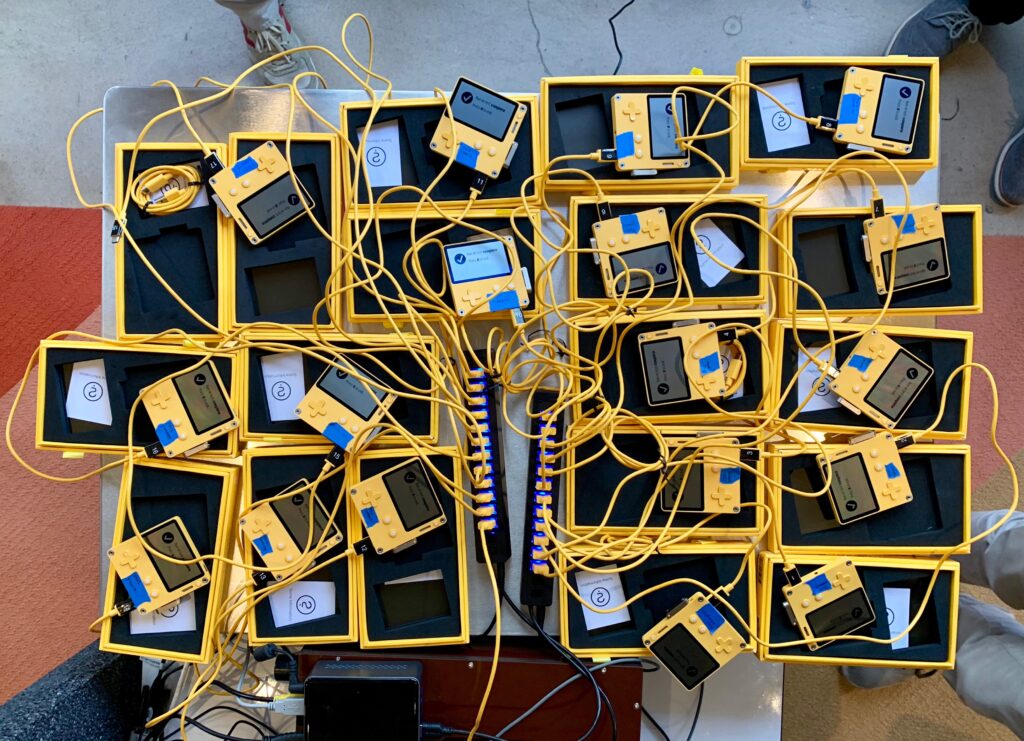
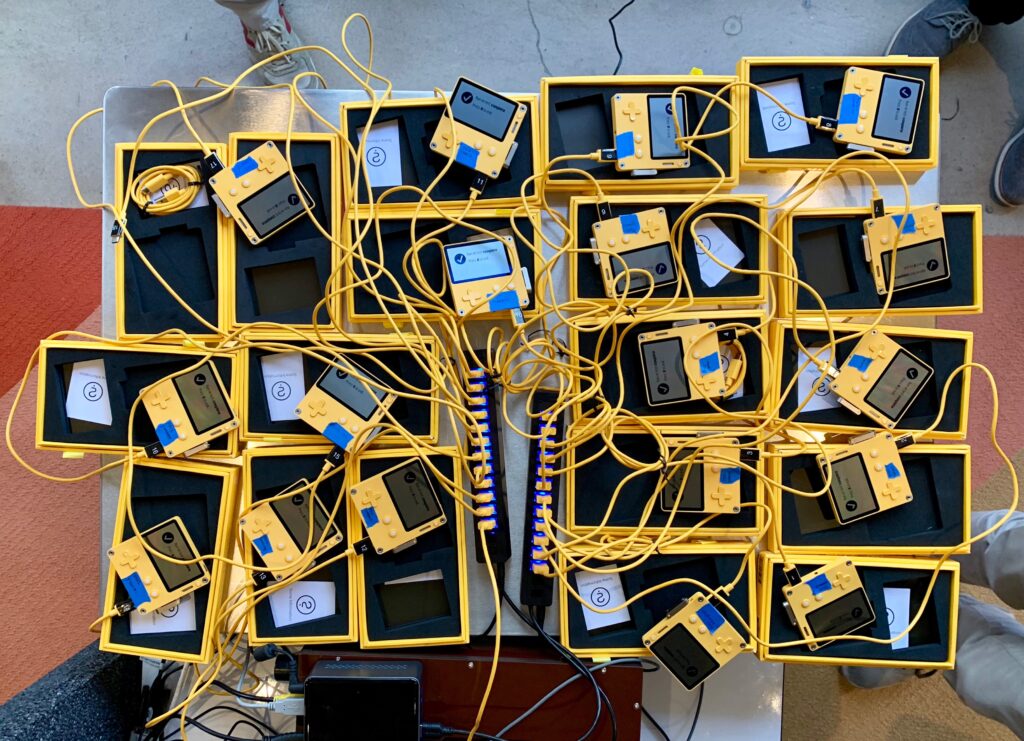
When Panic Inc. — the Portland-based indie publisher behind one of the most distinctive hardware plays in recent gaming history — quietly updated its Playdate developer guidelines to ban certain forms of generative AI in submitted titles, it sent a signal that reverberates far beyond its tiny, crank-equipped handheld. The move is small in raw revenue terms but enormous in strategic signaling. As the gaming industry grapples with a generative AI reckoning — from legal exposure to talent pipeline erosion — Panic’s policy draws a line in the sand that other platform holders, publishers, and investors will be forced to acknowledge. The decision that Panic won’t release Playdate titles incorporating AI-generated art, music, or code produced by models trained on unconsented data is not a feel-good PR stunt. It is a calculated risk-management and brand-positioning play that deserves serious analysis.
The Policy in Detail: What Panic Is Actually Banning
Let’s cut through the noise. Panic’s updated submission guidelines for the Playdate catalog now explicitly prohibit games that use generative AI outputs in “core creative assets” — specifically art, music, narrative text, and code — where those outputs are derived from models trained on datasets without clear consent from original creators. The policy does not ban all AI tooling. Procedural generation, traditional algorithmic systems, and AI-assisted tools where the developer retains clear authorship (think autocomplete in an IDE, not wholesale code generation from a large language model) appear to remain permissible.
This distinction matters. Panic is not engaging in a blanket technophobia play. The company is targeting the specific legal and ethical gray zone that has dominated industry discourse since the explosion of tools like Stable Diffusion, Midjourney, and GitHub Copilot. The policy essentially functions as a preemptive IP liability shield — and a brand differentiator in the indie space.
The Core Financial Move: Quantifying the Stakes
Panic is a private company and does not disclose granular revenue figures, but we can frame the financial context. The Playdate launched in 2022 at $199 per unit, with initial pre-orders selling out approximately 50,000 units in the first wave. Subsequent production runs and the “Catalog” — Panic’s curated digital storefront for the device — have expanded the installed base, with credible industry estimates placing cumulative Playdate sales in the range of 100,000 to 150,000 units as of mid-2025. At that scale, the Playdate ecosystem generates modest but meaningful revenue, likely in the low-to-mid eight figures when combining hardware, first-party software (the “Season One” bundle), and Catalog sales.
The direct financial impact of banning AI-generated content from a catalog serving a sub-200,000 user base is negligible in isolation. The number of Playdate submissions leveraging generative AI in a way that would trigger this policy is, by all credible estimates, a small fraction of total submissions. The real financial calculus is about brand equity preservation and long-term legal risk mitigation.
Consider the alternative scenario: A Playdate title ships with AI-generated art assets that are later proven to incorporate elements from copyrighted works used in training data without consent. The legal liability could cascade to Panic as the distributor and curator. With the U.S. Copyright Office still deliberating on the registrability of AI-generated works, and multiple class-action lawsuits (including Andersen v. Stability AI and Getty Images v. Stability AI) still winding through the courts, the downside risk for a small publisher is disproportionately large relative to the revenue upside from any single AI-assisted title.
Strategic Implications: Why This Move Makes Business Sense for Panic
Panic’s entire corporate identity is built on curation, craftsmanship, and creative integrity. From its Mac software roots (Transmit, Nova) to its publishing of Untitled Goose Game and Firewatch, the company has consistently traded on a premium brand that signals taste and quality. The Playdate itself — with its 1-bit display, physical crank, and deliberately constrained hardware — is a statement product. It exists to attract a developer and consumer community that values intentional, handcrafted creative work.
Allowing AI-generated content to proliferate on this platform would be a direct contradiction of the brand promise. This is not hypothetical. The indie gaming space has already seen a measurable backlash against AI-generated assets on platforms like itch.io, where curators and consumers have flagged and downvoted titles suspected of using AI art. Steam, for its part, updated its submission policies in mid-2023 to require developers to disclose AI usage, though Valve stopped short of an outright ban.
Panic’s move is strategically coherent: protect the brand, attract the highest-quality indie talent, and avoid being the test case in an AI copyright dispute. For a company of Panic’s size — estimated at 40 to 50 employees — even a single significant legal entanglement could be existentially threatening.
Market & Competitor Impact: The Ripple Effects Across the Industry
Panic’s policy does not exist in a vacuum. It arrives during a period of acute tension across the gaming industry regarding generative AI adoption, talent displacement, and legal uncertainty. Several concurrent industry developments amplify its significance:
The Legal Landscape Is Hardening. As a prominent video game lawyer recently implored at a major industry event, developers need to “understand ownership and swerve generative AI” until the legal frameworks are settled. The risk profile for studios and publishers using AI-generated assets without clear provenance is increasing, not decreasing. Every major litigation outcome in the next 12 to 24 months will reshape the calculus.
Layoffs Are Reshaping the Talent Market. Iron Galaxy Studios’ recent layoffs, Ubisoft Halifax’s closure and subsequent union settlement, and the broader industry-wide contraction that has eliminated an estimated 20,000+ jobs since January 2023 have created a paradox: companies are cutting human talent while simultaneously exploring AI as a cost-reduction lever. Panic’s policy implicitly positions the Playdate ecosystem as a haven for human creators — a differentiation that could attract displaced talent looking for platforms that value their work.
Platform Holders Are Watching. Microsoft’s Xbox ecosystem, with ID@Xbox’s global director publicly positioning Game Pass as a “discovery multiplier,” is focused on volume and reach. Nintendo, historically protective of creative IP, has not yet issued a formal policy on generative AI in submitted titles but is widely expected to take a conservative stance. Sony’s position remains ambiguous. Panic, as a micro-platform holder, has the agility to set policy ahead of the majors — and in doing so, it creates a reference point that larger companies will face pressure to address.
The Indie Sector Faces an Existential Question. The indie gaming ecosystem — which accounts for a growing share of total titles released annually (over 14,000 new games on Steam alone in 2024) — is the front line of the AI content debate. If AI-generated assets become normalized, the barrier to entry drops further, potentially flooding storefronts with low-effort content and making discoverability even harder for legitimate human-created indie titles. Panic’s curation model, reinforced by this AI policy, is a direct countermeasure to the “content flood” problem.
Broader Industry Context: A Sector in Flux
It is impossible to analyze Panic’s decision without acknowledging the broader macro forces reshaping the gaming business in 2025. The industry is simultaneously navigating:
- Consolidation and geopolitical tension: U.S. Representative Maxwell Frost’s public protest against the reported Saudi acquisition of EA underscores the increasingly politicized nature of gaming M&A. Sovereign wealth fund involvement in major publishers raises questions about content moderation, labor practices, and creative freedom that intersect directly with the AI debate.
- Subscription model economics: Microsoft’s new Xbox chief publicly acknowledging that Game Pass “has become too expensive” signals a potential repricing of the discovery and distribution model that indie developers depend on. If subscription economics tighten, curated platforms like Playdate’s Catalog could become relatively more attractive for developers seeking direct-to-consumer revenue.
- IP expansion strategies: Jagex’s move to expand the RuneScape IP into Asia-Pacific demonstrates the premium placed on established, human-created IP. In a world where AI can generate infinite derivative content, the value of authentic, culturally resonant IP increases — a dynamic that favors Panic’s curation-first approach.
- Community and event erosion: The announced end of Ludum Dare in October 2028 — one of the longest-running game jam institutions — signals fatigue in the grassroots indie community. Platforms that actively support and protect human creativity, as Panic is signaling, may fill part of that institutional void.
Future Outlook: What This Means for Investors, Developers, and the Industry
For investors tracking the gaming sector, Panic’s AI policy is a leading indicator, not a lagging one. The company’s move reflects a growing consensus among legal advisors, creative talent, and consumer-facing brands that the risks of generative AI in content creation currently outweigh the benefits — particularly for entities that cannot absorb the legal and reputational downside of a misstep. Expect more publishers and platform holders, especially in the indie and mid-tier segments, to adopt similar policies within the next 12 months.
For developers, the signal is clear: if you are building for curated platforms, your human creative provenance is becoming a competitive asset, not a cost center. Studios that invest in original art, music, and design — and can document that provenance — will have preferential access to the platforms and publishers that command the highest consumer trust and willingness to pay.
For the broader industry, Panic’s decision accelerates the bifurcation between “AI-permissive” and “AI-restrictive” ecosystems. This is not a binary moral judgment; it is a market segmentation reality. Some platforms will embrace AI as a productivity and cost tool. Others will differentiate on human authorship. Both models can be economically viable, but the legal, reputational, and consumer-trust profiles are fundamentally different.
The bottom line: Panic won’t release Playdate titles that use unconsented generative AI because the math — legal risk, brand equity, talent attraction, and consumer trust — overwhelmingly favors this position for a company of its size and strategic posture. The question is no longer whether other companies will follow. It is how quickly, and at what scale.
Frequently Asked Questions
Does Panic’s AI policy affect its valuation or financial outlook?
Panic is privately held, so there is no public stock impact. However, the policy strengthens the company’s brand equity and reduces its legal risk exposure — both of which are positive factors in any future fundraising, acquisition, or partnership discussions. For a company whose value proposition is built on curation and creative trust, this move is valuation-accretive in qualitative terms.
Will this lead to more platform holders banning generative AI in game submissions?
Yes, with caveats. Smaller, curation-focused platforms (itch.io, Playdate Catalog, potentially the Nintendo eShop) are the most likely near-term adopters of similar restrictions. Larger platforms like Steam and the PlayStation Store, which prioritize volume and breadth, are more likely to adopt disclosure requirements rather than outright bans. The legal outcomes of pending AI copyright cases will be the primary catalyst for broader policy shifts.
What does this mean for indie developers using AI tools in their workflow?
Developers need to distinguish between AI-assisted workflows (using tools that augment human creativity without replacing it) and AI-generated content (using models to produce final assets). Panic’s policy, and likely future policies elsewhere, targets the latter category. Developers who use AI for prototyping, brainstorming, or non-final workflow optimization but produce final assets through human authorship should remain in compliance with emerging standards.
How does this affect everyday Playdate owners?
For consumers, this policy reinforces the value proposition of the Playdate Catalog as a curated, quality-first storefront. Playdate owners can have higher confidence that the titles they purchase represent genuine human creative effort — a differentiator that is increasingly rare in the broader digital content marketplace.
Could this policy backfire if generative AI becomes legally settled and widely accepted?
It is possible but unlikely to be material. Panic can revise its policy at any time if the legal and ethical landscape shifts. The company’s agility as a small, private entity means it can adapt faster than large platform holders. In the meantime, the reputational benefit of being an early mover on creator protection significantly outweighs the risk of excluding a marginal number of AI-dependent submissions.