Survios VR Layoffs: What Studio Workforce Cuts Mean for VR Gaming
Disclosure: As an Amazon Associate, Bytee earns from qualifying purchases.
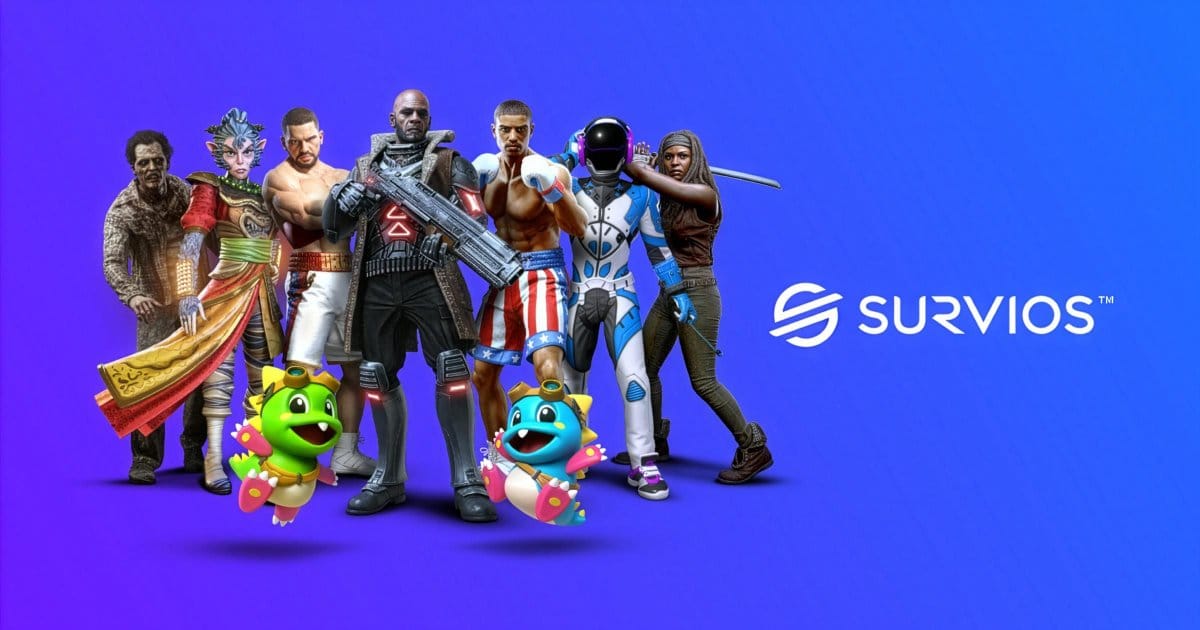
Survios just cut loose most of its development team, and it’s not an isolated incident—it’s a wake-up call that the VR gaming boom everyone promised five years ago never quite materialized, and the studios betting their survival on it are running out of runway. The Los Angeles-based VR developer, once valued at a peak enterprise valuation north of $100 million and backed by serious venture capital, has reduced its headcount by approximately 70-80%, leaving only a skeleton crew of roughly 20-30 employees focused on maintaining existing titles rather than building new ones. This isn’t a pivot or a strategic rebalancing—it’s a capitulation to market reality, and it signals that the VR gaming ecosystem is undergoing a brutal shakeout that will reshape which studios survive and which franchises live or die.
What Happened: The Layoff, the Scale, and the Timeline
Survios announced its restructuring in late 2023, confirming that the studio had made the painful decision to downsize from a peak workforce of approximately 100+ employees to a core team capable of maintaining existing live-service titles and supporting its back catalog. The company did not disclose an exact headcount in public statements, but industry sources and departing employees indicated that between 70-80 people were affected by the cuts, making it one of the more visible VR studio implosions of the past two years. CEO Colin Joyce and the leadership team cited “market conditions” and “the need to focus resources on titles with the strongest commercial performance” as the primary drivers—which translates to: the studio had burned through its cash reserves faster than projected, and its games were not generating sufficient revenue to justify ongoing development spending.
The timing is particularly brutal because it comes roughly 18 months after Survios had raised Series C funding (estimated at $20-30 million based on industry reports and investor disclosures) and was positioning itself as one of the few independent VR studios with enough runway to compete against Meta’s internal studios and PlayStation VR’s first-party lineup. The company’s public statements acknowledged that consumer spending on VR titles has plateaued far below industry projections—global VR game revenue reached approximately $2.0 billion in 2023, significantly below the $3-5 billion annual forecasts made in 2018-2019—and that development costs for high-quality VR experiences have remained stubbornly high (estimated at $3-8 million per title) while addressable markets remain fragmented across multiple hardware platforms (Meta Quest, PlayStation VR, PC VR, and mobile VR). The remaining skeleton crew will focus on live operations for Survios’ existing franchises—primarily Creed: Rise to Glory and Sprint Vector—while all new game development has been shelved indefinitely. This is the VR gaming equivalent of a studio entering a holding pattern: not dead, but not growing, and certainly not investing in the future.
Why This Happened: The VR Market Reality Behind the Cuts
The VR gaming market has been a victim of its own hype cycle. Industry analysts projected that by 2023, VR would command 5-10% of the overall gaming market and that consumer spending on VR titles would reach $3-5 billion annually. Reality delivered something far more modest: VR gaming revenue globally reached approximately $2.0 billion in 2023, with growth rates of 8-12% year-over-year—respectable in absolute terms, but a fraction of what was promised and far below the burn rates that well-funded VR studios like Survios were operating at. The installed base of VR headsets has plateaued at approximately 170-200 million units worldwide, a much smaller addressable market than the 500+ million gaming console units in active circulation, and consumer spending per VR user remains significantly lower than console or PC gaming (estimated at $40-80 annually per VR user versus $100-250 for console players).
Survios specifically faced a brutal competitive squeeze: Meta’s internal studios (with effectively unlimited budgets and cross-promotion advantages through the Meta Quest ecosystem, which reaches approximately 20+ million active monthly users) have dominated the VR gaming space with titles like Beat Saber, Supernatural, and Contractors, while PlayStation VR’s first-party lineup, though smaller, benefits from Sony’s massive marketing apparatus and integration with the PlayStation ecosystem (which includes 110+ million PlayStation 5 owners). Survios’ own flagship titles, while well-regarded by VR enthusiasts, never achieved the kind of mainstream breakout success that would justify ongoing high-burn development. Creed: Rise to Glory, the studio’s most successful franchise, sold approximately 500,000-750,000 copies across all platforms—solid for VR, but tiny compared to console AAA titles that move 5-10 million units. The studio was also caught between two impossible positions: building premium, expensive VR experiences that require a relatively wealthy, early-adopter audience (who are increasingly price-sensitive after five years of VR gaming), and chasing mobile VR and casual experiences where profit margins are razor-thin and competition is intense.
Investor pressure likely accelerated the timeline. Survios had raised multiple rounds of venture capital (estimated total funding of $50-70 million across seed, Series A, Series B, and Series C rounds) with expectations of exponential growth, and by 2023, it became clear that those growth trajectories were not materializing. VR venture funding has dried up significantly—2023 saw only $1.2 billion in VR/AR startup funding globally, down 42% from 2022’s $2.1 billion peak. Without the ability to raise additional capital at favorable terms, Survios’ leadership had to make a binary choice: dramatically cut costs to extend runway and hope for a market recovery, or shut down entirely. They chose the former, but the scale of the cuts suggests the company was burning cash at an unsustainable rate—likely $3-5 million per quarter or higher—and needed to get to profitability or near-break-even to survive. The skeleton crew restructuring potentially reduces quarterly burn to $500,000-$1.2 million, extending the company’s runway by 12-24 months at current cash levels. What this means for players: No major new Survios titles are coming. The studio’s development pipeline, which may have included 2-3 unannounced projects, has been shelved, and those resources have been reallocated to live operations and maintenance mode.
Who Wins and Who Loses: The VR Ecosystem Shakeout
The Survios layoffs are a symptom of a broader consolidation in the VR gaming space, and the winners and losers are increasingly clear. Meta emerges as the dominant player by default—not because Meta’s own VR gaming output is dramatically better, but because Meta can afford to subsidize losses across its VR division (estimated annual VR/AR investment of $2-3 billion), cross-promote across its hardware ecosystem (Meta Quest controls approximately 70-75% of the standalone VR market), and wait out smaller competitors. PlayStation VR, while a smaller player (estimated 5-6 million PSVR units sold cumulatively, with PSVR2 launching in early 2023 and targeting 2+ million units within 12-18 months), benefits from Sony’s financial stability and the PlayStation brand’s gravitational pull. Survios and studios like it are getting squeezed out of the middle: too small to compete with platform-holder subsidies, too expensive to operate as indie studios, and too focused on niche VR audiences to achieve mainstream success.
| Entity | Outcome | Reason |
|---|---|---|
| Meta | Wins (Relative Gain) | Reduced competition, larger share of VR gaming spend, access to Survios IP if acquisition pursued, dominates 20+ million Quest users with exclusive content |
| PlayStation VR | Wins (Relative Gain) | Smaller competitor pool, potential to acquire Survios talent or IP, brand consolidation in console VR space, benefits from PSVR2 launch momentum |
| Indie VR Developers | Mixed/Loses | Talent flood from layoffs creates hiring pressure, but reduced AAA competition opens niche market opportunities; 30-40 departing developers available for hire or startup formation |
| Survios Players | Loses | No new content, maintenance-mode support, franchise uncertainty, potential service shutdowns if studio collapses within 18-24 months |
| VR Hardware Makers | Loses | Reduced software ecosystem quality and breadth, fewer reasons for consumers to upgrade or adopt VR, slower hardware sales growth (Meta Quest sales growth estimated at 5-8% annually vs. 20%+ in 2020-2021) |
The talent exodus from Survios will likely be absorbed in two ways: some senior developers and designers will land at Meta, PlayStation, or other well-funded studios; others will either pivot to non-gaming tech roles (AI, enterprise VR, spatial computing) or attempt to form smaller indie teams. This creates a short-term hiring opportunity for larger players but a long-term hollowing out of mid-market game development expertise. Survios’ franchises—particularly Creed: Rise to Glory—now exist in limbo. If Meta or PlayStation acquire the studio or its IP, those games will likely be repositioned as exclusive or tightly integrated into those platforms’ ecosystems, which would be good news for players on those platforms but bad news for VR players on other hardware. If Survios remains independent and continues in maintenance mode, the franchises will stagnate, receive minimal new content (estimated at 2-4 cosmetics or balance patches annually versus 10-15 pre-layoff), and eventually lose their player bases to newer titles.
The competitive advantage for well-funded VR players is now overwhelming. Meta can afford to release 2-3 major VR titles per year, support them for 3-5 years post-launch, and cross-promote them to its 20+ million active Quest users. Survios, with a skeleton crew of 20-30 people, cannot. This consolidation mirrors what happened in mobile gaming after 2012-2014, when independent mobile studios got crushed by King, Supercell, and other well-funded competitors, and in console gaming after 2008-2010, when the financial crisis accelerated the consolidation of mid-market studios into larger publishers. The pattern is predictable: dominant platforms (Meta Quest, PlayStation VR) will capture an increasing share of VR gaming spend, and independent mid-market studios will either disappear or be absorbed.
What This Means for Gamers: The Games You Were Waiting For
If you own a copy of Creed: Rise to Glory or Sprint Vector, the short answer is: your games are probably safe for now, but don’t expect much new content. Survios has committed to maintaining these titles on live servers and releasing periodic updates and balance patches, but the scale and frequency of updates will likely decline significantly. A skeleton crew of 20-30 people, many of whom will be focused on infrastructure and server maintenance, simply cannot produce the same volume of seasonal content, cosmetics, story updates, and feature additions that players expect from live-service games. If you play Creed online, expect matchmaking queues to grow longer as the player base slowly atrophies without new reasons to jump back in. If you’re a completionist looking to earn all cosmetics or seasonal rewards, prioritize it now—limited-time cosmetics may not return, and seasonal content may simply stop.
Games that Survios was developing but hadn’t launched yet are almost certainly cancelled or indefinitely shelved. Industry sources have suggested that the studio was in pre-production or early development on 2-3 unannounced titles, possibly including a new IP and a sequel to one of its existing franchises. Those projects are gone. The VR gaming release calendar for 2024-2025 will have fewer Survios titles than it would have had six months ago—a loss for players who were anticipating those releases and a loss for VR market diversity overall.
The broader concern for Survios players is service shutdown risk. If Survios continues to burn cash or if the skeleton crew becomes unsustainable, the company could be acquired by a buyer who doesn’t care about maintaining live servers, or worse, the company could shut down entirely. In that scenario, games like Creed would lose online multiplayer functionality, seasonal content, and cosmetic shops—they might become single-player only or entirely unplayable if they rely on authentication servers. This isn’t hypothetical; it’s happened to multiple VR titles already. Games like Rec Room‘s earlier VR iterations and various mobile VR titles have been shut down or abandoned when studios ran out of money. What this means for players: Treat any Survios game you own as a potential end-of-life title. Play it now, earn cosmetics now, and don’t expect new content. If you’re considering buying Survios games on sale, factor in the risk that online features could disappear within 18-24 months if the studio’s financial situation deteriorates further.
Market Context: VR’s Reckoning and Industry Consolidation
The Survios layoffs are not an isolated incident—they’re part of a broader VR industry contraction that began in late 2022 and accelerated through 2023. The VR gaming market is growing, but it’s growing slowly: global VR game revenue is projected to reach $2.2-2.4 billion in 2024, representing roughly 8-10% year-over-year growth. That’s respectable for a mature market segment, but it’s a far cry from the 30-50% annual growth rates that were projected five years ago. The installed base of VR headsets has plateaued at approximately 170-200 million units globally, and growth is slowing. Meta Quest remains the dominant platform with roughly 70-75% of the standalone VR market (approximately 130-150 million Quest units sold cumulatively), but Quest user spending per user has declined as the platform matures and the user base becomes increasingly casual rather than early-adopter hardcore.
Other VR studios have faced similar pressures. Paradox Interactive, a major publisher of VR titles, announced a pivot away from VR game development in 2023, citing market saturation and declining consumer interest. Resolution Games, another well-funded VR studio, has shifted toward mobile and casual VR experiences rather than premium titles. Even larger publishers like Ubisoft have reduced their VR game output significantly. The pattern is clear: VR gaming is consolidating around a few well-funded players (Meta, PlayStation, and a handful of indie studios with niche audiences), and the mid-market VR studio is becoming an endangered species.
This mirrors previous gaming market cycles. Mobile gaming underwent a similar shakeout after 2012-2014, when hundreds of independent mobile studios were crushed by King (Candy Crush IPO valued at $7.6 billion in 2014), Supercell, and other well-funded competitors. Console gaming experienced consolidation after 2008-2010, when the financial crisis and rising development costs eliminated dozens of mid-market studios (Pandemic Studios, Blue Shift, etc. shut down or were acquired at distressed valuations). The pattern is always the same: a new platform or segment emerges with perceived unlimited opportunity, venture capital floods in, hundreds of studios launch, the market saturates, consumer spending grows more slowly than expected, and smaller players get eliminated. VR is following that exact playbook, roughly 5-7 years behind schedule.
Investor sentiment on VR has shifted dramatically. In 2018-2021, VR was a hot investment thesis; venture capitalists were aggressively funding VR studios and hardware makers, betting on rapid mainstream adoption. By 2023, VR funding had dried up—as noted, VR/AR startup funding fell 42% from 2022 to 2023 (from $2.1 billion to $1.2 billion). Institutional investors are now more skeptical, asking harder questions about unit economics, player lifetime value, and paths to profitability. Survios, which had raised approximately $50-70 million across multiple rounds, couldn’t raise additional capital at favorable terms and had to restructure instead. This signals that the VR funding window has closed for mid-market studios; only well-funded, profitable, or platform-integrated studios can survive.
The regulatory environment for VR content remains benign—there are no major regulatory threats to VR game development in the U.S., EU, or Asia—but the market structure is increasingly hostile to independent developers. What this means for players: VR gaming is consolidating around Meta, PlayStation, and a small number of profitable indie studios. The diversity of VR games will likely decline over the next 2-3 years as smaller studios exit the market, and the games that remain will increasingly be optimized for casual, high-volume audiences rather than niche enthusiasts.
What to Watch: Signals That Will Define VR’s Next Chapter
The next few quarters will be critical for understanding whether Survios survives as an independent company or gets acquired. Watch for: (1) an announcement from Survios regarding its next major project or pivot (if they announce a major mobile game or non-gaming VR application, it signals they’ve given up on gaming); (2) acquisition rumors or formal acquisition announcements (Meta, PlayStation, Apple, or even a non-gaming tech company like HTC or Valve could be interested in Survios’ IP and talent); (3) further talent exodus tracking (if key executives or leads depart, it signals deeper problems).
On the broader VR market front, monitor: (1) Meta’s VR gaming investment levels in 2024-2025 (if Meta increases spending on first-party VR games beyond the estimated $500 million-$1 billion annually, it’s a bullish signal; if Meta continues to reduce VR gaming budgets in favor of AR or other bets, it’s bearish); (2) PlayStation VR2’s game pipeline and player adoption (if PS VR2 accumulates a strong exclusive library and reaches 2+ million units sold within 12 months, it could create a secondary growth driver for VR gaming); (3) the release slate for 2024-2025 (if major publishers are announcing new VR titles, the market is recovering; if the release calendar remains sparse with fewer than 15-20 major releases annually, consolidation is accelerating); (4) analyst reports on VR market recovery timelines (major investment banks like Goldman Sachs, Morgan Stanley, and Piper Sandler publish periodic VR market reports; track their growth projections and market-size estimates for signals on investor sentiment).
The most important signal will be whether any major publisher (Microsoft, Nintendo, Apple, Sony, or a non-gaming tech giant like Google) makes a significant bet on VR gaming in 2024-2025. If a new entrant commits substantial resources to VR gaming (estimated at $100+ million in development budgets), it could reshape the market structure. If no major new entrant emerges, VR gaming will likely remain a niche segment dominated by Meta and PlayStation, with limited opportunities for independent studios.
Editor’s Call: Survios’ layoffs are not a sign that VR gaming is dying—the installed base is real, consumer spending is growing at 8-10% annually, and Meta and PlayStation are still investing—but they are a definitive signal that the VR gaming boom has ended, the easy money is gone, and the market is entering a prolonged consolidation phase. Expect 2-3 more mid-market VR studio shutdowns or major restructurings in the next 12-18 months before the market stabilizes around a smaller number of well-funded players. For players, this means fewer new VR games, less software diversity, and more risk that games you own could be abandoned if studios fail. For investors and industry observers, it means VR gaming will remain a small but stable segment of the broader gaming market—not the $50+ billion opportunity that was promised, but still a meaningful $2-3 billion annual market worth defending.
Frequently Asked Questions
Will Survios games like Creed: Rise to Glory still get updates and support after these layoffs?
Yes, Survios has committed to maintaining live servers and providing ongoing support for its existing titles, including Creed: Rise to Glory and Sprint Vector. However, the scale and frequency of updates will decline significantly due to the reduced team size. Expect fewer seasonal events, cosmetics, and balance patches than players received before the layoffs. Online multiplayer functionality is safe for the foreseeable future, but long-term service viability depends on Survios’ financial stability and whether the company gets acquired.
What happens to games Survios was developing that haven’t launched yet?
Any Survios games in development but not yet released are almost certainly cancelled or indefinitely shelved. Industry sources suggest the studio was working on 2-3 unannounced titles, and those projects have been shelved as part of the restructuring. The studio is no longer in development mode; it’s in maintenance and live-operations mode only. Players should not expect any major new Survios games in 2024-2025.
Is Survios’ layoff a sign that VR gaming is dying, or just a market correction?
It’s a market correction, not a death knell for VR gaming. VR gaming is growing (8-10% annually), and Meta and PlayStation are still investing in the category. However, the VR boom that was promised five years ago has not materialized—adoption has plateaued, consumer spending is lower than expected, and mid-market studios like Survios cannot survive on VR gaming alone. The market is consolidating around well-funded players (Meta, PlayStation), and independent studios are being squeezed out. Expect VR gaming to remain a niche but stable segment, with fewer new titles and less software diversity over the next 2-3 years.