Beat Saber Free Anniversary Songs: Still Worth It in 2026?
Disclosure: As an Amazon Associate, Bytee earns from qualifying purchases.
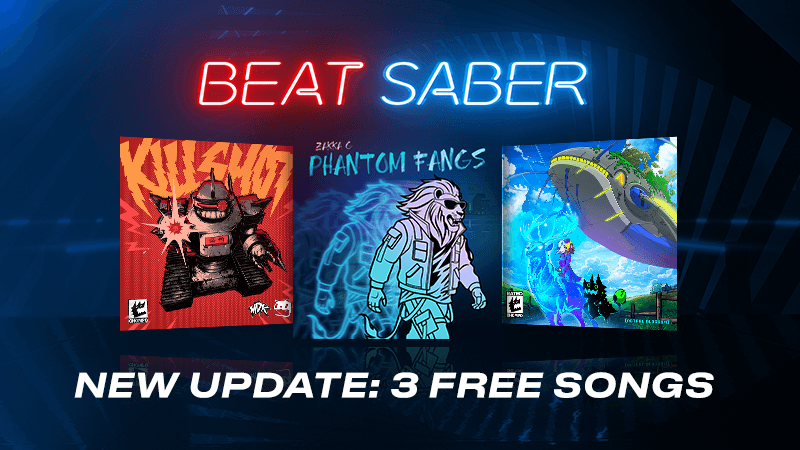
The moment the first note drops and your arm swings through a glowing red block — the crack of the hit syncing with the bass, your whole body leaning into the next beat before your brain has even processed it — is still, eight years later, one of the most purely satisfying things you can do inside a VR headset, and three new free songs just gave you the perfect excuse to feel it again. That split-second where your wrist flick meets the haptic feedback, where the neon environment pulses in sync with the beat, where you’re not thinking anymore — you’re just moving — that’s the beat-saber moment that no flat-screen rhythm game, no matter how flashy, can ever truly replicate.
Platform(s): Meta Quest 2 / Meta Quest 3 / Meta Quest Pro / PlayStation VR2 / PC VR (SteamVR)
Genre: Rhythm / Fitness / Music Action
Developer: Beat Games (now owned by Meta)
Price: $29.99 (Quest Store / Steam / PlayStation Store) — base game consistent across platforms; DLC music packs range $1.99–$4.99 per song or $9.99+ for bundled albums
Play Area: Standing / Roomscale (minimum 1.5m × 1.5m recommended; seated play possible on lower difficulties)
Game Length: Base library ~15–20 hours across all included tracks; infinite via DLC ecosystem and community custom songs (PC VR)
Motion Sickness Risk: None — stationary play, no locomotion, no camera movement
What Is It? VR-Native Legend or Aging Classic — And Which Headsets Get the Free Songs
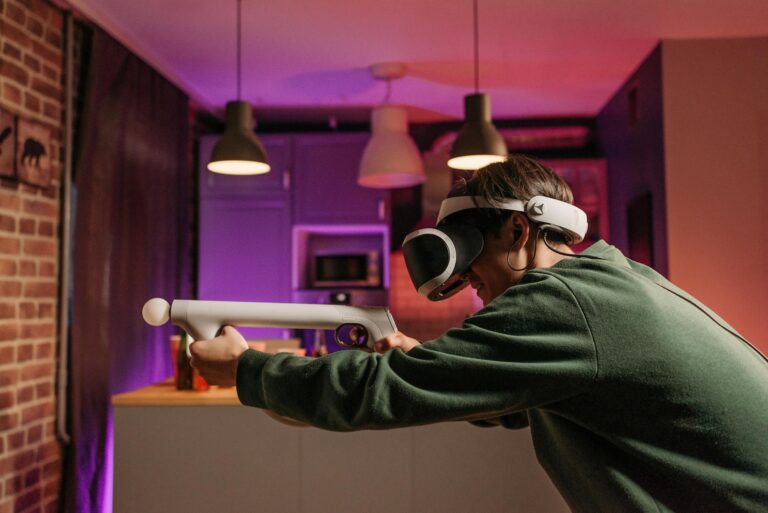
Beat Saber isn’t a port. It wasn’t born on a flat screen and hastily strapped into a headset. Beat Games built this game from the ground up as a VR experience in 2018, and eight years later, it remains the gold standard for what happens when a designer truly understands what makes virtual reality fundamentally different from traditional gaming. You swing two controllers — your sabers — and slice color-coded blocks to the beat. That’s it. That’s the entire concept. And it’s brilliant because VR lets you feel yourself doing it.
The anniversary update drops three new free tracks across all supported platforms simultaneously: Meta Quest 2, Quest 3, Quest Pro, PlayStation VR2, and PC VR via Steam. Every headset gets the same songs, the same update, at the same time — a rarity in the fragmented VR landscape. The base game costs $29.99 on every platform, though Meta’s ownership means Quest versions often see faster feature updates and promotional pricing during Meta sales events. The real money sink, though, is the DLC music ecosystem: over 100 licensed tracks available at $1.99 to $4.99 each, or bundled albums for $9.99–$14.99. A dedicated player can easily spend $100+ building their personal library. But here’s the thing: you don’t need to. The base game is perfectly complete, and these free anniversary songs are genuine additions, not stripped-down previews designed to upsell you.
Timing matters here. Sony’s Days of Play sale dropped the PSVR2 price by $100 to $349, making it the most compelling entry point for new players who don’t already own a PlayStation VR2. If you’re considering buying into VR rhythm gaming specifically, and you have a PS5, this is the moment. For Quest owners, this is a straightforward update that takes seconds to download. For PC VR players, the free songs are nice, but the real magic happens when you install BeatSaver community mod support and unlock thousands of custom tracks created by the fan community.
The VR Experience: Why Slicing Blocks Still Feels Like Nothing Else Eight Years Later
No flat-screen rhythm game — not Guitar Hero, not Dance Dance Revolution, not Crypt of the NecroDancer — can replicate what happens in your nervous system when you’re inside Beat Saber’s virtual space. The illusion of physicality is total. Your brain knows the blocks aren’t real, but your body doesn’t care. When your controller swings through a block and the haptic feedback crackles in your hand, when the neon environment flares with light in perfect sync with a bass drop, when spatial audio places the next beat somewhere in three-dimensional space around your head — your presence in that moment is absolute. You’re not holding a controller. You’re holding a saber. The blocks aren’t polygons. They’re objects you’re destroying.
The three new anniversary tracks lean into this. Each one is a masterclass in how visual design amplifies rhythm-game immersion. The neon environments shift color in real time, responding to beat intensity and song progression. Lighting effects exploit the VR medium — strobes and flashes that would feel cheap on a flat screen instead create a visceral sense of synchronization when you’re wearing a headset. The most memorable immersive moment arrives during the bridge of the second track, where the environment drops into near-total darkness and only your sabers and the blocks themselves glow. You’re swinging blind, trusting rhythm alone, and when you nail the sequence, the release is pure dopamine. That moment — where music, motion, and visual feedback sync into a single unified sensation — is why Beat Saber remains a go-to demo for skeptics who’ve never experienced true VR presence.
Visual fidelity varies by headset. Quest 3 delivers a noticeable upgrade over Quest 2, with sharper block edges and more detailed neon geometry. The mixed-reality passthrough feature feels like a missed opportunity in 2026 — imagine slicing real-world blocks overlaid on your living room — but Beat Saber doesn’t support it yet. PSVR2’s eye-tracked foveated rendering keeps the environment sharp and responsive even during intense play sessions. PC VR with a high-end GPU (RTX 4080 or better) and a high-refresh headset like the Valve Index or HTC Vive Pro 2 sets the visual ceiling: crystal-clear blocks, complex particle effects, and zero frame drops even on Expert Plus difficulty at 144Hz.
Gameplay Deep Dive: Arm-Swinging Controls, Workout Reality, and How Long You’ll Actually Play
Beat Saber’s control scheme is deceptively simple: hold a controller in each hand, and swing in the direction the block indicates. Red blocks require a slash from your right saber; blue blocks from your left. Some blocks demand a horizontal swipe, others vertical or diagonal. The difficulty scaling is elegant: Easy introduces blocks one color at a time. Normal mixes them. Hard adds density and complex patterns. Expert and Expert Plus are where the game becomes a genuine test of hand-eye coordination and endurance.
Here’s the uncomfortable truth about Beat Saber that nobody wants to admit: it’s a workout. A real one. Thirty minutes on Expert difficulty will leave your shoulders burning, your forearms fatigued, and your heart rate elevated. This is why it’s popular with fitness VR enthusiasts, and also why casual players often burn out quickly. The three free anniversary songs are all rated Expert difficulty, which means they’re designed for returning players, not newcomers. If you’ve been away from Beat Saber for months, you’ll feel humbled. There’s a satisfying wrist-snap technique that lets you score higher with less full-arm movement — the experienced players look almost lazy, flicking their wrists at the last second while newcomers are windmilling their entire arms. Both approaches work, but efficiency matters when you’re trying to maintain stamina across a 5-minute song.
Motion sickness risk is effectively zero. You’re standing in place. The camera never moves. There’s no spinning, no disorienting perspective shifts, no heights to trigger vertigo. This is one of the few VR games you can safely recommend to someone who’s never worn a headset before. The challenge is purely physical and cognitive, not vestibular.
Session length reality: most players hit a natural stopping point around 30–40 minutes. Your arms get tired. Your grip weakens. Your accuracy drops. The leaderboard system and multiplayer modes (available on certain platforms) extend the replay loop by introducing competitive pressure — beating a friend’s score or climbing global rankings creates reasons to return. But the free songs alone won’t convert lapsed players into dedicated rhythm-game enthusiasts. That requires either a personal connection to the music, or a competitive drive to master Expert Plus difficulty. For casual dippers, these three tracks are a nice refresher. For hardcore players, they’re a welcome but expected addition to a library they’ve already spent considerable money building.
Headset Comparison: Quest 3 vs PSVR2 vs PC VR — Which Version Hits Hardest
| Headset | Visual Quality | Price | Exclusive Features | Verdict |
|---|---|---|---|---|
| Meta Quest 3 | Sharp, clean; 120Hz support; good color accuracy | $29.99 base game; standalone convenience | Mixed-reality passthrough (unused by Beat Saber); fastest load times; wireless play via Air Link | Best for pick-up-and-play sessions; most portable |
| PSVR2 | Excellent; eye-tracked foveated rendering; rich blacks | $29.99 base game; $100 discount during Days of Play sale (now $349 for headset) | Adaptive trigger haptic feedback; eye-tracking; PlayStation Sense controllers with resistance per block slice | Best official tactile experience; most compelling entry point during sale |
| PC VR (Steam) | Highest ceiling; 144Hz+ possible; unlimited visual detail | $29.99 base game; requires capable PC ($1500+) | BeatSaver custom song support (thousands of community tracks); unlimited mod potential; highest refresh rate support | Best for power users and mod enthusiasts; definitive long-term platform |
Meta Quest 3 wins on convenience and portability. The standalone nature means you can grab it, slip on the headset, and be playing within 10 seconds. No PC tethering, no console docking, no cable management. The visual upgrade over Quest 2 is real — blocks feel crisper, environments more detailed — but it’s not night-and-day. Controller tracking is reliable and responsive, though the haptic feedback lacks the nuance of PSVR2’s adaptive triggers. If you already own a Quest 3, download the update immediately. If you don’t own a VR headset and want to try Beat Saber, Quest 3 is the entry point that makes sense for most people.
PSVR2 delivers the most satisfying tactile feedback. The PlayStation Sense controllers’ adaptive triggers add physical resistance to each block slice — you don’t just see the blocks breaking, you feel them resisting your saber. The haptic feedback is sophisticated enough that you can sense the difference between cutting a block cleanly versus missing it. Eye-tracked foveated rendering keeps the visuals sharp even during intense play sessions, and the OLED display produces rich blacks that make the neon environments pop. The major drawback is the PS5 tether — you’re limited to the cable’s reach, typically 10–15 feet. But for the player who values immersion and has a PS5 already, this is the best official Beat Saber experience available. And right now, with Sony’s $100 Days of Play discount, PSVR2 is the most compelling entry point into VR rhythm gaming. If you’re buying a VR headset specifically for Beat Saber, PSVR2 at $349 is the move.
PC VR represents the long-term investment. The visual ceiling is highest — a capable gaming PC paired with a high-refresh headset like the Valve Index or HTC Vive Pro 2 can run Beat Saber at 120–144Hz with maxed-out graphics. But the real advantage is community support. BeatSaver, the fan-created custom song platform, hosts thousands of community-made tracks across every genre imaginable. Popular songs from anime, video games, and obscure electronic artists all exist as playable Beat Saber maps. The mod community keeps the game perpetually fresh in ways official updates cannot match. If you’re a rhythm-game enthusiast and already have a gaming PC, PC VR is the definitive platform.
Definitive pick verdict: PC VR for power users and mod fans seeking infinite content. PSVR2 for the best official tactile experience, especially during the Days of Play sale. Quest 3 for convenience and portability, and for players new to VR.
Verdict: Does a Three-Song Free Drop Keep Beat Saber in Your Active VR Rotation?
Beat Saber in 2026 is a paradox: it’s simultaneously a living, breathing game with a thriving community and an aging classic coasting on eight years of goodwill. The three free anniversary songs are well-designed, engaging, and worth playing. But they’re not a reinvention. They’re a gesture of appreciation to a playerbase that’s already spent $30 to $100+ on the game.
For existing owners, these free songs are a straightforward download that’ll occupy 30–60 minutes of playtime. They’re not a reason to reinstall the game if you’ve moved on, but they’re a welcome addition if you’re already active. For new PSVR2 owners jumping in during the Days of Play sale, Beat Saber is a must-download. It’s the perfect introduction to what VR can do, it’s immediately engaging without a learning curve, and it scales from complete beginner to hardcore fitness enthusiast. For Quest 3 owners, grab the update. It costs nothing and takes seconds.
The honest long-term retention verdict: casual players will dip in for a few sessions and drift away. Dedicated rhythm-game fans will stay. The free songs alone will not convert lapsed players back into the active rotation. If you haven’t played Beat Saber in 12 months, these three tracks are not enough to break that cycle. But if you’re already a player, they’re exactly what you want: more of what works, no gimmicks, no bloat.
Two alternative VR rhythm games worth considering: Pistol Whip leans into action-forward gameplay where you’re shooting targets to the beat — higher adrenaline, more arcade energy. Synth Riders prioritizes flow-state gameplay with smoother, more forgiving mechanics — better for players who want the rhythm experience without the arm fatigue.
8.2 / 10
Buy Now: PSVR2 owners (especially during Days of Play sale) and PC VR players seeking infinite custom content. Download Update: Existing Quest 3 and Quest 2 owners. Wait: Lapsed players considering a return; the free songs are nice but not enough to justify re-engagement on their own. Skip: Players who’ve never enjoyed rhythm games; Beat Saber won’t change your mind.
Best For: VR newcomers seeking an immediate, satisfying sense of presence; fitness enthusiasts looking for cardio in a headset; rhythm-game veterans building a personal music library.
Frequently Asked Questions
Does Beat Saber’s free anniversary update work on Meta Quest 2 or only Quest 3?
The free anniversary songs are available on both Meta Quest 2 and Quest 3 simultaneously. Beat Games and Meta distribute updates across the entire Quest ecosystem at the same time. The only difference is visual fidelity: Quest 3 renders sharper block geometry and more detailed neon environments thanks to its improved display and processing power, but the three new tracks play identically on both headsets. If you own a Quest 2, download the update without hesitation. No purchase required.
Is Beat Saber worth buying for PSVR2 during the Sony Days of Play sale?
Yes. The Days of Play sale dropped the PSVR2 headset price by $100 to $349, making it the most compelling entry point into VR rhythm gaming if you own a PS5. Beat Saber on PSVR2 delivers the best tactile feedback available through the PlayStation Sense controllers’ adaptive triggers — each block slice has physical resistance that you can feel. The eye-tracked foveated rendering keeps visuals sharp, and the overall experience is more immersive than Quest 3. At $349 for the headset plus $29.99 for the game, this is the best value for a new player seeking a premium Beat Saber experience right now.
How does Beat Saber on Quest 3 compare to the PC VR version with mods?
Quest 3 offers convenience and immediate playability; PC VR offers unlimited content and the highest visual ceiling. Quest 3 delivers sharp visuals and zero setup friction — you put on the headset and play. PC VR with a capable gaming PC (RTX 4080 or better) can run Beat Saber at 120–144Hz with maxed-out graphics, producing crisper visuals and smoother motion. More importantly, PC VR unlocks BeatSaver, the community custom song platform hosting thousands of user-created maps. If you’re a casual player, Quest 3 is sufficient. If you’re a rhythm-game enthusiast seeking infinite content and maximum visual fidelity, PC VR is the definitive platform. The trade-off: PC VR requires a $1500+ investment in a gaming PC and headset, while Quest 3 is standalone.