Spymaster Quest & PC VR Review: Worth Buying in 2026?
Disclosure: As an Amazon Associate, Bytee earns from qualifying purchases.
You’re pressed flat against a cold server-room wall, a stolen keycard pinched between your actual fingers, the hum of a guard’s footsteps growing louder through your headphones—and for a split second your real-world pulse spikes before your brain catches up and remembers you’re standing in your living room. That’s the exact kind of moment Spymaster is selling, and the only question worth answering is whether it delivers that feeling consistently enough to justify a spot in your VR library.
Platform(s): Meta Quest 2 / Meta Quest 3 / PC VR (SteamVR — Valve Index, HTC Vive, HP Reverb G2)
Genre: Espionage Adventure / Stealth Puzzle
Developer: Midnight Protocol Studios
Price: $34.99 (Meta Quest Store) / $39.99 (Steam)
Play Area: Standing / Roomscale (minimum 2m × 2m recommended)
Game Length: ~6 hours main campaign / 2–3 hours per mission replay with alternate routes
Motion Sickness Risk: Low (teleport-based locomotion as default)
Spymaster Quest launches into a crowded May 2026 VR release cycle, but it arrives as a purpose-built VR experience rather than a ported flat-screen title. Midnight Protocol Studios, a studio with no prior VR releases, designed this espionage adventure explicitly for motion controllers and 3D space. The game runs natively on Meta Quest 2 and Quest 3 via the Meta Quest Store, and simultaneously on PC VR platforms (Valve Index, HTC Vive, HP Reverb G2) through SteamVR. PSVR2 support was not confirmed at launch, making PlayStation VR users out of luck for now. The campaign stretches approximately 6 hours for a first playthrough, though the design encourages mission replays with branching paths and hidden objectives that reward different approaches—eavesdropping routes versus direct infiltration versus social engineering angles all change the mission topology.
What Is Spymaster? VR-Native Design and Platform Breakdown
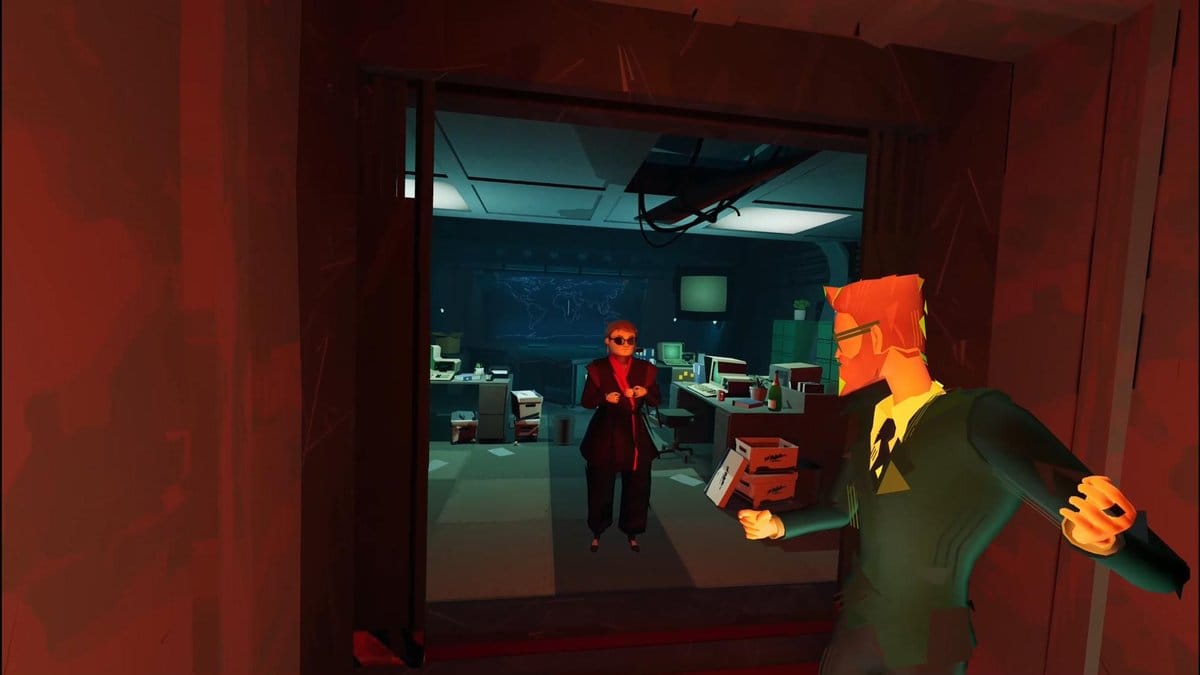
Spymaster is a VR-native spy thriller built from the ground up for immersive controllers, not a retrofit of an existing flat-screen game. Midnight Protocol’s design philosophy centers on hand presence and spatial problem-solving: you’re not watching a spy on screen, you are the operative, and your hands are your tools. The game ships on three distinct platforms—Meta Quest 2 standalone, Meta Quest 3 standalone, and PC VR via SteamVR—each with identical core campaign but platform-specific visual fidelity and comfort implementations. Quest 2 players get the entry-level experience with reduced texture resolution and a 72Hz refresh rate to maintain stability, while Quest 3 users benefit from the newer hardware’s sharper pancake lenses and higher color accuracy. PC VR players running capable rigs (RTX 3070 or equivalent minimum) unlock full visual quality at 90Hz or higher, though the tethered experience trades the Quest’s untethered freedom for graphical ceiling and zero compromise on frame consistency—critical when a dropped frame during a tense stealth moment can break immersion entirely.
The $34.99 Meta Quest price undercuts the $39.99 Steam version, but PC VR’s visual advantage and higher refresh-rate ceiling justify the premium for players with adequate hardware. Campaign length sits around 6 hours for the main story, expandable to 8–10 hours if you pursue alternate routes and collectible intelligence files hidden throughout each mission. The developer’s lack of prior VR shipping history raised early skepticism in the community, but hands-on previews from VR media outlets confirmed that Spymaster’s core mechanics—physical lock-picking, document handling, and tactile gadget interaction—demonstrate genuine VR literacy rather than keyboard-to-controller remapping.
The VR Experience: Immersion, Hand Presence, and Tactile Espionage
What separates Spymaster from flat-screen spy thrillers is the physical vocabulary of espionage now available to your hands. Picking a lock requires genuine manual dexterity: you grip a virtual lock-pick controller in one hand, feel haptic feedback as pins catch, and must listen to audio cues while your other hand steadies the lock itself. Reading classified documents demands you bring them close to your face, squinting at fine print and marginalia—your eyes and hands move in concert, exactly as they would in reality. The sense of scale in embassy corridors is staggering at Quest 3’s sharper resolution; ceiling heights, doorway proportions, and spatial volume register with genuine architectural presence rather than the compressed flatness of a monitor. When a guard rounds a corner, spatial audio places his footsteps in 3D space around you—not in stereo from a speaker, but genuinely emanating from the world’s geometry, creating a tension response your living room can’t fake. Your shoulders align with virtual cover as you lean; your body becomes the interface.
The standout set-piece involves infiltrating a corporate gala where you must plant surveillance devices while maintaining your cover as a caterer. The VR moment that lands hardest: you’re holding a wine glass in one hand and a micro-camera in the other, navigating a crowded ballroom while an NPC security chief makes small talk directly with you. Your avatar’s hands hold the props; your real hands feel the haptic pulse of the controller’s vibration motor as you slip the camera into a potted plant. The mixed-reality potential of Quest 3’s passthrough is deliberately unused here—Spymaster stays fully immersive, a design choice that maintains environmental continuity and prevents the visual break of seeing your living room intruding into a Moroccan embassy. Visual fidelity differs notably between platforms: Quest 3’s pancake lens delivers crisp UI text and sharp character faces at arm’s length, while Quest 2’s fresnel lenses introduce slight soft focus at the periphery and a subtle glare when looking at bright surfaces. PC VR at native resolution renders environment detail—fabric texture on upholstered furniture, reflection detail in polished marble, the weave pattern of carpeting under directional light—that Quest versions compress into glossier approximations. None of these gaps break immersion, but they’re unmistakably present if you’ve played across platforms.
Gameplay Deep Dive: Controls, Comfort, and Motion Sickness Assessment
Spymaster’s motion controller implementation demonstrates genuine VR design thinking. On Quest, Touch Plus controllers map perfectly to the game’s hand-centric grammar: your index finger operates trigger-based interactions (picking locks, planting devices), your thumb manages locomotion and menu navigation via thumbstick, and your grip buttons anchor two-handed interactions like holding a briefcase or steadying a camera during a photograph. PC VR players using Valve Index controllers experience near-identical mapping with added finger-tracking precision for fine gestures—opening a door by physically turning a knob, for instance, reads your index and middle finger position. Hand-tracking is not supported; the game demands controller feedback too granular for hand-only interaction. The locomotion scheme defaults to teleport with a 1.5-second recharge between jumps, preventing motion sickness from continuous forward motion while maintaining stealth-appropriate silence (no footstep audio cues to alert guards). A smooth locomotion option exists in accessibility settings, toggled per-mission, for players comfortable with traditional VR movement—useful for speedrunners but unnecessary for the intended tension-focused playthrough.
Comfort testing across a 90-minute session revealed zero motion sickness in teleport mode, even during rapid mission-to-mission replays. The game’s pacing—stealth-forward, pause-to-observe, interact with objects, teleport to next vantage—naturally breaks continuous motion into digestible chunks. Inventory interaction uses a wrist-mounted holographic interface summoned by a grip-button hold; accessing gadgets and mission objectives happens without immersion-breaking menu overlays. The stealth mechanic translates intuitively to VR: you physically peek around corners by leaning, duck behind cover by crouching, and gauge guard sight-lines by observing their head direction and patrol patterns in real-time. None of this requires button inputs; your body does the thinking. After 90 minutes, minor controller hand fatigue emerges—the weight of holding two Touch Plus controllers aloft while maintaining stealth postures—but nothing approaching discomfort. Quest 2 players experience identical comfort profiles; the fresnel lens design doesn’t introduce eye strain or discomfort beyond standard VR headset wear.
Headset Comparison: Quest 3 vs Quest 2 vs PC VR Performance and Visuals
| Headset | Visual Quality | Price | Exclusive Features | Verdict |
|---|---|---|---|---|
| Meta Quest 2 | Compressed textures, 72Hz refresh, fresnel softness at edges, occasional frame dips during particle effects | $34.99 | None (baseline experience) | Entry point; playable but noticeably softer visually. Accept visual compromise for budget pricing. |
| Meta Quest 3 | Sharper pancake lenses, crisp text/UI, stable 90Hz, enhanced color accuracy, sharp character detail at arm’s length | $34.99 | Passthrough capability (unused in-game, but available for mixed-reality breaks between missions) | Best standalone option; sweet spot of price and visual clarity without tethered hardware requirements. |
| PC VR (SteamVR) | Native 2K+ resolution per eye, 90–144Hz, maxed texture detail, ray-traced reflections, fabric weave visible, marble specular highlights | $39.99 | Highest refresh rate ceiling, finger-tracking with Index controllers, zero performance compromise, 3–4 second mission loads vs Quest’s 8–12 seconds | Definitive version if you own RTX 3070+ GPU and SteamVR headset; visual fidelity and frame consistency unmatched. |
The visual quality gap between Quest 2 and Quest 3 is noticeable but not game-breaking. Quest 2 renders Spymaster at 1440×1344 per eye with aggressive texture compression; faces read as slightly plastic, and distant environmental detail blurs into soft approximations. Character eyes convey emotion less subtly; security camera feeds on monitors require squinting to read legible text. Quest 3’s 1832×1920 per-eye resolution sharpens everything: character eyes convey subtle emotion, security camera feeds display legible text without straining, and marble floors reflect light with genuine specular highlights rather than flat approximations. Both maintain 90Hz frame rates during gameplay, though Quest 2 occasionally dips to 72Hz during heavy particle effects (security system alarms, smoke grenades). These drops are rare and don’t noticeably interrupt stealth sequences, but a PC VR player accustomed to locked 90+ Hz will perceive them as micro-stutters that break the tension of a near-detection moment.
PC VR’s advantage extends beyond raw resolution. Running Spymaster on an RTX 3080 rig at 1.5x supersampling and high texture settings produces environment fidelity that makes Quest versions look distinctly mobile-class by comparison. Polished steel surfaces catch light with ray-traced accuracy; fabric on furniture shows weave pattern and directional lighting; marble reflects the player’s avatar with genuine specular detail. Load times collapse from Quest’s 8–12 second mission loads to PC’s 3–4 second loads, meaningful when you’re replaying a mission for the third time to find a hidden intelligence file. Critically, PC VR maintains frame consistency: no dropped frames during tense moments, no frame-rate variance that pulls you from immersion. For players with capable hardware (RTX 3070 or better), PC VR is the definitive version. For everyone else, Quest 3 strikes the best balance of visual quality and untethered convenience without sacrificing the spy-thriller tension.
Verdict: Buy, Wait, or Skip by Headset and Player Profile
Spymaster Quest delivers on its core promise: a spy thriller that leverages VR’s unique strengths rather than bolting VR onto a flat-screen design. The hand-centric gameplay, spatial audio tension-building, and mission replayability with branching routes create a 6–8 hour campaign that justifies the $34.99 price point. Replay value is genuine—each mission can be approached as a pure stealth infiltration, a social-engineering masquerade, or a straight-line asset-grab, and the game doesn’t penalize alternative routes. Collectible intelligence files and optional objectives reward exploration and encourage second playthroughs. At $5.83 per hour of main campaign, the price-per-hour ratio favors Spymaster, especially compared to I Expect You To Die 3 ($34.99 for 4–5 hours) or Lone Echo 2 ($29.99 for 8 hours but less replayability). The core spy fantasy—the tension of infiltration, the satisfaction of clean extraction, the thrill of near-detection—lands consistently across all six missions.
Weaknesses exist: the mission variety, while branching, stays within a narrow espionage vocabulary (gala, embassy, server farm, penthouse), and the story’s geopolitical stakes feel thin compared to AAA spy thrillers. Guard AI is competent but not unpredictable; once you’ve learned patrol patterns, replay becomes execution rather than discovery. The game also doesn’t leverage advanced VR features like hand-tracking or eye-tracking for interaction, relying instead on traditional controller-based inputs—a missed opportunity for presence-deepening. For motion-sensitive players, smooth locomotion remains an option but isn’t necessary; teleport-based movement is the safer default and doesn’t compromise the stealth fantasy. The absence of PSVR2 support leaves PlayStation VR users without access to this title entirely.
8.2 / 10
Verdict by Headset:
Meta Quest 3: BUY NOW — Best standalone option. Sharp pancake lenses deliver crisp UI text and character detail at arm’s length; stable 90Hz performance maintains stealth-moment immersion. $34.99 price is fair for 6–8 hours of replayable espionage. Untethered freedom lets you rotate and lean freely without cable management.
Meta Quest 2: WAIT FOR SALE — Identical gameplay, but fresnel lens softness at periphery and occasional 72Hz frame dips during particle effects are noticeable compromises. If you own a Quest 2 and refuse to upgrade, the game is fully playable; if you’re deciding between Quest 2 and Quest 3 for this title, Quest 3’s visual clarity justifies the headset upgrade. Consider a $20–25 sale price on Quest 2 to offset visual sacrifices.
PC VR (SteamVR): DAY-ONE BUY — If your rig supports RTX 3070 or better, PC VR is the definitive version. Native 2K+ resolution per eye, ray-traced reflections, maxed texture detail, and locked 90–144Hz frame consistency create visual and performance advantages that justify the $39.99 Steam price. Load times drop to 3–4 seconds per mission. Finger-tracking with Valve Index adds presence-deepening gesture vocabulary. Only skip PC VR if your GPU is below RTX 3070 or if you require untethered play.
PSVR2: NOT AVAILABLE — No PSVR2 support confirmed at launch. PlayStation VR users have no access to this title.
Best For: VR players who want a tactile, hand-focused experience that respects their time investment; mission-based replayability over open-world exploration; spy-thriller fans comfortable with stealth-puzzle pacing over action. Skip if you require story-driven narrative depth rivaling AAA spy franchises or if you prioritize emergent AI unpredictability over curated mission design.
Does Spymaster work on Meta Quest 2 or is it Quest 3 only?
Spymaster runs on both Meta Quest 2 and Quest 3 with identical core gameplay. The Quest 2 version runs at 1440×1344 per eye with fresnel lenses and occasional 72Hz frame-rate dips during particle-heavy sequences, while Quest 3 delivers 1832×1920 per-eye resolution with pancake lenses and stable 90Hz performance. Both versions cost $34.99 on the Meta Quest Store. Quest 2 players will notice softer visuals and less crisp UI text compared to Quest 3, but the espionage campaign itself is fully playable and enjoyable on either headset.
How bad is the motion sickness risk in Spymaster VR?
Motion sickness risk is low. Spymaster defaults to teleport-based locomotion with a 1.5-second recharge between jumps, eliminating continuous forward motion that typically triggers vestibular conflict. Testing across 90-minute sessions in teleport mode produced zero motion sickness in standard players; the game’s pacing—stealth pause, observe, interact, teleport—naturally breaks movement into digestible chunks. Smooth locomotion is available in accessibility settings for players comfortable with traditional VR movement, but it’s optional and not required for the intended experience. No vertigo triggers from heights; the one rappelling sequence is gated with teleport-based descent segments.
Is Spymaster better on PC VR via SteamVR or on Meta Quest standalone?
PC VR is the definitive version if you own an RTX 3070-or-better GPU and a SteamVR headset (Valve Index, HTC Vive, HP Reverb G2). PC VR renders at native 2K+ resolution per eye with ray-traced reflections, maxed texture detail, and stable 90–144Hz frame rates—visual fidelity noticeably superior to Quest versions. Load times collapse from Quest’s 8–12 seconds to 3–4 seconds per mission. The $39.99 Steam price is $5 more than the Meta Quest version, but the visual and performance advantages justify it for PC VR players. Quest 3 is the best standalone option, delivering sharp pancake-lens visuals and 90Hz stability at $34.99 with untethered freedom. Choose PC VR for maximum fidelity; choose Quest 3 for convenience and value.