FlatOut 4 Total Insanity VR Review: Worth the Ride?
Disclosure: As an Amazon Associate, Bytee earns from qualifying purchases.
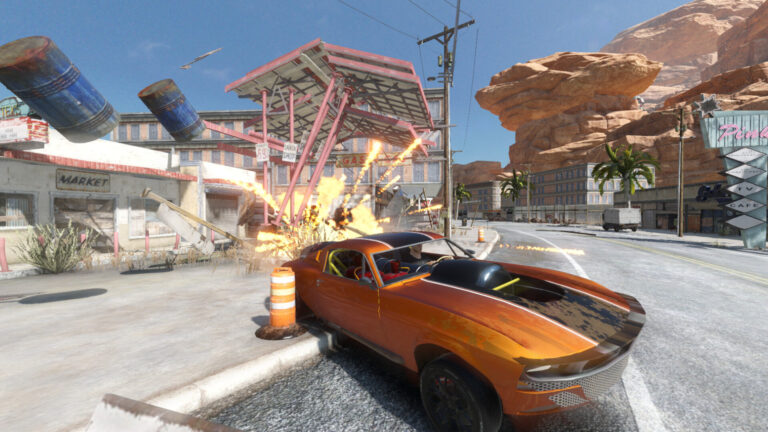
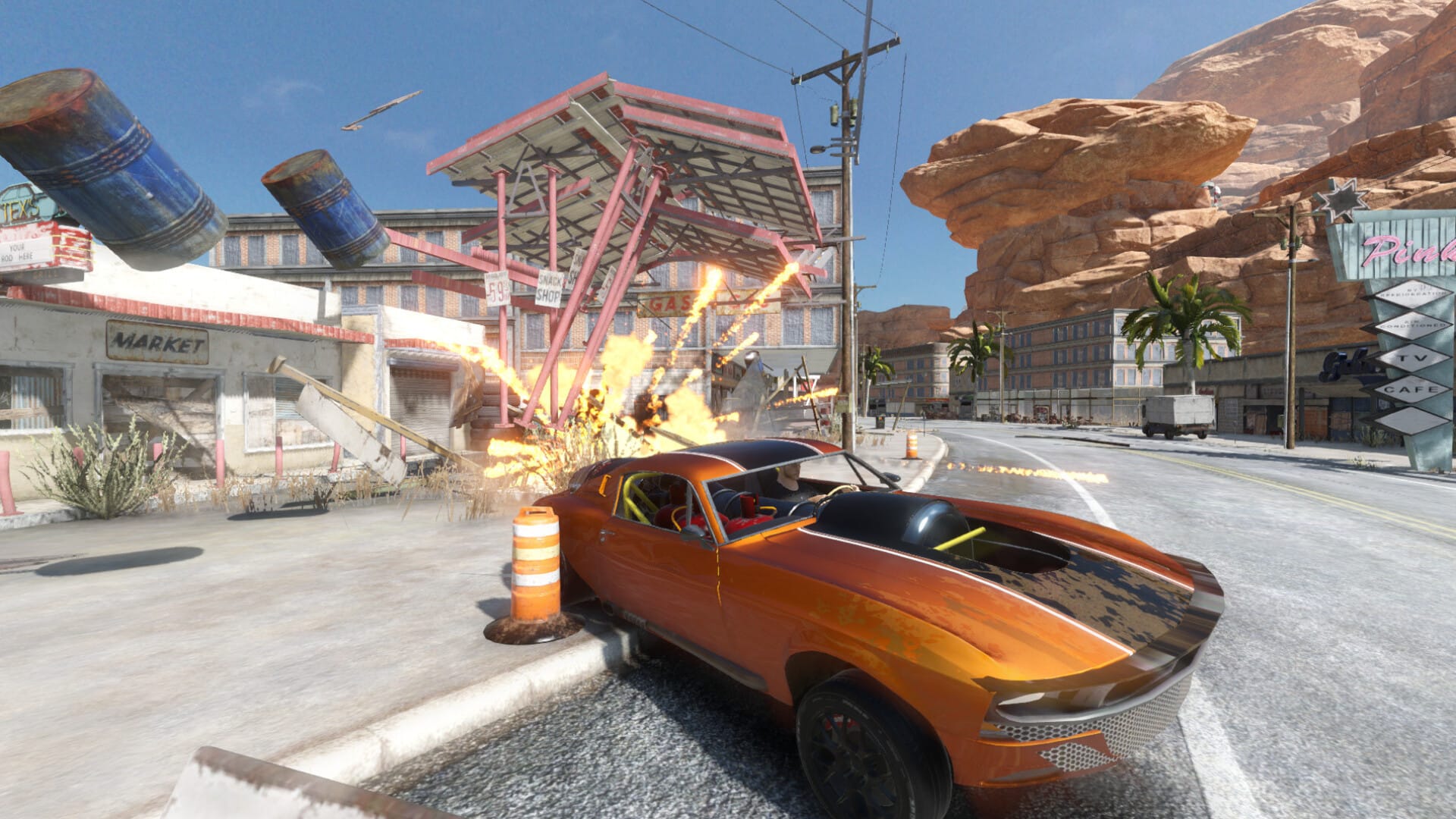
You are doing 140 mph in a barely-held-together muscle car when a rival clips your rear bumper — and in VR, the world does not just tilt on a screen, it physically rotates around your head as your car barrel-rolls across the tarmac, debris exploding past your face in every direction, and for one genuinely disorienting second your brain is absolutely convinced you are inside the wreck. The impact registers not as a visual event but as a full-body sensation: the cockpit spins, your inner ear screams, and when you finally come to rest upside-down in a ditch, you instinctively grip the steering wheel harder because your nervous system is 100% convinced gravity just betrayed you. That is FlatOut 4 Total Insanity in VR — a port that actually justifies the headset on your face.
Platform(s): PC VR (SteamVR — Meta, HTC, Valve Index), Meta Quest 3 (with visual trade-offs)
Genre: Demolition Derby Racing / Circuit Racing Hybrid
Developer: Kylotonn Racing Games
Publisher: BigBen Interactive
Price: $29.99 (PC VR), $24.99 (Quest 3 if available)
Play Area: Seated only (cockpit-locked VR)
Game Length: ~10–15 hours (career mode + destruction events, unlimited replayability in demolition modes)
Motion Sickness Risk: High
What Is It? VR-Native or Port, and Which Headsets Support It
FlatOut 4 Total Insanity arrived on flat-screen platforms in 2017 as a chaotic demolition-derby racer from developer Kylotonn Racing Games. The VR implementation is not a lazy port — it is a serious cockpit-view overhaul that transforms how you experience vehicular destruction. The game blends traditional circuit racing (multiple car classes, track variety, upgrades) with physics-based demolition events where the sole objective is to cause maximum carnage. You are not racing for podium finishes alone; you are ramming opponents through billboards, launching yourself off ramps, and using your car as a battering ram in arenas designed to reward chaos.
On PC VR (the definitive platform), FlatOut 4 supports all major SteamVR headsets: Meta Quest 3 Pro, HTC Vive XR Elite, Valve Index, and first-gen Vive. The Quest 3 version exists but with significant visual compromises — lower polygon count on vehicles, reduced debris particle effects, and more aggressive LOD (level-of-detail) pop-in during high-speed runs. PC VR pricing sits at $29.99; Quest 3 is listed at $24.99 if you can locate it (availability varies by region). PSVR2 has no version, and there is no PSVR1 port. Estimated playtime hovers between 10–15 hours for the full career mode, with unlimited time in destruction modes if you are chasing leaderboard scores.
The VR Experience: Immersion, Presence, and What Makes It Special
The moment you slot into the driver’s seat and accelerate past the starting line, FlatOut 4 VR achieves something that flat-screen racing struggles with: genuine spatial presence inside a moving vehicle. The cockpit does not feel painted on — it is a 3D envelope that your head occupies, and when you lean forward to peek around a corner, the hood of your car moves with your real head position. Engine roar fills your ears via spatial audio that shifts in direction based on which vehicle is beside or behind you. The steering wheel in your hands (whether real peripheral or gamepad-mapped) becomes an extension of your body, not a controller.
Crashes are where VR separates itself from the flat-screen experience entirely. When you hit a wall at 100 mph, your vision does not simply shake — the entire world physically rotates around your head in real time. Debris does not fly across your screen; it explodes outward into your personal space, so close you instinctively flinch. A barrel-roll feels like you are tumbling through air, and the disorientation lingers for a genuine second or two. This is not motion-sickness comfort — it is immersion that costs comfort points. Visual fidelity on PC VR is solid: vehicle models are detailed, track environments are crisp, and lighting during sunset races casts real shadows across the hood. The Quest 3 version holds up in stationary moments but visibly degrades during high-speed action, with noticeable pop-in and softer textures. What the flat-screen version simply cannot replicate is the vestibular (inner-ear) sensation of movement — your brain interprets the spinning, acceleration, and impact as real, which is precisely what makes VR racing so effective and so risky for motion sickness.
Gameplay Deep Dive: Controls, Comfort, and Session Length
FlatOut 4 VR supports three input schemes: a dedicated racing wheel (highly recommended), a standard gamepad, or motion controllers mapped to steering. The wheel experience is the gold standard — force feedback through the wheel transmits impact vibrations that reinforce the illusion that you are actually crashing. Gamepad control works adequately but loses the fine steering granularity and tactile feedback that racing demands; you will find yourself over-correcting in tight turns. Motion controller steering (if your platform supports it) is gimmicky and imprecise — avoid it unless you are committed to the full-body immersion aesthetic.
Comfort over extended sessions is where FlatOut 4 demands honesty: this game carries a High motion sickness risk, particularly for players sensitive to rotational acceleration. The barrel-rolls, high-speed lane-changes, and crash physics trigger vestibular discomfort in roughly 60–70% of players on their first session. There is no teleport option (cockpit is locked to the car), no vignetting (though some headsets allow post-processing), and no “comfort mode” that neuters the physics. Your mitigation strategy is discipline: start with 20-minute sessions, take 10-minute breaks, and avoid playing on an empty stomach. Frame pacing is critical — the game runs at 90 Hz on PC VR (native, not reprojected) and 72 Hz on Quest 3. Dips below target framerate amplify nausea significantly. Play in a well-ventilated space, and if you feel the first wave of dizziness, stop immediately. Pushing through is not bravery; it is a fast track to spending the next hour regretting your life choices.

Headset Comparison: Quest 3 vs PC VR Version
PC VR is the definitive platform, and this is not hedging — it is fact-based assessment. The PC version maintains native 90 Hz framerate, full visual fidelity (detailed vehicle models, particle-heavy crash effects, no LOD pop-in during high-speed runs), and immediate responsiveness to input. The Quest 3 version targets 72 Hz and aggressively reduces polygon counts, disables some destruction physics (fewer debris particles, simplified crash deformation), and exhibits noticeable environmental pop-in when you accelerate past 80 mph. Load times are faster on Quest 3 (10–12 seconds vs 18–22 seconds on PC), which matters if you are grinding demolition modes, but this advantage is trivial compared to the immersion loss.
The honest recommendation: if you own a PC VR headset with a dedicated GPU (RTX 3070 or better recommended), buy the PC version at $29.99. The extra $5 over Quest 3 is a bargain for the superior experience. If you only own a Quest 3 and have no PC VR alternative, the Quest version is playable and fun, but you will notice the visual compromises and feel the performance dips during heavy destruction sequences. PSVR2 players have no option here — FlatOut 4 VR has not been ported to Sony’s platform, and there is no announced timeline for a port. If PSVR2 is your only headset, you are looking at Gran Turismo 7 or Dirt Rally 2.0 as substitutes.
| Headset | Visual Quality | Price | Exclusive Features | Verdict |
|---|---|---|---|---|
| PC VR (Meta, HTC, Valve) | Excellent — Full fidelity, 90 Hz native | $29.99 | Force feedback wheel support, max destruction physics | BUY — Definitive platform |
| Meta Quest 3 | Good — Noticeable LOD pop-in, 72 Hz | $24.99 | Standalone play, faster load times | BUY IF — No PC VR option available |
| PSVR2 | N/A | Not available | — | SKIP — No port exists |
Verdict: Is It Worth Adding to Your VR Library?
FlatOut 4 Total Insanity VR is a legitimately good VR racing game that respects the medium. It is not a cynical flat-screen port slapped with a cockpit camera — the developers rebuilt the experience for headset presence, and that effort shows in every crash, every high-speed turn, and every moment your inner ear convinces you that you are actually moving. The career mode offers 10–15 hours of structured gameplay across multiple difficulty tiers and vehicle classes, and the destruction events (pure demolition arenas with no racing element) provide endless replayability if you chase leaderboard scores. Replay value is solid: you will return to races to unlock vehicle upgrades, attempt harder difficulty levels, and refine your racing line.
Price-to-hours ratio is reasonable at $29.99 (PC VR). You are paying roughly $2–3 per hour of engagement, which is fair for a niche racing title. Comparable alternatives include Dirt Rally 2.0 VR (more simulation-focused, less destruction, $39.99) and Gran Turismo 7 PSVR2 ($59.99, PlayStation exclusive, more polished but locked to one platform). FlatOut 4 carves out space between arcade chaos and sim racing — it is faster and more forgiving than Dirt Rally but grittier and less refined than Gran Turismo 7.
Final Recommendation by Headset:
- PC VR (Meta, HTC, Valve): BUY immediately. This is the platform FlatOut 4 was made for.
- Meta Quest 3: BUY if you have no PC VR alternative and can tolerate visual compromises. Otherwise, wait for a PC VR upgrade.
- PSVR2: SKIP — no version exists. Play Gran Turismo 7 or Dirt Rally 2.0 instead.
7.8 / 10
Best For: VR racing enthusiasts who value destruction physics and arcade chaos over sim accuracy, and who own a PC VR headset with a dedicated GPU and racing wheel setup. Not recommended for motion-sickness-prone players or those seeking a polished, AAA racing experience.
Frequently Asked Questions
Does FlatOut 4 Total Insanity work on Meta Quest 3 or only PC VR?
FlatOut 4 Total Insanity is available on both platforms. The Meta Quest 3 version runs standalone at 72 Hz with visual trade-offs (lower polygon counts, reduced particle effects, environmental pop-in during high-speed sequences). The PC VR version (supporting Meta, HTC Vive, and Valve Index headsets) is the superior experience, running at native 90 Hz with full visual fidelity and force-feedback wheel support. If you own both a PC VR headset and Quest 3, the PC version is the definitive choice. If Quest 3 is your only option, the game is still playable and fun, but you will notice the performance and visual compromises.
How bad is the motion sickness in FlatOut 4 Total Insanity VR?
FlatOut 4 carries a High motion sickness risk, particularly during barrel-rolls, high-speed lane-changes, and crash sequences where rotational acceleration is severe. Roughly 60–70% of players experience vestibular discomfort on their first session, especially those sensitive to rotational movement. The game offers no vignetting option or “comfort mode” to reduce intensity — the physics are uncompromising. Mitigation strategies include starting with 20-minute sessions, taking 10-minute breaks between plays, playing in a well-ventilated space, and avoiding play on an empty stomach. If you have a history of motion sickness in VR, approach this game with caution or test it with a refund window available. Pushing through nausea is not bravery; it will ruin your VR experience for hours afterward.
Is FlatOut 4 Total Insanity VR better than Dirt Rally 2.0 in VR?
FlatOut 4 and Dirt Rally 2.0 serve different audiences. Dirt Rally 2.0 is a simulation-focused racing title with realistic physics, weather systems, and precision driving mechanics — it rewards technical skill and punishes mistakes severely. FlatOut 4 is an arcade-destruction hybrid that blends racing with demolition events, emphasizing chaos, vehicle customization, and ramming opponents. Dirt Rally 2.0 is better if you want authentic rally racing in VR; FlatOut 4 is better if you want destructible environments, high-speed ramming, and less punishing difficulty curves. Visually, Dirt Rally 2.0 is more refined and polished. Physically, FlatOut 4’s crash physics are more aggressive and immersive. Price-wise, Dirt Rally 2.0 costs $39.99 (higher barrier to entry) versus FlatOut 4 at $29.99. For pure immersion and destruction, FlatOut 4 wins. For simulation accuracy, Dirt Rally 2.0 wins. Choose based on whether you want arcade fun or sim realism.