Panic Says the Playdate Rejects AI: Human Devs Only
Disclosure: As an Amazon Associate, Bytee earns from qualifying purchases.
In a move that’s quietly shaking up the indie gaming space, Panic—the Portland-based developer and publisher behind the wildly popular Playdate handheld console—just drew a hard line in the sand: no generative AI-created games on its official catalog. This isn’t performative posturing. It’s a deliberate rejection of the industry’s current AI arms race, and it says something uncomfortable about where gaming is headed.
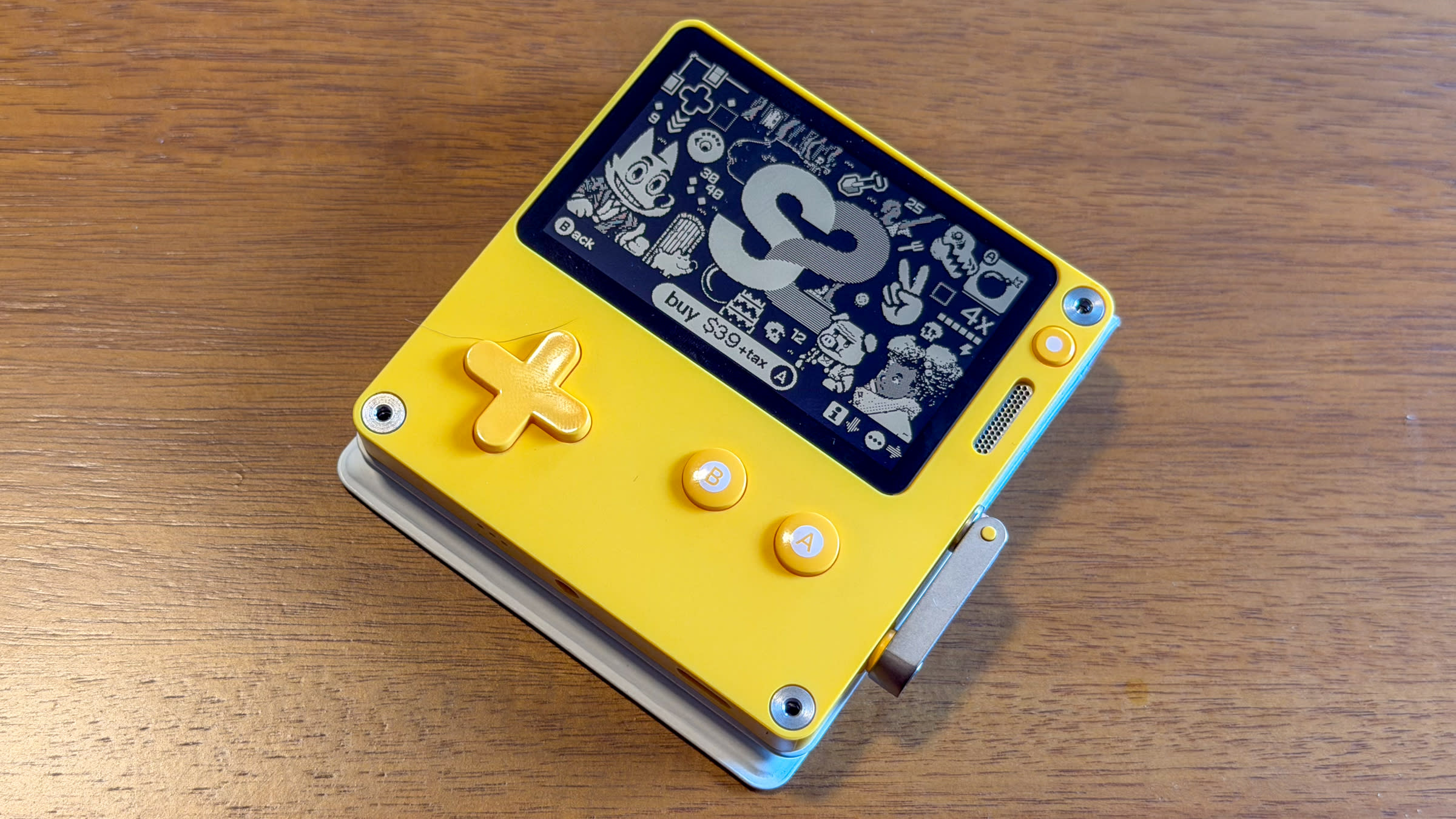
While Fallout’s creator optimistically preaches about generative AI’s potential, while Capcom hedges its bets with both “no gen AI in games” but “yes AI in development,” and while Roblox frantically deploys agentic AI to automate game creation, Panic is taking the path less traveled. The company isn’t banning developers from using AI tools to assist with development—that’s a different conversation. Instead, Panic is saying that games where the core creative assets (visuals, audio, design) are primarily generated by AI won’t make the cut on their storefront.
This matters because Panic matters. The Playdate isn’t just another gaming device; it’s a cultural artifact that’s attracted a fiercely loyal community of game enthusiasts, indie developers, and people who are tired of algorithm-driven, metrics-obsessed gaming experiences. What Panic does with its curation policy ripples outward in ways that AAA studios’ internal AI debates simply don’t.
The AI Tech Under the Hood: What We’re Actually Talking About
Before we dive into Panic’s stance, let’s be clear about what “generative AI” means in this context—because the term gets thrown around so loosely that it’s lost most of its meaning.
Generative AI in game development typically refers to a few distinct but overlapping technologies:
Large Language Models (LLMs) for code generation: These are systems like OpenAI’s Codex or GitHub Copilot trained on massive datasets of human-written code. They predict the next token (roughly, the next word or code snippet) based on statistical patterns in training data. When a developer types a function signature, the LLM suggests the implementation. It’s probabilistic pattern matching dressed up as creativity.
Diffusion models for image generation: Tools like Stable Diffusion or Midjourney work by iteratively “denoising” random pixel noise into coherent images based on text prompts. They learn statistical distributions of visual features from training data and sample from those distributions. The result? Images that are photorealistic or stylized depending on the training data—but fundamentally derivative of their training corpus.
Procedural generation with AI: This is more nuanced. Traditional procedural generation (think Minecraft’s terrain generation or No Man’s Sky’s universe creation) uses algorithms and mathematical rules to create content. AI-assisted procedural generation layers neural networks on top of these systems to make the output more sophisticated or contextually aware. It’s still algorithmic, but with learned statistical priors instead of hand-coded rules.
Agentic AI for automation: This is where Roblox is heading—autonomous agents that can take high-level instructions and execute complex sequences of actions to build game content, spawn NPCs, create dialogue trees, etc. These systems combine LLMs with planning and reasoning capabilities, but they’re still fundamentally doing what they were trained to do, at scale and speed.
The key insight: none of this is “creative” in the way humans understand creativity. These systems are statistical pattern-matching engines. They’re extraordinarily good at interpolating between patterns in their training data, but they don’t understand game design, player psychology, or narrative meaning. They can’t feel what makes a moment emotionally resonant. They can generate something that looks like it could be a game, but the gap between “technically functional” and “actually good” is where human creativity lives.
Why Panic’s Line Matters More Than You Think
Panic’s decision to exclude generative AI games from its catalog is essentially a curation statement. And in 2024, curation is becoming the most valuable resource in gaming.
Here’s the situation: we’re in an era of AI-assisted content proliferation. Roblox is deploying agentic AI specifically to automate game creation and reduce the friction of bringing new experiences to their platform. The result? More games, faster iteration, lower barriers to entry. On paper, that sounds great. In practice, it means more noise, more derivative content, more games that are technically playable but spiritually empty.
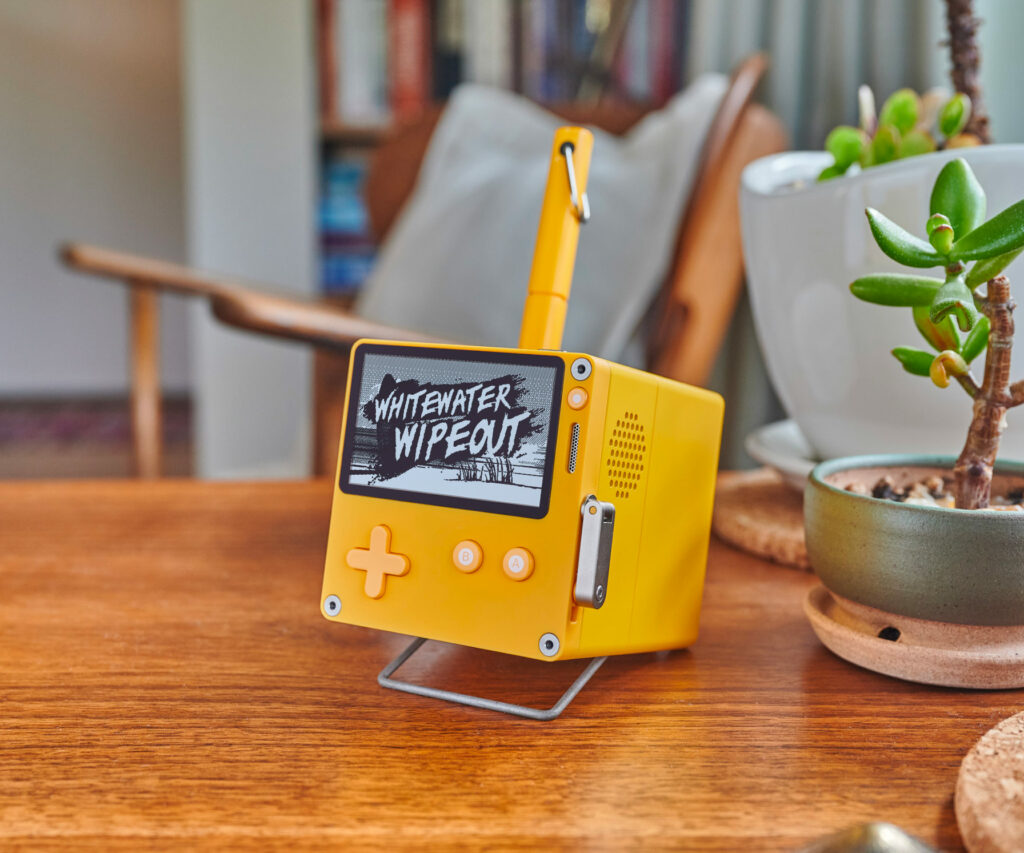
Playdate’s entire value proposition is the opposite. It’s a curated experience. The catalog is hand-picked. The games are weird, innovative, and unmistakably crafted by humans with specific visions. Playdate sold over 500,000 units because it represented a rebellion against the algorithmic recommendation engine, the battle pass, the engagement metrics obsession. It’s a platform where a game with 10,000 players can have as much cultural weight as a game with 10 million.
By explicitly rejecting generative AI games, Panic is reinforcing that curation philosophy. They’re saying: “We’re not interested in volume. We’re interested in signal.”
This distinction matters because it highlights a fundamental split in the industry’s AI future. On one side, you have platforms like Roblox and broader AAA studios optimizing for efficiency, speed, and scale. Use AI to accelerate asset creation. Use agentic AI to automate QA and level design. Use LLMs to generate thousands of NPC dialogue variations. The logic is straightforward: AI reduces development time and cost, which increases profit margins and allows for more rapid iteration.
On the other side, you have creators like Panic—and increasingly, a significant portion of the gaming community—who believe that the time and friction in game development is actually valuable. That the constraint of having to hand-craft every asset forces designers to make meaningful choices. That the labor of creation is inseparable from the art itself.
The Uncomfortable Reality Check
Here’s where we need to be honest: Panic’s stance is both principled and strategically smart, but it’s also a luxury position.
Panic can afford to turn away generative AI games because:
- They have market power. Being featured on the Playdate Catalog is valuable. Developers want to be there. Panic doesn’t need to accept every submission to fill their storefront.
- Their audience aligns with their values. Playdate users expect and prefer human-crafted experiences. Excluding AI games won’t alienate their customer base; it’ll reinforce community identity.
- They’re not competing on scale. Playdate isn’t trying to be the largest gaming platform. It’s trying to be the best gaming platform for its specific audience. That requires quality curation, not quantity.
But what about smaller platforms? What about indie developers who can’t afford to hire a team? What about regions where AI tools are the only economically viable way to create games?
This is where the narrative gets complicated. Glen Schofield, a veteran AAA game designer, recently argued that “true creatives” can learn to use AI as a tool to enhance their work—that AI is democratizing game development by reducing the technical barrier to entry. And he’s not wrong. An indie developer working solo can now use Stable Diffusion to generate placeholder art, then iterate and refine it. They can use Copilot to scaffold code structures. These are legitimate productivity tools.
The problem—and what Panic is implicitly addressing—is the distinction between using AI as a tool and using AI as a replacement for creative vision. The former is fine. The latter is a problem.
Game Developer magazine reported that one-third of game workers are now using generative AI, but notably, half of those workers think it’s bad for the industry. That split reflects a genuine anxiety: AI tools feel inevitable and useful, but their widespread adoption feels like it’s fundamentally changing what it means to be a game developer. Instead of being a creative problem-solver, you become a prompt engineer. Instead of crafting a specific experience, you’re refining the output of a statistical model.
And here’s the thing that matters: players notice. There’s a qualitative difference between a game designed by a human who spent six months thinking about pacing, feedback loops, and moment-to-moment feel, and a game where an AI agent generated 500 levels following a learned distribution of “good level design.” Both might be playable. Only one is memorable.
What This Means for the Broader Industry
Panic’s decision is a signal, not a solution. It doesn’t stop generative AI from becoming ubiquitous in game development. Capcom’s announcement—”no gen AI in games, but yes AI in development”—is probably closer to the industry consensus we’ll see emerge. Use AI to accelerate rigging, animation, code scaffolding, and asset creation pipelines. Use AI to automate tedious QA tasks. But keep humans in the creative loop.
But Panic’s stance does something crucial: it preserves the possibility of a curated alternative. It says that not every platform needs to optimize for scale. Not every game needs to be algorithmically efficient. There’s economic and cultural value in the human-crafted, the specific, the intentional.
The real question isn’t whether AI will transform game development—it already has. The question is whether we’ll allow platforms and communities to opt out. Whether there will still be spaces where human creativity isn’t just augmented by AI, but protected from it.
The gaming industry is becoming expensive, as The Guardian pointed out. AAA budgets are spiraling. Development cycles are lengthening. But paradoxically, AI is being sold as a cost-cutting solution while simultaneously making the industry more homogenous. If every studio uses the same AI tools to accelerate asset creation, the visual and mechanical diversity of games collapses. You get faster iteration on a narrower range of possibilities.
Panic’s Playdate represents a different model: slower, more intentional, more human. And right now, that model is thriving. The console is sold out. The community is engaged. The games are weird and wonderful.
That’s not an accident. That’s what happens when you prioritize vision over volume.
Conclusion: The Line in the Sand
Panic says the Playdate Catalog won’t accept games made with generative AI. It’s a simple policy with profound implications. In an industry increasingly obsessed with AI-driven efficiency and automation, Panic is doubling down on the value of human creativity, curation, and intentionality.
This doesn’t mean AI tools are inherently bad. It means that the unconstrained use of generative AI—where the core creative assets are generated rather than crafted—produces a fundamentally different kind of game. And Panic has decided that’s not the game they want to champion.
As the rest of the industry figures out how to balance AI efficiency with human creativity, platforms like Playdate are proving that there’s still an enormous audience for the alternative. For games that feel designed, not generated. For experiences that carry the fingerprints of human intention.
In the long run, that might matter more than all the efficiency gains in the world.
FAQ: Generative AI and the Future of Game Development
How does Panic actually define “games made with generative AI”?
Panic hasn’t released an exhaustive definition, but the implicit line is: games where the primary creative assets (art, audio, design, narrative) are primarily generated by AI rather than hand-crafted by humans. Using AI as a tool in a development pipeline is different from having AI generate the core creative vision. The distinction is fuzzy in practice, but the principle is clear: human authorship matters.
Does this mean developers can’t use AI tools at all on Playdate?
No. Developers can use AI to assist with development—Copilot for code scaffolding, AI-assisted animation tools, etc. The policy is about the final product, not the process. If a game was created by a human designer using AI as one tool among many, that’s acceptable. If a game was created by running a prompt through Midjourney and stitching the outputs together, that’s not.
Is Playdate the only platform with this policy?
Currently, yes. Most other platforms haven’t made explicit statements. Capcom has said no to gen AI in games but yes in development pipelines. Roblox is moving in the opposite direction, embracing agentic AI for automation. Nintendo and Microsoft haven’t taken clear public stances. Panic is an outlier.
Will this policy actually stick?
Probably, as long as Playdate’s market success justifies it. If Playdate sales decline, the policy might soften. But given the platform’s current trajectory and community values, it’s likely to remain a core part of Playdate’s brand identity.
What about AI-assisted procedural generation?
This gets murky. If a developer builds a procedural generation system that uses neural networks to make levels more contextually sophisticated, is that “generative AI”? Panic hasn’t clarified, but the spirit of the policy suggests that if the designer is in control and the AI is a tool for amplifying their vision, it’s probably fine. If the AI is autonomously generating core content, it’s probably not.
Does this affect games already in the Playdate Catalog?
No. The policy is forward-looking. Games already approved won’t be removed. New submissions will be evaluated against this standard.
Will other indie platforms follow Panic’s lead?
Some might. Independent game stores and curated platforms have more flexibility to set their own standards than algorithmic marketplaces do. But mainstream platforms like Steam, Epic, and mobile app stores are unlikely to adopt similar restrictions, as it would require more intensive curation and potentially exclude a growing segment of developers.