UE5 Procedural Animation Tool: Music-Driven Motion Explained
Disclosure: As an Amazon Associate, Bytee earns from qualifying purchases.
Imagine charging into a boss arena where every sword slash, dodge, and ground-pound isn’t just timed to the soundtrack—it is literally generated in real time by the kick drum vibrating through your headset. For decades, rhythm-action titles forced developers to build locked-down timeline tracks where animators manually synced keyframes to fixed beats per minute. But Unreal Engine 5 is tearing down that rigid pipeline. By hooking audio spectrum analysis directly into dynamic skeletal rigs, developers are turning sound waves into raw physical kinetic motion on the fly.
What Is Music-Driven UE5 Procedural Animation and Why Does It Matter?
Traditional rhythm games rely on a trick: rigid determinism. In classics like Guitar Hero or modern masterpieces like Tango Gameworks’ Hi-Fi RUSH, every single combat beat, enemy tell, and footstep is meticulously hand-keyed and clamped to a rigid tempo grid. If Chai swings his guitar on beat three, an animator had to craft that specific keyframe blend to ensure the hit lands exactly on the transient spike. While that approach delivers razor-sharp precision, it is also painfully expensive to author and completely inflexible. If your dynamic combat system changes tempo, or if the soundtrack modulates dynamically based on player performance, canned animation graphs start snapping, sliding, and breaking apart.
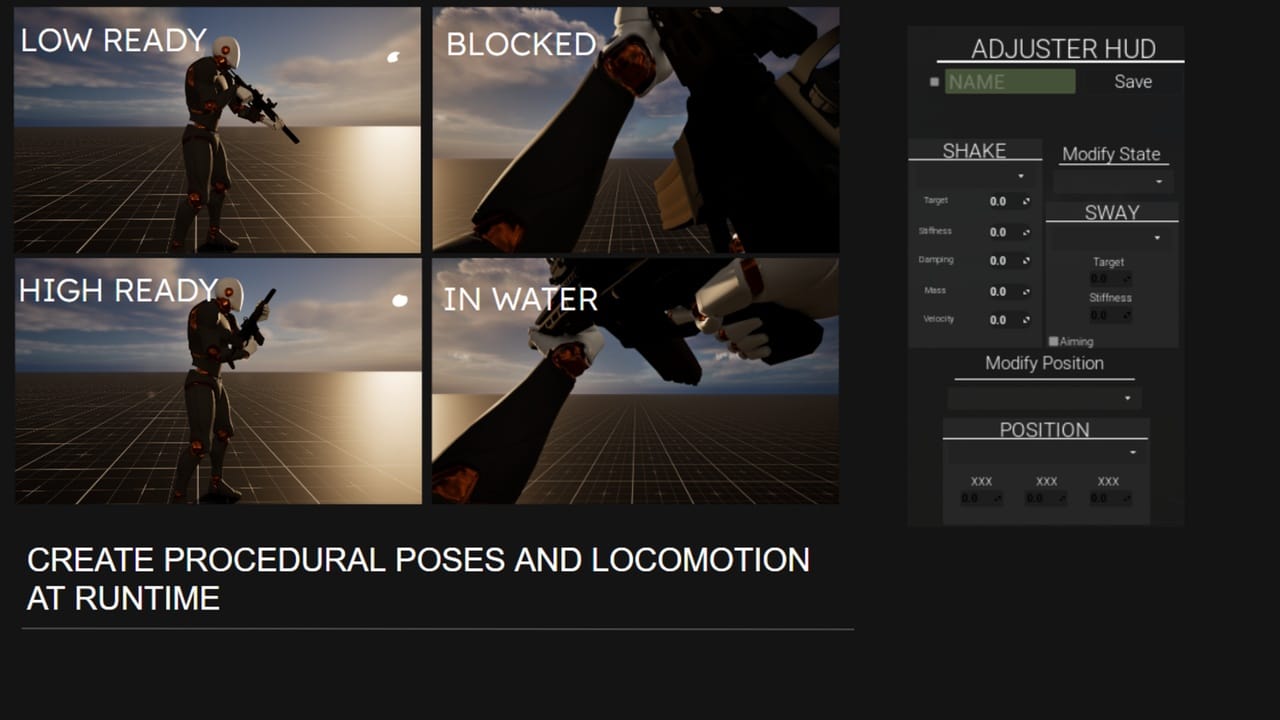
This is where a modern UE5 procedural animation tool changes the paradigm. Instead of relying purely on pre-baked animation cycles, audio-driven procedural animation parses audio signals in real time and feeds that acoustic telemetry directly into character rigs. Amplitude, frequency bands, and transients are converted into mathematical offsets for bones, blend shapes, and inverse kinematics (IK) chains. The character isn’t just playing a dance animation clip over a music track; the audio signal itself is manipulating the character’s skeletal hierarchy like an invisible digital puppeteer.
The sudden surge in audio-reactive motion comes down to raw computational muscle. Unreal Engine 5’s revamped animation runtime allows developers to evaluate full-body procedural solvers without eating the entire frame budget. By combining real-time spectral analysis with physics-based secondary motion, studios can create combatants, background crowds, and environmental hazards that pulse, duck, and react organically to whatever music or ambient sound is pumping through the scene.
How It Works: The Tech Behind Audio-Driven Procedural Motion
Under the hood, audio-reactive procedural animation in Unreal Engine 5 relies on the interplay between two core systems: the Quartz audio subsystem combined with AudioSynesthesia, and the engine’s node-based Control Rig. Quartz handles sample-accurate audio scheduling, preventing the micro-stutters and desyncs that traditionally plague frame-dependent game logic. Meanwhile, the AudioSynesthesia plugin runs real-time Fast Fourier Transform (FFT) analysis and envelope following, breaking down game audio into distinct frequency bands—sub-bass, midrange punch, and high-frequency sizzle.
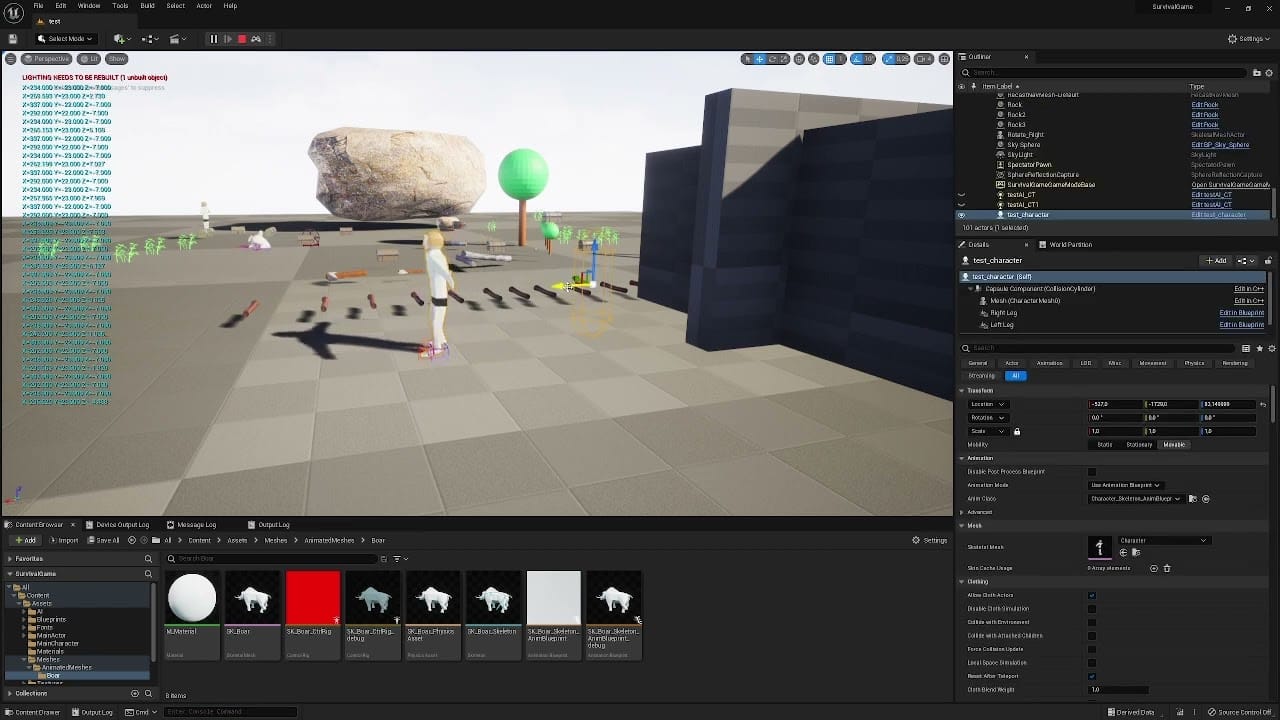
Once the audio engine extracts these values, it routes the data straight into UE5’s Control Rig graph via blueprints or C++. Think of the audio spectrum as a set of dynamic controller inputs. A heavy sub-bass kick at 60Hz might drive a vertical translation node on a boss character’s root bone, forcing the creature to drop its center of mass on every beat. A snare transient around 2kHz can trigger an additive rotation on the shoulders and spine, snapping the upper torso into an attack ready stance. Instead of dragging a keyframe along a static sequencer timeline, the developer defines mathematical rules: “When frequency band X spikes above threshold Y, displace bone Z by an inverse kinematic offset.”
This completely bypasses legacy state-machine limitations. In a standard setup, transitioning between an idle state, a windup, and an attack requires complex blend spaces with manual crossfades. With procedural audio translation, secondary motion—like the sway of a cape, the vibration of a mech’s plating, or the tension in a monster’s limbs—modulates continuously based on the live mix. The result is fluid motion that naturally speeds up, slows down, or intensifies without snapping animation frames.
What Changes for Players: Seeing and Feeling Real-Time Rhythm
The difference between canned synchronization and real-time procedural motion fundamentally alters player perception and game feel. When motion is generated directly by the underlying soundscape, the audiovisual disconnect completely evaporates.
To understand the leap, look at how the experience transforms when procedural systems replace static scripting:
- Before (Static Scripting): In titles like Metal: Hellsinger or BPM: Bullets Per Minute, enemies execute pre-baked animation loops locked to static BPM intervals. If a combat track dynamically shifts arrangements or an enemy gets staggered mid-beat, the game must either abruptly interrupt the animation cycle with a hard blend or let the model slide awkwardly across the floor until the next downbeat resets the state machine.
- After (Procedural Audio-Sync): Bosses and enemies dynamically modulate their physical weight and strike velocities to live stems. If the soundtrack drops into an ambient synth break, enemy attack swings physically lag, float, and drift. When the double-bass drums kick back in, their limb recovery speeds snap with immediate mechanical violence, creating organic, dynamic choreography that feels alive rather than prerecorded.
This tight coupling ramps up immersion, particularly in fast-paced character action games where combat feedback is king. When a player parries a strike in a rhythm brawler, the resulting audio clash can ripple backwards through the attacker’s Control Rig, driving a dynamic recoil that visually matches the sonic impact. However, there is a delicate mechanical trade-off: if an animation leans too heavily into procedural audio chaos, telegraphs become erratic, making precise hitboxes and frame data harder for competitive players to read.
How Studios and Creators Are Building With This Tool
Development teams across the industry are using these tools to build experiences ranging from hyper-kinetic rhythm brawlers to living, dynamic environments. In narrative and dynamic club sequences—similar to the neon-drenched dance floor shootouts seen in John Wick or Cyberpunk 2077—animators previously had to bake looping dance animations for dozens of background NPCs, resulting in repetitive, uncanny crowd behavior. With UE5’s procedural pipelines, background characters can dynamically shift their weight, head bobs, and arm sways based on real-time acoustic stems running through the scene’s spatial audio emitters.
Indie studios are leading the charge on mechanical innovation, using audio-driven Control Rigs to create dynamic music visualizer games where entire environments warp, pulse, and strike like lethal synthwave bosses. Meanwhile, AAA studios are embedding these nodes into complex blend trees to add subtle, organic micro-movements to characters during cutscenes and high-intensity boss encounters.
For technical animators and developers exploring this space, several specialized tools and frameworks form the backbone of modern audio-motion integration:
- Unreal Engine Control Rig & MetaSounds: The native powerhouse pairing within UE5, allowing procedural node-based bone manipulation driven directly by sample-accurate DSP audio graphs.
- AudioSynesthesia Plugin: Epic Games’ dedicated audio analysis suite that extracts loudness, pitch, and spectral envelopes for instant blueprint hookups.
- Audiokinetic Wwise Procedural Callbacks: Industry-standard middleware that feeds real-time audio telemetry directly into Unreal’s animation pipeline for cross-platform dynamic syncing.
The Catch: Performance Costs, Jitter, and Readability Risks
Despite the visual spectacle, audio-driven procedural animation is not a magic bullet, and over-relying on it introduces real engineering and gameplay risks. The first hurdle is computational cost. Running real-time FFT audio analysis while simultaneously calculating multi-point inverse kinematics and skeletal transforms across twenty onscreen enemies can quickly throttle the CPU. While a single boss character running Control Rig logic is lightweight, scaling that procedural math across a horde of minions will tank the frame budget fast.
Then there is the issue of visual artifacting and unnatural motion. Procedural bone math doesn’t understand anatomy unless heavily constrained. Without strict limiters, a sudden transient spike in the audio mix can cause a character’s elbow to snap backward or their spine to wrench unnaturally, instantly breaking player immersion. We saw the dangers of uncontrolled procedural physics in the launch version of Cyberpunk 2077, where dynamic physics and IK blend conflicts produced notorious visual glitches, jittering ragdolls, and awkward skeletal snapping that turned tense action scenes into unintentional comedy.
For high-skill action games like Elden Ring or Devil May Cry 5, animation readability is sacred. Players memorize startup frames, active hit frames, and recovery windows down to the millisecond. If an audio-reactive procedural tool stretches a boss’s sword swing to match a snare roll, it alters the windup timing dynamically. If an attack animation becomes unpredictable because the background track modulated its pitch, players won’t praise the AI tech—they will call the combat sloppy and unfair.
What Comes Next: The Future of AI-Generated Game Choreography
The next frontier for audio-driven motion is the convergence of procedural Control Rigs with real-time generative machine learning. Instead of simple frequency-to-bone math, researchers are training neural networks on motion-capture databases to generate context-aware combat choreography directly from multi-track audio. When fed an energetic drum-and-bass stem, the AI doesn’t just vibrate bones—it generates complex, anatomically sound acrobatics, dodges, and synchronized strikes that respect character mass and momentum.
Imagine a future boss fight where an adaptive generative music engine and an AI combat choreographer work in a closed feedback loop. As you parry and dodge, the game dynamically composes the musical score, and that evolving soundtrack instantly dictates the boss’s attack animations, pacing, and arena-wide visual effects. This will fundamentally redefine rhythm-action, turning every encounter into an unscripted, perfectly synchronized interactive music video.
The future of rhythm gaming isn’t tapping buttons on predetermined timeline rails—it’s turning the entire engine into a living visualizer where every clash of steel writes the score.
Frequently Asked Questions
How does a UE5 procedural animation tool differ from standard keyframe animation?
Standard keyframe animation relies on pre-recorded motion clips that play back identically along a fixed timeline, as seen in traditional rhythm games like Hi-Fi RUSH. A UE5 procedural animation tool uses real-time code, physics, and audio spectrum data to dynamically calculate bone positions and IK offsets on the fly, allowing motion to adapt instantly to changing audio signals.
Can music-driven procedural animation negatively affect gameplay readability?
Yes, if procedural audio offsets distort telegraphs or active attack windows, competitive combat can feel unpredictable and frustrating. In precise action titles like Devil May Cry 5 or Elden Ring, developers must tightly clamp procedural motion to secondary bones and visual flair rather than core hitboxes to preserve clear frame data.
Which types of games benefit most from audio-driven procedural motion in Unreal Engine 5?
Rhythm-action brawlers, dynamic music visualizers, interactive virtual concerts, and stylized action games gain the most value. It also excels in ambient world-building, allowing background crowds in bustling club scenes or dynamic environmental hazards to pulse naturally to in-game audio without requiring thousands of unique hand-keyed animation loops.