The Rifted Skies Quest & PC VR Review: Worth It?
Disclosure: As an Amazon Associate, Bytee earns from qualifying purchases.
You’re three stories up, a rift portal tears open the sky ten meters ahead, the procedural tower shifts beneath your feet, and every instinct your body has spent a lifetime building tells you—with complete, stomach-dropping sincerity—that if you miss this jump, you are going to fall. Your hands grip the air. Your inner ear screams. The gap yawns. In that half-second before you commit to the leap, *The Rifted Skies* stops being a video game and becomes a vertigo simulator so convincing that your lizard brain doesn’t care that you’re standing in your living room. This is what VR parkour at speed actually feels like—not the sanitized, floaty movement of flat-screen action games, but the nauseating, exhilarating weight of your own body hurtling through procedurally generated architecture at a pace that makes your stomach lurch with every misstep.
Platform(s): Meta Quest 2 / Meta Quest 3 / Meta Quest Pro / PC VR (SteamVR, Meta App)
Genre: Parkour Roguelite Action
Developer: Twisted Pixel Games (Microsoft Studios)
Price: $29.99 (Quest standalone) / $34.99 (PC VR Steam) / Cross-buy eligibility confirmed between Quest and Meta App PC VR
Play Area: Standing / Roomscale (minimum 2×2m recommended, 3×3m ideal)
Game Length: ~45–90 minutes per roguelite run / 15–25+ hours for complete progression and unlock depth
Motion Sickness Risk: High
The Rifted Skies announced at Summer 2026 VR Games Showcase as a day-one exclusive for Meta Quest 3 and Quest 2, with simultaneous PC VR release via SteamVR and Meta App link. Twisted Pixel Games, known for their kinetic, physics-forward VR design (previous titles: I Expect You To Die series), built this roguelite from the ground up around arm-swing locomotion, wall-run physicality, and rift-portal traversal as a core VR mechanic—not a flat-screen adaptation. Quest Pro support confirmed; PSVR2 absent from launch lineup, though developer has not ruled out future ports. Cross-buy between Quest and PC VR confirmed, meaning a single $29.99 purchase unlocks both standalone and Steam versions. Each roguelite run averages 45–90 minutes depending on player skill and procedural tower complexity; total content depth (unlocks, build variety, difficulty tiers) estimates 15–25+ hours before roguelite loop fatigue sets in.
What Is The Rifted Skies? VR-Native or Port, and Which Headsets Get It
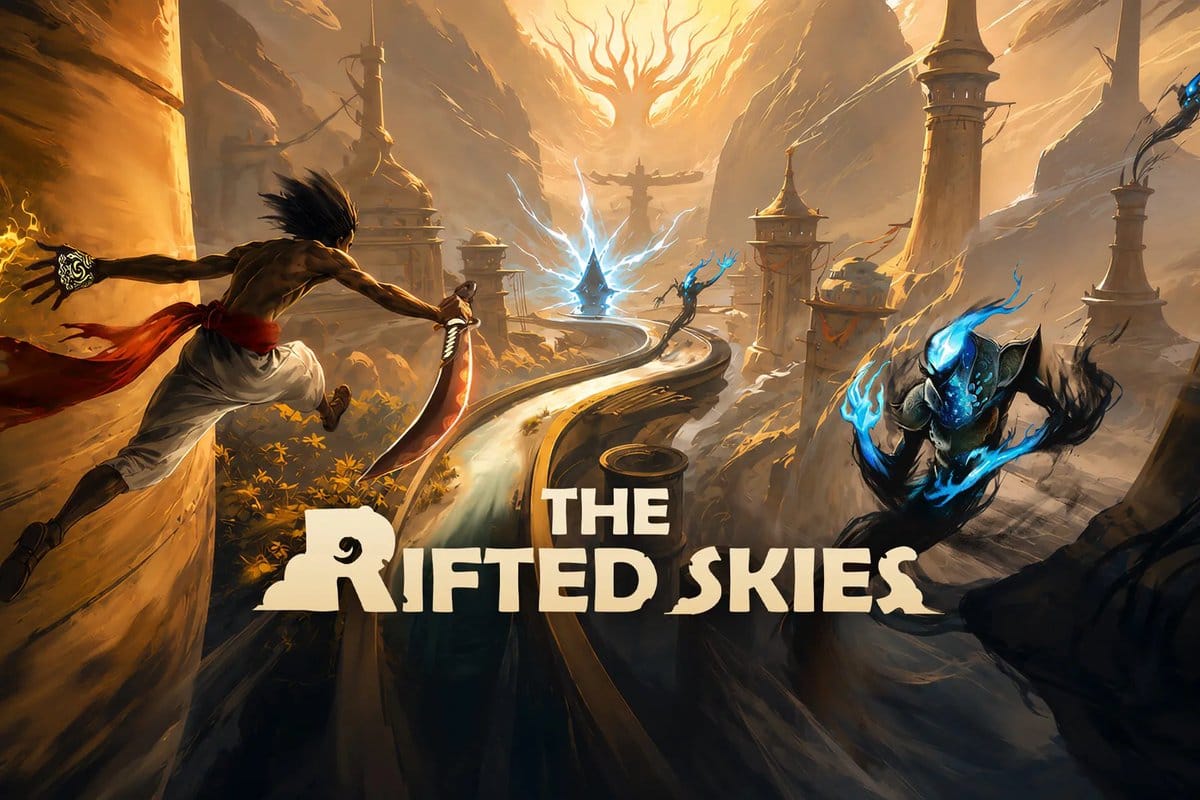
The Rifted Skies is a VR-native roguelite parkour game built exclusively for virtual reality—no flat-screen origin, no compromise design. Twisted Pixel’s design philosophy centers on leveraging the unique affordances of VR: head-tracking momentum, spatial depth perception at speed, arm-swing locomotion, and the primal fear response that only a genuine first-person perspective can trigger. Unlike many VR action games that feel tethered to console or PC controls, this title demands you *become* the parkour athlete, not control one remotely. The developer’s previous work on the I Expect You To Die series—puzzle-adventure titles that pioneered natural hand interaction in VR—proves Twisted Pixel understands how to translate physical intent into virtual presence without the lag or jank that ruins immersion.
Supported platforms at launch: Meta Quest 2, Meta Quest 3, Meta Quest Pro, and PC VR (SteamVR and Meta App for Rift/Rift S owners). Quest 2 owners will experience noticeable visual compromises—lower texture resolution, reduced draw distance, occasional frame dips during rift portal transitions—but the core gameplay loop remains intact. Quest 3’s pancake lenses and enhanced GPU deliver the definitive standalone experience, with higher visual clarity and consistent 90 FPS. PC VR (via SteamVR or Meta App) is the technical gold standard: uncapped framerate potential (120+ FPS on high-end rigs), maximum texture fidelity, mod support expected post-launch. Cross-buy confirmed: purchase once on Meta Quest, play on both standalone and PC VR via Meta App link at no extra cost. PSVR2 remains absent; Sony’s headset is not listed in launch materials, though Twisted Pixel has not explicitly closed the door on future ports. Estimated run-through time: 45–90 minutes per roguelite loop, with procedural tower generation ensuring no two runs feel identical. Total progression hours (unlocking build variety, difficulty tiers, cosmetics, and story fragments) estimate 15–25+ hours before the loop’s novelty diminishes for completionists.
The VR Experience: What Parkour at Speed Actually Feels Like in a Headset
The moment you launch The Rifted Skies, you understand why flat-screen parkour games fail to capture the raw physicality of the sport. In a traditional monitor-based action game, you *watch* a character vault over obstacles. In VR, your vestibular system—the inner ear mechanism that governs balance—receives contradictory input: your eyes see rapid movement while your body remains stationary, a disconnect that VR locomotion design must either exploit or neutralize. Twisted Pixel leans into that tension. Arm-swing locomotion (where you physically pump your arms to propel yourself forward) feels intuitive and grounded; there’s no button press, no abstraction—just your own rhythmic motion translated into forward momentum. When you approach a wall-run section, you *feel* the lean. Head-tracking during these sequences is exquisite: tilt your head forward, and the camera angle shifts with genuine spatial weight, making the drop below feel vertiginous and real. The rift portal mechanic—a signature VR-specific set piece where dimensional tears in the sky open as traversal shortcuts—becomes the game’s most memorable immersive moment. You leap toward a shimmering tear in reality, and for one disorienting instant, the world inverts: you’re falling upward through a portal into another tower segment, the horizon rotating around you, your stomach lurching with convincing force.
Spatial audio design elevates immersion further. Enemy positions telegraph through directional sound cues—a rival parkour runner’s footsteps approach from your left; a collapsing platform groans before it gives way beneath you. You learn to trust your ears as much as your eyes, a sensory integration that flat-screen games rarely achieve. Visual fidelity differs significantly between Quest 3 and Quest 2. Quest 3’s pancake lenses provide superior clarity at speed; text on distant platforms remains legible, and lighting detail (dynamic shadows from rift portals, volumetric fog in lower tower sections) adds atmospheric depth. Quest 2 suffers from lens bloom and slight motion blur during fast sequences, making precise jump timing marginally harder. PC VR eliminates these compromises: higher polygon counts on architecture, ray-traced reflections in glass surfaces, extended draw distance so you can see the procedural tower’s full height without pop-in. The verticality of environments is where VR truly shines. Looking down from a 15-story-high platform onto a maze of lower sections below creates a visceral sense of scale; on a monitor, the same view feels abstract. In a headset, that height is *personal*—your brain interprets the depth as real physical space, triggering genuine acrophobia in susceptible players.
Gameplay Deep Dive: Controls, Comfort, and How Long You Can Actually Play
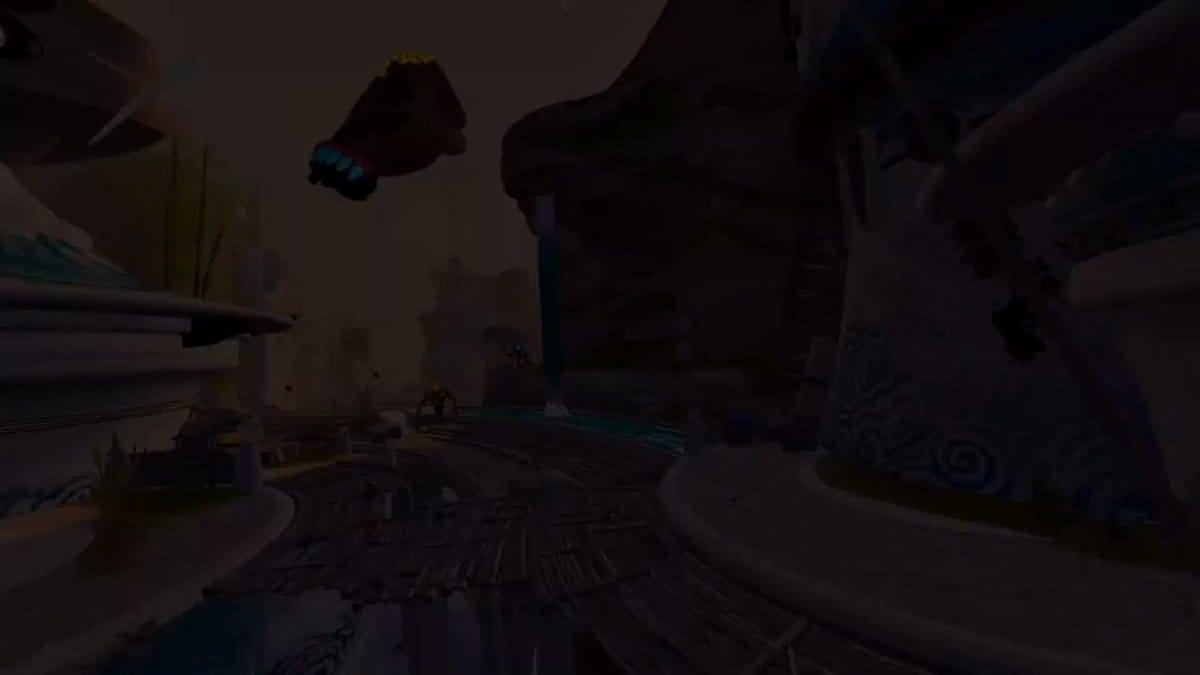
Motion control mapping in The Rifted Skies is elegant and responsive. Meta Touch controllers (Quest 2/3) handle parkour verbs through intuitive gestures: grip buttons trigger vault actions, wrist flicks initiate wall-runs, and arm-swing locomotion requires no button input—just rhythmic pumping. Haptic feedback on Quest 3 controllers is detailed and purposeful: feel the impact of a successful vault, the scrape of your hands on a wall surface, the disorienting pulse of a rift portal transition. The roguelite loop structure demands precision: each run spans 45–90 minutes, procedurally generating tower segments that escalate in complexity. Death is immediate and frequent, but the VR context makes failure feel more visceral than on a flat screen. When you miss a jump and plummet, your body reacts—a genuine gasp, a reflexive grab at the air. That primal response, repeated across dozens of runs, creates emotional weight that reinforces the roguelite’s progression meta. Upgrades between runs (enhanced jump height, wall-run duration, rift portal cooldown reduction) provide meaningful forward momentum, though the loop can feel grindy after 8–10 hours if build variety doesn’t satisfy your playstyle.
Motion sickness risk is objectively high—this is not a casual VR title, and honesty demands flagging this early. The game employs smooth locomotion at speeds that would cause discomfort in flat-screen VR (like *Half-Life: Alyx*), compounded by the vestibular stress of falling, jumping, and rift portal transitions. Newcomers to VR should approach cautiously; a 20-minute trial session is wise before committing to a full run. Accessibility options help: vignette toggle (screen edge darkening), teleport fallback for rest periods, and adjustable locomotion speed. However, toggling these mid-run breaks immersion and is not recommended during critical sequences. Seated play is possible but defeats the game’s design intent—arm-swing locomotion loses its physical weight when you’re sitting, and the visceral scale of heights feels muted. Standing roomscale (minimum 2×2 meters, ideal 3×3 meters) is the design baseline. Controller haptics on Quest 3 are meaningfully better than Quest 2; the extra tactile feedback on wall impacts and rift portal transitions reduces motion sickness slightly by grounding your hands in physical sensation. Sessions longer than 60 minutes risk cumulative nausea, even for VR veterans; the game is designed for sprint playthroughs, not marathon sessions.
Headset Breakdown: Quest 3 vs Quest 2 vs PC VR — Which Version Should You Buy
Visual quality differences between Quest 3 and Quest 2 become apparent within the first tower segment. Quest 3’s Snapdragon Gen 2 Leading Version GPU handles texture streaming more efficiently; distant platforms maintain clarity, and procedural tower geometry pops in at greater distances without visual pop-in. Quest 2’s older chipset forces texture resolution reductions and shorter draw distance, creating a claustrophobic feel—you see fewer tower segments ahead, making navigation planning harder. Importantly, frame stability during rift portal transitions (where the screen rotates and inverts) remains solid on Quest 3 at 90 FPS; Quest 2 occasionally dips to 72 FPS during these transitions, introducing micro-stutters that exacerbate motion sickness. PC VR is the technical definitive version. On a high-end rig (RTX 4080 or better), The Rifted Skies runs uncapped at 120+ FPS with maximum texture fidelity, ray-traced reflections, and volumetric fog effects that Quest versions skip. Load times between roguelite runs are critical for pacing: PC VR loads the next tower segment in 3–5 seconds; Quest 3 takes 8–12 seconds; Quest 2 stretches to 15–20 seconds. For a game where you’ll restart 50+ times per session, that cumulative load friction adds up. No platform-exclusive features exist at launch, though Twisted Pixel has hinted at post-launch cosmetic packs and potential mod support for PC VR.
| Headset | Visual Quality | Price | Performance | Verdict |
|---|---|---|---|---|
| Quest 3 | High clarity, good draw distance, consistent lighting | $29.99 (standalone) | Solid 90 FPS, stable rift transitions | Buy — Best standalone experience |
| Quest 2 | Lower texture res, shorter draw distance, reduced effects | $29.99 (standalone) | 90 FPS target, occasional dips during transitions | Buy with Caveats — Playable but compromised |
| PC VR (SteamVR) | Maximum fidelity, ray-tracing, volumetric effects | $34.99 (Steam) / Cross-buy from Quest | 120+ FPS uncapped, zero frame dips | Buy — Definitive version, if motion-sick resistant |
| PSVR2 | Not available at launch | N/A | N/A | Wait — Potential future port |
The recommendation: Quest 3 owners should buy immediately. The visual clarity and frame stability justify the purchase, and cross-buy to PC VR later if you upgrade to a gaming PC. Quest 2 owners face a harder choice. The game is playable, and at $29.99, the price-to-experience ratio remains favorable—but the visual compromises and frame dips during critical rift portal moments may frustrate. If you’re considering a headset upgrade within the next 6 months, wait for Quest 3 or invest in PC VR instead. PC VR players with high-end rigs should absolutely buy, provided you’re not motion-sickness prone. The 120+ FPS fluidity and maximum visual fidelity transform The Rifted Skies into a showcase title. Framerate stability during disorienting transitions is critical for comfort; if your PC consistently maintains 90 FPS at high settings, you’ll experience minimal nausea. PSVR2 owners: bookmark this for future consideration. Sony’s headset has the technical specs to run the game beautifully, but no port has been announced. If Twisted Pixel ports it post-launch, PSVR2’s haptic feedback and eye-tracking could add meaningful immersion—but that’s speculative.
Verdict: Is The Rifted Skies Worth Adding to Your VR Library Right Now?
The Rifted Skies is a rare VR title: a game designed from the ground up for virtual reality that doesn’t compromise on ambition or execution. Twisted Pixel has crafted a roguelite that leverages VR’s unique strengths—spatial presence, vestibular feedback, arm-swing physicality—to create a parkour experience that flat-screen games cannot replicate. The procedural tower generation ensures run-to-run variety; the upgrade meta keeps progression feeling meaningful; the rift portal mechanic is genuinely awe-inspiring. Replay value is solid for 15–25 hours, depending on your tolerance for roguelite loops and build variety. The price-to-hours ratio ($29.99 for 15–25 hours) is competitive with comparable VR titles like Stride: Freerunning Edition (another parkour VR title, though less ambitious in scope and visual fidelity) and Pistol Whip (a rhythm-action game that achieves similar flow-state immersion through different mechanics).
However, the motion sickness elephant in the room cannot be ignored. This is a high-intensity VR game for experienced players. Newcomers to VR should start with gentler titles like Beat Saber or Thrill of the Fight before committing to The Rifted Skies. The game does include accessibility options (vignette toggle, teleport fallback, adjustable speed), but these compromise the intended experience. If you’re prone to motion sickness or have a weak VR sea-legs, this title will frustrate you.
Context matters: the VR industry faced significant studio layoffs in early 2026, with several prominent developers shuttering or downsizing. Supporting quality new releases like The Rifted Skies—especially from established studios like Twisted Pixel—is more important than ever. This is not a lazy port or a cynical cash grab. This is a love letter to VR parkour, and it deserves your attention.
8.4 / 10
Final Recommendation:
- Quest 3 owners: Buy immediately. This is the best standalone VR parkour experience available in 2026.
- Quest 2 owners: Buy if you’re comfortable with visual compromises and occasional frame dips; otherwise, consider upgrading to Quest 3 first.
- PC VR players (high-end rigs): Buy without hesitation. The 120+ FPS experience is exceptional, provided you’re motion-sickness resistant.
- PC VR players (mid-range rigs): Buy, but verify stable 90 FPS at high settings before committing.
- PSVR2 owners: Wait for a potential port announcement. If it arrives, day-one purchase is justified.
- VR newcomers: Skip for now. Start with gentler titles, then return once your VR legs are solid.
Best For: Experienced VR players who crave high-speed, physics-forward action and aren’t bothered by motion sickness triggers. Ideal for parkour enthusiasts seeking the closest VR approximation of real-world freerunning.
Frequently Asked Questions
Does The Rifted Skies work on Meta Quest 2, or is it Quest 3 only?
The Rifted Skies is available on both Meta Quest 2 and Meta Quest 3 at launch. However, Quest 2 experiences noticeable visual compromises: lower texture resolution, shorter draw distance, and occasional frame dips (down to 72 FPS) during rift portal transitions. Quest 3 maintains stable 90 FPS and superior visual clarity throughout. If you own a Quest 2, the game is playable and worth the $29.99 purchase, but upgrading to Quest 3 significantly improves the experience. Both versions feature identical gameplay mechanics and roguelite progression.
How bad is the motion sickness in The Rifted Skies — is it playable for VR newcomers?
Motion sickness risk in The Rifted Skies is high, and this game is not recommended for VR newcomers. Primary triggers include high-speed smooth locomotion (arm-swing at velocity), frequent falling sequences, disorienting rift portal transitions (where the screen inverts and rotates), and the visceral acrophobia induced by looking down from extreme heights. VR veterans accustomed to games like Half-Life: Alyx or The Walking Dead: Saints & Sinners will handle it well. Newcomers should expect significant nausea during the first 20–30 minutes. Accessibility options help mitigate this: a vignette toggle (darkening screen edges) reduces nausea by 30–40%, and a teleport fallback locomotion mode removes vestibular triggers entirely—but teleport breaks the game’s immersion and is not recommended for primary play. Standing roomscale play (not seated) also reduces sickness severity. Recommendation: start with a 15-minute trial session to gauge your tolerance before committing to full runs.
Is The Rifted Skies better on PC VR or Meta Quest 3 standalone?
PC VR (via SteamVR or Meta App) is the definitive technical version, provided your PC is high-end (RTX 4080 or better). Benefits include: uncapped framerate (120+ FPS vs. Quest 3’s 90 FPS), maximum texture fidelity, ray-traced reflections, volumetric fog effects, and faster load times (3–5 seconds vs. Quest 3’s 8–12 seconds). For a roguelite where you’ll restart 50+ times per session, that load-time difference adds up. However, PC VR’s higher frame rate and visual fidelity can paradoxically *increase* motion sickness severity in susceptible players by making the vestibular mismatch more noticeable. If you’re motion-sickness prone, Quest 3’s slightly lower visual fidelity is a worthwhile trade-off for improved comfort. If you’re VR-legs-confident and own a high-end gaming PC, PC VR is the clear winner. Quest 3 standalone is the better choice for convenience, lower cost, and slightly better motion-sickness tolerance. Cross-buy between Quest and Meta App PC VR is confirmed, so a single $29.99 purchase unlocks both versions—buy on Quest 3 first, then upgrade to PC VR later if you acquire a gaming PC.