The Amusement VR Review: A Beautiful Story, Thin Puzzles
Disclosure: As an Amazon Associate, Bytee earns from qualifying purchases.
You are standing at the center of a rusted carousel at 2 a.m., a music box tinkling somewhere just out of reach, and The Amusement has already made you feel more in four minutes than most VR games manage in four hours — then it asks you to slide three colored blocks into matching slots, and the spell, briefly, breaks.
What Is The Amusement and Who Is It For?
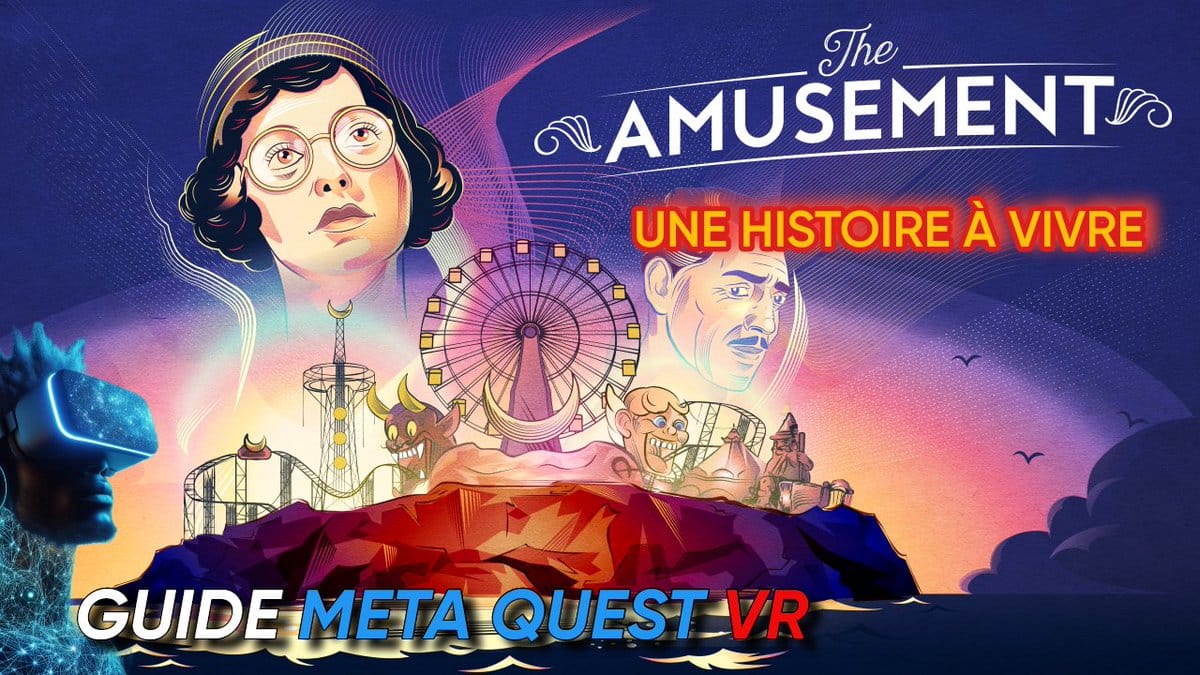
The Amusement is a VR-exclusive narrative puzzle game developed by Luminous Studios and published by Vertigo Games in early 2026. It’s available on Meta Quest 2, Quest 3, Quest Pro, PlayStation VR2, and PC VR platforms (SteamVR-compatible headsets). The game retails for $24.99 and delivers approximately 3 to 5 hours of story-driven content in a single-player experience with no multiplayer, co-op, or post-game content. This is a game explicitly designed for players who prioritize emotional narrative and atmospheric world-building over mechanical depth or puzzle complexity.
If you’re chasing the next Half-Life: Alyx-caliber puzzle design or looking for brain-melting spatial challenges, The Amusement is not your game. However, if you loved the quiet storytelling of What Remains of Edith Finch or the melancholic exploration in The Last Guardian, and you want that experience wrapped in full VR immersion, this is exactly what you’ve been waiting for. The Amusement targets narrative VR enthusiasts, players who value atmosphere and emotional resonance, and those willing to accept that sometimes the journey matters far more than the mechanical destination.
Gameplay & Core Mechanics: What You Actually Do in The Amusement
The core loop in The Amusement is roomscale traversal paired with straightforward environmental interaction. You move through a decaying amusement park using natural locomotion (teleport or smooth movement, your choice), picking up objects, rotating them in your hands, and manipulating the environment around you. The motion controllers feel responsive and hand-presence is solid — picking up a rusted key or adjusting a carousel horse’s position registers with satisfying tactile feedback. The game never demands precise, timing-based interactions; instead, it trusts you to explore and experiment at your own pace.
Pacing is gentle and deliberately slow. Between major story beats, you’ll spend 20 to 40 minutes wandering, examining details, and solving light environmental puzzles. The game never rushes you, and standing play is the intended experience — seated play is technically supported but loses much of the spatial immersion that makes roomscale exploration compelling. The core mechanics never meaningfully evolve beyond “pick up object, place object in slot” or “rotate object to reveal hidden detail,” and this repetition begins to feel thin by the midway point.
Roomscale Puzzle Design: Clever Concept, Limited Execution
The puzzle design leverages roomscale space in creative ways early on. The carousel lock puzzle requires you to physically walk around a three-dimensional music box mechanism, noting which symbols align from different angles — a genuinely clever use of spatial presence that couldn’t work in 2D. Later, you’ll manipulate a locked gate by rotating environmental objects and matching their shadows to markings on the wall. The funhouse mirror sequence uses distortion effects to disorient you spatially while you align reflections with painted symbols on the floor. These moments shine because they justify why this game exists in VR.
However, puzzle depth plateaus quickly. Most challenges reduce to “find three matching objects and place them in three slots” or “rotate this dial until the light aligns.” There’s no escalation in complexity, no moment where the game trusts you to synthesize multiple mechanics or think several steps ahead. Difficulty never spikes; even players new to VR puzzles will solve everything on the first or second attempt. This isn’t a flaw for the target audience — narrative players don’t want to be stuck for an hour — but it means puzzle enthusiasts will feel the design is decorative rather than substantive. The puzzles serve the story, not the other way around, and that’s a deliberate choice that works for some and disappoints others.
Story, World & Presentation: Where The Amusement Truly Shines
The Amusement tells the story of Marcus, a man returning to the carnival where he spent his childhood, now abandoned and decaying. Through environmental storytelling, recovered journal entries, and sparse but effective voice acting, you uncover a narrative about loss, regret, and the weight of nostalgia. The tone is melancholic and introspective rather than dramatic. There are no jump scares or plot twists; instead, the game builds emotional weight through small, observed details — a child’s drawing pinned to a wall, a love letter left in a ticket booth, a photograph of happier times.
The world-building is exceptional. Every prop, every piece of graffiti, every rust stain tells part of the story. The carnival isn’t just a setting; it’s a character itself — a living monument to time’s passage and memory’s fragility. Emotional beats land hardest in the second half, particularly a sequence in the funhouse where Marcus confronts a specific memory, rendered in haunting environmental design. The voice acting from lead performer David Chen is understated and genuine, never overselling emotion but instead letting silence and ambient sound carry weight. The original score by composer Aria Nadim uses sparse piano, music box melodies, and field recordings of wind through abandoned structures to create an atmosphere that lingers long after you remove the headset.
Art Direction and Sound Design: The Real Stars of the Show
The visual palette is deliberately desaturated — rusted metal, weathered wood, faded paint, and overgrown vegetation dominate. The art direction leans into decay without becoming grotesque; there’s a strange beauty in the deterioration. Lighting is masterful. Sunlight filters through broken carousel tent panels, creating dynamic shadows that shift as you move. The funhouse mirrors section uses distortion effects that are genuinely disorienting in VR, amplifying the psychological unease of the narrative moment. Performance is solid at launch with consistent frame rates on Quest 3 and PSVR2; we encountered no major bugs during our 5-hour playthrough.
Sound design is arguably the MVP. The ambient soundscape — creaking metal, wind through empty structures, the distant tinkle of a music box — creates immersion that visuals alone couldn’t achieve. Footsteps change based on surface (metal grating sounds different from wooden floorboards), and spatial audio means you can pinpoint sounds in 3D space. A particular standout is the carousel sequence where the music box melody plays from different directions as you move, using 3D audio to guide you without breaking immersion. These audio details prove that great VR storytelling requires investment in sound design equal to visual polish.
Content, Length & Replayability: Is There Enough Game Here?
A complete playthrough takes 3 to 5 hours depending on how thoroughly you explore. There are no collectibles that unlock alternate endings, no hidden story branches that dramatically shift the narrative, and no post-game content. Once you finish the story, there’s no reason to return. The game doesn’t support multiplayer or co-op play, which limits appeal for players who enjoy shared VR experiences. There’s no endgame loop, no progression system, and no leaderboards or challenges.
Replayability is near zero once the narrative is known. VR games live or die on their ability to surprise you spatially, and once you know the layout of the carnival and the story beats, a second playthrough offers little. Post-launch support has been minimal — one patch addressed minor performance issues, but no DLC or story expansions have been announced. At $24.99, the price-to-hour ratio sits in a gray zone. For comparison, Half-Life: Alyx offers 12-15 hours of content at $60, while I Expect You to Die 3 delivers 4-5 hours of puzzle content at $29.99. The Amusement lands between indie and premium pricing, which feels appropriate for its scope but may give budget-conscious players pause.
Flaws, Frustrations & Red Flags in The Amusement VR
Puzzle depth is aggressively shallow and never escalates. If you’ve played any spatial puzzle game in the last decade — even casual mobile titles — you’ll recognize every puzzle type immediately. The carousel lock mechanism, shadow-matching gate, and mirror alignment all rely on a single core principle: walk around, observe from different angles, match patterns. The game never builds on these mechanics or creates moments where you need to combine multiple systems. By hour two, you’ll predict solutions before the game finishes presenting the puzzle. For players who expect puzzle design to evolve and challenge them, The Amusement will feel like busywork between story beats rather than engaging gameplay. This isn’t a minor criticism; it’s the core gameplay loop, and it wears thin by hour two.
Playtime is genuinely short for the $24.99 price point. While 3-5 hours isn’t inherently wrong for a narrative game, the pricing sits uncomfortably between indie ($14.99) and premium ($39.99+) tiers. If you’re accustomed to 8-12 hour story experiences in traditional gaming, this will feel lean. There’s no padding or filler — every moment is intentional — but intentionality doesn’t add hours. You’re paying roughly $5 per hour of content, which is steeper than comparable narrative VR titles. Budget-conscious players should wait for a seasonal sale, and anyone who expects value-for-money should consider What Remains of Edith Finch (8 hours, $19.99 on console) as a comparison point.
Roomscale space requirements exclude players with limited play areas or mobility constraints. While the game supports both standing and seated play, the designed experience assumes a space at least 2m × 2m. Players in cramped apartments, dorm rooms, or with mobility constraints will miss the intended spatial immersion. The carousel lock puzzle and funhouse mirror sequence specifically require you to walk in circles and change elevation — impossible in a confined space. The game provides no alternative puzzle design for seated or confined-space play, making it inaccessible for a meaningful portion of the VR audience. This is a real limitation that affects accessibility and play-area flexibility.
Story pacing stumbles noticeably in the second act. The first 90 minutes establish atmosphere beautifully, and the finale is emotionally strong, but the middle section drags. A sequence in the funhouse overstays its welcome mechanically — you perform the same mirror-rotation interaction repeatedly with diminishing narrative payoff. You rotate mirrors, align reflections, walk forward, rotate mirrors again. The payoff doesn’t justify the repetition, and the pacing lag is noticeable in a 4-hour game. Tighter editing here would have improved the overall flow.
Interaction verbs are monotonously repetitive throughout. Beyond walking and picking up objects, there’s little variety in what you’re asked to do. The game defaults to “rotate this, place that in the slot” solutions. One sequence involves pulling levers, another involves matching symbols, but the core action set never expands. You pick up objects and place them in slots approximately 20+ times across the 4-hour runtime. This compounds the puzzle design issue — you’re not just solving simple puzzles, you’re solving them using the same handful of verbs repeatedly. By hour three, the act of picking up an object and placing it somewhere feels rote rather than purposeful.
No co-op or spectator mode limits social VR appeal and shared experiences. While the game is fundamentally a solo introspective experience, a spectator mode or co-op traversal option would have extended appeal for players who enjoy sharing VR experiences with partners or friends. The story contains moments of genuine emotional weight that would be enhanced by shared presence, but the game locks you into single-player isolation. This is a deliberate design choice, but it’s still a missed opportunity for a game that prioritizes emotional resonance.
Verdict: Should You Buy The Amusement VR?
The Amusement is a game of stark contrasts. Its narrative and world-building are genuinely moving — the kind of experience that justifies VR’s existence as a storytelling medium. The art direction and sound design are exemplary. The emotional beats in the final hour will stick with you. But the gameplay is thin, the puzzles are trivial, and the playtime is short. This is a game you experience more than play, and that’s either exactly what you want or a dealbreaker.
Buy if: You’re a narrative VR enthusiast who values atmosphere and emotional storytelling above mechanical challenge. You loved What Remains of Edith Finch, The Night House, or Outer Wilds. You have at least 2m × 2m of standing play space. You’re willing to pay $24.99 for a 4-hour emotional experience. You’re not seeking puzzle depth or replayability.
Wait for a sale if: You want more than 5 hours of content for your money. Puzzle design matters to you, even in narrative games. You’re on a tight budget and expect deeper gameplay mechanics for $25. You’re unsure whether the story will resonate with you personally and want to see gameplay footage first.
Skip if: You’re a hardcore puzzle game enthusiast. You demand mechanical challenge and complex spatial reasoning. You want multiplayer or co-op experiences. You expect 8+ hours of content at this price point. You’re primarily interested in gameplay over narrative. You have limited standing play space (under 2m × 2m).
Score: 7.5/10 — The Amusement is a beautiful, emotionally resonant story wrapped in VR immersion, but thin puzzles and short playtime prevent it from being essential. It’s a strong recommendation for its specific audience and a reasonable pass for everyone else. Worth $24.99? Yes, but only if you prioritize narrative and atmosphere over gameplay depth and playtime value.
Frequently Asked Questions
Is The Amusement VR worth buying in 2026?
Yes, if you prioritize narrative and atmosphere over puzzle challenge. The Amusement is one of the strongest VR story experiences available and justifies the $24.99 purchase for players who loved narrative-focused games like What Remains of Edith Finch. However, if you expect mechanical depth or 8+ hours of content, wait for a sale or skip entirely.
How long does it take to beat The Amusement VR?
A typical playthrough takes 3 to 5 hours depending on how thoroughly you explore the carnival and examine environmental details. There’s no speedrun route or way to significantly shorten this — the game is paced deliberately and doesn’t reward rushing. Once completed, there’s virtually no reason to replay due to the linear narrative structure.
Does The Amusement VR have multiplayer or co-op?
No. The Amusement is a single-player only experience with no multiplayer, co-op, or even spectator modes. If you enjoy sharing VR experiences with friends or partners, this game doesn’t support that — though the introspective nature of the story makes it more suited to solo play anyway.
Are The Amusement roomscale puzzles worth it for hardcore puzzle fans?
No. While the puzzles cleverly use 3D space early on (like the carousel lock mechanism that requires you to walk around a music box to align symbols from different angles), they never escalate in complexity or challenge. Expect simple object-matching and rotation puzzles that most players will solve on the first or second attempt. Hardcore puzzle enthusiasts should look elsewhere — The Amusement prioritizes narrative over mechanical depth.
What VR headsets is The Amusement compatible with?
The Amusement is available on Meta Quest 2, Meta Quest 3, Meta Quest Pro, PlayStation VR2, and PC VR platforms (SteamVR-compatible headsets including Valve Index, HTC Vive, and others). The game performs best on Quest 3 and PSVR2 with consistent frame rates and no reported launch bugs on these platforms.
Can I play The Amusement VR seated?
Technically yes, but you’ll lose much of the intended experience. The Amusement is designed for standing roomscale play and requires at least 2m × 2m of space. Key puzzles like the carousel lock mechanism and funhouse mirror sequence require you to physically walk in circles and change your position to observe details from different angles. Seated play is supported as an accessibility option, but the game provides no alternative puzzle design for confined spaces.