Splinter Cell AI Stealth Lighting: What Modern Design Gets Wrong
Disclosure: As an Amazon Associate, Bytee earns from qualifying purchases.
You’re pressed flat against a wall, half your body swallowed by shadow, watching a guard’s patrol route — and then he spins around and shoots you, even though you were invisible two seconds ago in a game from 2004. This isn’t a bug. This is Splinter Cell’s stealth lighting system working exactly as designed, and it’s the reason why the original trilogy still feels tighter, more readable, and more *fair* than most stealth games released in the last five years. Now that AI-driven lighting tools like Unreal Engine 5’s Lumen and machine-learning-assisted NPC perception systems are flooding into game development pipelines, the industry is quietly grappling with a problem that Splinter Cell solved two decades ago: how do you make stealth detection feel both immersive and legible to the player? The conversation matters now because photorealistic rendering, dynamic global illumination, and procedural visibility systems are pushing games toward a visual fidelity that actively *obscures* whether you’re hidden or exposed. And nobody’s talking about it.
What Is Splinter Cell AI Stealth Lighting and Why Are Gamers Talking About It?
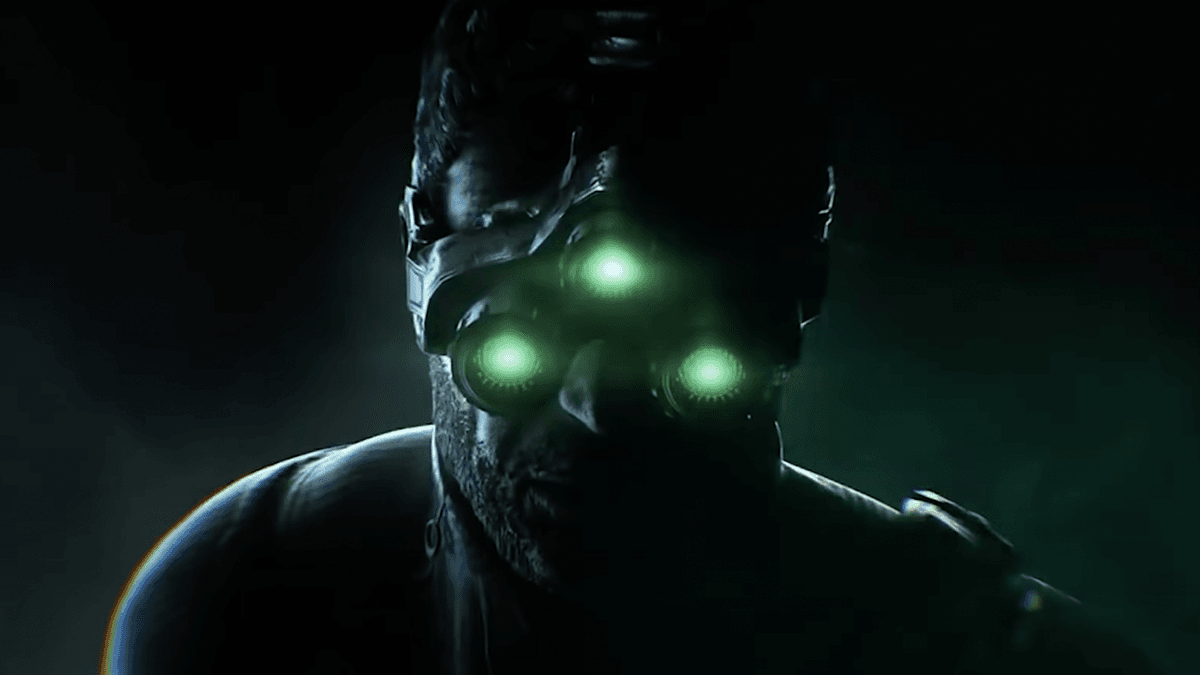
Splinter Cell’s stealth lighting system isn’t technically “AI” in the modern sense — it’s a carefully tuned readability layer that sits between the player’s eyes and the game world. What made it legendary was this: when you were in shadow, the game *told you* you were invisible through a light meter on Sam Fisher’s goggles. When that meter was dark, guards couldn’t see you. When it lit up, they could. This wasn’t realistic — real human eyes don’t work that way — but it was transparent. A player always knew the rules. They could predict what would happen next because the game showed them the exact data the NPC detection system was reading.
Fast-forward to 2024. Modern stealth games use photorealistic rendering, real-time global illumination (GI), and dynamic light systems that create thousands of subtle shadow gradations across a single room. A Unreal Engine 5 scene running Lumen can calculate indirect bounce light so convincingly that a human eye can’t distinguish it from baked lighting. But here’s the problem: if the player can’t visually parse the difference between “definitely hidden” and “maybe exposed,” how can they trust the NPC visibility system? When a guard shoots you from across a room that looks dark to your eyes but registers as bright to the game’s detection algorithm — exactly what happens in the Splinter Cell remake’s early footage when guards spot you in what appears to be darkness — the stealth system feels broken, even if it’s working perfectly.
This is why Splinter Cell is back in the conversation. The upcoming Splinter Cell remake is being built in Unreal Engine 5, which means Ubisoft Toronto’s developers face a choice: stay true to the original’s readability-first philosophy and sacrifice photorealism, or push toward visual fidelity and risk losing the tight, predictable stealth gameplay that made the series iconic. That tension is exactly what’s happening across the industry right now. AI-assisted lighting design tools like Enlighten (now Epic’s real-time GI middleware) and custom neural-network-based visibility systems are promising to solve this automatically — to generate NPC detection sensitivity that adapts in real-time to whatever lighting conditions the engine renders. But early results suggest the solution is messier than the marketing suggests.
How It Works: The Tech Behind Stealth Detection and Lighting AI
At its core, stealth detection in games is a visibility calculation. The NPC needs to answer one question: can I see the player? In older games, this was solved with a binary system. You were either in a predefined shadow zone (invisible) or you weren’t (visible). Splinter Cell took this further by measuring the actual brightness value of the pixel where the player was standing and comparing it to a threshold. If the pixel was dark enough, the guard’s detection value decreased. If it was bright enough, detection spiked. The genius was that the player could see the same light meter the guard was “seeing,” so stealth felt like a fair game of information rather than a dice roll.
Modern games layer additional complexity on top of this foundation. An NPC’s visibility system now typically processes multiple data streams per frame: ambient occlusion (how much indirect light reaches a surface), direct light intensity from all light sources, the player’s distance from the NPC, the NPC’s field of view angle, whether obstacles block line-of-sight, and increasingly, machine-learning models that predict how an NPC should react based on prior behavior. In a game like Hitman World of Assassination, the detection system isn’t just measuring light — it’s also tracking whether the NPC has recently been alerted by sound, whether they’ve spotted unusual behavior, and whether they’re in a heightened suspicion state that lowers their visibility threshold. All of this happens in real-time, every frame, across dozens of NPCs simultaneously. Unreal Engine 5’s Lumen system enables developers to run these complex calculations without pre-baking lighting, which means the visibility landscape shifts dynamically as light sources move.
Binary Shadows vs Dynamic Light: A Detection System Evolution
In Splinter Cell (2002), a shadow was a shadow. The level designer placed shadow volumes — invisible geometric zones that marked where light didn’t reach. When Sam stepped into one, his visibility meter dropped to zero. The rendering was low-poly, the lighting was baked, and the stealth rules were ironclad. A player could memorize the safe zones and execute perfect runs because the world was predictable. The tradeoff was obvious: the game looked like a PS2 game, not a photorealistic simulation.
Modern lighting systems like Unreal Lumen and Unity HDRP render global illumination dynamically, which means light bounces around the scene in real-time based on material properties, surface roughness, and environmental conditions. A white wall in a lit room might bounce enough indirect light into a “shadow” corner to make it partially visible to an NPC, but the human eye sees it as dark. This creates a readability gap. In Alien: Isolation, Xenomorph detection is partly based on light levels, but the game uses such photorealistic rendering that players can’t always tell where the visibility threshold lies. You hide in what looks like solid darkness, but the creature hunts you down anyway because the engine calculated ambient bounce light you couldn’t see. It’s immersive, but it feels unfair — a complaint that echoed across forums after Alien: Isolation’s release, with players specifically citing situations where they felt trapped in visually dark areas but were still detected.
Before and After: How Modern AI Lighting Changed Actual Gameplay
Let’s ground this in concrete gameplay moments. In the original Splinter Cell, you’re in a darkened corridor. Your light meter reads “safe.” You move. A guard walks past, and his detection meter doesn’t spike. You’re invisible. You understand the rules, and the rules worked. In Splinter Cell: Blacklist (which used more dynamic lighting via Unreal Engine 3’s real-time GI), the same scenario plays out differently. The corridor *looks* dark to your eyes, but the engine has calculated ambient bounce light from a distant window. The guard’s visibility system registers you as partially exposed. Your detection meter slowly climbs. You’re confused because the lighting looks the same, but the system is treating you as visible. You back up into deeper shadow, and the meter drops. You’ve now spent five seconds managing an invisible system instead of executing stealth. This shift from Splinter Cell’s binary readability to Blacklist’s nuanced (but opaque) detection represents the exact problem modern developers are wrestling with.
Compare this to Hitman World of Assassination, which solved the readability problem differently. The game uses a minimalist lighting aesthetic — areas are clearly lit or clearly dark, with very little ambiguity in between. When you’re hidden, the game shows you a status indicator. When a guard can see you, their vision cone highlights on the screen. This is less photorealistic than Blacklist, but it’s *fair*. A player always knows where they stand. The detection system is still complex underneath (accounting for distance, angle, NPC alertness, sound, etc.), but the game communicates the results clearly. Dishonored 2 takes a hybrid approach: the game renders photorealistic scenes but uses intentionally simplified lighting zones for stealth purposes, with a light meter UI that shows the player exactly where the visibility threshold lies.
Alien: Isolation takes a third approach. The Xenomorph is designed to be terrifyingly unfair — it has superhuman senses and unpredictable behavior. You hide in a locker, and the creature hunts you down anyway because its AI isn’t bound by human-like vision rules. The game *wants* you to feel exposed and vulnerable, so the readability gap becomes a feature, not a bug. But this only works because the game’s narrative framing justifies the unfairness. In a traditional stealth game, that same unfairness would feel broken.
The immersion versus readability tradeoff is real, and studios are split on how to weight it. Some players will choose photorealism and accept unpredictability. Others will choose clarity and accept lower visual fidelity. But most players want both, and that’s where the frustration comes in. When a stealth game looks photorealistic but plays like detection is arbitrary, the disconnect creates cognitive dissonance. You’re watching a beautifully rendered world while simultaneously playing a game with rules you can’t predict.
What Game Studios Are Building With AI Lighting and Stealth Detection
The industry is actively experimenting with AI-assisted tools to close the readability gap. Narrative-focused studios like Arkane (Dishonored 2, Deathloop) and Obsidian are exploring machine-learning models that can auto-tune NPC visibility sensitivity based on the actual lighting conditions the engine renders. Rather than hard-coding detection thresholds, the AI learns from thousands of test runs what exposure level *feels* fair to players. Some middleware providers like Enlighten (now owned by Epic) and custom in-house systems are pushing this further — they can generate real-time visibility maps that show the player exactly where they’re safe and where they’re exposed, overlaid on top of the photorealistic rendering. The player never sees these maps in-game, but the visibility system uses them to ensure detection feels consistent.
Unreal Engine 5’s Lumen system includes experimental features for real-time visibility baking, which allows developers to pre-calculate stealth-relevant lighting data while still supporting dynamic light changes. This is a middle ground: you get most of the immersion of real-time GI with the predictability of baked lighting. Unity HDRP has similar capabilities through its real-time GI preview system, which lets developers see how dynamic lighting will affect NPC detection during development and adjust thresholds accordingly.
Several AAA studios have shared GDC talks about their stealth detection pipelines. Arkane emphasized that their visibility system in Dishonored 2 runs on two parallel tracks: a player-facing readability layer (the light meter, the highlighted guard vision cones) and a hidden complexity layer (the actual AI perception model). The readability layer is intentionally simplified so players can predict outcomes. The complexity layer adds depth for players who want to dig deeper. This dual-system approach is becoming more common because it lets studios support both casual and hardcore stealth players. Ubisoft Toronto’s approach for the Splinter Cell remake reportedly prioritizes readability-first design, meaning the lighting and detection systems are being built in tandem to ensure they communicate the same information to the player.
Indie developers are leveraging AI lighting tools to compensate for limited art resources. Games like Tchia (a stealth-exploration hybrid) used procedural lighting systems powered by neural networks to generate realistic lighting without hiring a team of lighting artists. The tradeoff is that procedural systems can sometimes generate weird edge cases — a corridor that’s technically well-lit but visually confusing. However, indie developers are increasingly using AI post-processing to detect and flag these problem areas, then having artists manually fix them. This hybrid human-AI approach is lowering the barrier to entry for stealth game design. Tools like Unity Sentis (on-device ML inference) are making it feasible for small teams to run visibility prediction models in real-time without server costs. An indie developer can now train a lightweight neural network on reference footage from existing stealth games, embed it in their game engine, and have the NPC visibility system learn player behavior patterns on the fly. The result is stealth AI that adapts to player skill without explicit difficulty settings. If you’re consistently sneaking past guards undetected, the AI gradually lowers the visibility threshold to make guards more alert. If you’re getting caught constantly, it loosens the threshold to give you breathing room. It’s not perfect — the AI sometimes overcorrects and makes the game feel broken — but it’s a genuinely new capability that wasn’t feasible five years ago.
The Catch: Limitations, Risks, and Player Concerns With AI-Driven Stealth Lighting
Here’s where the hype hits reality. Real-time AI visibility systems are computationally expensive. Running a neural network that predicts NPC perception every frame, for every NPC, across a complex lighting scene can consume 10-15% of a frame’s GPU budget on console hardware. For a game targeting 60 FPS with a 16ms frame budget, that’s a massive cost. Most studios opt to run visibility AI every 2-4 frames instead of every frame, which introduces subtle jitter in detection sensitivity. A guard might feel like they’re taking a moment to “process” what they see, which can feel unresponsive or unfair to the player.
Unpredictability is the bigger risk. When detection logic is generated by a machine-learning model rather than hand-coded, it becomes harder to debug. If a player reports that they got caught in a situation where they should have been invisible, the developer can’t just look at the code and trace the bug. They have to re-run the scene through the ML model and try to understand why it made that prediction. Activision faced this exact problem with their AI-driven NPC behavior system in Call of Duty: Black Ops Cold War. The AI was trained to play realistically, but it sometimes made bizarre tactical decisions that felt broken. Players couldn’t predict what the AI would do, and the game felt unfair. Eventually, Activision had to add a layer of human-tuned constraints on top of the ML system to keep NPC behavior within expected bounds. This is a real limitation that developers rarely advertise — AI visibility systems can be harder to balance and debug than hand-crafted detection cones.
Player agency is another concern. When an NPC’s detection sensitivity is dynamically adapted by AI, the player loses the ability to predict and master the system. In the original Splinter Cell, once you understood the light meter, you could execute perfect runs because the rules were fixed. If the game is constantly adjusting detection sensitivity based on your performance, you can never fully master it. Some players find this engaging (it keeps the challenge fresh). Others find it frustrating (it feels like the game is cheating to stay ahead of them). Accessibility is a serious issue too. Low-vision players often rely on high-contrast HUDs and clear visibility indicators to play stealth games. If the game’s detection system is opaque and AI-driven, it becomes much harder to make it accessible. You can’t just add a colorblind mode — you have to ensure the AI’s internal visibility calculations are transparent to the player interface.
There’s also a real risk of over-engineering immersion at the cost of fun. Splinter Cell’s light meter was unrealistic, but it was *fun* because it was clear. Some studios have experimented with removing the meter in favor of pure visual readability (trying to make the lighting communicative without UI). The results have been mixed. In early playtests of Splinter Cell Blacklist, players complained constantly that they didn’t know if they were hidden. Ubisoft added the meter back, and player satisfaction jumped. The lesson: sometimes a little UI transparency is worth more than photorealistic ambiguity.
What Comes Next: Where AI Stealth Lighting Design Is Heading
The near-term roadmap is clear: expect more hybrid systems that combine AI-assisted lighting generation with human-tuned visibility thresholds. Developers are moving away from purely procedural or purely hand-crafted approaches toward a middle ground where AI handles 80% of the work and humans refine the last 20% to ensure fairness. Unreal Engine 5.2 and beyond are adding native support for “visibility debugging” — tools that let developers visualize exactly what an NPC can and can’t see in real-time, overlaid on the rendered scene. This is game-changing for stealth design because it closes the feedback loop. A designer can see the photorealistic scene, see the NPC’s calculated visibility, and immediately spot the readability gap.
Several stealth titles in development are rumored to be rethinking this entirely. The Splinter Cell remake is reportedly using a “readability-first” approach, meaning Ubisoft Toronto’s developers are designing the lighting and NPC detection systems simultaneously, ensuring they stay in sync. Rather than rendering a beautiful scene and then bolting on visibility detection, they’re starting with stealth rules and building visuals that communicate those rules clearly. This is a return to the original Splinter Cell’s philosophy, but with modern tools.
The open question is whether photorealism and stealth readability can coexist without compromise. Some researchers in game AI are exploring “semantic lighting” — lighting that’s physically plausible but intentionally designed to communicate game rules rather than pure realism. A corridor might be lit in a way that’s 90% realistic but with subtle visual cues (slight color shifts, brightness gradients) that tell the player “this is where the visibility threshold changes.” It’s not dishonest, and it’s not as obvious as a UI meter, but it’s a middle path between pure realism and pure abstraction.
The milestone that signals mainstream adoption will be when a AAA stealth title ships with an AI-driven visibility system that players can’t tell is AI-driven. They’ll play through the game, get caught occasionally, survive occasionally, and assume it’s all hand-crafted. When they find out the detection was generated by a machine-learning model, they’ll be surprised — not because the AI failed, but because they couldn’t tell the difference. That’s when the technology will have truly arrived. Until then, the safest bet for stealth game design is still the Splinter Cell approach: make the rules clear, even if it means sacrificing some photorealism.
Frequently Asked Questions
Does AI-driven stealth lighting make games feel more realistic or just more unpredictable and unfair?
Both. AI-driven systems can generate visibility behavior that’s more nuanced and reactive than hard-coded detection cones, which feels more realistic when it works. But when the AI makes unexpected decisions or when the lighting is photorealistic enough that the player can’t predict visibility boundaries, the result feels arbitrary and unfair. The key difference is whether the game communicates the AI’s decision-making clearly to the player — games like Hitman World of Assassination use AI-assisted detection but layer clear UI feedback on top, while games like Alien: Isolation embrace the unpredictability as part of the horror.
Which stealth games are using advanced AI visibility and lighting detection systems right now?
Hitman World of Assassination uses complex NPC perception that factors in light levels, sound, and behavioral patterns. Dishonored 2 uses a hybrid baked/real-time lighting system with multi-layered visibility checks powered by Arkane’s custom detection engine. Alien: Isolation’s Xenomorph uses machine-learning-inspired behavior patterns that make its detection unpredictable by design. The upcoming Splinter Cell remake is being built with Unreal Engine 5’s Lumen system to balance photorealism with stealth readability. Most modern stealth games in development are moving toward some form of AI-assisted visibility tuning, though few publicly discuss it in detail.
Will AI tools replace the human lighting artists and level designers who craft stealth game readability?
Not entirely, but the role is shifting. AI tools are automating the grunt work of lighting generation and initial visibility tuning, which means human artists can spend more time on the high-level readability problem — making sure the game communicates its rules clearly. The studios that will thrive are those that use AI to handle 80% of the technical work, then deploy experienced human designers to refine the last 20% that determines whether stealth feels fair or broken. Arkane’s approach to Dishonored 2 and the Splinter Cell remake team’s readability-first strategy both demonstrate that the demand for stealth-game specialists is actually increasing, not decreasing.