LumenTale Memories of Trey Review: Fresh Monster Battler
Disclosure: As an Amazon Associate, Bytee earns from qualifying purchases.
As a ferocious wild Animon charged across the screen, I didn’t click a static battle menu—I aimed my reticle, spun the HoloDisk in real-time, and deflected an incoming strike just seconds before securing the capture. That single encounter shattered decades of muscle memory built on turn-based creature collectors. In a genre crowded with nostalgic clones, this indie creature battler dares to bridge arcade precision with tactical depth, delivering an experience that feels genuinely modern.

What Is LumenTale: Memories of Trey and Who Is It For?
Developed by World Fusion Team, LumenTale: Memories of Trey is an ambitious creature-collector monster-taming RPG available on PC and Nintendo Switch. Retailing at a reasonable $24.99 indie tier, it delivers a substantive 25-35 hour main campaign set across the lush, mysterious continent of Talea. Rather than rehashing the cheerful, tournament-climbing formula made famous by modern Pokémon entries, LumenTale pivots toward a deeper, character-driven journey centered on loss, fragmented identity, and the symbiotic relationship between humans and monsters called Animon.
This game is tailor-made for creature-taming veterans who have grown weary of effortless battle systems and unskippable tutorials. If you miss the sense of exploration found in classic handheld RPGs but crave contemporary mechanical complexity, LumenTale will hit your sweet spot. However, casual players who dislike twitch-reflex minigames or demanding boss encounters may find its skill-based systems more punishing than expected.
LumenTale Memories of Trey Gameplay & Core Mechanics
The core loop of LumenTale Memories of Trey gameplay revolves around exploring semi-open biomes, interacting with Talea’s quirky denizens, and tracking down over a hundred distinct Animon. The game divides its action neatly into two distinct phases: real-time encounter initiation and strategic, turn-based party combat. Navigating through dense forests, ancient ruins, and arid canyons requires active spatial awareness, as wild Animon roam visibly in the overworld with unique behavioral patterns.
The HoloDisk Capture System: Real-Time Skill Over RNG
The standout feature here is the HoloDisk capture mechanic, which completely eliminates the passive RNG ball-toss routine. When initiating a capture, the game switches to a tactile, real-time interface where you physically aim, charge, and flick your HoloDisk like an energy-infused spinner. Wild Animon do not sit idle; they actively charge your reticle, fire elemental projectiles, and dart across the arena.
Capturing an Animon requires you to balance offense and defense in real time. You must deflect incoming physical rushes with well-timed HoloDisk spins while locking onto critical capture zones to wear down the creature’s willpower. It introduces a sharp difficulty curve where rare, high-tier Animon demand precise twitch reflexes and rapid pattern recognition. Catching a beast feels earned through personal player skill rather than a lucky roll behind the scenes.
Combat, Typings, and Team Synergy
Once you transition into standard trainer skirmishes or story encounters, combat defaults to a refined turn-based structure built on a six-Animon squad. LumenTale features a deep elemental matrix spanning thirteen typings—such as Blaze, Torrent, Mystic, Terra, and Umbra. What elevates the combat above run-of-the-mill clones is its dynamic energy system. Instead of individual move PP (Power Points), your squad shares an adaptable Action Point pool that rewards high-risk combo setup over raw move spamming.
Status ailments carry meaningful weight in tactical decisions. Stun doesn’t simply skip a turn; it reduces the victim’s evasion and delays their initiative queue. Synergizing environmental weather effects with your team’s passive abilities turns high-stakes gym-equivalent battles into intricate puzzles where one misplaced buff can derail your entire run.
Story, Talea World Design & Audiovisual Presentation
The narrative follows Trey, an amnesiac protagonist searching for the truth behind his forgotten past amidst rising geopolitical tension in Talea. Unlike the generic “become the local champion” trope, the story ventures into surprisingly mature emotional territory, exploring themes of grief, technological hubris, and personal sacrifice. Expressive, hand-drawn 2D character portraits accompany dialogue scenes, lending genuine gravitas to key cinematic beats.
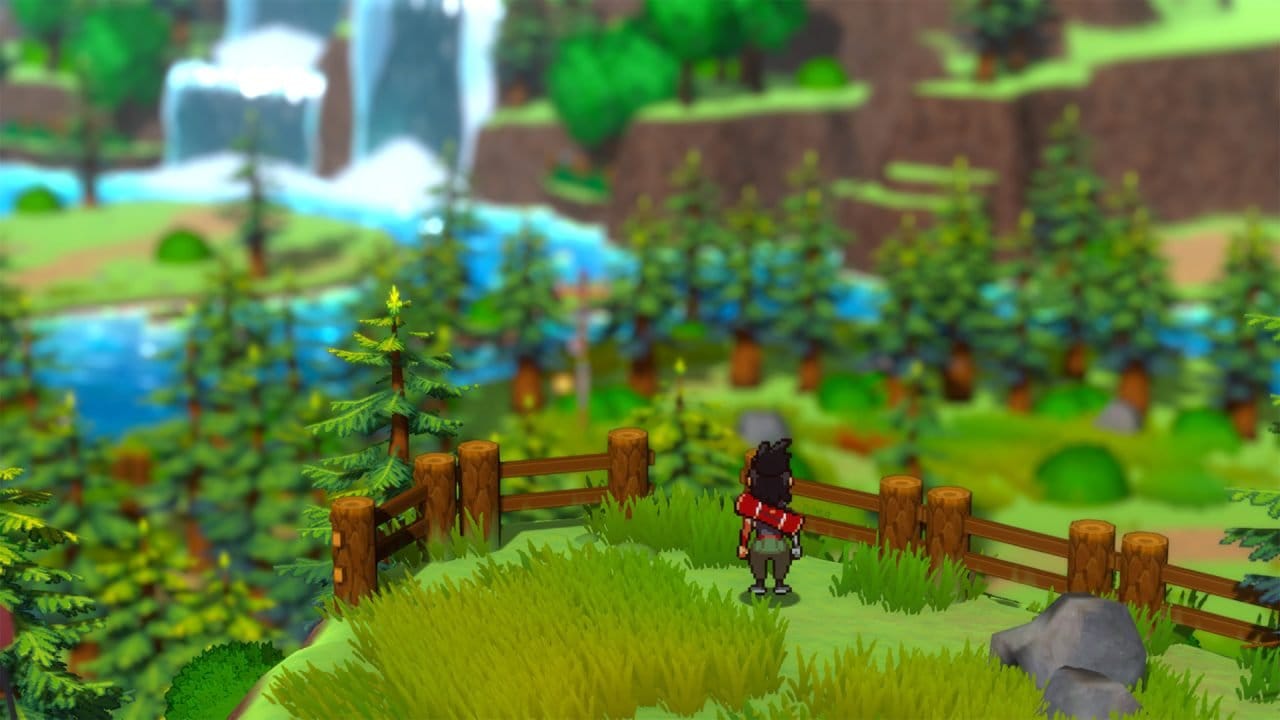
Visually, the game utilizes a gorgeous HD-2D aesthetic that blends high-resolution 3D environmental lighting with nostalgic, meticulously animated sprite work. Talea’s biomes feel alive, from wind-swept coastal cliffs to bioluminescent subterranean caverns. The soundtrack complements this beauty with sweeping orchestral melodies and melancholic piano motifs that easily rival high-budget JRPGs. On PC, performance is flawless at an uncapped 144Hz, while the Nintendo Switch version holds a respectable 30 FPS, marred only by brief frame dips in heavily forested areas featuring dense particle weather effects.
Content, Campaign Length & Post-Game Replayability
A standard playthrough clocking through the main narrative will take most players roughly 28 hours. Completionists aiming to log all 120+ Animon in the Talea Encyclopedia, locate hidden elemental shrines, and finish every town bulletin-board quest can easily squeeze 50 hours out of the base package. World Fusion Team did not skimp on post-game depth either; finishing the story unlocks the Master Archives, which houses brutal gauntlet trials, roaming Legendary Animon, and customized battle modifiers that will test the most optimized competitive builds.
While the game currently emphasizes a rich single-player experience, the developers have outlined a post-launch roadmap featuring local PvP battling, competitive ladder integration, and expansion islands designed to introduce new regional variants.
Flaws, Frustrations & Technical Red Flags
No comprehensive LumenTale Memories of Trey review would be complete without addressing its notable rough edges. First, the real-time HoloDisk capture mechanic, while brilliant in short bursts, suffers from severe fatigue during extended grinding sessions. Catching ten common Animon in a row for side-quest turn-ins becomes physically taxing on your hands and slows world exploration to a crawl.
Second, the mid-game pacing suffers a noticeable slump during Act 2. After a thrilling opening chapter, the narrative grinds to a halt with an onslaught of tedious fetch quests across the Sunken Marsh, padding out game length without advancing Trey’s character arc. Lastly, the difficulty balancing on story bosses features harsh, unearned spikes; bosses frequently wield multi-hit passive barriers that mandate specific team builds, forcing unprepared players into hours of level grinding.
Verdict: Is LumenTale Memories of Trey Worth Playing?
LumenTale: Memories of Trey is a confident, mechanically refreshing creature battler that injects much-needed innovation into a stale genre. By trading passive catching RNG for an engaging real-time capture system and backing it with rich turn-based combat, World Fusion Team has created an essential monster-taming adventure that punches well above its $24.99 price tag.
Score: 8.5/10 — A superb, inventive monster collector that respects veteran player intelligence despite minor pacing drags.
Verdict: BUY for any RPG fan yearning for deep monster synergy and active, skill-based gameplay mechanics.
Frequently Asked Questions
Is LumenTale Memories of Trey worth playing if you love classic Pokemon games?
Yes, absolutely. It captures the nostalgic charm of classic pixel-era creature collectors while modernizing the formula with active real-time capturing, a mature narrative, and tactical resource management in battles.
How long does it take to beat the main story in LumenTale: Memories of Trey?
The main storyline takes approximately 25 to 35 hours to finish depending on your exploration pace. Completing all side content, legendary hunts, and the full Animon encyclopedia can extend play time past 50 hours.
How does the capture mechanic work in LumenTale Memories of Trey gameplay?
Instead of choosing a ball from a static menu, you manually aim, charge, and spin a HoloDisk in real-time. Players must actively dodge wild Animon attacks and deflect charges while weakening the creature’s capture threshold.
Does LumenTale: Memories of Trey feature multiplayer or trading?
At launch, LumenTale is primarily an offline, single-player adventure. However, developer World Fusion Team has confirmed that multiplayer PvP battles and trade networks are planned in post-launch content updates.