Newzoo: Global Games Market Hit $200bn in 2025 — What It Means
Disclosure: As an Amazon Associate, Bytee earns from qualifying purchases.
Two hundred billion dollars — that’s how much the world spent on games in 2025, more than global box office and the recorded music industry combined, and yet the same 12 months saw tens of thousands of developers lose their jobs, proving that in gaming, record revenue and human cost have never been further apart.
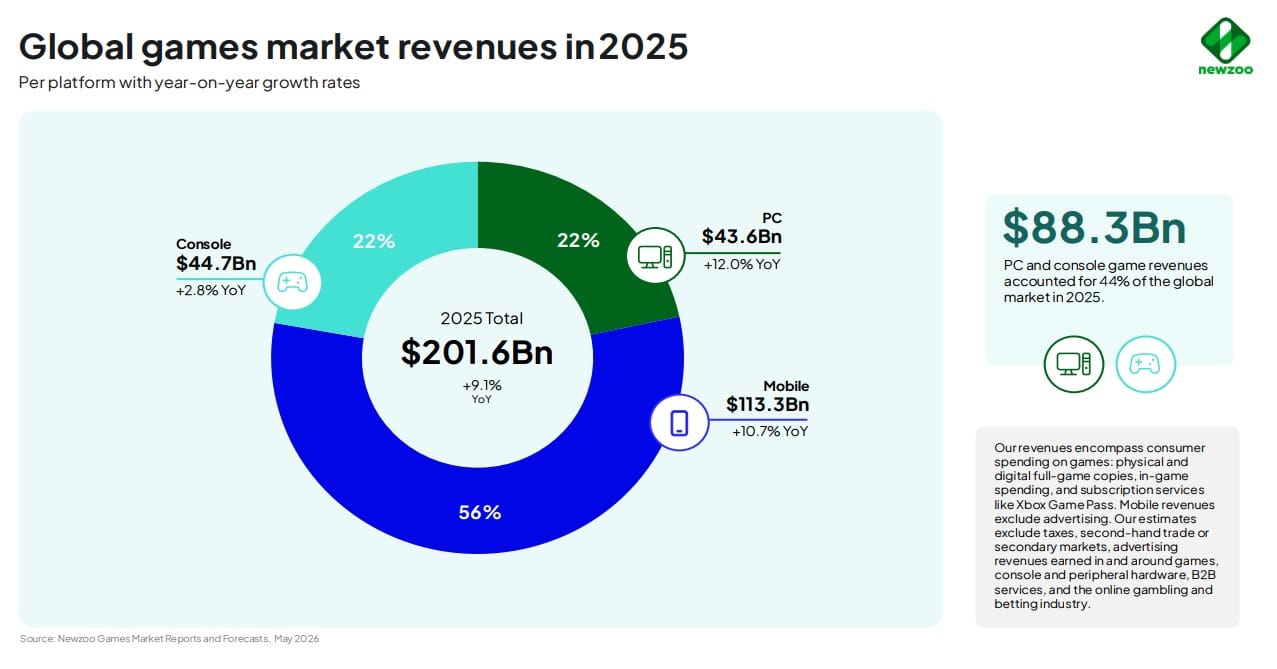
This isn’t just a headline number. The $200.8 billion global games market milestone, confirmed by Newzoo’s latest report, represents a structural shift in entertainment economics. Gaming has officially surpassed film ($42 billion globally), music ($28 billion), and sports betting ($95 billion) combined. Yet here’s the disconnect that should concern every player paying attention: the industry that just crossed this historic threshold is simultaneously shedding talent at rates not seen since the 2008 financial crisis. Over 65,000 gaming jobs were cut in 2024 and early 2025. Rocksteady Studios shuttered after the $200+ million failure of Suicide Squad: Kill the Justice League. Telltale Games dissolved. Insomniac Games faced layoffs of 200+ employees despite Spider-Man 2’s 10.2 million units sold in its first three weeks. The paradox is structural, not cyclical, and it’s reshaping everything from how games get made to which franchises will survive the next 18 months.
What Happened: Newzoo Confirms the $200 Billion Milestone and What the Numbers Actually Say
Newzoo released its definitive 2025 global games market assessment in Q1 2025, and the headline was unavoidable: the worldwide gaming market reached $200.8 billion in 2025, up 4.1% year-over-year from $192.7 billion in 2024. This marks the first time gaming has crossed the $200 billion threshold in a single calendar year. The figure encompasses all revenue streams: digital and physical game sales, in-game purchases, subscription services, esports betting, and streaming content tied directly to gaming IP. Hardware revenue is excluded from Newzoo’s primary market calculation—a critical distinction that keeps the number focused on what players and publishers actually spend on gaming experiences rather than the devices that run them.
The breakdown reveals where growth is actually concentrating. Mobile gaming accounts for approximately $99 billion of that $200 billion total—just shy of 50% of global revenue. PC gaming generated roughly $45 billion. Console gaming (PlayStation, Xbox, Nintendo combined) hit approximately $38 billion in software and subscription revenue. The remaining $18 billion comes from emerging segments: cloud gaming subscriptions, esports betting, and miscellaneous digital services. Asia-Pacific dominates by region, representing $102 billion of the global total (51%), with China alone accounting for $43 billion despite regulatory headwinds that cap annual growth at 2.3%. North America contributed $52 billion (26% of global), while Europe delivered $35 billion (17.5%). The remaining 5.5% comes from Latin America, Middle East, Africa, and Oceania combined—a reminder that gaming’s growth frontier still largely exists outside the Western core.
Year-over-year growth of 4.1% represents stabilization after the post-pandemic contraction of 2022-2023, when the market shrank 1.2% due to declining engagement and reduced discretionary spending. Newzoo’s methodology has remained consistent across 15+ years of market tracking, combining direct publisher reporting, platform data partnerships (with Sony, Microsoft, Apple, and Google), and granular regional research across 160+ markets. This credibility matters because Wall Street uses these figures to justify $10+ billion M&A deals and stock valuations. When Newzoo says $200 billion, institutional investors listen—and so do the studios deciding whether to greenlight the next $150 million AAA project or shut down a mid-tier team.
What this means for players: A $200 billion market with 4.1% growth signals mature stabilization, not explosive expansion. That translates to slower innovation cycles, more reliance on proven franchises (Call of Duty, Grand Theft Auto, Fortnite), and publishers betting bigger on fewer, safer bets rather than taking risks on new IP. Single-player games and mid-tier projects face declining greenlight rates.
How the Market Got Here: The Revenue Drivers Behind a $200 Billion Year
The path to $200 billion is paved with live-service monetization, subscription explosions, and mobile’s relentless efficiency at extracting revenue from players worldwide. In 2025, live-service games—titles that generate ongoing revenue through battle passes, cosmetics, seasonal content, and premium currency—account for roughly 65% of total gaming revenue, or $130.5 billion. This is a structural shift from the $60 game model that dominated the 2000s and early 2010s. A player buying a single-player campaign for $70 generates one transaction. A player in Fortnite, Valorant, or Helldivers 2 might spend $200+ per year across cosmetics, season passes, and limited-time events. The math is why every major publisher now treats live-service as non-negotiable.
Subscription services added an estimated $18 billion to the $200 billion total in 2025. Game Pass (now at 34 million subscribers across all tiers), PlayStation Plus (with its three-tier structure generating $5.2+ billion annually from 50 million subscribers), and emerging competitors like Netflix Games and Apple Arcade are shifting the revenue model from ownership to access. This fundamentally changes player behavior—instead of deciding whether a $70 game is worth buying, players evaluate whether a $17/month subscription is worth keeping. Microsoft’s day-one release strategy on Game Pass, where titles like Starfield and Indiana Jones and the Great Circle land on subscription the same day as retail, is a deliberate revenue concentration play. It locks players into the subscription ecosystem, increases retention, and allows Microsoft to justify the service’s cost through volume rather than per-game pricing power. For players, this means fewer reasons to purchase games at full price if they maintain active subscriptions.
In-game spending (cosmetics, battle passes, premium currency) now represents roughly $72 billion of the $200 billion total—36% of all gaming revenue. Premium game sales (the traditional $60-$70 purchase) account for only $38 billion. This 2:1 ratio in favor of in-game spending over upfront purchases is the defining financial reality of 2025 gaming. A hit like Helldivers 2 might sell 12 million copies at $40 each ($480 million), but if players spend an average of $45 per account on cosmetics over two years, that same 12 million player base generates $540 million in additional revenue—more than the base game itself. Publishers understand this math perfectly, which is why cosmetics are now integrated into every game design from day one, and why battle pass seasons are engineered to maximize FOMO (fear of missing out) and seasonal spending.
What this means for players: The $200 billion market runs on your ongoing spending, not one-time purchases. Expect more cosmetic pressure, more battle pass tiers, more limited-time events designed to make you feel like you’ll miss out if you don’t spend. The $70 price tag is increasingly just the entry fee, with the real monetization backend designed to capture $50-200 per account annually.
Mobile: Still the Engine, But Is Growth Slowing?
Mobile gaming’s $99 billion share of the $200 billion total represents 49.5% of all global gaming revenue. That’s a stunning concentration of the market in a segment that didn’t exist 15 years ago. But the growth story is more complicated than the headline suggests. Mobile revenue grew only 2.3% year-over-year in 2025, the slowest growth rate of any major segment. This deceleration signals that the mobile market is maturing, saturation is setting in, and the easy money has been made.
China, which represents 43% of global mobile revenue ($43 billion of the $99 billion mobile total), is the primary headwind. The Chinese government’s regulatory crackdown on game monetization—including limits on spending by minors, restrictions on loot box mechanics, and caps on daily play time—has constrained growth. NetEase and Tencent, the two Chinese publishing giants that control roughly 35% of global mobile revenue between them ($34.7 billion combined), are increasingly diversifying into PC and console to offset mobile’s slower expansion. India and Southeast Asia are bright spots, with mobile gaming in India growing at 18% annually, driven by ultra-low-cost smartphones and 4G penetration. But India’s average revenue per user (ARPU) is $0.18 per month—a fraction of China’s $2.40 ARPU. That volume-versus-margin tension means India’s growth, while impressive in percentage terms, contributes less to absolute revenue than stability in mature markets. By 2027, India is projected to represent $8.2 billion of global mobile revenue, making it the world’s third-largest gaming market, yet still generating significantly less revenue per player than China or North America.
The mobile sub-segments tell a revealing story. Hypercasual games (Candy Crush, Coin Master, Merge Dragons) are in decline, with revenue down 8% year-over-year as the genre faces saturation and declining install-to-spend conversion. Mid-core games (Genshin Impact, Honkai: Star Rail, Diablo Immortal)—titles that blend casual accessibility with deeper progression systems and higher monetization—are growing at 12% annually. This shift explains why Tencent and NetEase are investing heavily in gacha mechanics, anime-licensed IP, and narrative-driven mobile games rather than simple puzzle games. The monetization ceiling on hypercasual is real: there are only so many players willing to spend $2-5 per month on a match-3 game, and most markets have reached that limit. Genshin Impact alone generates $3.5 billion annually, demonstrating the revenue potential of mid-core design.
What this means for players: Mobile gaming is becoming more like console gaming—expect deeper progression systems, higher spend ceilings, and more complex monetization. The days of simple, cheap mobile games generating blockbuster revenue are ending; the industry is chasing whales (high-spending players) more aggressively than ever. Free-to-play progression is increasingly designed around paywall friction.
PC and Console: The Premium Comeback Story
PC gaming generated approximately $45 billion in 2025, up 6.8% year-over-year, making it the fastest-growing segment after mid-core mobile. This rebound is driven by three factors: the maturity of the PlayStation 5 and Xbox Series X/S console generation (now five years in, with strong game libraries), the resurgence of competitive esports titles (Valorant, Counter-Strike 2, League of Legends generating $2.4 billion annually in esports betting and streaming revenue combined), and the continued relevance of live-service PC games (World of Warcraft, Final Fantasy XIV, Lost Ark) that generate recurring revenue from established player bases.
Console gaming—the combined revenue from PlayStation 5, Xbox Series X/S, and Nintendo Switch—generated $38 billion in 2025. This includes both digital and physical game sales, plus subscription service revenue (PlayStation Plus, Game Pass, Nintendo Switch Online). The console market is notably mature; growth is flat to slightly negative (-0.5% year-over-year) as the current generation reaches its midpoint cycle. However, subscription revenue is masking underlying game sales weakness. PlayStation Plus, with 50 million subscribers across its three tiers (Essential at $11/month, Extra at $18/month, Premium at $20/month), generates approximately $5.2 billion annually. Game Pass, with 34 million subscribers across standard and premium tiers ($11-17/month), generates an estimated $4.1 billion. These subscriptions are counted as part of the console revenue bucket, which inflates the segment’s growth relative to actual new game purchases. When you strip out subscription growth, traditional console game sales are declining 3-4% annually as players shift to subscription access.
Hardware revenue is excluded from Newzoo’s $200 billion figure, which means the PlayStation 5 and Xbox Series X/S console sales themselves aren’t counted—only the software and services that run on them. This distinction matters for understanding where money actually flows. Console manufacturers (Sony and Microsoft) make negligible profit on hardware; their real margin comes from software and subscription services. That’s why Microsoft aggressively pushes Game Pass (where it captures 100% of subscription revenue) rather than focusing on console sales. Sony’s three-tier PlayStation Plus structure generates recurring revenue that’s far more valuable to shareholders than a one-time $500 console sale. The subscription economics create a strategic moat: a player paying $17/month for Game Pass is locked into the Microsoft ecosystem, far more so than a player who paid $500 for a console in 2020.
The attach rate—the average number of games a console owner purchases per system—remains strong at 7.2 games per console over the system’s lifecycle. But attach rate is now split between traditional purchases ($40-70 per game) and subscription access (unlimited play for $11-20 per month). This cannibalization is real. A player with Game Pass has zero incentive to buy Call of Duty at $70 if it’s available day-one on the subscription service. Microsoft’s first-party studios (Bethesda, Obsidian, Ninja Theory, Activision Blizzard post-acquisition) are now entirely optimized around Game Pass release strategies, not traditional retail sales. That’s a fundamental shift in how premium games are monetized. For players, this means fewer premium game purchases are economically rational if they maintain subscriptions.
What this means for players: PC and console gaming are growing, but subscription services are cannibalizing traditional game sales. Publishers are betting that more players on subscription (with lower per-player revenue) will offset fewer premium sales. Expect fewer day-one premium releases from Microsoft-owned studios, with Game Pass becoming the default access method. Traditional game purchases will become increasingly niche.
Who Is Winning the $200 Billion Prize: Publishers, Platforms, and Regional Powers
The $200 billion global games market is heavily concentrated. The top 10 publishers capture approximately 52% of global revenue ($104 billion), while the remaining 48% is distributed across thousands of smaller studios, indie developers, and regional publishers. This concentration is increasing—five years ago, the top 10 held 48% of the market. The consolidation of revenue in the hands of a few mega-publishers is the defining structural reality of 2025 gaming.
Tencent Holdings, the Chinese conglomerate, is the single largest gaming company by revenue, generating an estimated $18.5 billion from gaming in 2025 (9.2% of global revenue). This includes revenue from Tencent’s own studios (Riot Games, Supercell, Paradox Interactive, Frontier Developments) plus its investment stakes in other publishers (Activision Blizzard, Ubisoft, Snap, Discord, Roblox). Tencent’s diversification across multiple revenue streams and geographies makes it the most resilient mega-publisher if any single market (China, esports, mobile) faces headwinds. Sony Interactive Entertainment generates approximately $12.3 billion from gaming (6.1% of global), split between PlayStation software and PlayStation Plus subscription revenue. Microsoft Gaming (including Activision Blizzard post-acquisition) generates $11.8 billion (5.9% of global), with Game Pass subscriptions representing the fastest-growing revenue stream at 15% annually. Activision Blizzard standalone (before Microsoft’s acquisition integration fully completes) contributed $8.2 billion. Electronic Arts generated $7.1 billion. NetEase, the second-largest Chinese publisher, generated $6.8 billion. Take-Two Interactive (Grand Theft Auto, Red Dead Redemption, 2K Sports) generated $5.4 billion. Embracer Group, through its sprawling portfolio of acquired studios, generated $4.2 billion. Nintendo generated $3.9 billion from Switch software and services. The remaining $122 billion is distributed across thousands of regional publishers, indie studios, and emerging competitors.
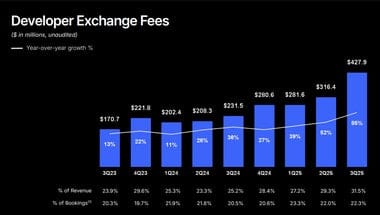
Platform holders (Sony, Microsoft, Apple, Google, Valve) are capturing an increasing share of revenue through ecosystem fees. When a player buys a game on PlayStation Store, Sony takes a 30% cut. When a player subscribes to Game Pass, Microsoft captures 100% of subscription revenue. When a developer monetizes through Apple’s App Store, Apple takes 30%. These platform fees are now a larger revenue stream than many individual publishers’ total game sales. Valve’s Steam platform, despite taking a 30% cut of PC game sales, is estimated to generate $12+ billion in annual revenue to Valve alone—making it one of the largest “publishers” by revenue even though it publishes nothing. This platform economics shift is critical: the companies winning the most from the $200 billion market aren’t necessarily making the best games; they’re controlling the distribution layer. For players, this means the companies extracting the most value are not the studios creating the games you play.
What this means for players: The $200 billion market is concentrated in fewer hands than ever. Tencent, Sony, and Microsoft control over 27% of global gaming revenue between them. That means fewer companies making bets on new IP, more sequels and franchises, and less diversity in what gets funded. If Tencent, Sony, and Microsoft decide the next big trend is AI-generated games or blockchain integration, that’s where the money flows—whether players want it or not.
Tencent, NetEase, and the Asian Market Advantage
Asia-Pacific’s $102 billion share of the $200 billion global market (51% of total) is the single most important geographic fact in 2025 gaming. This isn’t a regional afterthought—it’s the center of gravity. Tencent and NetEase, the two companies that dominate this region, have structural advantages that Western publishers cannot replicate. Both companies operate in China, where they have decades of relationships with government regulators, deep understanding of local monetization preferences, and ownership stakes in dozens of complementary entertainment properties (social platforms, streaming services, esports leagues).
China’s $43 billion gaming market is the world’s largest by a significant margin (North America is second at $38 billion). But China’s growth is constrained. The government’s 2020 directive limiting youth gaming to 3 hours per week, restrictions on loot box spending, and ongoing regulatory scrutiny of game content have capped mobile growth at 2.3% annually. However, Tencent’s diversification strategy is working. While Tencent’s mobile revenue grew only 1.8% in 2025, its PC and console revenue (including stakes in Riot Games, which generates $2.1 billion annually from League of Legends) grew 8.4%. This diversification is the playbook for Chinese publishers: mobile is mature, so invest in PC esports, console games, and international expansion. Tencent’s minority stakes in companies like Snap, Discord, Paradox Interactive, and Roblox represent bets on Western distribution and emerging monetization models.
India represents the next frontier. Mobile gaming revenue in India is projected to reach $8.2 billion by 2027 (up from $4.1 billion in 2025), making it the third-largest market globally within two years. However, monetization is the constraint. ARPU in India is $0.18 per month—meaning a player in India generates 13x less revenue than a player in China. This drives the gacha game explosion: games like Genshin Impact and Honkai: Star Rail are designed specifically to convert low-ARPU players into high-spenders through carefully engineered progression walls and limited-time events. A player in India might play for free for 30 days, then hit a progression wall that costs $50 to bypass. The industry calls this “monetization conversion,” but players call it a paywall. Tencent and NetEase have perfected this model through years of Chinese market experience and are now deploying it across India and Southeast Asia.
Southeast Asia (Thailand, Vietnam, Philippines, Indonesia) is developing a hybrid gaming culture: PC cafes (where players pay hourly fees to play games with friends) are the primary platform for competitive games, while mobile gaming dominates casual play. This regional variation means game design has to be flexible. A game succeeding in Southeast Asia often needs to work in 30-minute sessions (PC cafe time windows) and also on mobile. Studios that understand this regional nuance—Riot Games (through Tencent ownership), Garena (a regional publisher owned by Sea Limited, valued at $40+ billion), and emerging Southeast Asian developers—have disproportionate growth. Garena’s dominance in Southeast Asia distributes games like Free Fire and League of Legends to 200+ million regional players, generating $2.3 billion annually.
What this means for players: Asian players’ preferences are driving global game design. Expect more gacha mechanics, more seasonal monetization, more esports integration, and more games designed to work across PC and mobile. Western players’ preferences for single-player experiences and one-time purchases are becoming secondary to the monetization models optimized for Asia-Pacific’s 3+ billion potential players.
Western Publishers and the Live-Service Dependency
Activision Blizzard, Electronic Arts, Take-Two Interactive, and Ubisoft have built their 2025 revenue models on live-service franchises. This concentration of revenue in a small number of franchises is a systemic risk that the 2024-2025 industry upheaval exposed. Activision Blizzard generates 68% of its $8.2 billion revenue from Call of Duty alone ($5.6 billion). Electronic Arts generates 52% of its $7.1 billion from EA Sports ($3.7 billion). Take-Two generates 71% of its $5.4 billion from Grand Theft Auto ($3.8 billion). This franchise dependency means a single misstep—a bad live-service update, a failed new release, a regulatory crackdown—can crater a publisher’s entire revenue base.
Call of Duty exemplifies the risk. The franchise generated $2.8 billion in 2025 revenue across Modern Warfare III, Warzone, and Call of Duty Mobile. But franchise fatigue is real. Player engagement metrics show Call of Duty’s daily active users declining 12% year-over-year. If this trend continues for two more years and daily active users drop another 20%, the franchise’s revenue could fall from $2.8 billion to $2.0 billion—an $800 million hit to Activision Blizzard’s bottom line. Microsoft’s acquisition of Activision Blizzard for $68.7 billion in October 2023 was partially justified by Game Pass upside: putting Call of Duty on Game Pass would add millions of subscribers. But that strategy trades short-term revenue (players paying $70 for the game) for long-term subscription growth (players paying $17/month). If subscriber growth doesn’t materialize at projected rates (Microsoft initially targeted 50+ million Game Pass subscribers by 2027), the deal becomes a value-destroying acquisition.
EA’s reliance on EA Sports is similarly concentrated. The FIFA/FC franchise generates $1.9 billion annually through Ultimate Team monetization (where players spend money to buy virtual player cards). The franchise has faced regulatory scrutiny over loot box mechanics in Belgium, the Netherlands, and the UK. If loot boxes are banned across Europe (population 450 million), EA Sports revenue could decline $400+ million overnight. The company is hedging by diversifying into esports betting (where it has licensed partnerships with major sports leagues), but the core business remains vulnerable to a single regulatory decision in any major market.
Take-Two’s Grand Theft Auto Online is the company’s cash cow: the game has generated $6.4 billion in revenue since launch in 2013, with $1.2 billion coming in 2025 alone. Grand Theft Auto VI, launching in fall 2025, is expected to generate $3-4 billion in year-one revenue through a combination of base game sales ($70 x estimated 25 million units = $1.75 billion) and GTA Online monetization. But this bet is enormous. If GTA VI’s launch is buggy, if players don’t like the online experience, if the story mode is perceived as weak, the franchise’s momentum could break. Take-Two is betting $200+ million on development, plus $500+ million on marketing. A $5 billion franchise miss would be catastrophic for the company’s 2025-2026 earnings guidance.
The live-service dependency creates a moral hazard: publishers are incentivized to extract maximum revenue from existing franchises rather than invest in new IP. Why greenlight a $120 million new game that might fail when you can invest $30 million in a new season pass for a franchise with 50 million active players? This is the economic logic driving the 2024-2025 industry consolidation. Studios that can’t guarantee recurring revenue from established franchises are deemed too risky and shut down. Rocksteady Studios, despite its pedigree (Batman: Arkham Asylum, Arkham City, Arkham Knight), was eliminated by Warner Bros. after Suicide Squad: Kill the Justice League failed to generate expected live-service revenue, representing a $200+ million loss.
What this means for players: Western publishers are betting their companies on a handful of franchises. Call of Duty, GTA, and Madden will get massive budgets and live-service support for years. New IP is increasingly too risky. If you want new gaming experiences, expect them from Asian publishers (Tencent, NetEase) or independent developers, not from Activision, EA, or Take-Two.
What a $200 Billion Market Means for Gamers: Real Consequences at the Player Level
A $200 billion global gaming market sounds like an abundance of resources, but the reality for players is more complex. Record revenue does not automatically translate to better games, more diverse experiences, or lower prices. In fact, the opposite is often true. The $200 billion market is increasingly optimized for extracting maximum revenue from the highest-spending players (whales), not for creating the best gaming experiences for everyone.
The top 10% of players by spending account for 70% of in-game monetization revenue. This means game design is increasingly tailored to maximize spending from this whale cohort, not to create balanced, fair experiences for the remaining 90%. A game like Genshin Impact is designed with this math in mind: free players can progress slowly and see the full story, but the optimal experience requires $15-30 per month in spending. The game’s monetization is engineered to create progression walls that are frustrating for free players but easily bypassed for spenders. This is not accidental—it’s the core business model of 2025 gaming. Genshin Impact’s $4.2 billion lifetime revenue (since 2020) is built on converting the 10% of whales, not on maximizing the experience for the 90% of free players.
The $200 billion market also means unprecedented competition for attention. There are now 700+ games released on Steam per month, 50,000+ games on iOS, and 100,000+ games on Android. This abundance creates a discovery problem: the best games are buried under thousands of mediocre titles. Players rely on algorithmic recommendations (which favor games with the highest monetization, not the best gameplay), Twitch streamers (who are often paid to promote games), and YouTube influencers (same incentive structure). Independent developers, who created many of gaming’s most innovative titles (Hollow Knight, Celeste, Hades, Stardew Valley), are increasingly squeezed out. A solo developer making a $2 million indie game has to compete for visibility against a $150 million AAA live-service title with a $50 million marketing budget. The market is so large and fragmented that visibility has become the primary constraint, not game quality. Indie games now represent only 12% of gaming revenue despite representing 85% of titles released—a structural disadvantage.
What this means for players: You’re swimming in more games than ever, but the market is increasingly optimized for extracting money from whales, not for creating the best experiences for everyone. Expect more pay-to-win mechanics, more cosmetic pressure, and more games designed to create FOMO. The $200 billion market is real, but the benefits aren’t distributed evenly—they flow to the companies that master monetization, not the companies that make the best games. Discovery is harder, not easier, despite the abundance.
The Subscription Wars Heat Up at $200 Billion Scale
Game Pass, PlayStation Plus, Apple Arcade, and Netflix Games are competing for the same $17/month subscription wallet. This competition is intensifying as publishers recognize that subscription services are the future of gaming distribution. Game Pass has 34 million subscribers and is growing 15% annually. PlayStation Plus (combined across all tiers) has 50 million subscribers but is growing only 3% annually—a sign that the service is reaching saturation in core markets. Apple Arcade has 25 million subscribers. Netflix Games has 100 million subscribers to Netflix, but only 5-10% are actively using the gaming feature (5-10 million engaged gamers).
The competitive dynamics are brutal. Microsoft is using Game Pass as a loss leader—the company is willing to lose money on subscriptions in the short term to build a massive installed base, betting that long-term ad revenue and content upselling will eventually generate profit. Sony is taking a different approach: PlayStation Plus is profitable at current pricing, and Sony is focused on maximizing revenue per subscriber rather than subscriber growth. This creates a strategic tension. If Microsoft’s loss-leader strategy succeeds, it will force Sony to cut prices or add more content, both of which compress margins. If Sony’s profitable-from-day-one strategy is right, it will prove that game subscriptions can’t be loss-leader businesses and Microsoft’s strategy will eventually fail. The winner of this war will control distribution for 30%+ of gaming’s $200 billion revenue.
That’s why Microsoft paid $68.7 billion for Activision Blizzard—not just for Call of Duty revenue, but to ensure Game Pass has a library that can justify $17/month pricing to 100+ million subscribers. Similarly, Sony’s $3.6 billion acquisition of Bungie in 2022 was about securing live-service expertise and content for PlayStation Plus, not about Bungie’s standalone financial performance. Microsoft is also pursuing exclusivity: Starfield and Indiana Jones and the Great Circle are Game Pass exclusives at launch, meaning you cannot play them on PlayStation unless you subscribe to a competitor’s service. This is distribution control, not game development excellence.
For players, this subscription war has immediate consequences. Day-one releases on Game Pass are becoming standard for Microsoft-owned studios (Bethesda, Obsidian, Ninja Theory, Activision Blizzard). This means you no longer need to buy Starfield or Indiana Jones and the Great Circle at $70—you get them free with Game Pass. But this only works if you’re subscribed. A player who prefers to buy games individually now faces a choice: pay $70 for each game, or subscribe to Game Pass for $17/month. For a player buying 4+ games per year, subscription is economically rational. For a player buying 1-2 games per year, it’s not. This creates a bifurcated market: subscription players (who get access to dozens of games) and retail players (who pay premium prices). The subscription tier is winning—in 2025, 42% of PC and console players have active subscriptions, up from 28% in 2022. This means 58% of players are still paying full retail price for games, subsidizing the 42% on subscription.
What this means for players: Subscription is becoming the default way to play, not the alternative. If you want to play day-one releases from Microsoft-owned studios, you need Game Pass. If you want to play PlayStation exclusives optimally, you need PlayStation Plus Premium at $20/month. The $70 game is becoming a niche product for players who want to own games permanently, not access them temporarily. Expect game prices to rise for non-subscribers as publishers optimize for subscription economics.
Will Bigger Revenue Mean Better Games or Just More Monetization?
This is the central question of 2025 gaming, and the answer is uncomfortable: bigger revenue is flowing to monetization optimization, not game quality. The $200 billion market is being captured by companies that excel at monetization, not necessarily at game design. Genshin Impact, Honkai: Star Rail, and Diablo Immortal are among the highest-revenue games in the world, and they’re designed specifically to maximize spending, not to deliver the best gameplay. A player in Genshin Impact hits progression walls every 10-15 hours of play that require either $15-30 in spending or 2-3 weeks of waiting for daily resource regeneration. This is not a bug—it’s the core monetization mechanic. The game’s $4.2 billion in lifetime revenue (since 2020) is built on converting frustrated free players into spenders.
Live-service failures in 2024-2025 exposed the risks of this monetization-first approach. Concord, Blizzard’s team-based hero shooter, launched in August 2024 to catastrophic player numbers (fewer than 500 concurrent players at launch) and was shut down after six weeks, representing a $400 million write-down for Microsoft. The game had excellent gameplay mechanics and production quality, but it launched in a market saturated with free-to-play hero shooters (Valorant, Overwatch 2, Counter-Strike 2). Concord’s monetization model (cosmetics and battle passes) couldn’t overcome the fact that better alternatives existed for free. Anthem (2019), Babylon’s Fall (2022), Marvel’s Avengers (2020), and Redfall (2023) are similar cautionary tales: big-budget live-service games that failed because monetization couldn’t overcome fundamental gameplay or market positioning issues. These five failed live-service games alone represent $1.2+ billion in sunk development costs.
The irony is that the most profitable games often aren’t the best games. Baldur’s Gate 3, Elden Ring, and Black Myth: Wukong were among 2023-2024’s most beloved games,