PlayerUnknown Productions Studio Restructure: What It Means for Gaming
Disclosure: As an Amazon Associate, Bytee earns from qualifying purchases.
Brendan Greene built the battle royale genre from scratch and sold it to the world — but on a quiet announcement that landed with the weight of a final-circle gunshot, the PUBG creator revealed he has personally run out of money to keep PlayerUnknown Productions alive, leaving an estimated 50-100 staff members without jobs and Project Artemis, a $75 million-plus multiplayer title, hanging by a thread. The studio restructure, announced without advance warning to the gaming press, represents a stunning reversal for one of the industry’s most celebrated independent creators and signals a dangerous new reality for self-funded game studios in an era of tightening capital and rising development costs.
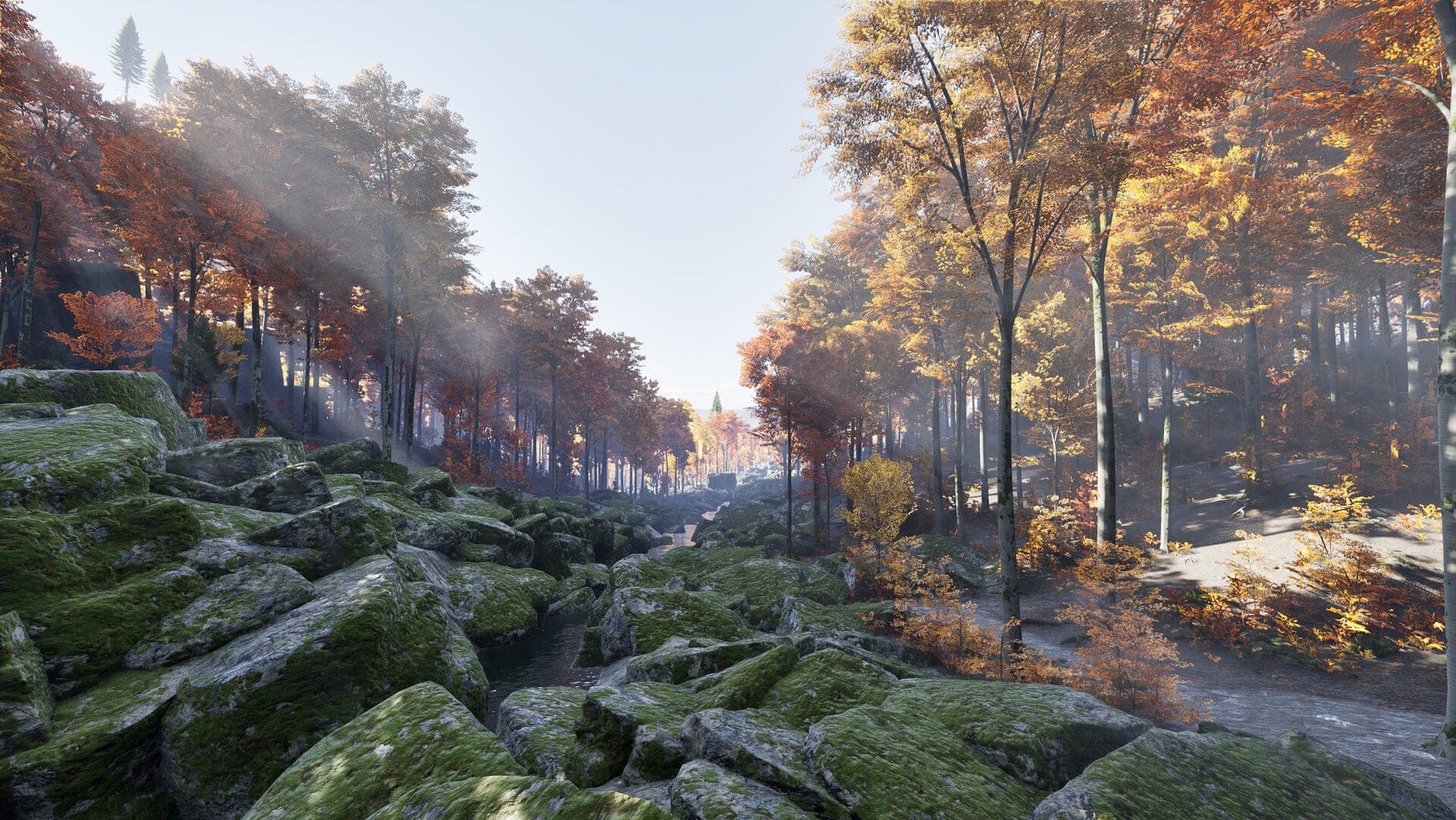
What Happened: Brendan Greene’s Funding Limit and the Studio Restructure Timeline
On a date that will likely become a case study in game industry finance, Brendan Greene announced that PlayerUnknown Productions had exhausted its self-funded runway and was forced into immediate restructuring. The studio, which Greene founded after selling PUBG to Krafton and establishing independence to pursue his own creative vision, revealed that personal capital had dried up — a stunning admission from a creator whose last major franchise generated over $1 billion in lifetime revenue. The announcement disclosed an estimated 50-100 layoffs across the studio’s approximately 150-person workforce, representing a 33-67% reduction in headcount. Greene did not announce a publisher acquisition, emergency funding round, or strategic partnership, leaving the studio’s operational status in critical condition.
The timeline is critical: PlayerUnknown Productions had been operating as an independent entity since Greene’s departure from Krafton in 2021, with the explicit mission to develop new IP outside the PUBG ecosystem. The studio had been publicly working on Project Artemis, an ambitious multiplayer title positioned as a competitor to games like Valorant and Overwatch 2, designed to compete in the live-service space without relying on the battle royale formula. Development costs for Project Artemis were estimated at $75 million to $120 million for a AAA-adjacent multiplayer game with planned ongoing content support across PC and console platforms — a figure that exceeded Greene’s sustainable burn rate. Industry analysis suggests the studio was operating at a monthly burn rate of approximately $2.5 million to $3 million, meaning a 3-year development cycle would require $90 million to $108 million in capital. The restructure announcement came without any indication of external investment, suggesting that Greene had been bankrolling the operation entirely through his PUBG earnings and had simply reached the limit of what one individual could sustain. No acquisition offer was announced, no publisher deal was disclosed, and no clear path forward was provided to affected staff or stakeholders.
What this means for players: Project Artemis, which was positioned to launch in late 2025 or early 2026 for PC and PlayStation 5, is now in existential limbo. Any game currently in development at PlayerUnknown Productions faces significant delays or potential permanent cancellation. The restructure signals that indie-scale funding is no longer sufficient for AAA-scope ambitions in the live-service era.
Why This Happened: The Strategic and Financial Miscalculations Behind the Crisis
Greene’s decision to leave Krafton and establish PlayerUnknown Productions was framed as a creative independence play — the narrative was that he wanted to build new experiences without the constraints of a publisher or parent company. That ambition was noble and resonated with the gaming community, but it was built on a dangerous financial assumption: that one person’s personal wealth, however substantial, could sustain a multi-year AAA game development cycle in 2024. The problem is mathematical and unforgiving. A studio of 150 people working on a live-service multiplayer game burns approximately $2.5 million to $3.5 million per month in salaries, infrastructure, tools, and middleware alone. Over a 3-to-4 year development cycle, that’s $90 million to $168 million in operating costs before a single player ever loads the game. Even for someone who made hundreds of millions from PUBG, that’s not infinite runway — and it’s certainly not enough if the project faces delays, scope creep, or market timing issues. Greene’s estimated remaining personal capital from PUBG sales was likely in the $300 million to $500 million range, but deploying that entirely to a single speculative game project would have been financially reckless from a wealth management perspective.
The strategic miscalculation was compounded by timing. Greene launched PlayerUnknown Productions during the post-pandemic period when the broader gaming industry was still riding high on venture capital enthusiasm and inflated valuations. By 2023-2024, the VC market for games had collapsed. Valuations compressed by 50% to 70%, and investor appetite for unproven new IP from indie studios evaporated. At the same time, live-service games became increasingly expensive to launch and maintain competitively. Titles like Concord (which cost Valve an estimated $200 million and failed spectacularly within two weeks of launch), Marvel Rivals, and Helldivers 2 reset market expectations for what a competitive multiplayer game requires in terms of launch quality, ongoing content velocity, and marketing spend. Greene’s Project Artemis, whatever its creative merit, was entering a market where $75 million budgets were considered underfunded and where indie studios had virtually no path to profitability in year one. The absence of publisher backing meant no safety net, no marketing co-investment (estimated at $30 million to $50 million for a new multiplayer IP), and no ability to weather a rough launch or pivot mid-development. When personal capital ran dry, there was no institutional investor to step in and bridge the gap.
What this means for players: The collapse of PlayerUnknown Productions proves that in 2024, you cannot build a competitive live-service game on indie funding alone. This will push more creators toward either publisher deals (trading independence for stability) or smaller-scope projects. Expect fewer ambitious multiplayer games from solo founders and more risk-averse greenlight decisions from publishers who now have even more leverage in negotiations with independent creators.
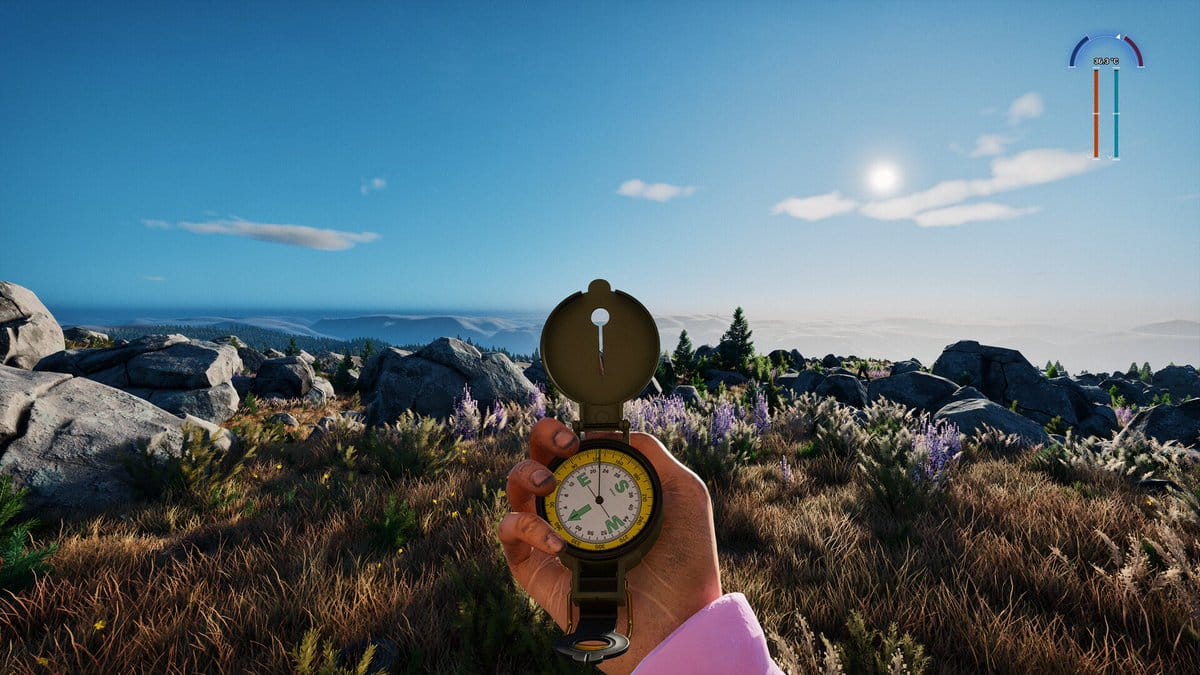
Who Wins and Who Loses: The Industry Power Shift This Signals
The PlayerUnknown Productions restructure is not an isolated crisis — it’s a data point in a much larger power consolidation within the gaming industry. The winners and losers here are not distributed equally, and the long-term implications are stark.
| Entity | Outcome | Reason |
|---|---|---|
| Major Publishers (Take-Two, EA, Ubisoft, Microsoft) | Win | Reinforces argument that self-funded studios cannot compete; increases leverage in negotiations with independent creators who now have no alternative to publisher backing. Microsoft and Sony gain additional justification for acquiring smaller studios rather than licensing or partnering with them. |
| Brendan Greene / PlayerUnknown Productions | Lose | Personal capital exhausted; creative independence compromised or eliminated; forced into restructuring with no clear recovery path unless acquisition occurs at a significant discount to pre-restructure valuation. |
| Indie Developers & Mid-Size Studios | Lose | Chilling effect on ambitious self-funded projects; investors become more risk-averse; market perception that indie studios cannot deliver AAA-scale live-service games hardens. Venture capital firms that were considering game studio investments will now redirect capital to other sectors. |
| Talented Game Dev Talent Pool | Mixed | Layoffs create available talent for competitors, but job insecurity increases; displaced workers may flee to publisher-backed studios or non-gaming sectors. Severance packages were not disclosed, suggesting minimal financial support for affected staff. |
| Krafton & PUBG Franchise | Unaffected | PUBG: Battlegrounds is owned and operated by Krafton, generating an estimated $500 million to $800 million annually in revenue. The franchise is entirely insulated from PlayerUnknown Productions’ collapse. Greene’s departure removes potential competitor but also removes the “creator’s legacy” narrative that could have enhanced the franchise’s cultural prestige. |
For Indie and Mid-Size Studios: The Consolidation Effect
The PlayerUnknown Productions crisis sends a clear message to any independent studio considering an ambitious live-service project: you need a publisher, or you need institutional capital from venture funds or private equity. Self-funding is no longer viable for AAA-scope games. This has immediate consequences. Studios that were in pre-production on multiplayer titles will face pressure to either scale down scope dramatically, pivot to smaller-scale projects, or seek publisher backing — which means surrendering creative control and accepting lower profit participation. Developers will increasingly demand equity stakes and revenue participation that publishers are less willing to provide, creating friction in negotiations.
The broader indie ecosystem will become more conservative. Investors who were on the fence about funding ambitious indie games will now point to PlayerUnknown Productions as evidence that the model doesn’t work. Valuations for indie studios will compress further — expect a 30-40% reduction in valuation multiples for new indie game studio funding rounds. And the talent market will fragment: experienced developers will gravitate toward publisher-backed studios for job security, while indie studios will struggle to hire senior talent. The net effect is a brain drain from independent studios to large publishers.
For Publishers and Platform Holders: Increased Leverage
Publishers emerge from this situation with significantly increased negotiating leverage. When Brendan Greene — arguably the most successful independent game creator of the last decade — cannot sustain a studio on personal funding, it validates the publisher safety-net argument. Any creator now pitching a live-service game to a publisher can be reminded that going independent is a path to financial ruin. This doesn’t result in a direct IP acquisition for any publisher (at least not yet), but it establishes a precedent: independent ambition without institutional backing is unsustainable. Microsoft, Sony, Take-Two, and EA can now point to PlayerUnknown Productions as a cautionary tale and use it as leverage in negotiations with creators and smaller studios. The threat is implicit: work with us, or run out of money. That’s a powerful negotiating position, and it will likely result in more favorable terms for publishers in future deals — higher ownership stakes, longer exclusivity windows, and lower royalty participation for creators.
What this means for players: The consolidation of power around major publishers means less creative diversity in big-budget games. Expect more sequels, fewer new IPs from independent voices, and more games designed by committee to appeal to the broadest possible audience. The era of the auteur-driven indie studio challenging the AAA establishment is functionally over. Games like Baldur’s Gate 3 (which succeeded despite publisher skepticism) will become rarer.
What This Means for Gamers: The Projects, the Promises, and What Survives
The immediate question for players is straightforward: what games am I losing? The answer is less clear than it should be, because Greene and PlayerUnknown Productions have been remarkably opaque about what was actually in development and at what stage. Project Artemis is the flagship title that’s now in jeopardy. From the limited information disclosed, Artemis was positioned as a competitive multiplayer experience — a competitor to games like Valorant, Overwatch 2, and Apex Legends, targeting PC and PlayStation 5. The project was understood to be in active development for at least 3-4 years, suggesting it was somewhere in mid-to-late production stages with an anticipated launch window of Q4 2025 or Q1 2026. However, “mid-to-late production” for a live-service game doesn’t mean “nearly finished.” It typically means core systems are in place, but content pipeline is ramping up, balance is still being tuned, and the game is likely still 12-24 months from a viable launch state. With the studio now in restructuring mode and 50-100 staff members laid off, that timeline becomes extremely uncertain.
The realistic scenarios are limited and none are particularly optimistic. Scenario one: PlayerUnknown Productions finds a publisher willing to inject capital and take over publishing and live-service operations. In this case, Project Artemis might still ship, but likely on a delayed timeline (2026 or 2027 instead of 2025) and potentially with scaled-back ambitions. Scenario two: A larger studio or platform holder (Microsoft, Sony, Valve, or a major publisher) acquires PlayerUnknown Productions’ remaining staff and IP. Artemis might be salvaged and integrated into the acquirer’s portfolio, or it might be cancelled and the team reassigned to existing projects. Scenario three: Project Artemis is quietly cancelled, and PlayerUnknown Productions either shuts down entirely or continues as a much smaller entity focused on maintenance or smaller projects. This scenario is increasingly likely given the lack of announced funding and the absence of a clear path forward. For players, scenario three means Artemis never launches, and whatever creative vision Greene had for it dies with the restructure.
The broader question is whether any new game from PlayerUnknown Productions reaches players in recognizable form. The answer is: probably not in the next 18-24 months, and quite possibly never. The studio’s restructure signals that it cannot sustain development of an AAA-scope live-service game. Even if it finds a publisher or acquirer, the game will be delayed, redesigned, and likely fundamentally altered from Greene’s original vision. Players should not expect Project Artemis to launch as promised. They should prepare for either a significant delay or outright cancellation.
What this means for players: If you were waiting for Project Artemis or any other PlayerUnknown Productions title, stop waiting. Redirect your anticipation toward games from publishers or studios with demonstrated financial stability. The promise of a Brendan Greene-led multiplayer revolution is effectively dead. Players on PC and PlayStation 5 who were expecting a new competitive multiplayer option in 2025 should look to titles like Valorant, Overwatch 2, and Counter-Strike 2 instead.
Market Context: Where This Fits in the 2024-2025 Indie Studio Collapse Wave
PlayerUnknown Productions did not collapse in a vacuum. The restructure is part of a devastating wave of studio closures, layoffs, and failed ventures that has characterized the gaming industry since late 2022. The scale is historic. According to Crunch Base and industry tracking, over 14,000 gaming industry jobs were lost in 2023 alone, with another 10,500 lost in the first half of 2024. This is not a correction — it’s a structural unwinding of an entire decade of venture capital excess and inflated valuations. The PlayerUnknown Productions situation mirrors and amplifies patterns seen across the industry: Telltale Games (2018) ran out of cash after massive investment in production quality and shut down with minimal warning before being revived under different ownership; Quantic Dream (2015) nearly collapsed due to poor game sales and was forced to seek publisher backing from Sony, severely compromising creative independence; and Embracer Group announced $900 million in write-downs in 2024 and fired 900+ employees, effectively admitting that its strategy of acquiring 100+ independent studios had failed catastrophically.
What distinguishes PlayerUnknown Productions is the scale of the creator involved and the speed of the collapse. Brendan Greene is not an unknown developer — he created a franchise that generated over $1 billion in revenue and fundamentally altered the gaming landscape. If he cannot sustain a studio on that legacy, what hope do lesser-known creators have? The answer is: virtually none. The indie funding ecosystem has effectively collapsed. Venture capital firms that were writing $20 million to $50 million checks to game studios in 2020-2021 have largely exited the space. Angel investors and family offices are more cautious. And the post-pandemic correction has eliminated the assumption that every game could be a breakout hit. In this environment, self-funded studios are not just at a disadvantage — they are functionally extinct for anything larger than small-scale indie projects.
The PlayerUnknown Productions restructure is also a referendum on the live-service model itself. For the past five years, the gaming industry has been obsessed with live-service games — games designed to generate recurring revenue through battle passes, cosmetics, and seasonal content. These games are expensive to build (often $75 million to $200 million), expensive to launch (marketing budgets of $30 million to $50 million), and expensive to maintain (ongoing content teams, balance patches, community management). The assumption was that live-service games were the future and that any studio capable of shipping one would be rewarded with years of profitability. That assumption has proven catastrophically wrong. Games like Concord (Valve’s estimated $200 million loss), Marvel’s Avengers (Square Enix write-off of $63 million), Redfall (Arkane Studios, Bethesda), and countless other live-service failures have demonstrated that the model is far riskier than the industry believed. PlayerUnknown Productions attempted to build a competitive live-service game on a self-funded budget that was likely insufficient even in 2020. By 2024, with market saturation, rising player expectations, and rising costs, it was a recipe for failure.
What this means for players: The age of ambitious indie live-service games is over. Expect the multiplayer market to be dominated even more heavily by Microsoft, Sony, Tencent, and other mega-publishers. Small studios will focus on single-player, co-op, or niche multiplayer experiences. The diversity of online gaming will contract, with fewer new competitive multiplayer franchises launching and more consolidation around existing hits like Valorant, Overwatch 2, and Apex Legends.
What to Watch: Key Signals in the Months Ahead
The PlayerUnknown Productions restructure is a story in motion, not a completed narrative. Several developments will signal whether this is a temporary setback or a permanent exit from the industry for Greene and his team. Watch for these key catalysts over the next 6-12 months:
Acquisition Announcements: The most likely outcome is that PlayerUnknown Productions (or its remaining assets and staff) will be acquired by a publisher or platform holder. Microsoft, Sony, Valve, or a major publisher like Take-Two or Ubisoft could see value in acquiring Greene’s team and the Artemis IP. If an acquisition is announced, it will signal that Project Artemis has a path to completion, though likely on a significantly delayed timeline. The acquirer’s track record will matter enormously — Microsoft and Sony have demonstrated willingness to invest in new IP and give acquired studios creative autonomy, while Take-Two and EA have histories of integrating acquired studios into existing franchises. Watch the acquirer’s statement carefully. If the acquirer emphasizes “integrating Artemis into our live-service portfolio,” expect the game to be fundamentally altered. If they emphasize “supporting Greene’s vision,” there’s a chance it survives relatively intact.
Quiet Cancellation of Project Artemis: If no acquisition is announced within 6-9 months, and if Greene does not secure external funding, Project Artemis is almost certainly cancelled. This will not be announced with fanfare — it will likely be a quiet statement that the project is “on hold indefinitely” or that the studio is “exploring strategic alternatives.” For players, this is the worst-case scenario: years of anticipation for nothing.
Brendan Greene’s Public Statements: Pay attention to what Greene says in interviews or social media. If he expresses optimism about finding a publisher or investor, that’s a positive signal. If his statements become increasingly vague or defensive, that’s a warning sign. If he pivots to a completely different project or scale, that’s an admission that the Artemis vision is dead.
Broader Indie Funding Announcements: The gaming industry’s recovery from the current downturn will be signaled by a resurgence in indie studio funding announcements. If new venture capital firms enter the space, if existing investors begin writing checks again, or if publishers announce new indie publishing labels, that will suggest the market is stabilizing. Conversely, if studio closures and layoffs continue to accelerate, that will confirm that the crisis is deeper and longer-lasting than currently assumed.
Competitor Live-Service Launches: Watch how games like upcoming titles from Bungie, new seasons of Valorant and Overwatch 2, and other live-service games perform. If these games struggle to retain players or fail to recoup their investments, it will further validate that the live-service market is oversaturated and that new entrants face an impossibly difficult climb. If they succeed spectacularly, it might attract new investors to the space and create an opening for PlayerUnknown Productions to find funding.
Editor’s Call: The PlayerUnknown Productions restructure is a permanent inflection point in gaming industry economics. The era of the self-funded, founder-led AAA studio is over. Within 12 months, expect either an acquisition announcement (most likely from Microsoft or Sony at a significantly reduced valuation) or a quiet cancellation of Project Artemis. Either way, the dream of Brendan Greene building the next generational multiplayer game as an independent creator is dead. For the gaming industry, this is a loss — it represents the consolidation of power around a smaller number of mega-publishers and the effective elimination of creative independence for ambitious, capital-intensive projects. For players, it means less diversity in big-budget games and more risk-averse greenlight decisions. The long-term consequence is an industry with fewer bold experiments and more safe, sequelized bets.
Frequently Asked Questions
Will the PlayerUnknown Productions restructure affect PUBG: Battlegrounds, which I already play?
No. PUBG: Battlegrounds is owned and operated by Krafton, not PlayerUnknown Productions. Brendan Greene left Krafton in 2021 to establish his independent studio, so the PUBG franchise is entirely unaffected by the restructure. Krafton continues to develop, publish, and monetize PUBG: Battlegrounds, generating an estimated $500 million to $800 million in annual revenue. The game will continue receiving updates and seasonal content as normal. Your gameplay experience and the game’s future roadmap are secure.
Is Brendan Greene’s studio likely to be acquired by a publisher or platform holder after this announcement?
Acquisition is the most likely outcome over the next 6-12 months, though not guaranteed. Microsoft, Sony, Valve, or a major publisher like Take-Two could see strategic value in acquiring Greene’s team and Project Artemis IP at a discounted valuation. However, the lack of an immediate acquisition announcement suggests that either Greene is negotiating terms with potential acquirers, or potential acquirers are hesitant about the financial runway, project viability, and cost of completing development. Watch for an acquisition announcement as a positive signal; if none comes within 9 months, assume Project Artemis is being cancelled quietly.
What happens to Project Artemis and other PlayerUnknown Productions games after this restructure?
Project Artemis is in existential jeopardy. In the best case, the studio finds a publisher willing to inject capital, and the game ships on a delayed timeline (2026 or 2027) with potentially reduced scope. In the most likely case, the game is quietly cancelled or indefinitely shelved. Any other games in development are even more at risk. Players should not expect to play any PlayerUnknown Productions title in the next 12-24 months, and should prepare for the possibility of permanent cancellation.