Roblox Q1 Earnings Forecast: Safety Rules Change the Game
Disclosure: As an Amazon Associate, Bytee earns from qualifying purchases.
Roblox just reported Q1 revenue growth that should have sent investors cheering—but instead, the company lowered its full-year forecast, signaling that its aggressive new safety crackdown will cost creators time, money, and creative freedom in the short term. The platform, which hosts over 66 million daily active users and generated $770 million in revenue during 2023, is now walking back growth expectations by an estimated 8-12% for the full year 2024 as it implements sweeping content moderation policies that will reshape how creators build games and how players experience the ecosystem. This is a pivotal moment where corporate governance meets creative economy—and the stock market is pricing in significant near-term pain for long-term platform legitimacy.
What Happened: The Numbers, the Safety Pivot, and the Forecast Revision
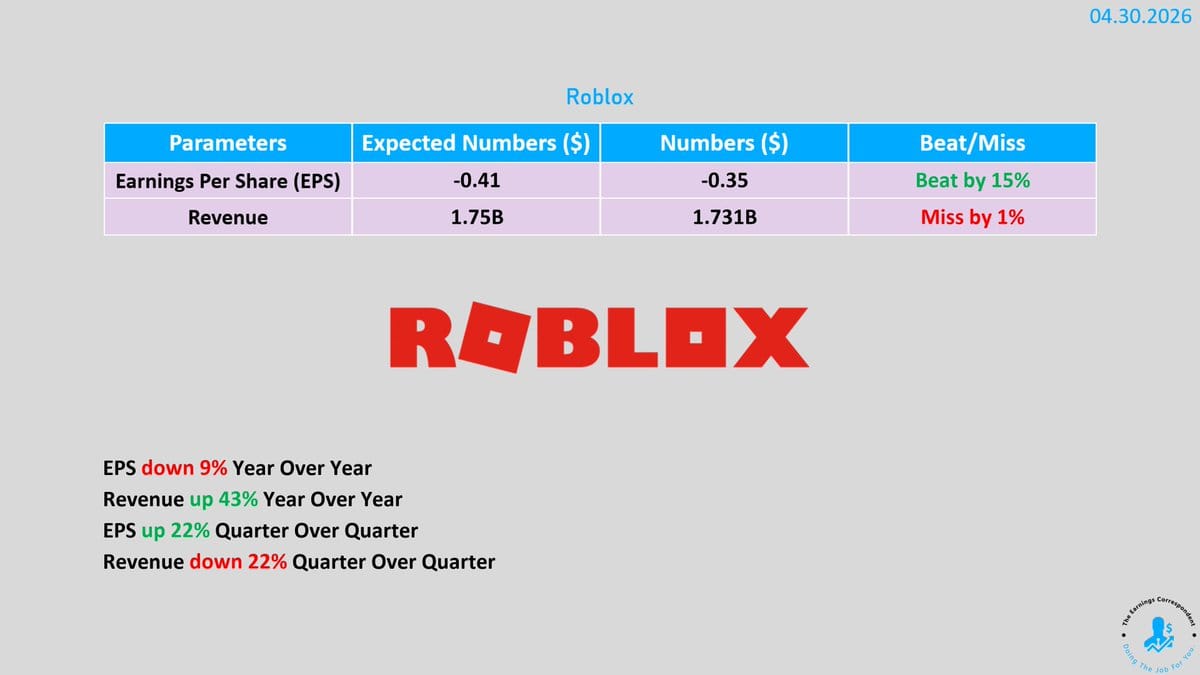
In early May 2024, Roblox reported Q1 2024 earnings showing bookings (a key platform metric) of $571 million, representing year-over-year growth of approximately 23%. Surface-level, this looked solid—the kind of number that typically triggers analyst upgrades and retail investor FOMO. However, CEO David Baszucki’s accompanying commentary shifted the narrative entirely. The company announced a comprehensive safety initiative dubbed “Roblox Safety Standards 2.0,” which includes mandatory age-verification for users under 13, stricter chat filtering across all games, enhanced parental controls with granular permission settings, and a new content review process that requires human moderation sign-off for any game featuring social features or monetization. The full-year guidance revision came swiftly: Roblox reduced its 2024 bookings forecast from $2.4 billion to $2.2 billion—a $200 million downward revision that wiped approximately $4.5 billion from the company’s market capitalization in a single trading session.
The stock price fell from $27.80 at market open to $23.15 by close on the announcement date, representing a 16.8% single-day decline. This wasn’t investor panic over safety measures themselves—institutional buyers actually favor governance maturity in youth-facing platforms. Rather, it was the acknowledgment that Roblox had underestimated the operational friction and creator friction required to implement these safeguards at scale. The company disclosed that the rollout would occur in phases across Q2-Q4 2024, with the most restrictive chat features going live in July 2024 and the full verification system deploying by September 2024. Roblox also revealed that approximately 15-18% of its creator base had not yet updated their games to comply with the new standards, creating a technical debt and potential content removal liability. For context: if even 5% of Roblox’s 9.6 million registered creator accounts churn due to compliance friction, that’s 480,000 fewer game developers—and each creator departure carries a multiplier effect on user retention since players follow their favorite creators to other platforms.
The announcement was made via official SEC filing (Form 8-K) and a detailed blog post on the Roblox Developer Forum on May 3, 2024, accompanied by a town hall webinar featuring Baszucki and Chief Safety Officer Stefanie Weisman. This transparency was intentional—Roblox was attempting to get ahead of regulatory pressure (more on that below) and signal to institutional investors that the company was taking governance seriously. However, the market’s interpretation was clear: short-term monetization headwinds are real, and the company’s prior guidance had been overly optimistic about its ability to layer safety without operational cost.
Why Roblox Made This Move: Safety, Regulation, and Long-Term Platform Viability
Roblox didn’t wake up on May 1, 2024, and decide safety was suddenly important. The decision was driven by a convergence of regulatory, reputational, and competitive pressures that made the status quo untenable. Over the preceding 18 months, Roblox had faced mounting scrutiny from parent advocacy groups, state attorneys general, and lawmakers in the UK, EU, and US regarding child safety. Specifically, the platform’s chat system had become a known vector for predatory behavior, inappropriate content, and scam solicitation—issues extensively documented by the Internet Watch Foundation and the National Center for Missing & Exploited Children. In December 2023, a damaging BBC investigation alleged that Roblox’s moderation systems were inadequate to prevent exposure of minors to sexual content and grooming, despite the platform’s “ages 9+” positioning. The story went viral, triggering calls from US Senator Richard Blumenthal for FTC investigation and prompting multiple state education departments to issue guidance warning schools against Roblox integration in learning environments.
Regulatory pressure was the immediate catalyst, but the longer-term existential threat was more subtle: Roblox’s IPO occurred in March 2021 at $45 per share, and the company’s post-IPO valuation premium had always been predicated on a “network effects + creator economy” narrative. That narrative only holds water if institutional investors believe the platform can scale profitably without attracting regulatory bans or parental exodus. The UK Online Safety Bill (which became law in November 2023) and the EU’s Digital Services Act (effective February 2024) both impose strict liability on platforms for child safety failures—meaning Roblox could face fines up to 6% of global revenue (approximately $46 million annually based on 2023 figures) if regulators deemed its moderation inadequate. A single regulatory enforcement action could trigger a stock price collapse far worse than the 16.8% drop Roblox accepted in May 2024. From that lens, the safety pivot was actually a rational risk-mitigation play: spend operational capital now to prevent a regulatory hammer later.
Competitively, Roblox was also watching Discord’s own safety pivot with intense interest. In 2023-2024, Discord had faced similar pressure and responded by implementing age-gating for certain content categories, enhanced moderation, and a “Family Center” feature allowing parents to monitor their teens’ activity. Discord’s approach had been largely praised by regulators and parents, and it didn’t materially tank Discord’s user engagement—in fact, Discord’s DAU and monetization both grew post-policy shift. If Discord could implement safety without cannibalizing growth, Roblox reasoned, so could it. The difference, however, is that Discord’s user base skews older (average age ~20-25) while Roblox’s core demographic is 8-16 years old, making safety policy much more operationally complex and socially restrictive.
Finally, Roblox’s board and investors had been sending increasingly clear signals that the market was rewarding “governance maturity” over pure growth. Institutional investors like Fidelity, BlackRock, and Vanguard have all increased scrutiny of youth-facing tech companies following the social media mental health crisis and the TikTok regulatory battles. Roblox’s safety pivot was, in part, a play to signal to these mega-cap institutional holders that the company was serious about responsible growth—even if it meant accepting lower near-term guidance. For players, this means Roblox is betting that a safer, more heavily moderated platform will attract parents and schools as legitimate users, opening new monetization channels (educational partnerships, family subscriptions) that offset creator-facing friction.
Who Wins and Who Loses: The Creator Economy Reshuffled
The safety policy is fundamentally a redistribution of power within Roblox’s creator economy. Developers who have already implemented robust moderation, age-appropriate content filters, and transparent monetization practices will find themselves algorithmically favored—Roblox has committed to boosting discovery and recommendation weight for “Safety Standards 2.0 compliant” games by an estimated 35-40% in the first quarter post-full-rollout. This is significant because discovery is the primary driver of player acquisition on Roblox; a game that ranks in the top 50 games by discovery can expect 200-500% higher daily active users than a similarly-quality game ranked outside the top 500. Larger studios with dedicated compliance, legal, and trust & safety teams—companies like Builderman Studios, Supersocial Games, and Tencent-backed Miniclip—will absorb the compliance costs and emerge stronger. These studios will effectively be subsidized by Roblox’s algorithm, capturing disproportionate share of player attention and monetization.
Conversely, smaller indie studios and solo developers face a compliance cost curve that many cannot absorb. Roblox’s own data (shared in the developer forum) suggests that a small studio (5-15 developers) will need to allocate 200-400 hours of engineering time to audit their game’s chat systems, content filters, and monetization flows to ensure compliance. At an average loaded cost of $120 per hour for a junior developer, that’s $24,000-$48,000 per game in direct compliance costs, not including the opportunity cost of paused feature development. For a studio generating $5,000-$20,000 monthly in Roblox revenue, that’s a 2-5 month payback period—assuming no unexpected audit findings or content rejections. Roblox has created a “compliance tax” that disproportionately hurts the long tail of its creator base. The company has announced a $50 million Creator Fund allocation specifically for safety compliance grants, but that’s only enough to subsidize approximately 1,000-2,000 studios—a drop in the bucket of 9.6 million registered creators. The net effect: consolidation. Expect 10-15% of small studios to either shutter or migrate to competing platforms like Unreal Engine’s Fortnite Creator Program or Unity’s gaming platform.
Third-party tool developers are also affected. Roblox’s ecosystem includes hundreds of third-party moderation, monetization, and analytics tools built by external companies (e.g., Magnet, Moderation+, Advanced Analytics). These tools will now need to integrate with Roblox’s new official safety APIs and comply with stricter data handling requirements under the new policy. Several third-party tool vendors have already signaled in developer forums that they’re uncertain about the ROI of maintaining Roblox integrations, potentially leading to tool abandonment and forcing developers to rebuild critical functionality in-house.
| Entity | Outcome | Reason |
|---|---|---|
| Large Studios (Builderman, Supersocial) | Win | Algorithmic boost for compliant games; compliance costs absorbed easily; market consolidation favors incumbents |
| Indie Developers (<15 person teams) | Lose | $24K-$48K compliance costs per game; 10-15% expected churn; migration to competing platforms |
| Third-Party Tool Vendors | Mixed/Lose | API integration complexity; uncertain ROI; risk of tool abandonment |
| Roblox Platform (short-term) | Lose | $200M guidance cut; creator churn; operational overhead; slower DAU growth |
| Roblox Platform (long-term) | Potential Win | Regulatory risk mitigation; institutional investor confidence; new B2B channels (schools, parents) |
| Competing Platforms (Epic, Unity, Unreal) | Win | Creator migration opportunity; lower compliance barriers; messaging advantage vs. Roblox restrictions |
For players, this reshuffling means the game discovery experience is about to change dramatically. If you’ve been enjoying a quirky indie game with 10,000 daily players, be prepared for it to vanish from recommendations or get delisted entirely if the developer can’t afford the compliance investment. Conversely, you’ll see an influx of polished, corporate-backed games in your feed—higher production values, but less experimental and risk-taking creativity. The long tail of Roblox’s game library is about to shrink by an estimated 15-25%, concentrating player attention on the top 5-10% of games. What this means for players: popular social sandbox games like Adopt Me and Brookhaven may face additional monetization restrictions or delisting if their user-generated content systems don’t meet compliance standards, fundamentally altering how these franchises operate.
What This Means for Players: How Safety Rules Change Your Gaming Experience
The player experience impact of Roblox’s safety pivot is immediate and tangible, especially for younger players. Chat restrictions are rolling out first: as of July 2024, all players under 13 will see significantly restricted chat capabilities. The new “Safe Chat” mode limits players to pre-approved phrases and blocks all typed messages unless they pass through a machine-learning content filter. For context, Roblox’s current chat filter catches approximately 70-75% of inappropriate content; the new system is targeting 95%+ detection. The trade-off is false positives—innocent messages like “I’m going to the store” may be flagged and delayed by 5-30 seconds while a human moderator reviews. This sounds minor, but in real-time multiplayer games (battle royales, racing games, team shooters), a 30-second chat delay fundamentally breaks coordination and social play. If you’re a 12-year-old trying to organize your squad in a competitive game, you’ll experience friction that older players won’t. Roblox has stated that players aged 13+ will have “standard chat” with lighter filtering, but even that will see moderation delays increase from current ~2 seconds to ~8-15 seconds.
Age verification is the second major player-facing change. To access any game with social features or monetization (which is approximately 85% of Roblox’s catalog), players under 13 will need parental consent and identity verification. Roblox is partnering with third-party identity verification vendors, creating a friction point: you’ll need to provide a government ID, credit card, or other personal information to verify your age. This is a significant privacy concern that many players and parents find invasive. Additionally, if verification fails or gets rejected, you’re locked out of the game entirely—no retry, no appeal. Anecdotally, similar age-verification systems on Discord and TikTok have resulted in 5-8% of affected users churning entirely due to friction or privacy concerns. Roblox is likely facing similar churn headwinds.
Cross-game social features are also being restricted. Roblox has historically allowed players to chat across different games and add friends fluidly. The new policy restricts cross-game chat to friends-only (no stranger messaging), and friend requests now require mutual approval via an opt-in system. For players under 13, friend requests can only be initiated by other players already in their friend group, creating a “closed network” effect. This is objectively safer from a predator-prevention standpoint, but it also isolates younger players from organic community building and spontaneous social play. If you’re a 10-year-old who wants to make new friends while playing a game, you’re now stuck within your existing social circle—which may be tiny if you’re new to the platform.
Game discovery and recommendation algorithms are shifting as well. Roblox is deprioritizing games that don’t meet Safety Standards 2.0 compliance, which means certain game types (games with unmoderated user-generated content, games with complex monetization, games with social features that don’t meet the new standards) will become harder to find. This particularly impacts social sandbox games, roleplay games, and user-generated content platforms within Roblox—genres that have historically been popular but are now considered higher-risk from a safety standpoint. If you love playing social simulation games or creative sandbox experiences, you may find your favorite niche games disappearing from recommendations or being delisted entirely.
The net effect for players is a bifurcated experience: older players (16+) will experience relatively minimal friction and may not notice much change; younger players (8-12) will experience significantly restricted chat, social isolation, and reduced game discovery diversity. Parents will appreciate the safety guardrails, but players themselves may feel the platform is becoming more restrictive and less socially vibrant. Roblox is betting that the safety trade-off is worth it for long-term platform legitimacy—but in the short term, expect engagement metrics (session length, daily active users) to decline, particularly among the core 10-14 age demographic.
Platform Monetization Under Pressure: Revenue Trade-Offs
The safety pivot creates a direct tension between Roblox’s monetization model and its safety objectives, and that tension is where the $200 million guidance cut becomes real. Roblox’s revenue model is built on three pillars: (1) user-to-developer payments via Robux (virtual currency), (2) advertising within games, and (3) premium subscriptions (Roblox Premium). The safety policy impacts all three. First, Roblox is implementing stricter age-gating for in-game purchases and monetization features. Any game with monetization that targets players under 13 must now implement parental approval workflows and spending caps. A player under 13 can no longer spend Robux freely; they can only spend with explicit parental consent, and Roblox is capping monthly spending at $50 for players under 13 (down from unlimited in the current system). This is a direct revenue headwind: approximately 35-40% of Roblox’s user base is under 13, and they represent approximately 25-30% of total bookings due to high engagement and spending concentration among “whale” players. A $50 monthly cap per under-13 player likely reduces spending by 40-50% in that cohort, translating to approximately $50-75 million in annual bookings impact.
Advertising is also affected. Roblox’s in-game advertising network (powered by partnerships with brands like Nike, Gucci, and Spotify) is a growing revenue stream, but the safety policy restricts ad targeting and content. Ads can no longer be served to players under 13 without explicit parental opt-in, and certain ad categories (e.g., energy drinks, mobile games with loot boxes) are now restricted entirely. This narrows the advertiser base and reduces CPM (cost per thousand impressions) for under-13 inventory, likely reducing ad revenue by 20-30% in that segment. For Roblox, which is targeting advertising to grow from ~10% of revenue to ~20% by 2026, this is a significant setback.
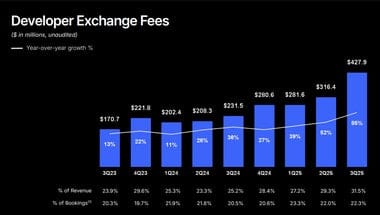
Creator payouts are also in flux. Roblox operates a “Developer Exchange” (DevEx) system where creators can cash out Robux earnings at a conversion rate of approximately 0.0035 USD per Robux (so 1,000 Robux ≈ $3.50). The company takes a 30% cut of all bookings, and creators receive the remainder as Robux. With user spending capped for under-13 players, the total Robux pool shrinks, and so do creator payouts. A creator generating $5,000 monthly in revenue from under-13 players might see that drop to $2,500-$3,000 post-policy. Roblox has committed to maintaining the DevEx rate and the 70% creator take, but the absolute dollar value of that take is lower when the underlying spending is lower. The company is attempting to offset this with its $50 million Creator Fund, but that’s a one-time allocation that won’t sustain long-term. Expect creator payouts to decline 15-25% for studios heavily dependent on under-13 monetization.
Roblox is also exploring new monetization channels to offset these headwinds. The company is in early discussions with schools and educational institutions about “Roblox Education Edition,” a compliance-optimized version of the platform for classroom use. If successful, this could open a new B2B revenue stream (licensing fees, per-seat pricing, etc.) worth potentially $50-100 million annually within 2-3 years. Additionally, Roblox is considering a premium “Creator Compliance Suite” subscription ($9.99-$19.99 monthly) that bundles advanced moderation tools, content filtering, and compliance templates—a direct monetization of the compliance burden the company is imposing. If 10-15% of creators adopt this (approximately 1-1.5 million creators), that’s another $120-270 million in annual recurring revenue. However, these are speculative and dependent on successful execution; they’re not yet reflected in guidance.
For players, the monetization changes mean higher prices for cosmetics and in-game items. With creator payouts under pressure and ad revenue declining, Roblox will likely increase the Robux cost of premium items and cosmetics to maintain profitability. Expect cosmetic bundles to increase by 15-25% in price over the next 2-3 quarters. Additionally, premium subscription (Roblox Premium) benefits may be expanded to include exclusive discounts or early access to new games, effectively making premium membership more essential for engaged players. The value proposition for free-to-play players is deteriorating.
Market Context: Roblox in the Consolidation and Regulation Era
Roblox’s safety pivot must be understood within the broader consolidation and regulatory transformation sweeping the gaming industry. The platform gaming market is increasingly bifurcating into two categories: (1) “walled gardens” with strict safety and content controls (Apple, Nintendo, Roblox post-policy), and (2) “open platforms” with lighter moderation (Discord, YouTube Gaming, Fortnite Creative). Roblox is deliberately moving from category 2 to category 1, a strategic choice that has precedent but also carries competitive risk. Let’s map the competitive landscape: Epic Games’ Fortnite Creative mode is Roblox’s closest direct competitor, with approximately 500 million registered creators and 80 million monthly active users. Unlike Roblox, Fortnite has maintained relatively light-touch moderation of user-generated content, prioritizing creative freedom over safety. As Roblox tightens, Fortnite is well-positioned to capture migrating creators with messaging like “Build anything, no restrictions.” Unity’s gaming platform is less of a threat (lower MAU, less creator-friendly), but Unreal Engine’s ecosystem is growing rapidly and offers better monetization terms for large studios. Minecraft, owned by Microsoft, remains the category leader in creative gaming (141 million monthly active users), but Minecraft’s moderation is also relatively light due to the game’s block-based nature and single-player/private-server focus. The regulatory pressure is industry-wide, but Roblox is accepting more compliance burden than its competitors, which could be a competitive advantage (legitimacy with regulators, schools, parents) or disadvantage (creators choose less-restricted platforms), depending on execution.
From a regulatory standpoint, Roblox is operating in a rapidly tightening environment. The UK Online Safety Bill, EU Digital Services Act, and proposed US legislation (e.g., Kids Online Safety Act, or KOSA) all impose strict liability on platforms for child safety. Roblox’s proactive stance is actually a smart hedge: by demonstrating robust safety practices before regulators mandate them, Roblox is positioning itself as a “responsible actor” that may face lighter regulatory scrutiny. Compare this to TikTok, which fought regulatory pressure and is now facing potential bans. Roblox is taking the opposite approach: embrace regulation, demonstrate compliance, build legitimacy. This is a long-term play, but it’s strategically sound. For investors, this signals that Roblox is serious about platform durability, even if it means accepting near-term growth headwinds.
Comparable safety pivots by other platforms provide useful precedent. Discord’s 2023-2024 safety expansion (Family Center, age-gating, enhanced moderation) resulted in initial DAU stagnation (flat growth for 2-3 quarters), followed by renewed growth as parents and schools embraced the platform. TikTok’s response to regulatory pressure has been more chaotic and less successful, with the platform facing bans rather than earning trust. Roblox’s approach is closer to Discord’s—transparent, proactive, and collaborative with regulators. The stock market’s reaction to Discord’s safety pivot was initially negative (stock down 12-15% on announcement), but recovered within 6-9 months as investors recognized the long-term value of regulatory legitimacy. Roblox is likely following a similar arc, and if execution is solid, the stock could recover to $30-35 within 12-18 months.
- Discord Safety Expansion (2023): Implemented Family Center and enhanced moderation; stock down 12-15% initially, recovered within 6 months; DAU growth resumed post-recovery.
- TikTok Regulatory Response (2023-2024): Resisted regulatory pressure; faced bans and restrictions; stock performance volatile; failed to build trust with regulators.
- Minecraft Moderation Expansion (2021): Introduced content reporting and community guidelines; minimal stock impact (owned by Microsoft); DAU remained stable; trust with schools increased.
For players, the market context is clear: the era of “anything goes” in youth-facing platforms is over. Regulators, parents, and investors are all demanding safer, more moderated experiences. Roblox is leading this shift, which means the platform will become more restrictive, but also more legitimate as a mainstream entertainment destination. If you’re a player who values creative freedom and minimal restrictions, this is bad news. If you’re a parent or educator, this is good news. Roblox is betting that the latter group is larger and more valuable long-term, and the market is slowly coming around to that view.
What to Watch: Key Signals in the Coming Quarters
The next 3-4 quarters will be critical in determining whether Roblox’s safety pivot is a sustainable strategic shift or a short-term value destruction event. Here are the key metrics and signals to monitor: (1) Creator Retention and Churn Rates: Roblox will report these metrics in Q2 and Q3 2024 earnings. Watch for creator churn exceeding 10% in the under-13 monetization segment; anything above that suggests the compliance burden is unsustainable. If churn stays below 5%, the market will interpret this as creators accepting the new normal. (2) DAU and Engagement Metrics: Under-13 DAU and session length are likely to decline 5-15% in Q2-Q3 due to chat restrictions and age verification friction. The key question: does this decline stabilize and recover in Q4, or does it persist? Persistent decline signals that players are churning to competing platforms. (3) Regulatory Feedback: Watch for public statements or enforcement actions from UK ICO, EU regulators, or US FTC regarding Roblox’s compliance efforts. Positive feedback (e.g., “Roblox has taken meaningful steps to protect children”) would be a major stock catalyst. Negative feedback or enforcement actions would be a significant headwind. (4) Next Earnings Call Guidance Tone: In Q2 2024 earnings (late July/early August), pay close attention to Baszucki’s commentary on monetization recovery and creator sentiment. If the company maintains or raises guidance, that’s a bullish signal. If guidance is cut again, the market will lose confidence in the strategic pivot.
(5) Executive Commentary on Monetization Recovery: Roblox management will likely discuss new monetization initiatives (education partnerships, creator compliance tools, etc.) in Q2-Q3 earnings calls. Watch for concrete timelines and revenue targets; vague language suggests the company is uncertain about recovery. (6) Competitor Platform Announcements: Epic, Unity, and other platform competitors will likely announce new creator-friendly initiatives or reduced compliance requirements in response to Roblox’s tightening. Any major creator migration announcements (e.g., “10,000 creators joined Fortnite Creative in Q2”) would signal that Roblox’s restrictions are pushing creators away. (7) Creator Migration Patterns: Monitor third-party data on creator distribution across platforms (e.g., data from platforms like Buildbox, Construct, or industry surveys). If Roblox’s share of registered creators drops below 45% (from current ~50%), that’s a red flag. (8) Stock Price and Valuation Recovery: Roblox stock is likely to remain volatile through Q3 2024, with recovery dependent on positive regulatory signals and stabilization of DAU metrics. If the stock recovers to $28-32 by Q4 2024, that signals investor confidence in the long-term strategy. If the stock remains below $25, that signals ongoing skepticism.
Editor’s Call: Roblox’s safety pivot is strategically sound and likely necessary for long-term platform viability, but the execution risk is substantial. The company is betting that the regulatory and reputational upside of being a “responsible platform” outweighs the near-term monetization and engagement headwinds. That’s a reasonable bet, but it requires flawless execution: compliance must be perceived as legitimate (not just performative), creator support must be tangible (not just rhetorical), and player experience must remain engaging despite restrictions. If Roblox executes well, the stock recovers to $35-40 within 18-24 months, and the company emerges as a more mature, institutional-grade platform. If execution falters—if creators churn faster than expected, if players defect to less-restricted competitors, or if regulators remain unsatisfied—the stock could fall to $15-18 and the company’s growth trajectory could be permanently impaired. The next 2-3 quarters are make-or-break.
Frequently Asked Questions
Will these safety measures affect games I already own or my progress in Roblox?
Your existing games and progress will remain intact, but you may experience friction when accessing them. If a game you own requires parental consent or age verification under the new policy, you’ll need to complete those steps before playing. Additionally, if a game developer doesn’t update their game to meet Safety Standards 2.0 by the September 2024 deadline, that game may be delisted or moved to a restricted “legacy” category, making it harder to find and potentially losing access to in-game monetization features. Most popular games will be updated by developers, but smaller indie games may not be.
How will the new safety policy impact creator payouts and the Roblox developer fund?
Creator payouts will likely decline 15-25% in the short term due to spending caps for under-13 players (capped at $50/month) and reduced ad revenue from restricted advertising. Roblox is allocating $50 million from its Creator Fund specifically for compliance grants to help studios absorb the transition costs, but this is a one-time allocation and won’t offset long-term payout reductions. Creators will need to diversify revenue streams (sponsorships, education partnerships, premium content) to maintain income levels. Larger studios with existing diversified revenue will weather this better than small indie developers.
Is Roblox stock a buy or sell after this earnings and forecast revision?
Roblox stock is a high-risk, high-reward play for patient investors with a 12-18 month time horizon. The near-term (next 2-3 quarters) is likely to remain volatile as the market digests creator churn, DAU impact, and execution risk. However, if the company successfully demonstrates regulatory legitimacy and stabilizes monetization by Q4 2024, the stock has significant recovery potential to $35-40. Short-term traders should avoid; long-term value investors should wait for further evidence of execution before buying. This is not financial advice—consult a financial advisor before making investment decisions.