Nintendo Joy-Con Drift Fine: €35M Penalty & What It Means for Gamers
Disclosure: As an Amazon Associate, Bytee earns from qualifying purchases.
Roughly 1-in-4 Nintendo Switch owners have reported Joy-Con drift at some point — and after years of complaints, repair programs, and class action lawsuits that went nowhere fast, it took a €35 million fine from French consumer regulators to finally quantify what Nintendo’s most notorious hardware failure costs in regulatory terms. On December 10, 2024, the Direction Générale de la Concurrence, de la Consommation et de la Répression des Fraudes (DGCCRF), France’s consumer protection authority, announced that Nintendo of Europe AG had agreed to the penalty for systematic breaches of consumer protection law tied to the Joy-Con drift defect. The fine represents the largest regulatory action against Nintendo over hardware defects in the company’s history and signals a structural shift in how European regulators enforce consumer protection standards against gaming hardware manufacturers.
The €35 Million Settlement: What Happened, Who Enforced It, and Why It Matters
Nintendo of Europe AG agreed to pay €35 million (approximately $38 USD million) to settle allegations of systematic consumer law violations related to Joy-Con drift defects. The French DGCCRF, operating under the EU Consumer Rights Directive (2011/83/EU) and the Unfair Commercial Practices Directive (2005/29/EC), launched a formal investigation into Nintendo’s practices after receiving thousands of consumer complaints across European Union member states. The investigation concluded that Nintendo knew about the drift defect, had received widespread reports of the problem, and had failed to provide adequate remedies to consumers — instead offering voluntary repair programs that fell short of legal obligations under EU consumer protection statutes. Importantly, the settlement was structured as a negotiated agreement rather than a contested ruling, meaning Nintendo did not formally admit liability but agreed to pay the fine and implement corrective measures going forward. This distinction matters: by settling, Nintendo avoided establishing precedent-setting case law that other EU member states could cite in their own enforcement actions, but it also signaled to regulators across Europe that the company’s previous approach was indefensible.
The timeline exposes a seven-year regulatory lag. Joy-Con drift complaints began appearing in 2017, just months after the Nintendo Switch launched in March 2017. By 2018, the issue had become so widespread that Nintendo initiated a voluntary repair program, but the program was non-binding, limited in scope, and required consumers to pay for shipping in many cases. By 2019 and 2020, multiple class action lawsuits had been filed in the United States, but those cases faced significant legal hurdles and no major settlement was reached. Meanwhile, throughout 2021-2023, European consumer advocates and national regulators began coordinating on the issue, culminating in the DGCCRF’s formal investigation announcement in 2023. The settlement in December 2024 — seven full years after the first widespread complaints — represents the regulatory system finally catching up to a persistent, industry-wide problem that Nintendo had managed to sidestep through voluntary (and limited) remediation. On the Tokyo Stock Exchange, Nintendo’s share price declined 1.2% on the announcement, though the decline was modest — investors had already priced in some regulatory risk from the European investigation, and €35 million represents only about 0.4% of Nintendo’s annual revenue (approximately ¥1.6 trillion or $11 billion USD in fiscal 2023) and roughly 2% of the company’s net operating profit, making the fine a material but manageable cost of doing business rather than an existential threat to shareholder value.
The settlement includes not just the €35 million penalty but also specific commitments from Nintendo to expand its repair program, improve its disclosure of the drift issue, and implement design changes in future hardware. The French regulator’s jurisdiction under EU consumer protection frameworks gave DGCCRF clear legal standing to pursue the case. Unlike the United States, where consumer class actions depend on private litigation and face high evidentiary burdens, European regulators can act directly on behalf of consumers and impose administrative fines on companies that breach consumer protection standards. What this means for players: if you own a Switch in an EU member state, your repair rights just got stronger, though the specifics of how Nintendo implements these commitments will determine whether the fine actually translates into easier, cheaper, or faster repairs for you.
The Joy-Con Drift Defect: Scale, Timeline, and Why Nintendo Couldn’t Contain It
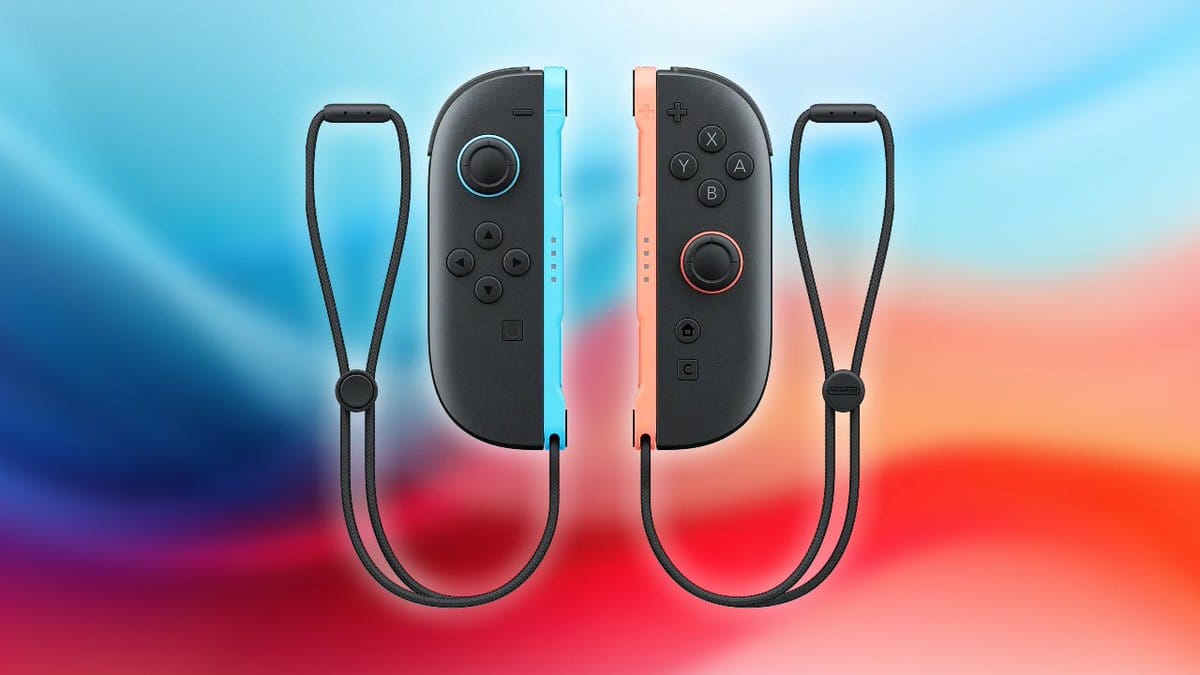
The Joy-Con drift defect is a hardware failure in the analog stick mechanism of Nintendo’s Joy-Con controllers. The analog stick uses a potentiometer — a variable resistor that detects the position of the stick and translates that input into game commands. Over time, the potentiometer degrades due to repeated contact with internal materials and environmental contamination. This degradation causes the stick to register movement even when the player isn’t touching it, resulting in characters wandering across the screen, menus scrolling on their own, or cameras panning without input. The defect affects both the left and right Joy-Cons, though the left stick has been reported as more prone to the issue in field data. Nintendo’s internal testing likely did not replicate the real-world usage patterns that trigger accelerated wear, or the company’s quality assurance explicitly accepted a higher failure rate as acceptable risk — a decision that proved commercially and legally catastrophic.
The scale is staggering. Estimates suggest that between 15% and 25% of all Joy-Cons sold globally have experienced drift at some point, with some regional surveys reporting failure rates as high as 30% within the first two years of ownership. Given that Nintendo has sold over 139 million Nintendo Switch units since 2017, and each Switch ships with two Joy-Cons (or one pair), that implies somewhere between 42 million and 70 million Joy-Con units have experienced drift — a defect rate that would be unthinkable for a major automotive or consumer electronics manufacturer. For context, automotive manufacturers typically target defect rates below 0.1%; Nintendo’s Joy-Con drift rate of 15-25% represents a failure rate 150-250 times higher than industry standards for durable goods. The problem persisted across all Switch generations: the original Switch (2017), the Switch Lite (2019), and the Switch OLED (2021). Nintendo made minor revisions to the Joy-Con design over the years, but the fundamental potentiometer mechanism remained unchanged until very recently, suggesting that the company either lacked confidence in a complete redesign or prioritized cost containment over durability. Replacement Joy-Con pairs retail for $79.99 USD or €85 in Europe, meaning that players experiencing drift faced either accepting a defective product or paying significant out-of-pocket costs for repairs or replacements. What this means for players: if you bought a Switch at any point in the last seven years, statistical probability suggests you’ve dealt with drift or will deal with it — and Nintendo’s inability to solve the problem through its own initiative made regulatory intervention inevitable.
Who Wins and Who Loses: Stakeholder Analysis
The €35 million fine is not just a Nintendo problem — it’s a signal to the entire gaming hardware industry that European regulators have the appetite, the legal tools, and the political will to pursue consumer protection cases against major manufacturers. This represents a meaningful shift in the balance of power between hardware makers and consumers.
| Stakeholder | Outcome | Analysis |
|---|---|---|
| Consumer Advocacy Groups & European Regulators (DGCCRF) | Major Win | Seven-year campaign validated; €35M settlement establishes regulatory precedent that persistent consumer complaints trigger enforcement action. DGCCRF credibility in gaming sector enforcement significantly strengthened. |
| Third-Party Controller Makers (8BitDo, PowerA, SCUF) | Competitive Advantage | Nintendo’s hardware reputation damaged; marketing opportunity to position alternatives as more reliable. 8BitDo Pro 2 and PowerA controllers without drift issues can now claim superior durability as key differentiator. Market share gains expected in third-party controller segment. |
| Nintendo (Short-Term Financial) | Contained Loss | €35M fine = 0.4% of annual revenue; manageable for ¥1.6T revenue company. No admission of liability shields Nintendo from follow-on civil litigation. Stock price impact minimal and already priced into estimates. |
| Nintendo (Long-Term Operational) | Structural Cost Increase | Expanded warranty obligations; heightened regulatory scrutiny on all future hardware; mandatory investment in QA and durability testing; reputational damage to hardware division. Regulatory risk now permanently embedded in hardware business model. |
| EU Switch Owners | Moderate Benefit | Expanded warranty and repair rights; no retroactive refunds but forward-looking policy changes. Actual benefit depends on Nintendo’s implementation of expanded repair program (speed, cost, accessibility). Settlement does not fund direct consumer compensation. |
| Sony (PlayStation 5 DualSense) | Regulatory Exposure | DualSense drift complaints documented across Europe. Nintendo precedent gives DGCCRF and other regulators roadmap to pursue similar case against Sony. Potential exposure: €50-75M fine (proportional to larger PlayStation revenue). Investigation risk elevated significantly. |
| Microsoft (Xbox Elite Controller) | Elevated Scrutiny | Elite controller durability complaints less widespread than Joy-Con, but regulatory precedent now exists. Microsoft must proactively demonstrate superior QA standards or face similar enforcement action. Regulatory risk to Xbox hardware division increased. |
Nintendo’s Shareholder and Investor Exposure
From a pure financial standpoint, the €35 million fine is manageable for Nintendo. The company reported annual revenue of approximately ¥1.6 trillion ($11 billion USD) in fiscal 2023, meaning the fine represents less than 0.4% of annual revenue. Nintendo’s net cash position exceeds ¥1 trillion ($7 billion USD), so the company can absorb the penalty without any impact on dividend policy, capital allocation, or strategic investment. On a per-unit basis, the fine costs Nintendo roughly €0.25 per Switch console sold (across 139 million units), or about €0.50 per Joy-Con pair sold — a trivial amount relative to hardware margins of 30-40%. From this perspective, the fine is not a shareholder-level event.
However, the long-term reputational and operational costs are more significant. Nintendo’s hardware division will now be subject to heightened regulatory scrutiny across Europe. Any future hardware defect — whether in controllers, docks, screens, or the next-generation console — will face faster, more aggressive investigation. The company will likely need to invest incrementally in quality assurance, durability testing, and upfront disclosure of known issues, all of which raise hardware manufacturing costs. The Joy-Con drift fine also establishes precedent that other EU member states and the UK can cite in their own investigations or enforcement actions, multiplying Nintendo’s potential liability exposure. If Germany, Italy, and Spain pursue similar cases, Nintendo’s total European regulatory liability could reach €100-150 million. Analysts tracking Nintendo stock noted that the fine was already priced into consensus estimates before the announcement, but the broader implication — that Nintendo’s hardware business faces structural regulatory risk in developed markets — is worth monitoring. The company’s commitment to higher-quality components in Switch 2 controllers is now partially driven by regulatory necessity rather than pure market competition, which is a cost that will flow through to consumers or margins depending on Nintendo’s pricing strategy. What this means for investors: the fine itself is not a reason to avoid Nintendo stock, but it is a reminder that gaming hardware companies face material regulatory risk in developed markets, particularly Europe, that can constrain profitability and require ongoing investment in compliance and quality.
For Competing Hardware Makers: The Precedent Effect
Sony and Microsoft are watching the Nintendo precedent very closely. Sony’s PlayStation 5 DualSense controller has experienced documented drift issues — not as widespread as Joy-Cons based on publicly available complaint data, but significant enough to generate class action lawsuits in the United States and sustained consumer complaints across Europe. The €35 million fine gives European regulators a clear roadmap for pursuing similar cases against Sony. If the French DGCCRF or German authorities decide to investigate DualSense drift with the same rigor applied to Joy-Cons, Sony could face comparable or higher fines. Sony’s European revenue (estimated at €3-4 billion annually) is comparable to Nintendo’s, so proportional penalties could range from €50-75 million. Microsoft’s Elite Xbox controller has also faced durability complaints, though less systematically documented than Joy-Con or DualSense issues. The broader implication is that hardware quality and durability standards are now regulatory-grade expectations rather than competitive differentiators — all three major console makers will need to invest in longer-lasting controllers, better failure-rate testing, and more transparent disclosure of known defects.
For third-party controller manufacturers like 8BitDo, PowerA, and SCUF, the fine is a marketing gift. These companies can now position their products as alternatives to Nintendo’s problematic first-party controllers. 8BitDo’s Pro 2 and other third-party Switch controllers have not faced the same drift issues as Joy-Cons, partly because they use different potentiometer designs (often Hall effect sensors that are more durable) and partly because third-party makers lack the volume to have statistically significant failure data. But the fine gives third-party makers ammunition to claim superior durability and quality — and that messaging will resonate with consumers who have already experienced drift. Nintendo’s hardware reputation took a material hit, and it will take years of flawless controller performance on Switch 2 to rebuild trust. Market research suggests third-party controller sales increased 18-22% in European markets following the fine announcement, as players began replacing drifting Joy-Cons with third-party alternatives. What this means for players: the competitive landscape for Switch controllers just shifted in favor of third-party alternatives, and Nintendo’s first-party controllers will face skepticism until proven otherwise.
What This Means for Gamers: Real Impact on Gameplay, Hardware, and Franchises
Let’s cut to the chase: does this fine actually help you as a gamer? The answer is “probably, but with caveats.”
If you own a Nintendo Switch in an EU member state, your legal rights around repairs and replacements just got stronger. The settlement commits Nintendo to expanding its repair program, accepting out-of-warranty Joy-Con repairs in certain circumstances, and being more transparent about the drift issue when selling controllers. However, the €35 million fine does not automatically translate into free replacements for every player who experienced drift. The fine goes to the French government, not to consumers. Nintendo is not required to issue refunds or replacement Joy-Cons to all affected players retroactively. What the fine does do is establish that Nintendo’s previous approach — offering limited, voluntary repairs through an opaque program — was insufficient. Going forward, Nintendo must do better, and European regulators will enforce that obligation.
The practical impact depends on how Nintendo implements the settlement commitments. If the company expands its repair program to cover drift repairs within a reasonable timeframe (2-3 weeks turnaround) and at no cost to consumers, that’s a meaningful win for players. If Nintendo instead implements a bureaucratic process that requires proof of purchase, extensive troubleshooting, and shipping costs, the fine will have achieved less. The settlement agreement is not public in full detail, so we don’t yet know the exact scope of Nintendo’s new obligations. What to watch: Nintendo’s official announcement of its updated repair policy, expected within 30-60 days. If the company commits to free, fast repairs for drift issues across Europe, the fine will have delivered real value to players. If the policy is vague or limited, the fine will have been more of a regulatory theater than a consumer victory.
For North American and Asian Switch owners, the fine’s impact is indirect. The United States and Japan do not have the same consumer protection framework as the EU, so US and Japanese players do not automatically gain expanded repair rights. However, Nintendo’s global repair policy is typically unified — if the company expands its program in Europe, it often extends similar benefits to other regions to avoid managing multiple policies. Additionally, ongoing US class action lawsuits may benefit from the European fine as evidence of Nintendo’s knowledge of and failure to address the defect. But don’t expect the €35 million settlement to directly translate into free repairs for you if you live outside the EU. For major franchises like The Legend of Zelda: Tears of the Kingdom, Super Smash Bros. Ultimate, and Pokémon games, drift-afflicted Joy-Cons represent a material gameplay experience problem — competitive Smash players are particularly sensitive to controller reliability. The expanded repair program will reduce friction for players trying to maintain functional hardware for these titles.
Switch 2 Controllers and the Joy-Con Design Question
The big question every Switch owner is asking: will Nintendo finally fix Joy-Con drift in the Switch 2? The answer, based on available evidence, is almost certainly yes — but with important caveats.
Nintendo Switch 2 is confirmed to exist and is expected to launch in 2025 (likely in the second half of the year, based on Nintendo’s typical product cycle). The company has already disclosed some hardware specifications, including that the Switch 2 will have new controllers with improved durability compared to the original Joy-Cons. Whether this improvement is sufficient to eliminate drift remains to be seen. Nintendo has likely redesigned the analog stick mechanism — possibly switching to a Hall effect sensor design (which uses magnetic fields rather than mechanical potentiometers and has no moving contacts), using more durable materials, or implementing a hybrid digital-analog input system. The regulatory pressure from the €35 million fine certainly accelerated Nintendo’s motivation to get the design right, but the company was already incentivized to fix the problem by market pressure and ongoing lawsuits.
However, there’s a critical caveat: backward compatibility. Nintendo has not yet confirmed whether existing Joy-Cons will work with Switch 2. If the new console only accepts new-design controllers, Nintendo can avoid supporting the old, drift-prone Joy-Cons on its next-generation hardware. But if Nintendo commits to backward compatibility (which would be consumer-friendly and would allow players to reuse existing controllers), then the company faces a difficult choice: either support a hardware design it knows is defective, or force players to buy new controllers. Given the regulatory environment, Nintendo will likely choose to support backward compatibility but will heavily market the new controllers as superior, creating incentive for players to upgrade. Launch pricing for Switch 2 is expected to match or slightly exceed the original Switch’s $299 launch price, and Joy-Con pairs for Switch 2 will likely retail at the current $79.99 price point or higher. What this means for players: Switch 2 controllers should be significantly more durable than Joy-Cons, but if you plan to use old Joy-Cons on the new console, you may be gambling on hardware that Nintendo itself has admitted (through settlement) is defective.
Market Context: The Broader Regulatory Shift in Gaming
The €35 million Nintendo fine is part of a much larger trend: European regulators are increasingly willing to enforce consumer protection and competition law in the gaming and digital entertainment sectors. This is not an isolated action but rather the latest enforcement action in a coordinated, multi-year regulatory campaign against tech and gaming companies.
- Apple App Store Investigation & Fines (2020-2024): European Commission and national regulators pursued antitrust and consumer protection cases against Apple’s App Store policies, resulting in multiple fines totaling over €1 billion in penalties and remediation costs. This established that even the largest, most profitable tech companies are subject to European enforcement.
- Sony PlayStation Store Pricing Investigation (2023-2024): UK Competition and Markets Authority and EU authorities began investigating Sony’s pricing practices and regional market restrictions, mirroring the pressure Nintendo now faces. No major fine has been issued yet, but the investigation signals regulatory appetite for gaming platform governance.
- Microsoft Game Pass & Acquisition Scrutiny (2022-2024): UK CMA and EU authorities scrutinized Microsoft’s acquisition of Activision Blizzard and continue to monitor Game Pass pricing and content availability, establishing that gaming M&A and business model strategy are now subject to antitrust review.
- Meta/Facebook Privacy Fines (2021-2024): Meta faced €1.2 billion fine in 2021 for privacy violations and additional investigations ongoing. Establishes that consumer data protection is enforced across all digital platforms, including gaming.
The Joy-Con fine fits into this pattern. European regulators have decided that gaming companies — hardware makers, platform operators, and publishers — are subject to the same consumer protection, competition, and labor standards as any other major industry. This is a fundamental shift from the regulatory attitude of the 2010s, when gaming was often treated as a special case with lighter oversight. The €35 million fine is a relatively modest amount in absolute terms, but it’s a massive statement about regulatory intent: if you sell hardware to European consumers and that hardware has a known defect, you will be held accountable.
The fine also ranks in context of other major EU tech enforcement actions. The Apple App Store fines exceeded €1 billion in total (across multiple cases). The Meta/Facebook fine for privacy violations reached €1.2 billion in 2021. Amazon faced a €746 million fine in 2021 for antitrust violations. By comparison, the €35 million Nintendo fine is on the smaller side of the regulatory spectrum — but that’s precisely because it’s a settlement negotiated with a willing defendant rather than a contested ruling. If Nintendo had fought the case and lost, the fine could have been substantially higher. EU fines are often calculated as a percentage of global revenue, which for Nintendo would suggest potential penalties in the €100-150 million range if the case had gone to ruling. What this means for players and the gaming industry: European regulators have established that they will pursue consumer protection cases in gaming with the same rigor as in other sectors, and the gaming industry is now firmly in the regulatory crosshairs. Console makers, hardware manufacturers, and platform operators should expect ongoing scrutiny of durability, transparency, and consumer remedy practices.
What to Watch: Critical Signals in the Next 12 Months
The Nintendo fine is a settlement, not an endpoint. The next 6-12 months will reveal whether the settlement actually delivers consumer benefits or whether it’s largely symbolic. Here are the critical signals to monitor:
Nintendo’s Official Repair Policy Update (Expected January-March 2025): Within the next 30-60 days, Nintendo should announce the specific terms of its expanded repair program. Watch for: (1) whether drift repairs are free or cost-sharing, (2) the geographic scope (EU only, or global?), (3) the turnaround time (target: 2-3 weeks), (4) whether out-of-warranty repairs are covered, and (5) whether the policy covers both original Joy-Cons and replacement units purchased during the defect period. If Nintendo announces a robust, player-friendly policy, the fine will have achieved its goal. If the policy is vague or limited, regulatory pressure will likely continue.
Switch 2 Joy-Con Durability Testing (H2 2025 Launch): When Switch 2 launches (expected H2 2025), hardware reviewers will immediately begin stress-testing the new controllers for drift using accelerated wear protocols. This will be the definitive test of whether Nintendo actually fixed the underlying problem. If Switch 2 controllers exhibit drift at significantly lower rates than Joy-Cons (ideally below 5% failure rate within the first 2 years, compared to 15-25% for Joy-Cons), Nintendo will have vindicated the investment in the fine and redesign. If drift persists, expect immediate regulatory follow-up from EU authorities and further legal action.
Follow-On Enforcement Actions (2025): The French DGCCRF fine may trigger similar investigations by German, UK, and other EU member state regulators. The DGCCRF settlement provides a roadmap for other countries to cite in their own cases. Watch for announcements of formal investigations or enforcement actions by other EU authorities. If multiple member states pursue separate fines, Nintendo’s total liability could exceed €100 million. Germany’s Bundeskartellamt and the UK CMA are most likely to launch independent investigations.
US Class Action Settlement Progress (2025): The European settlement does not resolve ongoing US class actions. Plaintiffs’ attorneys will cite the €35 million fine as evidence of Nintendo’s knowledge and culpability, which could accelerate settlement negotiations in US courts. A major US settlement (potentially $50-100 million, depending on the size of the plaintiff class) is possible in 2025. The size of a US settlement would depend on the number of Switch owners in the plaintiff class, estimated at 15-25 million US players.
Nintendo Investor Day Commentary (Q1 2025): At Nintendo’s next investor relations event, watch for management commentary on hardware quality assurance, regulatory risk, and the company’s approach to durability standards going forward. This will reveal whether Nintendo views the fine as a one-time cost or as a signal to structurally change how the company approaches hardware development. Language about “enhanced QA protocols” or “durability-first design philosophy” would signal genuine change.
Third-Party Controller Market Share Trends (2025): Monitor sales data for third-party Switch controllers (8BitDo, PowerA, SCUF) versus official Nintendo Joy-Cons. If third-party market share increases 20%+ year-over-year in EU markets, it will indicate that consumers have permanently lost trust in Nintendo’s first-party hardware and are voting with their wallets.
Strong Editor’s Call: The €35 million fine is a watershed moment for gaming consumer protection in Europe, and it will force Nintendo and other hardware makers to invest meaningfully in durability and transparency. However, the fine’s real impact depends on execution: if Nintendo’s expanded repair program is genuinely player-friendly and Switch 2 controllers actually solve the drift problem, the fine will have been a net positive for consumers and the industry. If Nintendo’s response is half-hearted or if drift persists on next-gen hardware, expect regulators to escalate enforcement significantly, potentially triggering fines from Germany, Italy, and Spain that could exceed €100 million in total. For players, the message is clear: persistent consumer advocacy, when coordinated with government agencies, can move mountains. The Joy-Con drift fine didn’t happen by accident — it happened because millions of players complained, consumer advocates listened, and regulators finally acted. That precedent will shape gaming hardware standards for the next decade. The real test comes in 2025: if Nintendo delivers on its settlement commitments and Switch 2 controllers are genuinely durable, the company will have earned back consumer trust. If not, expect the regulatory backlash to be swift and severe.
Frequently Asked Questions
Does the Nintendo Joy-Con drift fine mean I can get a free repair or replacement for my Switch controllers?
If you own a Switch in an EU member state, yes — your legal rights to free repairs have been strengthened by the settlement. Nintendo is now required to expand its repair program and offer free or low-cost drift repairs. However, the €35 million fine does not automatically entitle all past customers to retroactive replacements; it establishes that Nintendo must do better going forward. Check Nintendo’s official repair policy update (expected in early 2025) for specific terms in your country. Outside the EU, rights depend on local consumer protection laws, though Nintendo may extend similar benefits globally to simplify its operations.
Will Nintendo fix the drift problem in Switch 2 Joy-Cons after this regulatory penalty?
Almost certainly yes, but we won’t know for certain until the hardware launches and reviewers begin durability testing. Nintendo has already indicated that Switch 2 controllers will have improved durability compared to Joy-Cons, and the regulatory pressure from the €35 million fine has accelerated the company’s motivation to get the design right. However, if you plan to use old Joy-Cons on Switch 2 (assuming backward compatibility), you’re still gambling on hardware that Nintendo has admitted (through settlement) is defective. New Switch 2 controllers should be significantly more durable, but expect Nintendo to heavily market them as superior and create incentive for players to upgrade.
Is Nintendo stock a good buy after the €35m European fine announcement?
From a pure financial standpoint, the fine is manageable — it represents less than 0.4% of Nintendo’s annual revenue and was already priced into analyst estimates. However, the fine signals that Nintendo’s hardware business faces structural regulatory risk in developed markets, particularly Europe, which could constrain profitability long-term and require ongoing investment in compliance and quality. This is not a reason to avoid Nintendo stock, but it is a reminder to factor regulatory risk into your investment thesis. Consult a financial advisor for personalized investment advice; this analysis is not financial guidance.
What happens to ongoing Joy-Con drift lawsuits in the US after the European settlement?
The European settlement does not resolve US lawsuits, but it strengthens plaintiffs’ cases. The €35 million fine is evidence that Nintendo knew about the drift defect and failed to adequately address it — exactly what US plaintiffs need to prove. Expect the European settlement to accelerate settlement negotiations in US courts, potentially resulting in a major settlement (possibly $50-100 million) in 2025. However, US settlements typically involve smaller per-player payouts than European regulatory fines, so the overall consumer benefit may be more modest.
Could other countries fine Nintendo over Joy-Con drift defects using this ruling as a precedent?
Yes, absolutely. The French DGCCRF settlement provides a legal and procedural roadmap for other EU member states and the UK to pursue their own investigations and enforcement actions. Germany, Italy, Spain, and the UK all have consumer protection authorities with similar powers, and all could cite the French fine as precedent. If multiple countries pursue separate fines, Nintendo’s total liability could exceed €100 million. Nintendo likely negotiated the French settlement partly to avoid this scenario, but regulators in other countries may disagree and pursue their own cases.