LumenTale Memories of Trey Review: Flawed But Fantastic
Disclosure: As an Amazon Associate, Bytee earns from qualifying purchases.
You’re twenty hours in, your team of three Lumens is barely holding together, and the game asks you to remember — not just a move set, but why Trey built these creatures in the first place — and somehow that question hits harder than any boss fight has any right to. That moment, sitting in a rain-soaked cabin on the edge of the fourth region, crystallizes everything LumenTale: Memories of Trey is trying to do. It’s a creature-collector RPG that refuses to let you forget that these aren’t just stats and type matchups. They’re memories made flesh.
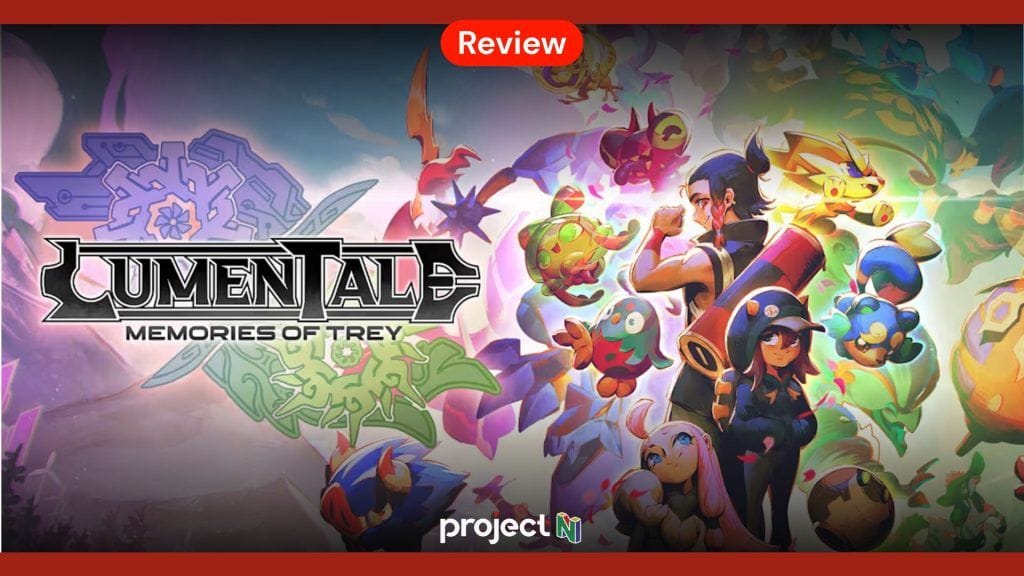
What Is LumenTale: Memories of Trey and Who Is It For?
LumenTale: Memories of Trey is a narrative-driven creature-collector RPG developed by indie studio Prism Echo, launching in early 2026 across PC (Steam), PlayStation 5, and Nintendo Switch. It costs $39.99 and delivers 25–35 hours for a focused story playthrough, with completionists hitting 55–60 hours when chasing side quests, Lumen variants, and post-game content. This is a solo-focused experience with no multiplayer modes at launch, though the developer has outlined a roadmap that hints at future additions.
The game is built for players who loved Pokémon‘s core loop but wanted more emotional depth, and who resonated with the hybrid-system storytelling of Cassette Beasts. If you’re the type who reads NPC dialogue trees, who gets attached to your team members, and who cares why the main character is on their journey — not just that they are — this game is designed for you. Conversely, if you’re hunting for real-time action combat, competitive multiplayer ladders, or fast-paced dungeon crawlers, LumenTale will feel slow and narratively bloated. This is a game about memory and grief wrapped in a creature-collector framework, not a Pokémon killer.
Gameplay & Core Mechanics: What You Actually Do in LumenTale
The core loop is familiar territory: explore an overworld, encounter wild Lumens, weaken them in turn-based combat, then capture them using Resonance Shards (the game’s equivalent to Poké Balls). You build a team, level them, learn new moves, and face increasingly difficult trainers. But LumenTale layers two systems on top that transform the formula. The first is the Bonding System. Every Lumen you catch has a Bond Meter that increases through battles, exploration, and a surprisingly robust camp-building mechanic where you craft items and decorate spaces. This isn’t cosmetic fluff. Higher bond levels unlock new moves, stat boosts, and most importantly, story vignettes that flesh out each creature’s personality and connection to Trey’s past. I found myself deliberately grinding bond levels with a Lumpen called Emberclaw not because I needed the stat boost, but because I wanted to see what memory it would unlock.
The second innovation is the Memory-Chain Combat System. Traditional turn-based battles would feel stale here, so instead of just selecting Attack or Defend, you’re building chains. When you use a move, the next move in your selected sequence is highlighted — use it immediately and you build a chain multiplier that boosts damage and accuracy. Miss the chain window (it’s roughly 2–3 seconds) and you lose the combo but still execute the move. This creates a rhythm-puzzle element that keeps turn-based combat engaging without demanding frame-perfect inputs. It’s not as demanding as Persona 5‘s press-turn system, but it’s far more interactive than Pokémon’s “tap button and watch.” Elemental affinities matter too: Lumen types interact in a rock-paper-scissors web that’s more nuanced than the traditional 18-type system. A Lumtide (water-based) doesn’t just beat a Flameling (fire); it gains bonus chain damage and access to exclusive combo moves when paired with a Thornkin (grass-type). Team synergy isn’t optional — it’s the difference between a smooth boss fight and a grinding wall.
Lumen Capture, Bonding, and Combat Depth
Capturing Lumens feels fundamentally different from Pokémon’s catch mechanic. Instead of throwing balls and hoping for RNG luck, you engage in a brief “Resonance Ritual” — a mini-game where you match the rhythm of the Lumen’s heartbeat by pressing buttons in sync. Get it right and you’re guaranteed a capture; fail and the Lumen escapes with no health penalty. This shifts the capture experience from luck-based to skill-based, and it removes the frustration of accidentally knocking out a rare creature you wanted to catch. I initially worried this would trivialize captures, but difficulty scales with Lumen rarity — legendary Lumens have erratic, complex rhythms that require real focus. Rare Lumens like Stellaryx (a cosmic-type creature found in the Aurora Wastes) have 8–10 beat patterns that demand genuine timing precision, while common creatures like Sparklet have simple 3-beat sequences.
The Bonding System is where LumenTale separates itself from the pack. Bond isn’t just a number that gates moves. Early in the game, you unlock the Sanctuary — a personal camp where you can place Lumens, craft beds and toys, and watch them interact. A Lumpen might teach a younger Flameling how to hunt, or a Thornkin might tend to a garden. These aren’t cutscenes; they’re ambient background events that play while you’re managing your party or crafting. The bond story vignettes are voiced (partially — major NPCs are fully voiced, Lumens have chirps and calls) and often emotionally grounded. One Lumen’s backstory involved it being abandoned by its trainer, and the vignette showed Trey finding it nearly dead in the rain. By the time I caught it, I wasn’t optimizing for stats — I was rescuing a friend. Reaching Bond Level 5 with any Lumen unlocks a fusion move — a powerful, temporary combination attack that requires both creatures to execute a synchronized chain sequence. These fusion moves are visually spectacular and mechanically crucial in late-game boss fights.
The Memory-Chain system is the combat backbone, supported by move variety and strategic depth. Each Lumen learns 4–8 moves across its lifetime, and move pools are thematic but not restrictive. A Lumtide learns water moves like Torrent Surge and Tidal Slam but can also learn ice attacks (Frost Spike, Glacial Prison) and electric moves (Thunderbolt, Chain Lightning), opening hybrid strategies. The chain mechanic rewards pattern recognition and planning: you’re not just thinking about this turn, but the next two moves, which means team composition and move order matter intensely. I fought a mid-game trainer named Soren around hour 15 whose team forced me to rethink my entire strategy. His Lumens had moves that interrupted my chain windows — specifically, Soren’s Lumvortex used Temporal Stall, which freezes your next move input for one full turn — forcing me to either adapt my sequences or swap team members mid-battle. That’s good design. Where combat occasionally drags is in the early game (hours 1–6) before you have enough Lumens and move variety to feel agency. The tutorial battles hold your hand, and grinding early-game trainers to level up feels like busywork. By hour 10, once you’ve caught 8–10 Lumens and unlocked fusion, the system sings. The flip side is that the game never quite reaches the mechanical complexity of, say, Pokémon Competitive or Digimon Cyber Sleuth. There’s no held-item system, no weather effects, and status ailments are fewer and less impactful. It’s a trade-off: LumenTale prioritizes narrative accessibility over competitive depth, meaning a new player can enjoy it without needing a wiki, but veterans might find the ceiling a bit low.
Story, World & Presentation: Does LumenTale Earn Its Emotional Beats?
The narrative premise is deceptively simple: you play as an unnamed protagonist who discovers a journal belonging to someone named Trey, a legendary Lumen trainer who vanished 20 years ago. As you follow Trey’s trail across five regions, you catch Lumens he created, uncover memories he left behind, and slowly piece together why he disappeared. It’s a grief narrative disguised as a creature-collector adventure, and it works because the game never sacrifices pacing for sentimentality. Trey’s story unfolds through found journals, NPC dialogue, and Lumen bond vignettes — never through exposition dumps or cutscene overload. By hour 18, when you reach the Obsidian Peaks region and a major plot revelation hits (involving Trey’s relationship with a character named Iris and a Lumen named Prism), you’re emotionally invested because the game has earned it over 18 hours of careful world-building, not because a cutscene tried to manipulate you.
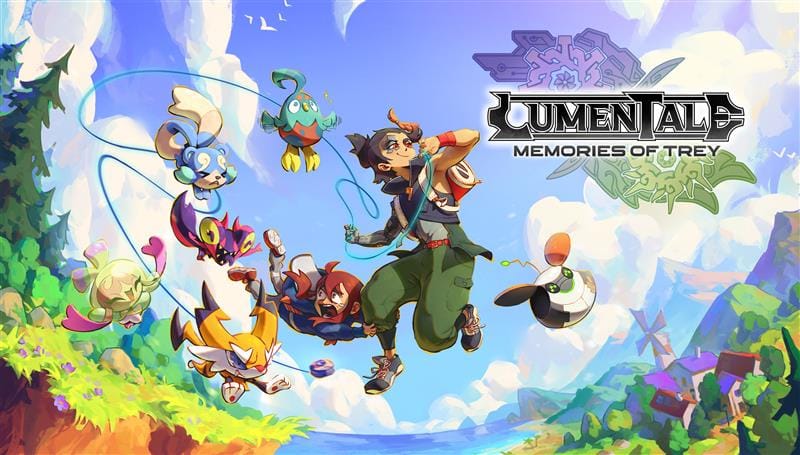
The five regions — Verdant Lowlands, Sapphire Coast, Crimson Dunes, Obsidian Peaks, and the final Aurora Wastes — are hand-painted in a style that sits somewhere between Ni no Kuni and Okami. Each region has a distinct visual identity and weather system that affects which Lumens spawn and how the environment behaves. The Sapphire Coast has a gentle, almost melancholic rain that falls constantly, reinforcing the region’s theme of loss and memory. The Crimson Dunes are harsh and isolating, mirroring the protagonist’s loneliness at that story beat. The Obsidian Peaks feature perpetual storm clouds and jagged terrain that makes exploration feel treacherous and emotionally heavy. This isn’t accidental — the art direction and narrative are locked in step. The original soundtrack, composed by Marcus Webb, is genuinely excellent. The Verdant Lowlands theme has a haunting flute melody that plays in your head long after you’ve stopped playing. Boss battles get their own themes that escalate in intensity, and the final encounter’s theme is genuinely moving.
Voice acting is limited but impactful. Trey himself (heard through journal entries and one late-game sequence) is voiced with a weariness that conveys his guilt and regret without explanation. Major NPCs like the regional gym leaders are fully voiced, while minor NPCs have portrait-based dialogue. Lumens themselves have creature sounds — chirps, growls, and vocalizations that feel distinct and memorable. I could recognize my team’s Lumens by sound alone by hour 20. On the technical side, the PC version runs smoothly with minimal frame drops, even in dense areas like the Sanctuary. The Switch version, however, has documented frame rate issues in densely-populated areas and during multi-Lumen battles. At launch, the game dips to 20–25 fps in the Aurora Wastes, which is noticeable and frustrating during a story-critical boss fight against the Champion. Minor texture pop-in occurs on both platforms when fast-traveling, but it’s cosmetic and doesn’t affect gameplay. The PS5 version maintains a stable 60 fps throughout.
Content, Length & Replayability: How Much Game Do You Actually Get?
A focused playthrough of the main story takes 25–35 hours depending on how much you engage with side content and grinding. If you’re the type who catches every Lumen, completes every side quest, and maxes bond levels with your entire team, you’re looking at 55–60 hours. The side quests are a mixed bag in terms of quality. Some are genuinely engaging — a multi-part questline involving a trainer trying to rescue an injured Lumen across three regions has real emotional stakes and world-building. Others are fetch-quest filler: “Bring me five Lumstone Shards” with minimal narrative payoff. I’d estimate 60% of side quests are worth your time, 40% are padding. The main story quests, however, are consistently strong and never feel like they’re wasting your time.
Post-game content includes the Lumen Colosseum, a battle tower where you face increasingly difficult trainer teams with the goal of reaching the top. The final Colosseum opponent is a rematch against Trey himself (in a special post-game sequence), which serves as a mechanical and narrative climax. There’s also a New Game+ mode that preserves your Lumens and bond levels while resetting the story, letting you experience plot twists with full knowledge of the endgame. This is excellent for completionists who want to catch every Lumen variant (each species has 3–4 regional color variants with stat differences) or optimize their teams for Colosseum runs. However, there’s no online multiplayer at launch — no PvP battles, no trading, no co-op. This is a significant omission for a 2026 creature-collector game, though the developer’s roadmap indicates online features are planned for a post-launch update. If you’re buying this expecting to battle friends or trade Lumens online, you’ll be disappointed.
Flaws, Frustrations & Red Flags: What LumenTale Gets Wrong
LumenTale is a genuinely good game, but it has real problems that prevent it from being great. The most significant is a pacing wall around hour 18. After you reach the Obsidian Peaks region, the game’s difficulty spikes sharply, and simultaneously, the story beats slow down. You’re grinding more, exploring less, and the narrative momentum that carried you through the first 18 hours stalls. The spike isn’t impossible to overcome — I beat the Obsidian Peaks gym leader Kess on my third try — but it’s a noticeable shift that disrupts flow. The game asks you to grind your team from levels 38–42 to even compete, and there’s no new story content in that gap. You’re just battling the same trainer types repeatedly. The game recovers in the final region, but that mid-game slog is real and will frustrate players who were enjoying the narrative momentum.
The second flaw is the Lumen storage UI, which is genuinely bad. Once you’ve caught 30+ Lumens, managing your team and storage becomes a chore. The menu uses tiny, hard-to-read text, sorting options are limited (you can sort by level, type, or name, but not by bond or capture date), and moving Lumens between your active team and storage requires multiple button presses. It’s not game-breaking, but it’s friction that shouldn’t exist in a 2026 game. A simple search function or favorite-tagging system would solve this, but they’re absent. In the post-game when you’re trying to build multiple Colosseum teams, this UI becomes actively painful. I spent roughly 30 minutes moving Lumens around to build a specialized fire-type team, and it should have taken five minutes.
Third, fast travel unlocks too late. You don’t get access to fast travel between regions until hour 22, which means the first 20+ hours involve a lot of backtracking across large overworlds. Early on, this is fine — you’re exploring and finding secrets. But by hour 15, when you’re returning to earlier regions for side quests or grinding, the lack of fast travel feels deliberately restrictive. The game justifies it narratively (something about Lumen energy not stabilizing until you reach a certain story point), but the justification doesn’t make the experience less tedious. Returning to the Verdant Lowlands from the Crimson Dunes for a side quest involves a 4-minute walk with no shortcuts. By hour 20, I was actively avoiding side quests in earlier regions because the travel time wasn’t worth the reward.
Finally, the Switch performance issues are serious enough to warrant a mention. Frame drops during battles in the late game aren’t just cosmetic — they can make the chain-timing mechanic inconsistent, which is frustrating when you’re trying to execute a planned strategy and the frame rate stutters mid-chain. I experienced chain-window misses during the Aurora Wastes boss fight that I’m confident were caused by frame drops, not my timing. If you’re a Switch-primary player, I’d recommend waiting for a performance patch before buying. The game is unquestionably best experienced on PC or PS5.
Verdict: Should You Buy LumenTale: Memories of Trey?
LumenTale: Memories of Trey is a flawed but genuinely moving game that respects your time and your attachment to its creatures. At $39.99, it’s fairly priced for 25–35 hours of solid narrative RPG gameplay, and the emotional payoff in the final chapters justifies the investment. The Memory-Chain combat system is engaging without being overwhelming, the Bonding mechanic makes you care about your team beyond their stats, and the hand-painted world is beautiful and thematically coherent. The pacing wall, UI friction, and platform-specific performance issues prevent this from being a must-buy, but they don’t disqualify it.
Buy this game if: You loved Pokémon or Cassette Beasts and want a narrative-focused creature-collector with real emotional depth. You’re willing to engage with a slower-paced story that rewards attention. You play primarily on PC or PS5. You care more about a compelling 30-hour experience than 100+ hours of content.
Wait for a patch if: You play exclusively on Nintendo Switch. You need online multiplayer or trading at launch. You want a game with zero pacing issues or UI friction.
Skip this game if: You’re looking for real-time action combat or competitive PvP. You need a game that respects your time in every single moment (the mid-game grind exists). You want a Pokémon replacement with all the same features — this isn’t that.
Score: 8/10 — A game that swings for emotional resonance and mostly connects, with solid mechanics and a respectful approach to its narrative. The flaws are real but not fatal, and they shouldn’t stop you from experiencing a genuinely moving creature-collector RPG.
Recommendation: BUY (on PC/PS5) — WAIT FOR PATCH (on Switch). At $39.99 on PC and PS5, LumenTale delivers excellent value for the quality of its narrative, mechanics, and emotional payoff. On Switch, wait for performance improvements before committing your money.
Frequently Asked Questions
Is LumenTale: Memories of Trey worth buying in 2026?
Yes, absolutely — if you’re a creature-collector fan who cares about narrative and character attachment. At $39.99 for 25–35 hours of story content, LumenTale: Memories of Trey is fairly priced, and the emotional payoff in the final chapters is worth the investment. The Memory-Chain combat keeps the turn-based battles engaging, and the Bonding System makes you genuinely care about your team. The main caveat is the mid-game pacing wall and UI friction, but neither is deal-breaking on PC or PS5.
How long does it take to beat LumenTale: Memories of Trey?
The main story in LumenTale: Memories of Trey takes 25–35 hours depending on how much you explore and grind. Completionists aiming to catch every Lumen variant, finish all side quests, and max bond levels should expect 55–60 hours. The pacing is deliberate — this isn’t a game you’ll rush through — but the narrative momentum carries you through most of the experience.
Does LumenTale: Memories of Trey have multiplayer or co-op?
No online multiplayer, trading, or co-op at launch. LumenTale: Memories of Trey is entirely single-player. The developer’s roadmap indicates online features are planned for post-launch updates, but nothing is confirmed. If multiplayer is important to you, you’ll need to wait for announcements or look elsewhere.
How does LumenTale: Memories of Trey compare to Pokémon and Cassette Beasts?
LumenTale: Memories of Trey sits between the two. Like Pokémon, it has a familiar creature-collector loop with regions, gyms, and a champion battle. Like Cassette Beasts, it prioritizes narrative and character development over competitive depth. The Memory-Chain combat is unique to LumenTale: Memories of Trey and more engaging than Pokémon’s passive turn system, but less complex than Cassette Beasts’ hybrid-type system. If you loved both games, LumenTale: Memories of Trey is worth your time.
Is LumenTale: Memories of Trey playable on Nintendo Switch?
Yes, but with caveats. LumenTale: Memories of Trey is available on Switch, but it suffers from frame rate drops (20–25 fps) in densely-populated areas and during late-game boss battles. The chain-timing mechanic relies on consistent frame rates, so the stutters can make combat inconsistent. If you’re a Switch-primary player, I’d recommend waiting for a performance patch before buying. On PC and PS5, performance is stable.
What is the Memory-Chain Combat System in LumenTale: Memories of Trey?
The Memory-Chain Combat System is LumenTale: Memories of Trey’s turn-based battle mechanic that rewards timing and planning. After you use a move, the next move in your sequence is highlighted. If you use it within a 2–3 second window, you build a chain multiplier that boosts damage and accuracy. Missing the window doesn’t prevent the move from executing, but you lose the combo bonus. This creates a rhythm-puzzle element that makes turn-based combat more interactive than traditional Pokémon-style battles.