Into the Radius 2 PSVR 2 Review: Worth Buying?
Disclosure: As an Amazon Associate, Bytee earns from qualifying purchases.
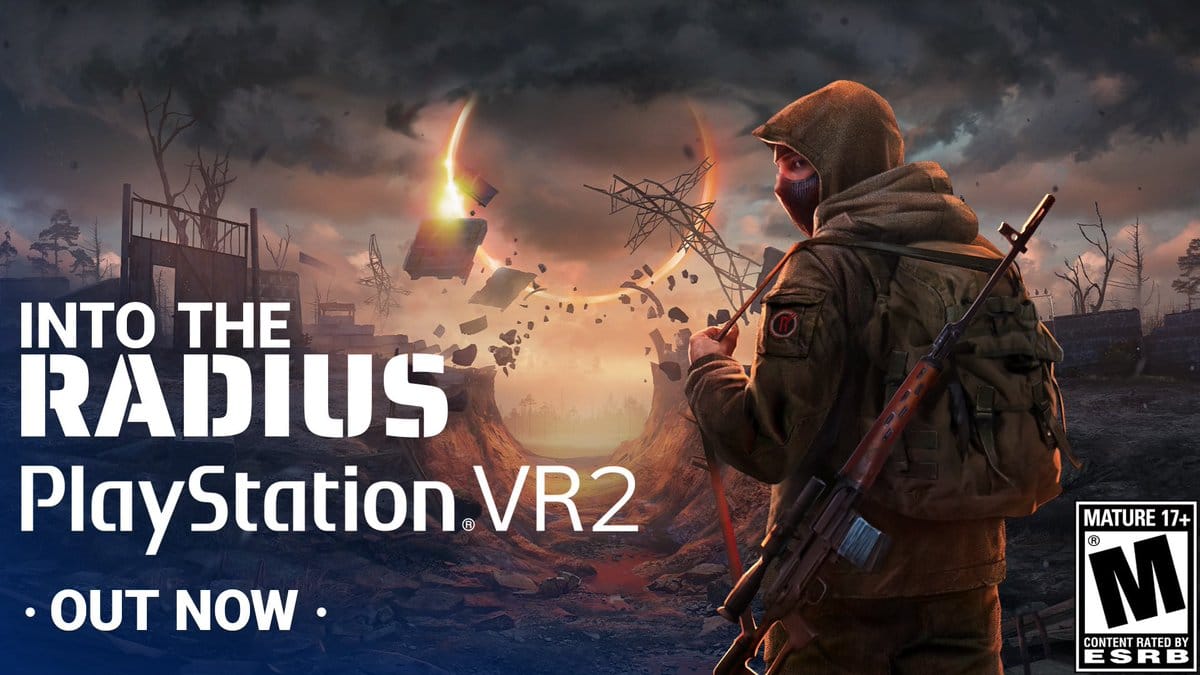
Pitch blackness swallows the corridor until your trembling flashlight beam catches the jittering silhouette of a mimic entity just three paces away, leaving you scrambling to manually slap a fresh magazine into your jammed sidearm before it strikes. That visceral panic—the frantic tactile fumbling across your virtual tactical vest while an otherworldly predator lunges from the dark—defines why CM Games’ survival horror sequel is such a monumental step forward for tactile virtual reality. With the impending Into the Radius 2 PSVR 2 release, PlayStation hardware owners are finally getting their hands on a ruthlessly immersive, hardcore survival simulator built without compromises.
Platform(s): PlayStation VR2, PC VR (SteamVR – Index, Quest 3 via PC Link, Vive, Bigscreen Beyond), Meta Quest 3 Standalone (Roadmap TBA)
Genre: Hardcore VR Survival Shooter / Extraction Horror
Developer: CM Games
Price: $39.99 (PC VR Early Access / PSVR 2 Launch)
Play Area: Standing / Roomscale (Minimum 2.0m × 2.0m strongly recommended)
Game Length: 35–50+ Hours (Campaign & Emergent Extraction Loop)
Motion Sickness Risk: High (Smooth Locomotion Only, Fast Lateral Movement, Zero Teleportation)
What Is It? VR-Native Survival Shooter Details and Headset Support
Into the Radius 2 is the uncompromising follow-up to CM Games’ acclaimed 2020 tactical survival title, heavily inspired by Arkady and Boris Strugatsky’s classic sci-fi novel Roadside Picnic and the S.T.A.L.K.E.R. franchise. Built natively from the ground up for modern VR hardware, the sequel transports explorers back into the surreal, desolate landscape of the Pechorsk Anomaly. Rather than relying on arcade-style HUD shortcuts, floating crosshairs, or abstracted button presses, every interaction in the zone requires deliberate physical effort, from manually scraping carbon buildup off fouled weapon receivers with a cleaning rod to packing individual 9x18mm cartridges into steel box magazines one by one.
Currently progressing through its PC VR Early Access phase on SteamVR with full PlayStation VR2 support arriving alongside the 1.0 commercial launch, the sequel represents an enormous technical expansion over its predecessor. CM Games has priced the experience at an accessible $39.99 tier, delivering a sprawling campaign spanning dozens of hours alongside brand-new cooperative multiplayer for up to two explorers (expanding to four in future post-launch updates). While Meta Quest 3 standalone iterations remain tentatively on the developer’s post-launch radar, the title is fundamentally engineered around high-fidelity rendering, complex physics interactions, volumetric fog, and expansive draw distances that demand dedicated rendering power.
The VR Experience: Pechorsk Anomaly Immersion and PSVR 2 Features
Stepping into the Pechorsk Zone through the PSVR 2 headset is a masterclass in claustrophobic, atmospheric tension. Sony’s dual OLED panels and HDR integration radically alter the survival experience compared to standard LCD displays. When you delve into derelict concrete industrial compounds at midnight, the black levels are truly pitch-black, plunging you into authentic sensory deprivation. Shadows feel heavy and suffocating, making your narrow flashlight beam an indispensable lifeline as dust motes drift realistically through the volumetric fog. When electrical anomalies crackle across the horizon, the HDR peak brightness forces an authentic physical squint, cementing unmatched visual presence.
The implementation of PlayStation VR2’s Sense controller features elevates weapon handling into genuine muscle memory. Adaptive triggers deliver distinct mechanical resistance profiles for every firearm: a stiff single-action break on a surplus Makarov sidearm, a progressive two-stage trigger squeeze on modified Kalashnikovs, and distinct mechanical resistance when pulling a charging handle back to clear a stovepipe jam. Headset haptics vibrate with low-frequency rumble when gravitational anomaly fields distort the surrounding air space or when an entity unleashes a psychic shriek. Meanwhile, Sony’s Tempest 3D Audio provides pin-sharp spatial positioning—the crunch of broken glass underfoot and distant metallic clanking give you the exact coordinate vector needed to raise your rifle before visual contact.
Inventory management remains a gold standard for spatial VR ergonomics. There are zero floating abstract menus or 2D grid boxes. You physically reach over your shoulder to pull a heavy canvas backpack into your roomscale space, unzip pouches with your off-hand, and arrange ration tins, detector probes, and loose magazines in freeform three-dimensional space. If your gear is disorganized when an anomaly storm rolls across the wasteland, you will pay for that physical negligence with your life.
Gameplay Deep Dive: Gunplay Mechanics, Co-op Dynamics, and VR Comfort
The mechanical depth of weapon handling in Into the Radius 2 places it squarely alongside milsim heavyweights like Hot Dogs, Horseshoes & Hand Grenades and Ghosts of Tabor. Firearms are fully simulated physical objects that foul and degrade in the harsh environment. Maintaining your arsenal demands physical workspace hygiene: spraying aerosol solvent into dirty bolt assemblies, running cleaning patches down the rifling, and meticulously managing individual magazines in your vest pouches. Anomaly navigation is equally physical; stepping into anomalous fields requires you to lob brass probes with your off-hand to trigger invisible gravitational crushes while reading real-time LED telemetry from your handheld artifact detector.
The addition of cooperative play drastically alters tactical dynamics without diluting the underlying horror. Teaming up with a partner requires coordinated, real-world communication: one player illuminates a pitch-black train depot with a weapon-mounted beam while the other sweeps the perimeter with a high-magnification optic. Physically handing over medical syringes during frantic retreats, toss-trading loose ammo boxes across anomalous craters, and coordinating dual-probe pathfinding through dense minefields makes survival expeditions feel profoundly rewarding.
From a comfort standpoint, this is an uncompromising, intense simulation. Because combat balance and anomaly detection hinge on continuous spatial movement, CM Games does not offer teleportation locomotion. Players sensitive to simulator sickness must rely on the dynamic peripheral vignette and snap-turning options while acclimating to rapid ladder ascents and sudden vertical drops. To maximize physical comfort and prevent cable snags or boundary strikes during frantic reloading drills, a dedicated standing play area of at least 2.0m × 2.0m is essential.
Headset Comparison: PSVR 2 vs PC VR vs Meta Quest 3
Choosing the ideal hardware configuration for your expedition into the Pechorsk Anomaly comes down to display technology, tracking reliability, and raw computing power. On PlayStation VR2, the implementation of eye-tracked foveated rendering (ETFR) enables native high-resolution clarity with solid frame pacing, bypassing the micro-stuttering that can occur on unoptimized PC rigs. Most importantly, the PSVR 2’s true OLED black levels deliver unmatched dread during night cycles, where PC VR players using LCD headsets like the Valve Index or Quest 3 via Link suffer from washed-out gray ambient lighting.
| Headset Platform | Display & Performance | Tracking & Haptics | Price | Recommendation |
|---|---|---|---|---|
| PlayStation VR2 | OLED HDR, ETFR Sharpness, True Inky Blacks | Sense Adaptive Triggers + Headset Rumble + 3D Audio | $39.99 | Essential Buy (9.3/10) |
| PC VR (High-End Rig) | Ultra Render Scale, High Refresh (120Hz/144Hz) | SteamVR Lighthouse / Touch Pro Precision | $39.99 | Essential Buy (9.1/10) |
| Meta Quest 3 (Standalone) | TBA (Expected Texture & Geometry Downscaling) | Touch Plus Tracking (Wireless Freedom) | TBA | Wait (Unconfirmed Port) |
For PC VR purists running high-end rigs (RTX 4080/4090), SteamVR offers higher supersampling ceilings and native support for ultra-enthusiast micro-OLED headsets like the Bigscreen Beyond. However, for sheer out-of-the-box immersion, Sony’s combination of OLED contrast, headset haptic feedback, and adaptive trigger tension gives the PSVR 2 version a decisive edge in atmospheric immersion per dollar spent.
Verdict: Is Into the Radius 2 on PSVR 2 Worth Adding to Your Library?
Into the Radius 2 stands as a monumental achievement for hardcore virtual reality design, completely rejecting casual flat-screen abstractions in favor of deeply engaging, physical simulation. Its methodical pacing, terrifying spatial sound design, and relentless tactical depth demand your complete focus and reward patient, deliberate exploration. While its steep difficulty cliff and demanding smooth locomotion will prove overwhelming for VR newcomers or those seeking arcade-style run-and-gun action, it represents the absolute pinnacle of tactile survival horror alongside The Walking Dead: Saints & Sinners.
With dozens of hours of high-stakes extraction gameplay, intricate firearm maintenance, and seamless cooperative expeditions across the anomaly zone, this is an essential pillar for the platform. If you own a PSVR 2 or enthusiast PC VR rig and have the stomach for pure survival dread, stepping into the Pechorsk Zone is an absolute must.
Overall Score: 9.2 / 10
PSVR 2: 9.3 / 10 — Essential Buy | PC VR (SteamVR): 9.1 / 10 — Essential Buy | Meta Quest (Standalone): N/A — Wait for Official Confirmation
Best For: Hardcore survivalists, tactical milsim VR enthusiasts, extraction shooter fans, and players with strong “VR legs” seeking deep atmospheric presence.
Frequently Asked Questions
When is the Into the Radius 2 PSVR 2 release date?
The Into the Radius 2 PSVR 2 release is scheduled to launch alongside the game’s full 1.0 exit from PC VR Early Access. CM Games is tailoring the PlayStation VR2 version specifically to take advantage of the platform’s eye-tracked foveated rendering, OLED HDR screens, and Sense controller adaptive triggers, providing visual fidelity comparable to high-end PC VR builds.
Does Into the Radius 2 feature crossplay co-op between PSVR 2 and PC VR?
CM Games has designed the co-op architecture to support seamless cross-platform multiplayer between PlayStation VR2 and PC VR (SteamVR) players. Both platforms share synchronized anomaly generation, weapon interaction physics, and campaign progression, allowing duo squads to explore the Pechorsk Zone together regardless of headset ecosystem.
How intense is the motion sickness in Into the Radius 2 on PSVR2?
Motion sickness intensity in Into the Radius 2 is rated as Moderate to Intense. The game relies entirely on smooth thumbstick locomotion without a teleportation alternative to preserve tactical combat pacing. Players prone to simulator sickness should enable the peripheral FOV vignette tunneling, utilize snap turning, and keep initial play sessions to 30–45 minutes while acclimating to ladder climbing and sprint mechanics.