G-Rebels VR Review: Impressive Sci-Fi Flight Sim Sensation
Disclosure: As an Amazon Associate, Bytee earns from qualifying purchases.
Slamming the virtual throttle forward while banking hard through a jagged planetary ravine pulls your stomach into your throat the instant enemy interceptors lock on. In this comprehensive G-Rebels VR review, we examine how this high-octane sci-fi combat simulator pushes flight physics, spatial awareness, and VR hardware to their absolute limits. While many VR flight games default to floaty, friction-free space arenas, this title forces you to wrestle with atmospheric drag, crushing G-forces, and terrain hazards that demand absolute control over your craft.
What Is G-Rebels and Who Is It For?
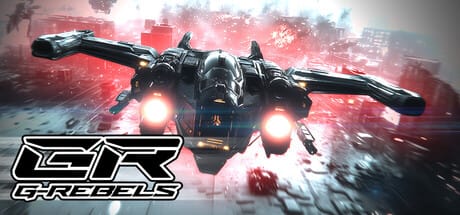
Developed as an uncompromising love letter to classic atmospheric combat simulators like Crimson Skies and Descent, G-Rebels drops players into the cockpit of customized anti-gravity strike fighters operating inside dense planetary envelopes. Launching on PC VR platforms at a mid-tier $24.99 price tag, the game bridges the gap between hyper-complex technical sims like DCS World and arcade dogfighters like Star Wars: Squadrons.
This is not a casual sit-back-and-cruise experience. G-Rebels is built explicitly for flight sim enthusiasts and combat pilots who crave tactile feedback and authentic flight constraints within an unapologetic sci-fi setting. If you enjoy managing engine heat, computing lead angles manually on evasive targets, and physically reaching across a digitized dashboard while pulling an 8-G break turn, you are the target audience. Players looking for auto-lock missiles and zero-consequence flight physics will quickly find themselves crashing into canyon walls.
Cockpit Immersion and Flight Model Mechanics
The moment-to-moment combat loop in G-Rebels revolves around momentum preservation and energy management. You are not flying in a frictionless vacuum; atmospheric density varies based on altitude, directly impacting control surface responsiveness, engine cooling rates, and maximum airspeed. Executing a tight barrel roll near sea level feels radically heavier than maneuvering in the thin upper stratosphere, requiring constant throttle micro-adjustments to prevent aerodynamic stalls.
The cockpit layout is fully interactive and functional. Essential subsystems—including shield distribution toggles, electronic warfare jammer switches, and secondary weapon select dials—are mapped to physical toggle switches and multi-function displays surrounding the pilot’s seat. Reaching out with a tracked hand to flick open the missile arming cover before depressing the physical trigger adds a layer of mechanical authenticity that standard gamepad inputs cannot replicate.
Flight physics balance sci-fi agility with grounded aerodynamic weight. Thrust-to-weight ratios carry genuine forward inertia into high-speed drift maneuvers. Dropping your speed brakes immediately redistributes engine power to primary attitude thrusters, allowing for rapid pitch-up snap turns at the expense of dumping airspeed and leaving your ship sitting dead in the air if you misjudge enemy closing distance.
Combat Systems, Target Acquisition, and Mission Flow
Engagements in G-Rebels are fast, lethal, and tactically demanding. Primary armaments consist of kinetic auto-cannons and plasma beam arrays, requiring pilots to lead targets based on dynamic HUD reticles that calculate target vector, distance, and projectile velocity. Secondary hardpoints house heat-seeking missiles, radar-guided swarm pods, and electromagnetic pulse torpedos designed to strip heavy corporate gunship shields.
Missions avoid repetitive patrol loops by staging dynamic, multi-phase battles. A single sortie might task you with intercepting a low-altitude bomber wing inside a canyon corridor, deploying decoy flares to defeat surface-to-air missile batteries, and providing close air support to ground-based rebel convoys while maintaining air superiority against agile corporate interceptors.

Campaign Scope, Upgrades, and Technical Performance
The single-player campaign spans 14 handcrafted missions, translating to roughly 7 to 9 hours of gameplay depending on your flight sim proficiency. Missions feature branching secondary objectives—such as scanning hidden data relays or destroying optional radar installations—which reward extra fabrication currency used to modify your craft in the hangar bay between sorties.
Ship progression offers tangible build diversity across three chassis: Light Interceptor, Strike Fighter, and Heavy Gunship. Upgrading magnetic cooling manifolds, reinforcing titanium composite plating, or swapping standard pulse lasers for high-heat particle beams noticeably alters your ship’s handling, maximum G-load tolerance, and thermal budget. Outside the campaign, a customizable Skirmish mode and endless Wave Survival arena let you test experimental loadouts against escalating fleet waves.
Visually, the game shines through volumetric weather and lighting. Diving through dense sulfur clouds into a neon-lit industrial trench while rain streaks across your canopy glass creates genuine VR spectacle. On an RTX 3080 running through a Quest 3 via Link, the game held a stable 90 FPS with high supersampling, showing clean optimization across dense battle scenes with minimal frame drops.
Flaws, Frustrations, and Hardware Headaches
Despite its impressive flight model, G-Rebels suffers from several glaring design flaws and technical frustrations that will test your patience:
First, the tracked motion controller implementation is awkward and imprecise during intense dogfights. Grabbing the virtual joystick and throttle with VR motion controllers lacks physical centering resistance, leading to constant deadzone drift, oversteering, and accidental switch flips when reaching across the cockpit in a scramble. Playing without a physical HOTAS or traditional gamepad puts you at a severe tactical disadvantage.
Second, the friendly and enemy AI exhibits maddening pathfinding bugs. Friendly wingmen frequently ignore focus-fire orders and fly directly into cliff faces during low-altitude canyon runs. Enemy aces, while mechanically aggressive on higher difficulties, frequently get stuck in repetitive 360-degree looping patterns after evading a missile, turning tense dogfights into tedious target practice.
Third, the holographic HUD suffers from atrocious visual clutter, compounded by a punishing lack of mid-mission checkpoints. In fleet skirmishes with eight or more bogies, overlapping lock-on boxes, missile warning arrows, and shield telemetry completely obscure your target lead pip. Failing a multi-phase 15-minute mission right at the final objective forces a full restart from the beginning, which quickly leads to burnout.
Finally, the game is an aggressive motion sickness hazard. The combination of intense angular velocity, rapid terrain-hugging rolls, and the physiological blackout/redout mechanic creates severe vestibular discomfort that will overwhelm players without iron VR legs, even with comfort vignettes enabled.
Verdict: Should You Buy G-Rebels VR?
G-Rebels delivers high-stakes atmospheric dogfighting with deep cockpit interactivity and a satisfyingly heavy flight model. It demands genuine piloting discipline, punishes poor thermal and energy management, and rewards spatial awareness with thrilling aerial victories. While motion controller floatiness, HUD clutter, and brain-dead friendly AI hold it back from perfection, its tactile combat mechanics shine brilliantly when paired with a physical flight stick.
At $24.99, G-Rebels offers strong value for flight sim veterans hungry for an atmospheric alternative to space dogfighters, easily justifying its price tag through its 8-hour campaign and modular hangar progression.
Score: 7.5/10
Verdict: Buy for flight sim enthusiasts with a physical HOTAS setup and strong VR motion tolerance; Skip for casual players relying solely on virtual motion controls or those prone to severe simulator sickness.
Frequently Asked Questions
Does G-Rebels support physical HOTAS flight sticks and rudder pedals?
Yes, G-Rebels features full native plug-and-play support for major HOTAS setups including Thrustmaster T.Flight, Logitech X56, and VKB flight sticks, alongside configurable rudder pedals. The in-game remapping menu lets you bind weapon hardpoints, energy distribution shunts, and boost thrusters directly to physical switches.
How long does it take to beat the G-Rebels campaign?
The single-player campaign in G-Rebels takes between 7 and 9 hours across 14 linear story missions. Completing all optional secondary objectives and farming fabrication credits to max out all three ship chassis adds another 4 to 6 hours in Skirmish and Survival modes.
Is G-Rebels available on standalone Meta Quest or PSVR 2?
G-Rebels is currently available exclusively on PC VR platforms via SteamVR. While the developers have stated interest in future standalone Quest 3 and PlayStation VR2 ports, no official release dates or confirmation have been finalized as of launch.
How intense is the motion sickness risk in G-Rebels VR?
Motion sickness intensity in G-Rebels is rated as severe. Rapid angular rolls, close-quarters canyon weaving, and dynamic blackout/redout G-force effects create high vestibular friction. Even with peripheral comfort vignetting toggled on, it requires well-developed VR tolerance and is not recommended for flight sim newcomers prone to nausea.