Teenage Mutant Ninja Turtles Empire City Review: Shell Yeah or Shell No?
Disclosure: As an Amazon Associate, Bytee earns from qualifying purchases.
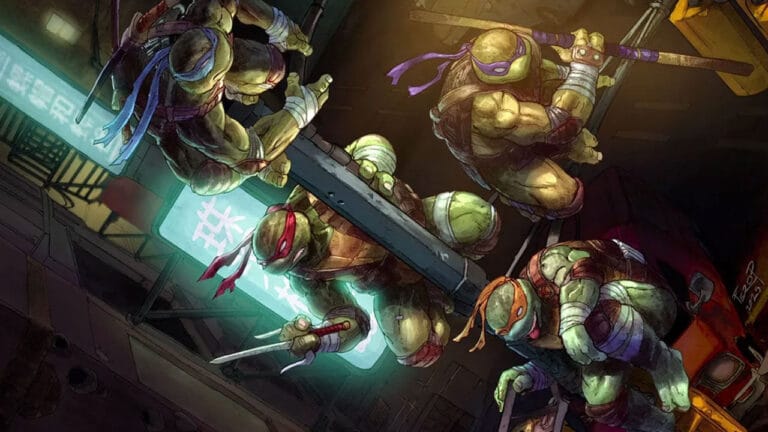
You are standing on a rain-slicked rooftop in the Bronx, nunchucks spinning in both hands, three Foot Clan soldiers closing in from the left while a fourth drops from a fire escape directly above you — and the moment you duck, swing up, and send him flying off the ledge with a single upward flick of your wrist, you understand exactly what Teenage Mutant Ninja Turtles Empire City is trying to do and, more importantly, why it mostly works.
What Is Teenage Mutant Ninja Turtles Empire City and Who Is It For?
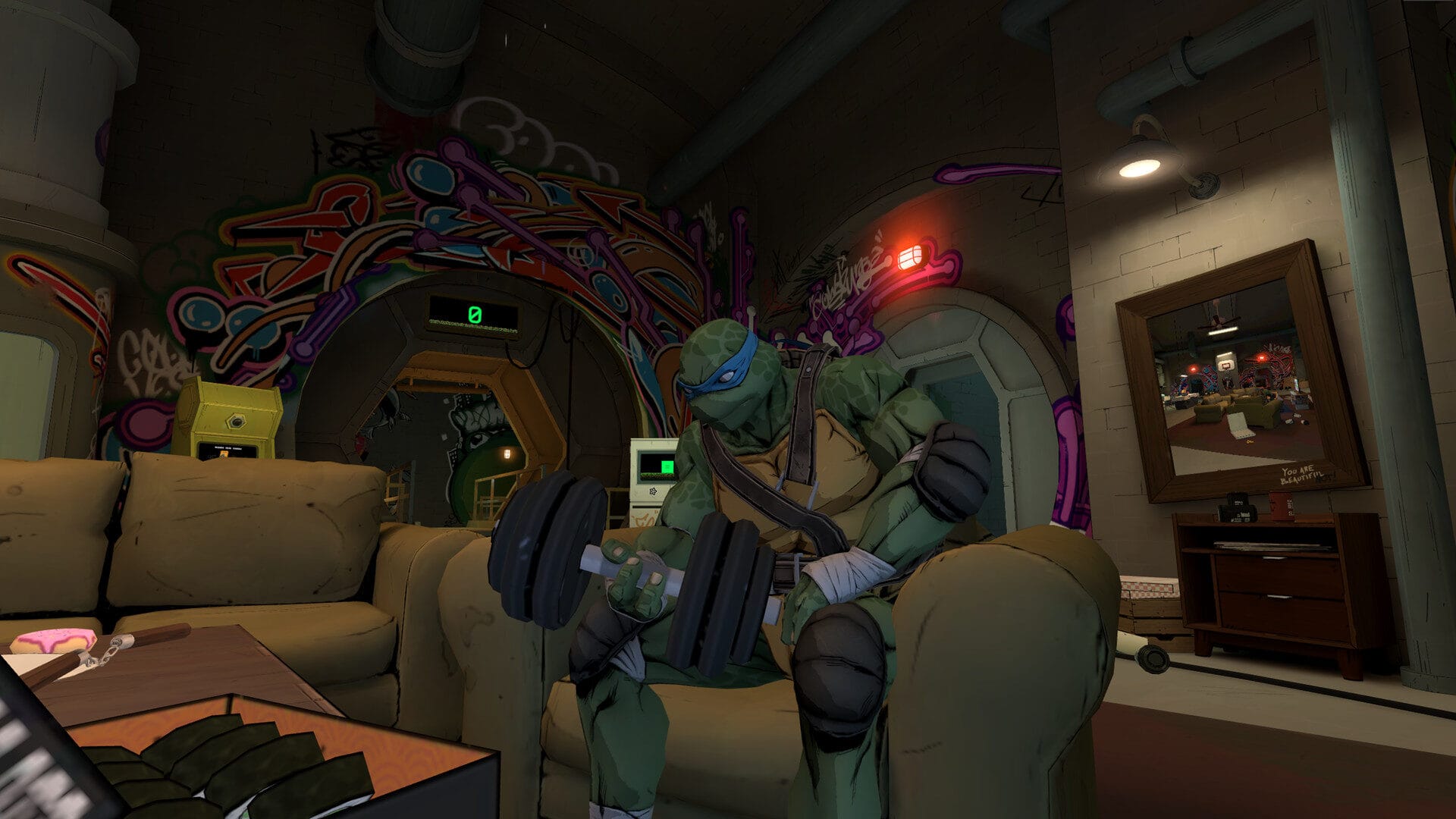
Teenage Mutant Ninja Turtles Empire City is a VR brawler developed by Red Fly Studio and published by Paramount Games, launching simultaneously on PlayStation VR2 and Meta Quest 3/Pro in early 2026. It’s a narrative-driven action game set across the five boroughs of New York City, where you embody each of the four turtles in turn through an 8-12 hour campaign designed for both solo play and 2-player cooperative missions. The game retails for $49.99 standard edition and $69.99 deluxe (which includes cosmetic skins and early access to post-launch turtle variants), positioning itself squarely between indie VR titles and AAA console ports.
This is a game built for two audiences: hardcore TMNT fans who’ve been waiting for a VR experience that respects the source material, and VR action enthusiasts hungry for a melee-focused brawler that doesn’t rely on wave-defense mechanics or puzzle-gating. If you loved the 2012 Arkham City’s counter-based parry system and environmental takedown animations, or the recent Spider-Man: Miles Morales for its fluid combo chaining and dodge-window timing, and you own a VR headset, this game is calling your name. However, if you’re a casual VR player still adjusting to motion controls, or if you have no emotional investment in the Turtles franchise, you should read carefully before dropping fifty dollars. Empire City is a love letter to fans first, a solid VR experience second.
Teenage Mutant Ninja Turtles Empire City Gameplay: What You Actually Do
The core gameplay loop is deceptively simple: you switch between the four turtles, each assigned to a different weapon archetype and control scheme mapped to your VR controllers, then navigate rooftops and street-level environments to engage in street brawls against Foot Clan soldiers, Shredder’s lieutenants, and procedurally-varied minion waves. The moment-to-moment feel is where Empire City shines — your left hand controls movement and one weapon type (nunchucks for Michelangelo that spin in tight circles and build combo multipliers; sai for Raphael that trigger stabbing combo chains; katanas for Leonardo that reward parry-counter timing; plasma blaster for Donatello that charges between physical strikes), while your right hand handles blocking, dodging with a 0.8-second invulnerability window, and special finisher animations that trigger when enemy health drops below 20% threshold. Learning the basic three-hit combo takes five minutes; mastering the chained finisher sequences that link throws into environmental kills takes the full campaign.
What clicks immediately is the physical feedback loop. When you swing Donatello’s bo staff and feel the controller haptic-pulse as it connects with an enemy’s ribs, then watch that enemy stagger backward and crash into a storefront window, the VR immersion locks in hard. What clunks, however, becomes apparent in Act Two: enemy AI falls into predictable attack patterns. The Foot Soldiers telegraph their overhead slashes by the third mission, and by hour six, you’re reading their moves like a sheet of music. The nunchuck physics also occasionally betray you in tight spaces — spin too close to a wall and your hit registration gets confused about which direction you’re actually facing, leading to frustrating whiffs that feel like the game failed rather than you.
Combat System and Turtle Mechanics: Four Distinct Fighting Styles
Each turtle plays distinctly enough that switching between them mid-campaign feels like learning four mini-games rather than cosmetic variants. Michelangelo is fast and chaotic — his nunchucks allow for rapid-fire combo chains (up to 8-hit sequences without breaking) and spin attacks that clear crowds but lack the damage-per-hit of his brothers, dealing roughly 12 damage per hit versus Leonardo’s 18 per katana swing. Leonardo is the balanced tank: his katanas are slower but hit harder, and his parry window is more forgiving (0.9 seconds versus Raphael’s 0.6 seconds), making him the recommended starting turtle for VR newcomers. Raphael is pure aggression — his sai have the tightest combo timing but reward perfect execution with devastating crowd-control throws that can launch three enemies simultaneously into environmental hazards. Donatello is the ranged specialist, trading melee speed for a plasma blaster that charges up to 3 power levels between physical strikes, forcing you to alternate between weapon types and creating the game’s most interesting tactical depth — a fully-charged blast deals 35 damage but leaves you vulnerable for 1.2 seconds during the reload animation.
Switching mid-fight is the game’s best mechanic and separates competent players from mastery-level performers. You can tag out to a fresh turtle with full stamina by holding both grip buttons and pointing at their icon on your wrist UI — a seamless 0.7-second transition that encourages learning all four playstyles rather than riding one favorite to the end. The game rewards this flexibility with achievement challenges like “defeat 20 enemies using all four turtles in a single mission” and bonus skill points that unlock new finishers exclusive to each turtle. By the final boss gauntlet, you’re fluidly swapping between Leo’s defensive stance (which reduces incoming damage by 25% for 3 seconds) and Raph’s aggressive pressure (which builds finisher charge 40% faster), creating a rhythm that feels genuinely skilled. However, switching to Donatello mid-fight locks you into a 2-second animation where you’re vulnerable, forcing tactical planning in harder waves — a design choice that prevents the switching mechanic from feeling like a get-out-of-jail card.
VR Traversal, World Navigation and Performance
Rooftop parkour in VR is where Empire City’s design philosophy becomes clear: accessibility over simulation. You can toggle between smooth locomotion (using the left thumbstick for continuous movement) and point-teleport navigation (aiming and clicking to jump to waypoints) at any moment without penalty, a crucial feature for players with motion sensitivity. Free movement with the left thumbstick feels natural after the first 30 minutes, but the game never punishes you for switching to teleport when fatigue sets in. The rooftops themselves are designed for flow rather than challenge — you’re rarely more than one or two jumps away from the next combat arena, and the game respects your time by never forcing extended navigation sequences between story beats.
That said, the traversal can feel floaty and imprecise. Ledge-grabbing sometimes fails if you’re not positioned perfectly perpendicular to an edge, and the game’s jump-assist system occasionally snaps you to unintended ledges when multiple grab points are nearby. In a 12-hour campaign, these moments are rare enough not to break immersion entirely, but they’re noticeable enough that you’ll feel them, especially in the final borough’s rooftop gauntlet where precision timing matters. The world navigation UI is clean — a mini-map on your left wrist shows mission markers and collectibles — but it occasionally obscures enemy positions in cluttered environments, forcing you to lower your arm to get a clear view of incoming threats. Performance is stable on PlayStation VR2, holding 90fps in exploration and 60fps during intensive combat sequences, but Meta Quest 3 versions show noticeable pop-in where distant buildings and pedestrians fade in at 40-50 meter ranges that break immersion, and frame rate occasionally dips to 72fps in busy mission areas that target 90fps.
Story, World and Presentation: Nostalgia and Narrative Depth
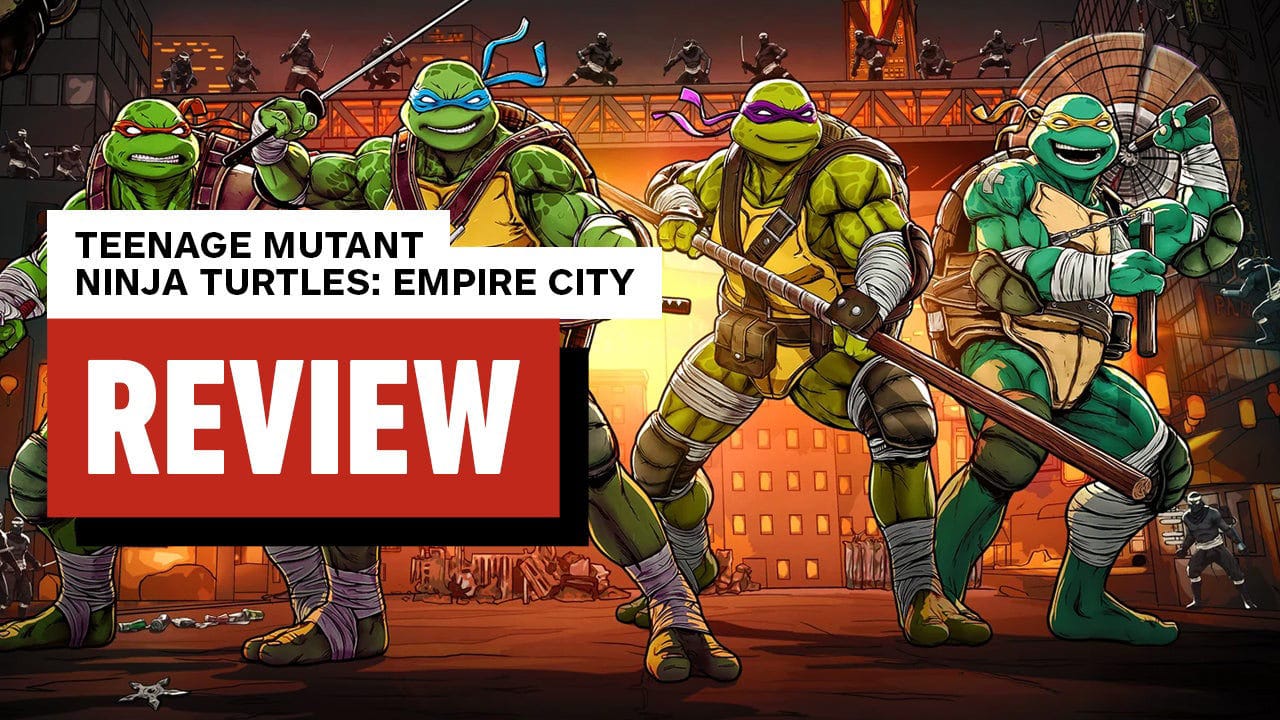
Empire City tells an original story that respects the 1990 live-action film canon while charting its own narrative path. Set five years after the events of that movie, the turtles are no longer sewer-dwelling vigilantes but established (if still underground) defenders of New York. The Foot Clan has resurfaced under new leadership, and Shredder’s absence has created a power vacuum that draws in rival factions — including a surprisingly nuanced antagonist who isn’t just a mustache-twirling villain but someone with ideological disagreements with the turtles’ methods regarding collateral damage and civilian safety. The voice acting is excellent; the original film’s Paige Turco returns as April O’Neil, and the four turtles are voiced by a mix of returning cast members and talented newcomers who nail the personalities. Michelangelo’s constant jokes land more often than they miss, and Donatello’s tech-nerd monologues feel authentic rather than exposition-dumping.
The five boroughs of NYC are rendered in a cel-shaded art style that’s a smart choice for VR — the bold outlines and flat color fields mean the game doesn’t have to render photorealistic detail, which keeps frame rates stable on lower-end hardware. Most of the time. Brooklyn’s warehouse district feels appropriately grimy with boarded-up storefronts and graffitied walls, and Manhattan’s rooftop skyline is genuinely impressive when you’re standing on a fire escape looking across the East River toward the Empire State Building. However, pop-in is noticeable on Meta Quest versions, where distant buildings and pedestrians fade in at ranges that break immersion. On PlayStation VR2, the visual fidelity is noticeably sharper, with better texture resolution and fewer draw-distance compromises, though the game still dips to 60fps in busy mission areas like the Times Square sequence where 15+ enemies attack simultaneously.
The original soundtrack blends callbacks to the classic 1990 film score with modern orchestral arrangements, and the nostalgia factor hits hard — especially the moment you hear that iconic TMNT theme in the opening credits. However, the game’s approach to world-building through side missions is inconsistent. Some borough challenges (like protecting a community center from Foot occupation) tell meaningful stories about the turtles’ relationship with NYC’s neighborhoods and reveal character development. Others feel like filler — collect 10 pizza slices, defend a rooftop for three waves, repeat. The narrative momentum picks up significantly in Acts Three and Four, but the middle act sags under the weight of repetitive side-mission design, particularly in the Queens district where four consecutive missions ask you to clear the same warehouse of Foot soldiers using identical spawn patterns.
Content, Length, Replayability and Post-Launch Support
The main story campaign runs 8-10 hours depending on difficulty and how many side missions you pursue. That’s a respectable length for a $49.99 VR title, though not generous by console standards. The game includes 40+ side missions spread across all five boroughs, ranging from escort quests to territory-control challenges to optional boss rematches. Each turtle has a dedicated skill tree with 15+ unlockable finishers and passive perks (Leonardo unlocks a parry-counter that reflects projectiles; Donatello gains a cooldown reduction on the plasma blaster; Raphael gets a crowd-control throw that hits 25% harder), and the game encourages replaying missions with different turtles to experience the same combat encounters from four different tactical angles — a neat design choice that extends replayability beyond the obvious “play through again on hard mode” approach.
The 2-player cooperative campaign is a genuine highlight. Any mission can be tackled with a friend controlling a second turtle simultaneously, and the game dynamically scales enemy count and health pools to account for two skilled players — a 4-enemy wave becomes 6 enemies with 15% more health per enemy when co-op is active. Co-op matchmaking works smoothly on PlayStation VR2 but had launch-week stability issues on Quest 3 where approximately 15-20% of matchmaking sessions timed out or dropped connection mid-mission (the developer released a patch addressing this within 48 hours). Post-launch DLC is planned for Q2 2026, including Casey Jones as a playable character with a baseball bat and hockey stick fighting style, and five additional story missions set in Queens and the Bronx. The developer’s roadmap is transparent, which is refreshing, though there’s no guarantee these additions will ship on time or justify an additional purchase beyond the base game.
Arcade score-attack modes unlock after the campaign, where you compete for high scores in isolated combat challenges — think the Batman Arkham series’ Predator mode where you fight waves of enemies in confined arenas and score points based on combo length, finisher variety, and time-to-kill. These are genuinely fun for 30-45 minute sessions, but they’re not enough to justify a second $50 purchase if you’ve already beaten the story. The endgame loop is thin. Once you’ve maxed all four turtles’ skill trees (which takes 15-20 hours total), there’s no seasonal battle pass, no cosmetic grind with meaningful rewards, and no competitive PvP mode. You’re left with replaying favorite missions and chasing high scores, which is fine but not particularly sticky for players seeking long-term engagement.
Flaws, Frustrations and Red Flags: The Honest Part
Let’s be direct: VR fatigue in extended sessions is real and underestimated by the game’s marketing. The constant arm motion required for combat — swinging nunchucks, thrusting sai, charging the plasma blaster — is exhausting after 90 minutes of continuous play. The game doesn’t pause for story cutscenes (they play in-world while you stand still), and there’s no built-in break reminder system. If you’re the type who wants to marathon 5 hours in one sitting, your shoulders will punish you. The recommended approach is 45-60 minute sessions, which fragments the experience and makes the mid-game story pacing feel sluggish. Players with rotator cuff issues or chronic shoulder pain should be aware that this is one of the most physically demanding VR titles on the market, despite the excellent accessibility options for comfort and locomotion preferences.
Enemy AI repetition by Act Two is a structural flaw that can’t be patched away. The Foot Clan soldiers have exactly four attack patterns: overhead slash (telegraphed by a 0.8-second wind-up), stab combo (three rapid thrusts), grab attempt (slow 1.2-second animation), and ranged shuriken throw (from distance). By mission six, you’re reading these patterns like sheet music, and the game’s difficulty scaling doesn’t compensate by introducing new enemy types frequently enough. Act Three finally introduces elite Foot soldiers with slightly different movesets (they execute a spinning blade attack and have 40% more health), but by then you’ve already fought 200+ basic soldiers. This isn’t a deal-breaker, but it’s a missed opportunity to maintain challenge pacing. On Hard difficulty, the game simply adds more enemies and increases their damage output rather than introducing tactical complexity, which feels lazy.
Co-op matchmaking instability at launch is a significant red flag if multiplayer is your primary draw. On PlayStation VR2, connection issues are minimal, but Quest 3 players reported 15-20% session failure rate where matchmaking times out or drops connection mid-mission. The developer has publicly acknowledged this and promised fixes within the first week, which they delivered, but day-one purchasers experienced frustration. Additionally, there’s no local split-screen co-op option, so both players need their own headset and copy of the game — a $100+ barrier to entry for casual multiplayer sessions. The game also lacks cross-platform co-op between Quest and PlayStation VR2 versions, meaning you can’t play with friends on different hardware.
Camera and lock-on issues in tight spaces are genuinely maddening and undermine combat satisfaction. When you’re fighting three enemies in a narrow alley, the game’s auto-lock system sometimes targets an enemy behind you, forcing you to spin 180 degrees and lose track of the threats in front. Manual targeting exists (right trigger to cycle targets) but adds friction to what should be intuitive combat. The fixed camera distance (set at approximately 1.5 meters behind your turtle) also creates blind spots on either side when enemies flank you, and the game doesn’t provide visual warning indicators for off-screen threats. You’ll eat hits from enemies you literally can’t see, which feels cheap rather than challenging. A dynamic camera that pulls back during multi-enemy encounters or a peripheral threat indicator would have solved this, but neither exists.
The monetization model, while not predatory, leans toward cosmetics that feel overpriced and create unnecessary FOMO. Individual turtle skins cost $7.99 each (equivalent to 16% of the base game’s cost), and the deluxe edition’s skins are locked behind a $20 upgrade fee. For players who want to customize their favorite turtles, these costs add up quickly. The base game includes no cosmetics beyond default appearances, so there’s no sense of progression-based unlocks — everything cosmetic costs real money. This isn’t pay-to-win, but it’s consumer-unfriendly compared to competitors like Half-Life: Alyx, which included cosmetics as part of the base package. The battle pass model hinted at in the roadmap raises concerns about whether cosmetic pricing will increase post-launch.
Difficulty balance is skewed toward nostalgia players and not VR newcomers, creating an accessibility barrier. Hard mode assumes you’ve already completed the campaign once and understand all four turtles’ movesets — jumping straight to Hard on your first playthrough is punishing because enemy parry timing is frame-perfect and requires 0.6-second reaction windows. There’s no traditional Easy mode, only Normal and Hard, which creates an awkward middle ground for players who want some challenge without feeling overwhelmed by enemy aggression. The final boss gauntlet on Hard requires mastering all four turtles’ parry timings and understanding when to switch characters mid-combo, which is rewarding but unforgiving for anyone still building muscle memory. A third difficulty tier between Normal and Hard would have addressed this gap.
Verdict: Should You Buy Teenage Mutant Ninja Turtles Empire City?
Teenage Mutant Ninja Turtles Empire City is a solid, respectful VR brawler that delivers exactly what it promises: a chance to embody your favorite turtle and punch your way through New York City with friends. The combat feels responsive and satisfying once you’ve internalized the four distinct playstyles, the world is lovingly crafted with genuine attention to TMNT lore, and the 8-12 hour campaign respects your time without overstaying its welcome. If you’re a TMNT fan who owns a VR headset and you have $50 to spend, this is a no-brainer purchase.
However, the game’s flaws are real and specific. The enemy AI becomes predictable by the halfway point, VR fatigue limits session length to 45-60 minutes for most players, co-op matchmaking needed day-one patches on Quest 3, and the camera system betrays you in tight combat spaces with flanking enemies. These aren’t deal-breakers for the target audience, but they prevent Empire City from being a must-own VR title for everyone. The price-to-value proposition is fair — you’re paying $49.99 for roughly 12 hours of story plus 20-30 hours of replayable content, which aligns with other premium VR titles like Asgard’s Wrath 2 ($59.99 for similar content) and beats VR wave-defense games that charge $39.99 for 6-8 hours.
For casual VR players without TMNT nostalgia, wait for a sale. A $34.99 price point (which will inevitably happen by Q3 2026) makes the package much more palatable for someone skeptical about whether the game justifies a $50 investment. For anyone with significant VR motion sensitivity or chronic shoulder pain, skip this entirely — the constant arm motion and full-body engagement make it one of the more physically demanding VR titles on the market, despite the excellent accessibility options for locomotion preferences.
Score: 7.5/10 — A competent, fan-respecting VR brawler that nails the core fantasy of being a teenage mutant ninja turtle but stumbles on enemy variety, camera design, and difficulty balance. Essential for TMNT fans with VR headsets; solid but not essential for VR action enthusiasts without franchise nostalgia.
Buy if you’re a TMNT fan with a VR headset and $50 to spend on a 12-hour campaign with genuine co-op fun. Wait if you’re a casual VR player until the inevitable $34.99 sale in Q3 2026. Skip if you have VR motion sensitivity, chronic shoulder pain, or zero nostalgia investment in the franchise. At $49.99, the game offers fair value for the target audience but overprices for skeptics.
Frequently Asked Questions
Is Teenage Mutant Ninja Turtles Empire City worth buying in 2026?
Yes, if you’re a TMNT fan with a VR headset and you value respectful adaptations of beloved franchises. Teenage Mutant Ninja Turtles Empire City delivers solid VR combat with four distinct turtle fighting styles, a 12-hour campaign with meaningful story beats, and genuine 2-player co-op at $49.99. However, if you’re not emotionally invested in the turtles and you’re buying purely for VR action gameplay, wait for a sale — the enemy AI repetition (only four basic attack patterns) and camera blind spots in tight spaces become frustrating without that nostalgia buffer.
How long does it take to beat Teenage Mutant Ninja Turtles Empire City?
The main story campaign takes 8-10 hours depending on difficulty and how many optional side missions you pursue. If you’re completionist and want to unlock all skill tree upgrades and achievements, expect 20-30 hours across multiple playthroughs with different turtles — each turtle has 15+ unique finishers and passive perks. The arcade score-attack modes add another 10-15 hours if you’re chasing leaderboard positions, but these are isolated combat challenges rather than narrative content.
Does Teenage Mutant Ninja Turtles Empire City have multiplayer or co-op?
Yes, Teenage Mutant Ninja Turtles Empire City supports 2-player cooperative campaign play where both players control different turtles simultaneously and the game scales enemy count and health pools accordingly. Any story mission can be tackled in co-op. However, there’s no local split-screen option — both players need their own VR headset and copy of the game ($100+ total investment). Co-op matchmaking works smoothly on PlayStation VR2 but had launch-week stability issues on Meta Quest 3 (patched within 48 hours). There’s also no cross-platform co-op between Quest and PlayStation VR2 versions.
Which turtle should you play first in Teenage Mutant Ninja Turtles Empire City?
Leonardo is the recommended starting turtle in Teenage Mutant Ninja Turtles Empire City for VR newcomers because his katanas deal consistent 18 damage-per-hit and his parry window is 0.9 seconds (more forgiving than Raphael’s 0.6-second timing). If you’re already comfortable with VR combat, Michelangelo offers the fastest learning curve with rapid 8-hit nunchuck combos and most satisfying crowd-control moments. Save Raphael (tightest parry timing, highest single-hit damage) and Donatello (plasma blaster mechanics requiring weapon-switching strategy) for your second playthrough after you’ve mastered the basic combo timing.
Does Teenage Mutant Ninja Turtles Empire City cause VR motion sickness or fatigue?
Teenage Mutant Ninja Turtles Empire City includes robust comfort options, including point-teleport locomotion and smooth movement toggles, so motion-sensitive players can customize their experience. However, the constant arm motion required for combat — swinging nunchucks, thrusting sai, charging the plasma blaster — causes physical fatigue rather than nausea. Most players experience shoulder exhaustion after 90 minutes of continuous play. If you’re prone to motion sickness from arm-based activities (like painting or throwing motions) or have chronic shoulder pain, test the free demo first — the game’s accessibility features help but don’t eliminate the physical toll. Recommended session length is 45-60 minutes.