Samson Review: A Crime Game That Promises More Than It Delivers
Disclosure: As an Amazon Associate, Bytee earns from qualifying purchases.
You have spent eleven minutes crouched behind a dumpster, timing a guard’s patrol to the second, and the moment you move — the AI spots you through a solid wall, and the checkpoint resets everything. That single moment tells you almost everything you need to know about Samson.
What Is Samson and Who Is It For?
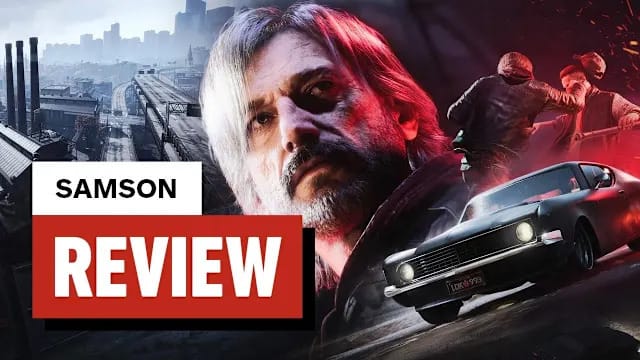
Samson is a single-player, story-driven crime thriller developed by Nerial and published by Devolver Digital, arriving on PC in 2026 with a $29.99 price tag. It’s a linear narrative experience that sits somewhere between the top-down isometric brutality of Hotline Miami and the dialogue-heavy moral decay of Disco Elysium — except it doesn’t quite reach the heights of either. The game follows Samson, a fixer caught in the gravitational pull of organized crime, as he navigates a world where branching dialogue choices and mission decisions occasionally reshape the story. Expect roughly 8-10 hours of content on a first playthrough if you explore methodically and accept that some infiltrations will fail due to AI detection quirks.
This is not a sandbox. There’s no freeroaming, no side hustles to build wealth, no reputation system to grind. Samson is a rails-guided experience that prioritizes atmosphere and consequence over player agency depth. It targets players who loved the noir aesthetic and decision-making of Disco Elysium, the tension of methodical stealth games like Hitman’s smaller maps, and the dark humor of crime fiction. If you’re hunting for a game that rewards patience and calculated risk-taking, Samson has the bones for that — but execution stumbles repeatedly. This is absolutely not the game for players who demand consistent AI behavior, deep replayability, or a story that maintains narrative momentum across all four acts.
Gameplay and Core Mechanics: What You Actually Do in Samson
The core loop in Samson is deceptively simple: infiltrate a location, make dialogue and mission decisions that ripple through the narrative, manage consequences, and move forward. In practice, you’ll spend most of your time either crouched behind cover waiting for guard patterns to align, or sitting in dialogue trees selecting dialogue options that feel like they matter more than they actually do. The moment-to-moment feel oscillates between genuinely tense and frustratingly arbitrary. On PC, the controls themselves are tight — WASD movement, mouse-look, and context-sensitive interactions all respond immediately — but the menu navigation to access your inventory or objectives feels clunky, with unnecessary clicks between screens that should be consolidated. The learning curve is moderate; the game punishes impatience and rewards observation, but only when the systems cooperate.
Stealth and Infiltration System
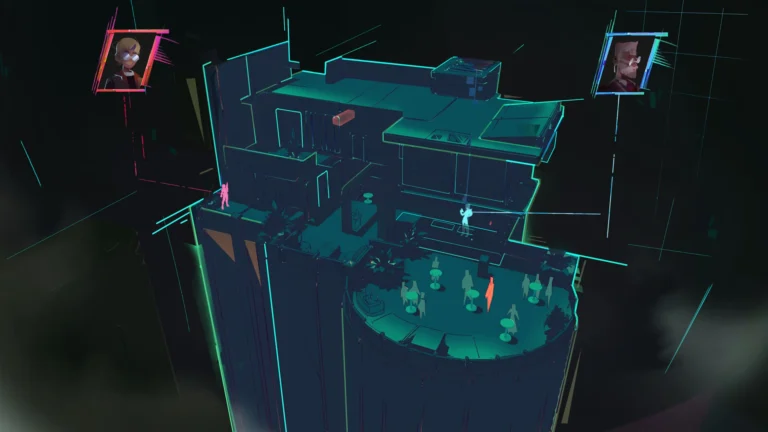
Stealth in Samson operates on a cone-based detection system: guards have a forward-facing vision cone that expands as they move, and you need to stay outside it or use cover to break line of sight. Noise matters — running on tile floors alerts guards faster than walking on carpet, and shooting a weapon without a silencer is an instant alarm. Cover mechanics are straightforward: stand behind a wall or object, and guards won’t see you unless they specifically investigate your position. This should feel predictable, but it doesn’t always. Repeatedly, I’d position myself in what seemed like perfect cover, watch a guard’s patrol route for a full minute to understand the timing, and then move exactly when the guard turned away — only to have the AI spot me through the solid brick wall I was standing behind. The detection system feels like it has invisible “gotcha” zones that aren’t explained, making successful infiltrations feel lucky rather than earned. When stealth works, it’s genuinely rewarding — that moment when you slip past three guards in sequence, knowing you timed each movement perfectly, delivers real tension. But the inconsistency undermines the entire system.
Decision Trees and Consequence Engine
Samson promises a consequence engine where your choices reshape the story. In dialogue scenes, you’ll pick between options like “threaten the informant” or “appeal to their greed,” and the game tracks these decisions. A specific example: in Act One, you can choose to spare or execute a rival fixer named Garrett. If you spare him, he reappears three chapters later as an uneasy ally offering intel. If you execute him, his lieutenant hunts you for revenge, triggering a tense confrontation. The problem is that most consequences feel cosmetic rather than structural beyond these binary branches. You might choose mercy over violence in an early mission, and the game remembers it — but the narrative acknowledgment is often a single line of dialogue three hours later, not a meaningful fork in the story. Some choices do matter: there are at least three distinct ending scenarios depending on your choices throughout the game, including one where you betray your crew entirely versus one where you protect them. But the branching isn’t as deep as the game implies. After your first playthrough, you’ll realize that most of your “agency” was actually a predetermined path with cosmetic flavor text.
Story, World and Presentation: Does Samson Nail the Crime Atmosphere?
Samson’s narrative setup is genuinely compelling: you play as a career criminal watching his world collapse as younger, hungrier operators muscle in on territory, and you’re forced to choose between loyalty to old allies and survival. The premise echoes the best crime fiction — think Michael Mann’s Heat or the fatalism of The Wire. The protagonist himself is a character study worth exploring: he’s not a hero, not even anti-hero-coded in a fun way. He’s just a guy who made certain choices decades ago and is now living with the consequences. The problem emerges in Act Two, where the narrative momentum stalls. Missions start to feel repetitive (infiltrate location, make choice, watch cutscene), and the emotional stakes that seemed so sharp in the opening hours begin to diffuse. By the final act, the story rushes toward a conclusion that feels earned on paper but emotionally hollow in execution.
The world design is dense but underexplored. You’ll move through detailed environments — a nightclub with multiple entry points, a warehouse district with verticality, an apartment complex with interconnected passages — but these spaces exist primarily as stealth puzzles rather than lived-in locations. There’s environmental storytelling in the form of scattered documents and overheard conversations, but it’s sparse enough that you’ll miss most of it on a first playthrough. The art direction leans hard into a gritty noir aesthetic with desaturated colors, heavy shadows, and angular architecture that evokes a city perpetually under rain. It works visually, though the style occasionally obscures readability — I’ve mistaken cover objects for walls and vice versa due to the murky lighting.
The sound design is the game’s standout strength. The original soundtrack, composed by Ólafur Arnalds, is haunting and thematically perfect — sparse piano lines that build to orchestral swells at the right moments. Ambient sound design is meticulous: footsteps echo differently on various surfaces, guard radio chatter creates atmosphere, and the absence of music during tense infiltration sequences makes every sound feel dangerous. Voice acting is solid across the board; the lead actor voicing Samson delivers a world-weary performance that nails the character’s resignation. Supporting cast performances vary, with some characters feeling fully realized and others reading as functional exposition.
On the technical front, Samson launches on PC with generally solid optimization. Frame rates hold steady at 60+ FPS on mid-range hardware (RTX 3060, Ryzen 5 5600X), though the game does have occasional stutters during scene transitions. There are minor visual bugs — textures occasionally pop in late, and I’ve seen NPCs clip through walls during animations — but nothing game-breaking. Loading times are reasonable, typically 8-12 seconds between major sections. Performance is acceptable, but not exceptional.

Content, Length and Replayability: Is There Enough Game Here?
The main story takes 8-10 hours to complete on a first playthrough if you’re methodical and explore side paths. That’s a respectable length for a narrative-focused game, but the replayability question is thornier. Samson has multiple endings — at least three distinct final scenarios depending on your choices throughout the game — which theoretically incentivizes a second run. In practice, the second playthrough is a slog. Since you already know the story beats, the tension that made the first run compelling evaporates. The dialogue doesn’t change substantially based on your prior knowledge, so you’re essentially watching the same cutscenes with slightly different flavor text. The game has no New Game Plus mode that would add modifiers or new challenges to justify revisiting the story.
Side missions exist, but they’re thin. There are optional jobs that branch off the main path — a job to steal documents from a rival gang’s safehouse, or to eliminate a witness before they testify — but they’re largely infiltration-puzzle variations without narrative depth. These side missions don’t develop the world or characters in meaningful ways — they’re filler that pads the playtime without adding narrative depth. The developer has announced post-launch support, but as of this review’s publication, no DLC roadmap exists. This means that what you see on day one is the entire experience; there’s no promise of new content to extend the game’s lifespan.
Flaws, Frustrations and Red Flags: Where Samson Falls Short
Samson’s most critical flaw is the inconsistent stealth AI. I’ve already touched on the invisible detection zones, but the problem runs deeper. Guards will sometimes ignore obvious sounds, and other times they’ll investigate phantom noises. I watched a guard walk directly past me while I was crouched in plain sight — no cover, no stealth bonus — simply because the AI hadn’t finished its patrol routine. Then, minutes later, the same guard type detected me through a wall. This inconsistency isn’t a quirk; it’s a design failure that breaks the core gameplay loop. When you can’t trust the system to behave predictably, methodical stealth planning becomes a gamble, which undermines the entire tension the game is trying to build. For players who specifically want stealth to feel like a puzzle where careful observation leads to guaranteed success, this will be infuriating.
The narrative loses critical momentum in Act Two. The first four hours establish stakes, introduce compelling characters, and set up moral dilemmas that feel weighty. Then, the game stalls. You’re sent on repetitive infiltration missions that don’t advance character arcs or the central conflict in meaningful ways. The pacing feels like the developer couldn’t figure out how to escalate the story, so they padded it with busywork instead. By the time Act Three arrives, the emotional investment you built in the opening hours has dissipated. The final confrontation should hit hard, but it lands with a thud because the narrative has spent 6+ hours spinning its wheels. This is particularly damaging for a narrative-first game; players who buy Samson for the story will feel cheated by Act Two’s stagnation.
Side content is genuinely copy-pasted. Every optional mission follows the identical structure: receive a job, infiltrate a location, retrieve or eliminate a target, exfiltrate. There’s no variation in mission design, no unique mechanics or challenges introduced through side work. These missions exist solely to extend playtime and provide alternative narrative branches, but they do so without any creativity. Compare this to a game like Hitman, where side missions introduce novel challenges and force you to reconsider your approach to familiar locations. Samson’s side missions are busywork that actively discourages completionism. For completionists and players who value content variety, this is a significant disappointment.
The replayability value is severely limited for a $29.99 game. While multiple endings exist, the branching paths aren’t extensive enough to justify multiple full playthroughs. The story is engaging enough for one run, but the game doesn’t provide mechanical incentives (like a hard mode, permadeath option, or challenge modifiers) to replay it. For a single-player narrative game, this is acceptable — many story games are one-and-done experiences. But at this price point, with only 8-10 hours of content, the value proposition is thin. You’re paying nearly $3 per hour of gameplay for a game that doesn’t invite repeated engagement.
Verdict: Should You Buy Samson in 2026?
Samson is a game with excellent bones and execution that doesn’t match the ambition. The premise is compelling, the world is atmospheric, and the sound design is genuinely excellent. If you’re a patient player who can tolerate inconsistent stealth AI, who values noir atmosphere over mechanical depth, and who is willing to accept a narrative that peaks early and plateaus, then Samson has something to offer. You’ll find a game that respects your time enough to tell a focused story without endless padding — even if that story fumbles its own momentum.
However, at $29.99, Samson is overpriced for what it delivers. The 8-10 hour playtime, limited replayability, and thin side content don’t justify the full asking price. If you’re genuinely interested in the game, wait for a 40-50% discount — at $15-18, it becomes a reasonable purchase for narrative-focused crime game fans. At full price, this is a hard pass unless you have disposable income and a high tolerance for flaws. The game is competent and occasionally brilliant, but it promises more than it delivers, and that gap is too wide to ignore.
Score: 6/10 — Samson is a flawed but earnest crime narrative that rewards patience and atmosphere-appreciation in players who can overlook inconsistent mechanics and thin replayability.
Verdict: WAIT for a 40-50% sale. Not worth $29.99 full price. Skip entirely if you demand mechanical consistency or deep branching narratives.
Frequently Asked Questions
Is Samson worth buying in 2026?
Samson is worth buying only if you catch it on sale for $15-18 and you prioritize noir atmosphere and narrative over mechanical consistency. At full price ($29.99), the 8-10 hour playtime and limited replayability don’t justify the cost. The stealth AI inconsistency and Act Two pacing issues make it a risky full-price purchase for Samson.
How long does it take to beat Samson?
The main story in Samson takes 8-10 hours to complete on a first playthrough if you explore optional paths and take time to absorb the world. Speedrunners who skip dialogue and use trial-and-error stealth tactics can finish in 6-7 hours. There’s minimal incentive to replay the story, so expect a single 8-10 hour experience with Samson.
Does Samson have non-lethal stealth options?
Samson does not feature dedicated non-lethal takedown mechanics. You can choose not to engage guards and slip past them silently, which is the primary non-lethal approach in Samson. Once detected, you must either eliminate guards or flee. There are no tranquilizer weapons or knockout options in Samson’s stealth system.
How many endings does Samson have?
Samson features at least three distinct ending scenarios. The outcomes depend on major choices you make throughout the game, particularly regarding whether you betray or protect your crew, and how you handle key confrontations with rival factions. Most playthroughs of Samson will reach one of these three primary endings.
Is Samson well optimized on PC?
Samson runs at 60+ FPS on mid-range PC hardware (RTX 3060, Ryzen 5 5600X) with solid optimization. There are occasional stutters during scene transitions and minor texture pop-in, but nothing that significantly impacts gameplay. Loading times in Samson are reasonable at 8-12 seconds between sections.
How does Samson compare to Hotline Miami and Disco Elysium?
Samson borrows the noir atmosphere and isometric perspective of Hotline Miami and the dialogue-heavy moral decision-making of Disco Elysium, but doesn’t reach the heights of either. Samson is slower-paced than Hotline Miami (stealth over action) and less narratively ambitious than Disco Elysium (with shallower branching). Think of Samson as a middle ground that doesn’t quite excel at either approach.