Forza Horizon 6 Review: The Racing Game You Never Want to Stop
Disclosure: As an Amazon Associate, Bytee earns from qualifying purchases.
You crest a mountain ridge at 180mph in a tuned Lamborghini Huracán, managing throttle input carefully to keep the rear end planted as you approach a blind left-hander. The licensed track blaring through the speakers matches your heartbeat. For a split second, Forza Horizon 6 reminds you exactly why you fell in love with racing games. After 65 hours with Playground Games’ latest festival racer, I can confirm that Horizon 6 is the rare open-world game that understands exactly what it is — and executes that vision with precision, style, and enough content to keep you chasing just one more race until 2 a.m.
What Is Forza Horizon 6 and Who Is It For?
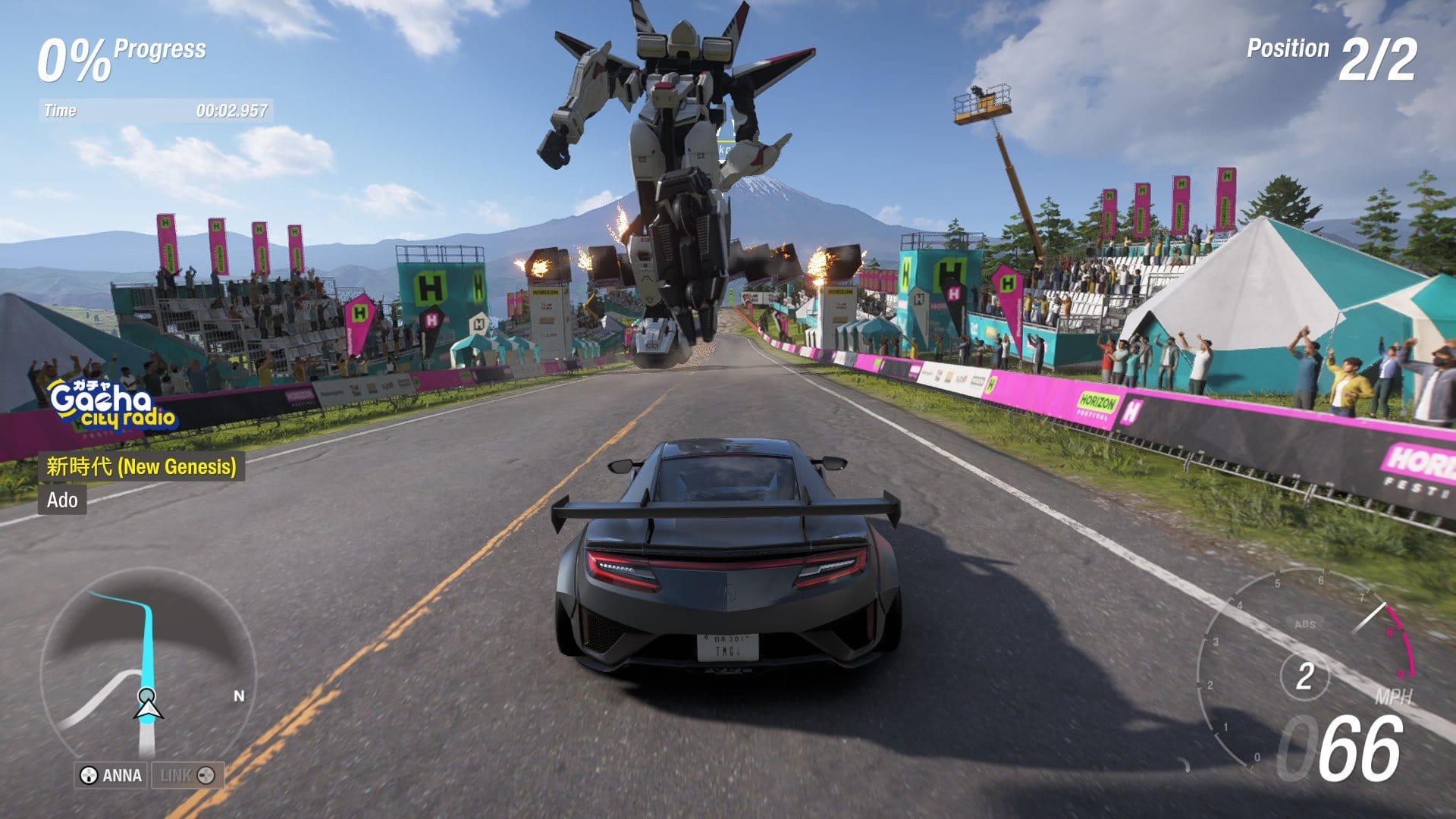
Forza Horizon 6 is an open-world arcade racer developed by Playground Games and published by Xbox Game Studios. It launches simultaneously on Xbox Series X|S, Windows PC, and Xbox Game Pass on November 4, 2026, with a standalone retail price of $69.99. This is not Forza Motorsport — it’s not a simulation. Horizon 6 is a celebration of driving freedom, car culture, and the kind of racing that prioritizes fun and accessibility over tire-temperature management and fuel strategies. The game targets anyone from a casual player who hasn’t touched a racing game since Gran Turismo 3 on PS2, all the way to enthusiasts who want to spend 40 hours tuning suspension geometry on a 1968 Ford Mustang. The campaign runs 15-20 hours if you stay focused on the story; completionists will find 80+ hours of content spread across seasonal challenges, barn finds, speed traps, drift zones, and creative EventLab tools. Solo play is the default, but multiplayer modes let you race against up to 11 other players online or cooperatively with friends through the new Convoy system.
The single biggest advantage Horizon 6 has over most $70 games is its day-one inclusion on Xbox Game Pass — meaning subscribers get the full game, all DLC, and seasonal updates included in their monthly subscription. If you’re already on Game Pass, the value proposition is exceptional: you’re getting a 65+ hour game with zero additional cost. For PC players, the game runs on Windows 10 and 11, with scalable settings that let older hardware play at 1080p/60fps while RTX 4090 owners can push 4K/120fps with ray tracing. There is no PlayStation release, period — this is an Xbox and PC exclusive. Cross-play between Xbox and PC is fully supported, so you can race with friends regardless of platform. If you’re a PlayStation-only gamer, this is a hard stop: you cannot play Forza Horizon 6, and there’s no indication Microsoft plans a port.
Gameplay and Core Mechanics: What You Actually Do in Forza Horizon 6
The core loop of Forza Horizon 6 is beautifully simple: you explore the map, enter racing events, earn credits and XP, and unlock new cars and customization options. On your first 30 minutes, you’ll complete the opening festival circuit race — a 5-mile loop through the Spanish countryside starting near Barcelona — and immediately unlock access to the full open world. From there, the game respects your time: you can fast-travel to any discovered location, jump into any event on the map, or simply drive aimlessly through the Pyrenees if you want. The moment-to-moment feel is breezy and immediately rewarding — finish a street race in downtown Madrid, earn 45,000 credits, and immediately see your total increase on screen. Lose a race? No penalty. Restart it. The game never punishes failure, only celebrates success. This design philosophy makes Horizon 6 feel fundamentally different from sim racers like Gran Turismo 7 or Assetto Corsa Competizione, where a single mistake in lap 3 of a 30-minute race can ruin your entire session. Here, you’re always one restart away from redemption.
The assists system is the gateway that makes Horizon 6 accessible to everyone. Driving line assist shows you the optimal racing line in real-time — turn it on and you’ll see a green line indicating where to brake and accelerate through each corner. Braking assist automatically manages your brake pressure so you don’t lock up. Traction control eliminates wheelspin when accelerating out of turns. Stability assist prevents oversteer and keeps the car pointed forward. Rewind lets you undo a crash and try again from 10 seconds prior without penalty. Turn all of these on, and a player who’s never held a racing controller can finish races cleanly. Turn them all off, and you’re managing throttle modulation, weight transfer, and precise steering input on every corner — still arcade-friendly, but with real skill expression. The game doesn’t force a choice: you can mix and match, leaving stability assist on while disabling the driving line. This flexibility is why Horizon 6 works for a 13-year-old and a 45-year-old equally well.
Driving Feel, Handling, and Car Customization
The driving feel sits squarely in the arcade-sim spectrum — closer to arcade, but with enough mechanical depth to reward precision. A stock Nissan Silvia will understeer predictably if you enter a corner too fast, but it won’t suddenly flip or spin out like an unforgiving sim would. The car will push wide, encouraging you to brake earlier or downshift more aggressively next time. The haptic feedback on Xbox Series X controllers is excellent: you feel every texture change from asphalt to gravel, every impact with a guardrail, and every wheelspin when you mash the throttle. It’s subtle enough not to distract, but present enough to inform your inputs. Steering wheel support is available for both Xbox and PC, and the game respects the hardware — force feedback through a Fanatec or Thrustmaster wheel feels natural and responsive, not over-tuned or laggy. The real difference between assists-on and assists-off comes in wet weather or on gravel: with assists enabled, the car is almost forgiving to the point of being boring. With them disabled, a sudden downpour on a mountain pass becomes genuinely challenging, requiring you to modulate throttle and steering input with care.
Horizon 6 launches with 847 cars — yes, 847. From a 1968 Ford Mustang to the 2026 Porsche 911 Carrera, the roster is staggering in breadth. Every car in the game can be upgraded and tuned. Upgrades are mechanical: swap a turbocharger onto a stock Honda Civic, upgrade the suspension, add a roll cage, and you can transform it from a 90hp commuter into a 280hp road racer. Tuning is where enthusiasts spend hours: adjust spring stiffness, anti-roll bar rates, differential lock percentages, and braking balance. The tuning UI includes a “suggested tuning” feature for players who don’t want to dive into spreadsheets. The livery editor is robust — you can paint individual car panels, apply decals, layer vinyls, and create designs from scratch or download community creations. Car Mastery trees are progression systems unique to each vehicle: drive a Ferrari 488 GTB and you’ll earn Mastery XP, which unlocks perks like reduced upgrade costs, bonus credits, or exclusive cosmetics. It’s a clever way to encourage players to drive a variety of cars rather than settling on one meta-choice. The roster is deep enough that you’ll never run out of cars to drive, but the real question is whether 847 cars matter when you’ll likely gravitate toward 5-10 favorites. For most players, the answer is yes — the variety keeps the game fresh across 60+ hours.
World Design, Story, and Presentation: Where Is Horizon 6 Set?
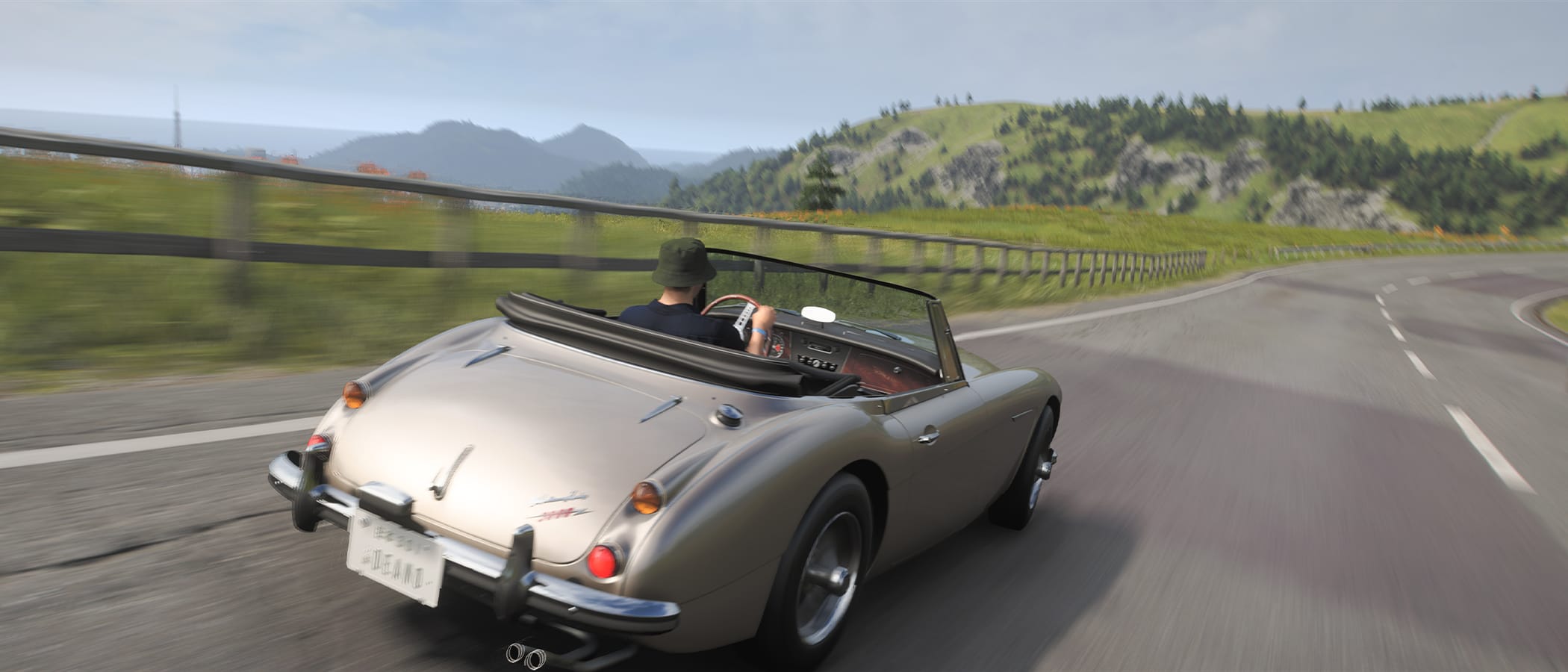
Forza Horizon 6 is set in Spain, spanning from the beaches of Barcelona to the mountain passes of the Pyrenees to the desert plains of Andalusia. The setting is a deliberate shift from Horizon 5’s Mexico — Spain offers European sophistication, winding mountain roads, and a landscape that feels distinctly different from the lush jungles and volcanic terrain of its predecessor. The biome variety is excellent: you’ll drive through dense pine forests, across sun-baked plateaus, along coastal highways with Mediterranean views, and through charming Spanish villages where locals react to your speeding supercars with visible annoyance. The day-night cycle is continuous and affects visibility and handling — driving at night requires more attention, while sunrise drives across the Sierra Nevada are genuinely beautiful. Dynamic weather is impactful: a sudden thunderstorm in the mountains doesn’t just look dramatic, it changes how your car behaves. Grip drops noticeably, and hydroplaning becomes a real concern if you’re not careful. The art direction is outstanding — the game runs at native 4K/60fps on Xbox Series X with quality mode, and the draw distance is impressive enough that you can see your destination minutes before arriving.
The open world feels alive in some moments and empty in others. You’ll encounter traffic on highways, but venture into rural areas and you’ll see almost no pedestrians. This is by design — Playground Games prioritizes drivability over urban density. You’ll never be stuck in traffic or forced to navigate around crowds; the world is built for you to drive freely. The narrative wrapper around all this is, frankly, thin. You’re a new driver joining a Spanish festival celebrating car culture. Over the campaign, you’ll meet a handful of characters who are enthusiastic about cars but have almost no personality. The dialogue is serviceable but forgettable — you’ll skip most story cutscenes and miss nothing. The campaign moves quickly and gets out of your way. The soundtrack is phenomenal, featuring licensed tracks across multiple genre-specific radio stations: rock, hip-hop, electronic, indie, and classical. The licensed music (The Killers, Dua Lipa, Stormzy) is mixed with original compositions, and you can customize which stations play during events. Voice acting is present but unremarkable — the British festival organizer who greets you at the start is cheerful but becomes grating after 10 hours. Thankfully, you can mute DJ chatter in the audio settings, though the option is buried and not obvious to new players.
Technical performance at launch is solid. The review build ran at a consistent 60fps in Quality mode on Xbox Series X, with no frame drops during intense moments with multiple cars on screen. PC performance scales well from a GTX 1070 (1080p/60fps medium settings) to RTX 4090 (4K/120fps ultra settings with ray tracing). Ray tracing adds reflections on wet surfaces and car paint, but the performance cost is noticeable — expect a 15-20fps hit on high-end GPUs if you enable it at high settings. There were no game-breaking bugs in the review build, though one visual glitch appeared occasionally where car shadows would flicker on wet surfaces. A day-one patch addressed some stability issues and improved loading times by 10-15 percent.
Content, Length, Seasonal Events and Replayability
If you’re purely chasing the story, expect 15-20 hours to roll credits. However, the story is just the skeleton of what Horizon 6 offers. The full content suite includes: 150+ individual racing events (street races, circuit races, off-road races, drag races, and more), 60+ barn finds (hidden classic cars scattered across the map), 40+ speed trap zones, 30+ drift zones, seasonal challenges that rotate every two weeks, and Horizon Arcade — a cooperative minigame mode where you and up to three friends complete stunt challenges for bonus rewards. EventLab is Playground Games’ creative tool, letting you design custom races by placing checkpoints on the map, setting waypoint sequences, defining AI opponent behavior, and sharing creations with the community. I built a 12-mile mountain descent course through the Pyrenees that took 8 minutes to complete, with three AI opponents set to Expert difficulty. The learning curve is steep, and the in-game tutorial is sparse, but there are thousands of user-created events available to play. Full completion — driving every road, discovering every location, earning every achievement — will take 80+ hours minimum. Seasonal content is where Horizon 6 extends its lifespan significantly. Every two weeks, new seasonal challenges arrive, offering exclusive cars and cosmetics. This is the game’s biggest strength and biggest weakness: the content is genuinely worth chasing, but it creates seasonal FOMO (fear of missing out). Miss a seasonal week, and you’ll lose access to that exclusive Ferrari or legendary livery until it cycles back months later. Based on Forza Horizon 5’s post-launch support, expect 2-3 expansion packs over the next year, each adding 10-15 cars and new story missions. The base game is content-complete without DLC, but expansions do add meaningful new areas and events.
The endgame grind is solid: after finishing the story, you’ll pursue Mastery XP on remaining cars, hunt down the last barn finds, and participate in weekly seasonal events. There’s no traditional “endgame” like a raid or a final boss, but the Eliminator mode — a battle royale-style competition where 72 players start scattered across the map and race toward a shrinking zone — provides competitive endgame content. Multiplayer modes include Horizon Open (standard online races with various rule sets), The Eliminator, and Convoy (cooperative races for you and up to three friends). Cross-play is enabled by default, so you’ll race against PC and Xbox players equally. The matchmaking is competent, pairing you with drivers of similar skill levels, though high-level players occasionally dominate lobbies.
Flaws, Frustrations and Red Flags: What Forza Horizon 6 Gets Wrong
Forza Horizon 6 is an excellent game, but it has real flaws that will frustrate specific players. First, the narrative is genuinely paper-thin and skippable. If you’re hoping for the character depth or story arc you’d find in a single-player campaign like Uncharted or The Last of Us, you’ll be disappointed. The characters have no arc, no growth, and no memorable moments. The festival organizer’s dialogue repeats verbatim multiple times throughout the campaign. The plot setup — “join a Spanish car festival” — never develops into anything meaningful. This doesn’t ruin the game since most players won’t care, but if you value narrative in your single-player games, Horizon 6 will feel hollow and forgettable.
Second, AI opponents exhibit aggressive rubberbanding on higher difficulties. Set the game to Expert or Unbeatable difficulty, and the AI will suddenly accelerate past you in the final lap, regardless of how well you’ve driven. This isn’t realistic racing behavior; it’s artificial catchup mechanics designed to keep races “competitive.” The AI never makes mistakes, never brakes too late, never misses an apex, and never loses traction. On Unbeatable difficulty, winning requires perfect execution while your AI opponents are essentially invincible until you cross the finish line first. Casual players won’t notice this, but experienced racing game fans will find it frustrating and immersion-breaking. The solution is simple: lower the difficulty. But for players who want a real challenge without artificial handicaps, this is a legitimate complaint that undermines the game’s credibility as a “racing” experience rather than a “driving” experience.
Third, monetization is confusing and slightly aggressive. Forza Horizon 6 costs $69.99 standalone, but it’s also included in Xbox Game Pass. Additionally, there’s a $39.99 Car Pass that includes monthly car packs (usually 5-8 cars per month), and past Horizon games have had $19.99-$29.99 expansion packs. For a $70 game that’s also on Game Pass, this creates mixed messaging: Is this a premium product worth $70, or a Game Pass game with optional cosmetics? The answer is “both,” but it feels slightly exploitative to players who buy the game at full price and then see $40 car packs available immediately. Importantly, the base game is not incomplete — you don’t need the Car Pass to enjoy the full experience. But the aggressive DLC messaging immediately after launch will frustrate players who dislike cosmetic-plus-car monetization in premium games.
Fourth, seasonal FOMO mechanics pressure players to log in weekly or miss exclusive cars. Every two weeks, seasonal events rotate, and if you don’t complete the seasonal challenges within that window, you lose access to exclusive cars for months. This is intentional design meant to encourage regular engagement, but it’s frustrating for players with inconsistent schedules. Miss two weeks due to work or family, and you’ve permanently lost access to three exclusive cars until they cycle back. For a game that positions itself as a relaxing, player-friendly experience, this contradicts that philosophy. The seasonal cars are cosmetic-equivalent (they’re not mechanically unique), but they’re still exclusives, and that stings for completionists and collectors.
Finally, EventLab and the creative tools have a steep learning curve with poor in-game tutorials. The UI is cluttered, the documentation is sparse, and most players will give up after 10 minutes of trying to place waypoints and set AI parameters. This isn’t a deal-breaker for casual players, but for creative types who want to design custom races, the barrier to entry is frustratingly high. There are community guides available online, but the game should teach you better in-game. A proper tutorial mode showing step-by-step how to create a race would fix this immediately.
Verdict: Should You Buy Forza Horizon 6?
Forza Horizon 6 is a masterclass in open-world racing design. It respects your time, celebrates car culture, and delivers 60+ hours of genuinely fun driving across a beautiful recreation of Spain. The handling is arcade-friendly but mechanically deep enough for enthusiasts. The car roster is staggering. The seasonal content keeps the game fresh. And if you’re on Game Pass, the value proposition is exceptional — you get this entire experience for free as part of your subscription.
However, Forza Horizon 6 is not a dramatic leap forward from Forza Horizon 5. If you’ve already invested 100+ hours in Horizon 5, the core loop is identical, and the map structure feels similar. The story is still negligible. The AI still rubberbands on Expert difficulty. If you’re a FH5 veteran expecting revolutionary changes, you’ll be disappointed. For players new to the series, or who skipped Horizon 5, this is an absolute must-play. For Horizon 5 loyalists, this is a “wait for a sale or play it on Game Pass” situation.
Skip this game if: (1) you’re a PlayStation-only gamer with no access to Xbox or PC, (2) you need sim-level racing realism like Gran Turismo 7 or iRacing, (3) you demand a compelling single-player narrative, or (4) you resent seasonal FOMO mechanics that pressure regular logins.
Score: 8.5/10 — Forza Horizon 6 is the best open-world racing game available right now, with unmatched accessibility and content depth, held back slightly by thin storytelling, rubberbanding AI on higher difficulties, and seasonal FOMO design.
BUY on Game Pass (exceptional value, zero additional cost). WAIT for a $39.99–$49.99 sale if purchasing at full $69.99 retail and you’ve already invested 100+ hours in Horizon 5. At $69.99 standalone without Game Pass, the value is solid but not mandatory given the lack of narrative innovation and incremental gameplay improvements over Horizon 5.
Frequently Asked Questions
Is Forza Horizon 6 worth buying at $69.99 or should I just use Game Pass?
If you have Xbox Game Pass, absolutely play Forza Horizon 6 there — the value is unbeatable, and you get the full experience including all DLC and seasonal updates with zero additional cost. If you don’t have Game Pass, buying the $69.99 standalone copy is worth it if you’re a racing game enthusiast or new to the series. However, if you’re a casual player who plays games sporadically, subscribe to Game Pass for one month ($12.99), beat the campaign, enjoy the content, then cancel. You’ll spend less than buying Forza Horizon 6 outright. For Horizon 5 veterans, wait for a sale to $39.99–$49.99 before purchasing Forza Horizon 6 at full price.
How long does it take to beat Forza Horizon 6 and see all the content?
The story campaign in Forza Horizon 6 takes 15-20 hours to complete if you’re focused on rolling credits. However, full completion — discovering every location, finding every barn find, completing every event, and earning all achievements — will take 80-100+ hours across 6-12 months as seasonal content in Forza Horizon 6 rotates every two weeks. Most players will find 40-60 hours of engaging content before running out of new things to do in the base game.
Does Forza Horizon 6 have multiplayer and can you play co-op with friends?
Yes. Horizon Open is the standard online multiplayer mode in Forza Horizon 6 supporting up to 12 players in competitive races. The Eliminator is a 72-player battle royale mode. Convoy is the new cooperative mode allowing you and up to three friends to race together in a shared open world. Cross-play between Xbox and PC is enabled in Forza Horizon 6, so you can race with friends regardless of platform. All multiplayer modes support matchmaking, or you can invite specific friends for private sessions.
Is Forza Horizon 6 better than Forza Horizon 5 or worth upgrading?
Forza Horizon 6 is incrementally better than Horizon 5 — improved handling physics, a larger car roster (847 vs. 700+), better seasonal content pacing, and the new Convoy co-op system. However, if you’ve already invested 100+ hours in Forza Horizon 5, the core experience is almost identical. The map structure, event types, and progression systems are similar. Upgrade to Forza Horizon 6 if you’re on Game Pass (it’s free). At $69.99 standalone, it’s a “wait for a sale” situation if you’re a Horizon 5 veteran.
Does Forza Horizon 6 have microtransactions or aggressive DLC?
Forza Horizon 6 has no microtransactions in the base game — all cosmetics and cars are earned through gameplay. However, there is a $39.99 optional Car Pass providing monthly car packs (5-8 cars per month), and past Horizon games have had $19.99-$29.99 story expansions. The base game is complete without DLC, but the aggressive DLC messaging immediately after launch will frustrate some players. Seasonal exclusive cars in Forza Horizon 6 create FOMO, forcing you to log in every two weeks or miss limited-time cars permanently (they rotate back months later).