Directive 8020 Review: A Brilliant Concept Lost in Limbo
Disclosure: As an Amazon Associate, Bytee earns from qualifying purchases.
You are staring at a crew manifest on a flickering terminal, three names highlighted in amber, one already greyed out, and somewhere in the ventilation shaft above Deck C something is moving — and Directive 8020 has not yet told you whether it is the alien, a malfunction, or a crewmate losing their mind. This is the exact moment Directive 8020 should hook you. And for the first hour, it does. The atmosphere is suffocating. The dread is real. But then you realize you’re reading the same dialogue trees, clicking the same locked doors, and waiting for the game to tell you what happens next — and the spell begins to crack.

What Is Directive 8020 and Who Is It For?
Directive 8020 is a psychological sci-fi thriller developed by Tall Story Games and published by Secret Mode. It launched on Steam Early Access in 2024 at $19.99 USD and positions itself as a narrative-driven survival horror experience set aboard the research vessel Cassini. The game targets a very specific audience: fans of Alien Isolation’s slow-burn tension and Observation’s puzzle-based isolation, players who prioritize atmosphere and story over mechanical depth. A single playthrough clears in 4 to 6 hours depending on how thoroughly you explore the ship and read optional environmental logs. This is a solo-only experience with no sandbox elements, multiplayer modes, or emergent gameplay systems. It is a linear, narrative-first game that lives or dies on the strength of its writing, world design, and ability to sustain psychological horror through restraint.
If you are an action-first gamer, a multiplayer enthusiast, or someone who measures value by hours-per-dollar of mechanical variety, Directive 8020 will feel like a chore. If you are someone who loved the claustrophobic dread of watching a space station slowly fall apart in Observation, or who can sit through a five-hour game with minimal combat and maximal atmosphere, this is closer to your speed — though even then, the current Early Access build has significant reservations attached.
Directive 8020 Gameplay: What You Actually Do Aboard the Cassini
The core loop of Directive 8020 is straightforward: exploration, deduction, and survival tension woven together through a paranoia system that tracks both the alien threat and your crew’s mental state. Moment-to-moment, the feel is slow-burn dread. You move through the Cassini using mouse-and-keyboard controls (no gamepad support at review build), accessing terminals to read logs and crew communications, monitoring life support systems through a resource-depletion meter, and making dialogue choices that nominally affect which crew members survive encounters with the undefined threat stalking the ship. The action ceiling is deliberately low — there are no combat sequences, no stealth mechanics in the traditional sense, and no moment-to-moment decision-making about how to physically defend yourself. The learning curve is gentle because the game does not demand mechanical mastery; instead, it asks you to absorb atmosphere and make narrative choices when prompted.
What works is the paranoia system. As you progress, the game tracks how many crew members trust you (displayed as a numerical loyalty meter), how stable the ship’s systems are (oxygen reserves, thermal regulation, power distribution), and how close the threat is to critical areas (tracked through audio cues and crew reports). Your choices in dialogue and which crew members you prioritize for resources create genuine tension because the game does not always tell you whether you made the right call. You might allocate oxygen reserves to the botanist instead of the engineer, and hours later, that decision cascades into a thermal regulation failure in the hydroponics bay. This creates a sense of consequence that keeps you engaged. What frustrates, however, is how limited your actual interactivity is beyond these binary choice nodes. You cannot explore freely and discover alternate solutions. You cannot attempt unconventional strategies. Most doors are locked until the narrative permits them to open (the game explicitly denies access with “Access Denied” prompts that do not change based on your actions or resources). Most terminals offer only cosmetic flavor text or predetermined dialogue options. The game feels more like an interactive fiction experience than a game with systemic depth — and while that is not inherently bad, it is a significant limitation that genre fans should understand upfront.
The Paranoia and Threat System Explained
The paranoia and threat system is the mechanical heart of Directive 8020, and it is where the game attempts to create emergent tension. As you move through the Cassini, the threat level escalates based on your choices and exploration. When you access certain terminals or move through particular corridors, the game logs this activity and adjusts the crew’s anxiety (shown as a percentage indicator on your crew status screen) and your own vulnerability. The alien-adjacent threat (the game is deliberately vague about what is hunting you) has a presence tracker that increases when you are alone in certain areas or when crew members report strange sounds through the intercom system. Your dialogue choices directly influence crew morale and trust, which affects whether they will help you during critical moments (such as rerouting power during system failures) or whether they will panic and make poor decisions (refusing to leave their quarters, sabotaging your resource allocation).
The system attempts to create a sense that your decisions matter and that you cannot save everyone. In theory, this is compelling. In practice, at the review build stage, the threat system feels overly scripted. You quickly realize that certain outcomes are baked into specific story beats, and your “choices” mostly determine which dialogue you see rather than whether you actually change the outcome. The paranoia escalates on a predetermined timeline (the threat level increases by a fixed percentage every 10-15 minutes of gameplay), and crew deaths often feel inevitable rather than consequential to your actions. For example, the botanist will always die during the oxygen depletion sequence regardless of whether you allocated resources to them earlier — the game simply uses your choice to determine whether they die with dignity or in panic. This undermines the system’s psychological weight and makes multiple playthroughs feel like you are watching the same predetermined events with slightly different flavor text.
Story, World and Presentation: Where Directive 8020 Shines Brightest
The narrative concept is high-octane sci-fi horror: a deep-space research vessel detects an anomaly, the crew investigates, something goes catastrophically wrong, and you must figure out what happened while managing dwindling resources and crew stability. The problem is that the current Early Access build feels genuinely underwritten. The story beats are there, but the character development is thin, the motivations are unclear, and the pacing drags badly in the second and third acts. The dialogue is competent but uneven — some crew interactions feel naturalistic and tense (the argument between the chief engineer and the science officer over resource allocation in the communications log on Day 3), while others fall flat with exposition-heavy lines that no human would actually say in a life-or-death situation (“The quantum anomaly detector has registered seventeen distinct readings in the past six hours, which suggests increased subspace fluctuations”). The voice acting ranges from solid to forgettable depending on the actor, and the script does not give the better performers much to work with.
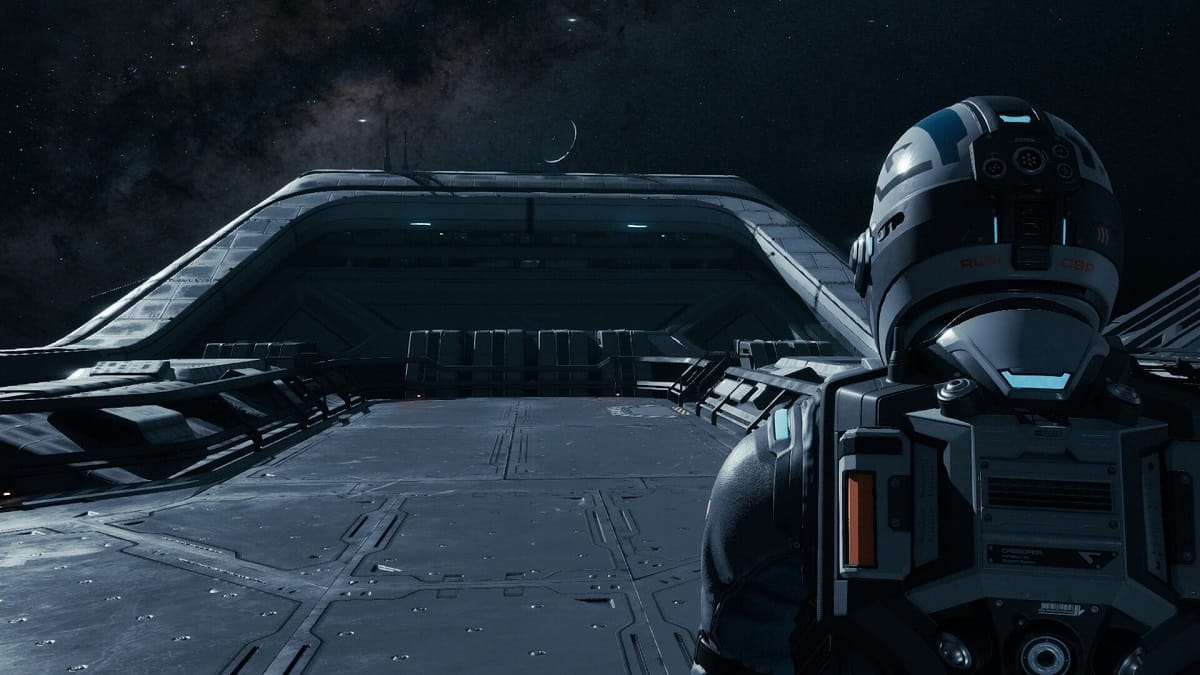
What absolutely excels is the environmental presentation. The Cassini itself is a character in Directive 8020, and the art direction captures cold, sterile, institutional terror with precision. The ship’s corridors are narrow and repetitive by design — the game reuses the same corridor assets with slightly different lighting and signage — which should feel monotonous but instead creates a disorienting sense of being trapped in a maze where every hallway looks identical until you realize you are lost. The lighting is deliberately dim, forcing you to rely on your suit’s flashlight and the ship’s emergency systems (which flicker and fail during high-threat moments), which creates natural claustrophobia. The sound design is exceptional — the game uses ambient hums, distant creaks, silence, and sudden audio spikes as psychological weapons. When you hear something moving in the ventilation shaft above Deck C (a specific recurring audio cue that plays during high paranoia moments), the sound design does most of the heavy lifting to make you believe something is actually there, even though you never see it. The original score by the in-house audio team is restrained and atmospheric, favoring ambient dread over dramatic orchestral swells. This is horror through implication, not spectacle.
Performance is a legitimate concern at the review build stage. On mid-range PCs (RTX 3060, Ryzen 5 5600X), the game stutters during scene transitions (specifically when moving between major ship sections like Deck A to Deck B) and when multiple systems are updating simultaneously (paranoia increase, crew status changes, threat level escalation happening within the same 2-3 second window). These are not game-breaking frame drops, but they are immersion-breaking interruptions that pull you out of the slow-burn tension at critical moments. There are also reported UI bugs where crew status information fails to update properly (the loyalty meter sometimes shows stale data for 10-15 seconds after a dialogue choice), and save state inconsistencies where loading a save sometimes reverts crew status changes made in the previous session. These are Early Access growing pains, but they are real problems that affect the current experience.
Content, Length and Replayability: How Much Game Are You Actually Getting?
A single playthrough of Directive 8020 takes 4 to 6 hours depending on your exploration pace and how much time you spend reading optional crew logs and environmental storytelling. There is no side content in the traditional sense — no optional missions, no discovery-based gameplay loops, no collectibles with meaningful rewards. The only “extra” content is reading supplementary logs scattered throughout the ship (approximately 40-50 optional text files that add flavor to the world but do not extend playtime significantly), which add flavor to the world but do not extend playtime significantly. There is no multiplayer, no co-op mode, and no endgame loop. Once you finish the story, the game ends. You can start a new playthrough to see alternate dialogue branches and different crew survival outcomes, but the core experience remains the same.
The developer’s Early Access roadmap promises additional chapters covering other crew members’ perspectives and expanded story content, but this content does not exist in the current build. The roadmap suggests the game could eventually grow to 8-10 hours of content, but that is not here yet. The monetization is not aggressive — there is no battle pass, no cosmetic shop, no aggressive DLC pricing — but the episodic structure strongly implies that future chapters will be paid content. This raises a legitimate concern about the long-term cost of the full experience. At $19.99 for 5 hours of current content, the price-to-value ratio is weak. If you are paying $20 for a complete game, you expect more. Replayability exists only for players who care about branching dialogue and crew survival outcomes, and even then, the linear structure means you are not discovering new areas or mechanics on subsequent playthroughs.
Flaws, Frustrations and Red Flags: The Honest Problems With Directive 8020
First and most critical: the Early Access content feels genuinely incomplete, not just unpolished. This is not a finished game with some rough edges. This is approximately 40-50% of a game that the developer is asking you to pay full price for. The story cuts off at a narrative cliffhanger (the final scene shows the crew discovering the true nature of the threat, then cuts to black with “Chapter 1 Complete” text). Character arcs are left hanging (the chief engineer’s subplot about sabotaging the captain’s decisions is never resolved). The threat is never properly explained or resolved (you learn what the anomaly is, but why it is aboard the ship and what it wants remain unanswered). You finish the game with more questions than answers, and it is unclear whether that is intentional ambiguity or whether the developer simply has not finished writing the ending. For a narrative-first game, an unfinished story is a fatal flaw. You are not paying for an early access pass to a complete experience — you are paying to be a beta tester for a game that may or may not deliver on its promises.
Second: the interactivity is shallower than genre peers, making it feel closer to interactive fiction than a game. In Alien Isolation, you hunt and are hunted within systemic environments where your choices about where to hide, what tools to use, and how to move create emergent moments. In Observation, you solve puzzles by manipulating ship systems (rerouting power, hacking terminals, accessing restricted areas) and uncovering hidden information through environmental investigation. In Directive 8020, you mostly watch events unfold and click through dialogue trees when prompted. The vast majority of doors are locked until the story says they can open (the laboratory door on Deck B remains sealed for the first 2.5 hours despite containing resources you need). The vast majority of terminals offer only flavor text (you can read the captain’s personal log, the crew roster, environmental data, but you cannot use these terminals to solve problems or unlock new areas). You cannot attempt unconventional solutions because the game does not provide the mechanical tools to do so. You cannot hack doors, override locks, or reroute power to open sealed areas. This is not inherently bad — some players prefer narrative linearity — but it is a significant limitation that makes the game feel passive rather than agentive. You are not solving the mystery; you are watching the game reveal the mystery on its schedule.
Third: PC performance breaks immersion on non-high-end rigs. On a mid-range system, the game stutters during critical moments — specifically when the paranoia system updates and multiple UI elements refresh simultaneously (crew loyalty changes, threat level increases, audio cues trigger). These stutters last 1-2 seconds and happen frequently enough (approximately every 10-15 minutes of gameplay) to be noticeable and immersion-breaking. For a game that lives entirely on atmosphere and psychological tension, a sudden frame rate dip is a death blow. The developers need to optimize the engine or reduce the visual complexity in certain scenes. This is fixable, but at review time, it is a real problem that makes the game feel unfinished rather than ready for purchase.
Fourth: pacing drags badly in the middle section with no mechanical escalation to compensate. The first hour is tense and engaging (you discover the anomaly, the first crew member dies, paranoia escalates). The final two hours sprint toward a climax (the threat becomes active, multiple system failures cascade, the story races to its cliffhanger conclusion). The middle three hours are a slog of repeated corridor traversals (you backtrack through the same hallways multiple times with no new areas opening up), crew conversations that circle the same emotional beats (crew members repeatedly express fear about the threat, ask for reassurance, then return to their quarters), and a threat level that increases on a predetermined timeline regardless of your actions (the paranoia meter fills automatically every 10-15 minutes, making your dialogue choices feel cosmetic). Because there is no mechanical escalation — no new tools to acquire, no new systems to manipulate, no new challenges to overcome — the game relies entirely on narrative momentum to carry you through this section. And the narrative, in its current state, is not strong enough to sustain that momentum alone. The dialogue repeats the same themes (crew members fear the unknown, doubt your leadership, worry about survival) without developing new character dynamics or emotional stakes.
For players seeking action, mechanical depth, or systemic emergent gameplay, Directive 8020 will feel like a waste of time and money. For players expecting a complete narrative experience, the unfinished story is a dealbreaker. The game is not bad — the bones are genuinely promising — but it is not ready for full-price purchase in its current state.
Directive 8020 Verdict: Buy, Wait or Skip?
Directive 8020 is a WAIT, not a Skip. The core concept is solid. The atmosphere is genuinely unsettling. The world design shows real craft and care. But the game is fundamentally incomplete, and asking players to pay $19.99 for 5 hours of an unfinished narrative is asking too much. The smart move is to wishlist the game on Steam and check back when Chapter 2 or 3 releases. At that point, you will have a fuller picture of whether the developer’s roadmap actually delivers on its promises, and you will be able to assess whether the total content justifies the cumulative cost.
If you are a patient narrative horror fan who is comfortable with Early Access risk and does not mind revisiting a game once new content releases, and if you can accept that the current story ends on a cliffhanger, then Directive 8020 is worth a purchase at a discount price (wait for a 20-30% sale, bringing the effective cost to $14-16). But at full price in its current state, the value proposition is weak. The game will frustrate action gamers, multiplayer enthusiasts, and anyone seeking mechanical depth. It will disappoint players expecting a complete narrative arc. It will test the patience of anyone playing on a mid-range PC due to performance issues.
Score: 6.5/10 — A game with a genuinely promising foundation that is undermined by incomplete content, shallow interactivity, and technical roughness. For narrative horror fans with patience and a tolerance for Early Access risk, there is something here worth revisiting once more chapters release. For everyone else, wait for the full release or skip entirely. At $19.99, Directive 8020 represents poor value for a 5-hour incomplete experience; at $14.99 on sale, it becomes a reasonable gamble for patient fans of Observation and Alien Isolation willing to accept an unfinished story.
Frequently Asked Questions
Is Directive 8020 worth buying right now in its Early Access state?
No, not at full $19.99 price. Directive 8020 is approximately 50% complete with an unfinished story that ends on a cliffhanger, thin content (5 hours), and performance issues on mid-range PCs that cause stuttering during critical moments. Wishlist it and buy when Chapter 2 releases or during a 25-30% sale. The concept is solid, but the execution is not ready for full-price purchase.
How long does it take to beat Directive 8020?
A single playthrough takes 4 to 6 hours depending on exploration pace and how thoroughly you read optional crew logs. The story ends on a cliffhanger and is not complete. Replayability exists only for players interested in seeing alternate dialogue branches and different crew survival outcomes, but the core experience is linear and does not change significantly on subsequent playthroughs.
Does Directive 8020 have multiplayer or co-op support?
No. Directive 8020 is a solo-only, single-player experience with no multiplayer, co-op, or competitive modes. It is a narrative-driven game designed for individual play with no plans announced for multiplayer features.
What genre is Directive 8020 and what games is it similar to?
Directive 8020 is a psychological sci-fi horror game that blends atmosphere and narrative with light puzzle-solving and survival tension. It is most similar to Alien Isolation (slow-burn space horror with resource management), Observation (isolated crew, system manipulation, mystery unfolding), and The Expanse (deep-space sci-fi setting). However, Directive 8020 has less mechanical depth than those games and feels closer to interactive fiction than a traditional game because you cannot solve problems through unconventional means or access locked areas before the story permits it.
Will Directive 8020 run well on a mid-range PC?
Not currently. At review on a mid-range system (RTX 3060, Ryzen 5 5600X), Directive 8020 stutters during scene transitions (moving between ship decks) and system updates (when paranoia increases and crew status changes simultaneously), which breaks immersion during critical moments. These stutters occur every 10-15 minutes of gameplay and last 1-2 seconds. The developers need to optimize performance. High-end systems (RTX 3080+) run it more smoothly, but mid-range players should expect immersion-breaking performance issues in the current build.
How much does the story change based on crew survival choices in Directive 8020?
Story changes are superficial. While your dialogue choices affect which crew members survive certain encounters, the core narrative beats and outcomes are predetermined. For example, the botanist will always die during the oxygen depletion sequence regardless of resource allocation — your choice only determines whether they die with dignity or in panic. The game uses your choices to show different dialogue branches rather than create genuinely branching story paths.
Does Directive 8020 have controller support?
No controller support exists in the current Early Access build. The game requires mouse-and-keyboard controls for terminal interaction and menu navigation. The developer’s roadmap does not list gamepad support as a planned feature, though this could change in future updates.