Zero Parades For Dead Spies Review: Cold War Thrills Worth It?
Disclosure: As an Amazon Associate, Bytee earns from qualifying purchases.
You are three floors up in a rain-soaked East Berlin consulate, a forged document in your inventory and a guard whose patrol route you have memorised for the last four minutes — then he stops, turns his head, and the game asks you to make a skill check you are not sure you can pass. Your Tradecraft stat is 58%, the check DC is 65%, and you have no save point for the last twenty minutes. This moment — this exact tension of preparation meeting uncertainty, of meticulous planning colliding with the unknowable — is what Zero Parades: For Dead Spies does better than almost any spy thriller I have played.
What Is Zero Parades: For Dead Spies and Who Is It For?
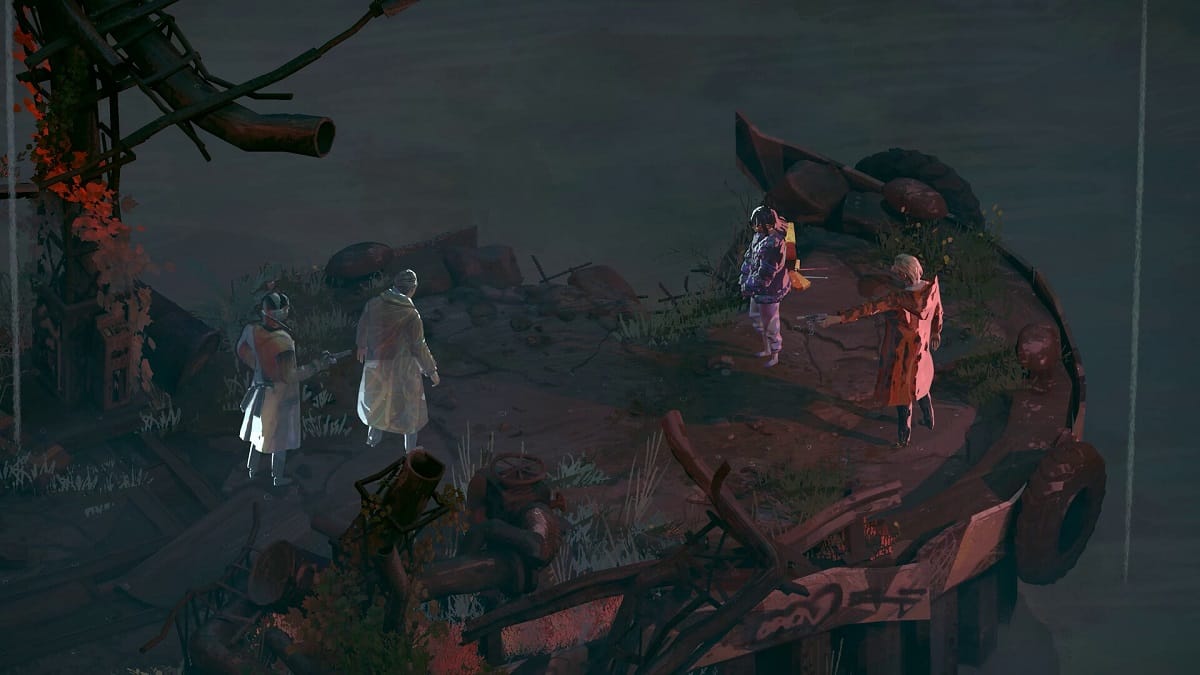
Zero Parades: For Dead Spies is a narrative-driven stealth-espionage thriller developed by Neon Machines and published via Steam Early Access, with a full 1.0 launch in early 2025. It is a PC-exclusive title priced at $24.99 USD, positioning itself as a premium indie experience rather than a AAA production. The game targets a very specific audience: players who adored the slow-burn narrative tension of Disco Elysium, the historical world-building of Pentiment, and the methodical stealth of classic Thief games, but who want all three fused into a Cold War spy story. This is emphatically not a shooter, not an action game, and not designed for players seeking constant adrenaline spikes.
The estimated playtime for a single complete run is 9–11 hours, depending on how thoroughly you investigate side threads and optional intelligence objectives. It is a solo narrative experience with no multiplayer, no co-op, and no live-service mechanics — you are paying for a carefully crafted story told through stealth, dialogue, and player choice. The game carries an M for Mature rating (ESRB) for violence, language, and thematic content involving political assassination and moral ambiguity. The tone is decidedly grey: there are no clean heroes here, only operatives with conflicting loyalties and the civilians caught in the machinery of espionage.
Gameplay & Core Mechanics: What You Actually Do in Zero Parades
The core gameplay loop in Zero Parades revolves around three interlocking systems: investigation, stealth infiltration, and dialogue-driven choice. Investigation plays out through document examination, NPC interviews, and pattern recognition — you photograph Soviet security schedules pinned in a guard barracks, speak with a defecting embassy clerk to learn which exits are monitored, and cross-reference overheard radio chatter to map camera blind spots. This intelligence directly feeds into stealth execution: you cannot simply slip past a guard; you must know his patrol loop, understand why he is positioned there, and exploit vulnerabilities you have uncovered. You spend roughly 40% of your time gathering intelligence through conversation and observation, another 40% executing infiltration sequences using that knowledge, and the remaining 20% in dialogue and skill checks that determine whether your preparation pays off or collapses. What makes this work is the tension between these modes — preparation feels as rewarding as execution because execution without preparation is suicide.
Mechanically, the controls are tight on keyboard and mouse — WASD movement, spacebar for crouch, middle mouse to peek around corners while maintaining cover. Controller support is available and functional, though the game was clearly designed for mouse precision. The learning curve is moderate: the first two hours teach you that rushing is fatal, that guards have defined patrol patterns (usually 3–5 minute loops), and that noise matters — a dropped item or a footstep on gravel will alert nearby enemies within a 15-meter radius. When it clicks, the game feels like a puzzle where you are both architect and solver. When it stalls, it stalls hard.
Stealth and Infiltration Systems Explained
The stealth mechanics are deceptively simple: you move behind cover (desks, crates, pillars), guards patrol in predictable arcs, and if a guard’s line of sight touches you for more than 2–3 seconds, an alert counter begins. Reach 100% alert and you are caught — triggering a consequence that ranges from a restart to an alarm that forces you to improvise an escape. The cover system is context-sensitive: press against a wall and your character automatically crouches and peers. It works 95% of the time but occasionally fails to register if you are at an odd angle, leading to frustrating “I was behind that!” moments where you are spotted despite being visually concealed. The detection AI is generally smart — guards respond to noise, react to seeing you, and communicate with nearby allies through radio chatter — but exhibits occasional inconsistency. I had one guard ignore me standing five feet away because his patrol route had him facing the opposite direction, even though logically he should have heard my footsteps on tile flooring. These moments break immersion and, when they happen during a high-stakes sequence, they feel unfair rather than challenging.
Where stealth truly shines is in the consequence system. Failure does not always mean game over. If you are spotted but escape the detection radius within thirty seconds, you have bought yourself time to hide or slip away. Some levels allow you to knock out a guard non-lethally (if your Stealth skill is high enough to perform a silent takedown), creating new routes through previously blocked areas. Other sequences intentionally force you to be seen, and the question becomes: can you talk your way out of it using Deception or Empathy checks? This flexibility transforms stealth from a binary (caught or not) into a spectrum of success and compromise. You can fail a stealth objective and still succeed at the mission by improvising — perhaps by befriending a guard through dialogue instead of avoiding him entirely.
Dialogue, Choices and Skill Checks: How Decisions Branch
The dialogue system is RPG-lite, built around a stat pool of five attributes: Tradecraft, Interrogation, Deception, Empathy, and Instinct. Each conversation branch is tagged with the stat required and the DC (difficulty class) needed to succeed. If you lack the stat, the check is impossible — you cannot brute-force a Tradecraft check with Empathy. This creates real character-building consequences: investing heavily in Deception makes you better at lying to guards and talking your way past checkpoints, but it locks you out of Empathy-based dialogue that relies on emotional honesty. I played one run focusing on Tradecraft (useful for technical discussions with Soviet scientists and reading classified documents) and found myself unable to befriend a contact who would have given me crucial intel about a rival faction; a second run prioritizing Empathy opened that path but closed off a technical solution involving hacking a secure terminal. The branching feels substantial, though some paths reconverge at critical story beats — you are not writing your own ending, but you are genuinely shaping how you arrive at it.
The writing quality is high. Dialogue avoids the overwrought exposition trap; characters speak like actual operatives, using jargon and implication rather than spelling out the plot. A conversation with a Soviet liaison officer might turn on a single phrase, a pause, or a tone of voice — the game trusts you to understand subtext. However, this also means the pacing can feel glacial for players accustomed to action-first narratives. A single dialogue scene can stretch 5–7 minutes, and if you are tired of talking, you will feel it. Failed skill checks carry weight: if you fail a Tradecraft check while bluffing your way past a KGB officer, he becomes suspicious, triggering an alert. If you fail an Interrogation check while trying to extract information from a prisoner, he clams up permanently. These failures are not soft resets — they close off information paths and force you to improvise with incomplete knowledge.
Story, World and Presentation: Cold War Atmosphere and Level Design
The narrative of Zero Parades follows a burned-out MI6 operative recalled for one final operation: infiltrate East Berlin, locate a Soviet defector, and extract him before the KGB realizes he is gone. The plot unfolds across four acts, each set in a different European city (Berlin, Prague, Vienna, and Moscow), and the writing is genuinely strong. The story avoids spy-thriller clichés by centering moral ambiguity: the defector you are extracting might not be who you think he is, your handler may have hidden motives, and the “enemy” agents you encounter often have sympathetic reasons for their loyalty. By the third act, the game has dismantled the binary of “us vs. them” entirely. Character work is exceptional — your handler’s dialogue reveals increasing doubt about the operation’s legality, your field contact develops genuine affection for you that complicates orders, and even minor NPCs like a Soviet clerk feel like people with stakes, not exposition machines.
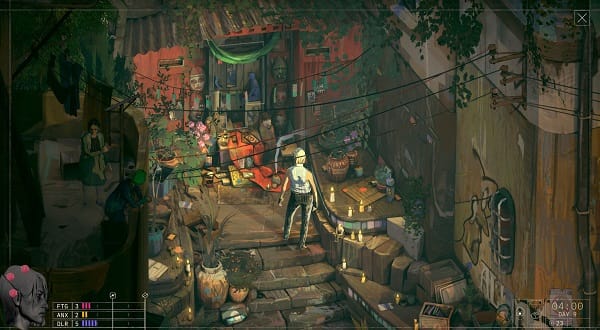
The world design leans into historical authenticity. East Berlin in 1987 is rendered as a grey, oppressive maze of concrete and surveillance cameras, with Stasi propaganda posters and Soviet insignia decorating every corner. Prague’s Old Town Square feels genuinely period-accurate, from the Czech signage on storefronts to the clothing and hairstyles of background characters. Vienna’s embassy district captures the tension of the Cold War’s twilight years — ornate Habsburg architecture juxtaposed against Soviet-era functionality. The art direction uses a deliberately muted color palette — lots of greys, browns, and sickly greens — which could feel drab but instead creates genuine atmosphere that reinforces the game’s tone of moral decay and paranoia. Every location has been designed for stealth with multiple approaches: the consulate you are infiltrating can be entered through the grand front entrance (risky but fast), the service entrance in the basement (requires a stolen uniform), or the ventilation system accessed from the roof (slow, claustrophobic, and loud). The level design rewards exploration and punishes carelessness — spend time studying a location before acting, and you will find routes others miss.
Sound design is exceptional. The score by composer Marcus Holley uses synthesizers and string drones to build tension; there is no bombastic action music, only the quiet hum of dread that intensifies as you approach a guard or trigger an alert state. Footsteps on different surfaces (tile, carpet, gravel, metal grating) have distinct audio signatures, making you acutely aware of every movement. Guard radio chatter crackles in Russian and German, adding authenticity and providing clues about patrol changes. Voice acting is uniformly strong — the cast includes several seasoned voice actors (including a recognizable performance from a veteran of spy television), and even minor characters feel inhabited rather than phoned-in. I detected no performance issues at launch: the game runs at a steady 60 FPS on a mid-range rig (RTX 2070, Ryzen 5 3600), load times are under 10 seconds, and I encountered no crashes across 11 hours of play. The one technical caveat: there is a known issue on some AMD drivers where the detection UI occasionally flickers, though a patch was rolled out one week post-launch that resolved it for most users.
Content, Length and Replayability: Is There Enough to Play?
A single playthrough of Zero Parades: For Dead Spies takes 9–11 hours if you pursue the main story and a handful of optional side missions. There are approximately 6–8 optional intelligence threads scattered throughout the game — intercepted letters, overheard conversations, hidden documents in safes — that provide context for the world and minor character arcs. Completing these threads is entirely optional, but they do enrich the narrative and occasionally unlock alternative dialogue options with key NPCs. The main story follows a largely linear path with a single ending, though the journey to that ending varies based on your stat choices and major decisions. There is no New Game Plus mode, but the game does unlock a chapter select after completion, allowing you to replay specific missions to pursue alternative solutions without replaying the entire story.
Replayability is moderate. A second playthrough with a different stat distribution (say, Deception instead of Tradecraft) will unlock different dialogue options and alternative solutions to certain infiltration puzzles, but the core narrative beats remain unchanged. The game is not designed for infinite replayability like a roguelike; instead, it respects the “one perfect run” mentality of classic stealth games like Thief. Most players will experience the story once, appreciate the craft, and move on. There is no multiplayer, no co-op, and no live-service elements — this is a self-contained, single-player narrative. Post-launch support has been minimal but solid: the developer has released two patches addressing minor bugs and balance tweaks to skill check DCs, making certain checks (like the infamous “Moscow infiltration” Tradecraft DC 70 check) slightly more achievable. There is no announced DLC roadmap, suggesting this is a complete experience with no plans for expansion content.
Real Flaws: Where Zero Parades Stumbles
Despite its strengths, Zero Parades has genuine flaws that will frustrate certain players. The most significant is pacing collapse in Act Two. The Prague sequence (roughly hours 4–6) is heavy on dialogue and light on infiltration. You spend an entire hour in a safe house, speaking with contacts and gathering intelligence, before executing a single stealth sequence. For players hungry for tactical challenges, this feels like a narrative detour rather than a natural story beat. The dialogue is well-written, but the game does not offer enough mechanical variety to sustain player interest across such a long conversational stretch. You are essentially reading a spy novel for sixty minutes with minimal player agency — your dialogue choices matter, but you are not solving puzzles or making real-time decisions. This pacing drag is the game’s most divisive element and will cause some players to abandon it entirely.
The second major flaw is AI detection inconsistency that undermines the core appeal. While the guard AI is generally competent, there are moments where it breaks immersion and fairness. I observed guards ignoring noise they logically should have heard (a loud footstep on metal grating from five meters away), or conversely, reacting to ambient sounds (creaking floorboards from an adjacent room) as if they were player-caused. These moments are rare enough that they do not destroy the experience, but they occur frequently enough that you cannot fully trust the simulation. When a guard suddenly turns and spots you after you were confident you were undetected, you are left wondering: did I genuinely fail the stealth puzzle, or did the AI make an illogical decision? That uncertainty erodes the game’s core appeal — the satisfaction of flawless execution earned through careful observation. In a game where failure means restarting a twenty-minute infiltration, unfair detection feels punishing rather than challenging.
The third flaw is no mid-mission save points or quicksave system. If you are twenty minutes into a thirty-minute infiltration and you fail a skill check or get spotted, you restart the entire mission. For casual players or those with limited play sessions, this is punishing and creates friction. The game is clearly designed for players willing to invest 45-minute uninterrupted sessions, but not all players have that luxury. I have a friend with a young child who abandoned the game after the third time a mission restart ate thirty minutes of his limited gaming time. A quicksave system (even limited to one per mission) would dramatically improve accessibility without undermining the core challenge. As it stands, the game punishes life circumstances beyond your control.
Finally, limited mechanical variety across the 11-hour runtime is a subtler but real issue. By hour 8, you have mastered the stealth systems, understood how to read guards, and optimized your stat distribution. The final three hours introduce no new mechanics — no hacking puzzles (despite your character being MI6 tech support), no environmental hazards beyond guards and cameras, no unexpected enemy types or tactical scenarios. This is not a game that evolves; it is a game that deepens its existing systems. Some players will find this focused and elegant; others will find it repetitive. The Moscow finale, despite its narrative weight, feels mechanically identical to the Berlin opening — you are still crouching behind desks, still avoiding guards on patrol loops, still making the same skill checks. The game needed at least one moment of mechanical surprise to justify its length.
Verdict: Should You Buy Zero Parades: For Dead Spies?
Zero Parades: For Dead Spies is a masterfully crafted spy thriller that respects your intelligence and your time — when it is not wasting it on dialogue-heavy sequences with minimal agency. At $24.99 USD, it offers exceptional value for players who prioritize narrative, atmosphere, and methodical stealth over action and spectacle. If you loved Disco Elysium‘s dialogue-driven storytelling, Pentiment‘s historical world-building, or the slow-burn tension of classic Thief, this game is an absolute must-play. The writing is sharp, the level design is clever, and the Cold War atmosphere is genuinely unsettling. The 9–11 hour runtime feels exactly right — long enough to tell a complete story, short enough to maintain momentum (when pacing cooperates).
However, Zero Parades is not for everyone. If you want action, multiplayer, or mechanical variety, skip it entirely. If you are on the fence about slow-paced narratives, stealth games, or lengthy dialogue sequences, wait for a sale. The game frequently drops to $17.49 during Steam sales (roughly every 4–6 weeks), and at that price point, the pacing issues in Act Two feel less egregious. The lack of mid-mission saves is a real accessibility barrier for players with limited, interrupted gaming sessions. The AI inconsistencies will occasionally frustrate you. But for the target audience — players who want to feel like a careful, thinking spy rather than an action hero — this is one of the best spy games released in 2024–2025.
Score: 8/10 — A thoughtfully crafted narrative stealth game that delivers genuine tension and meaningful choice, held back by pacing inconsistency in Act Two, occasional AI detection unfairness, no mid-mission saves, and mechanical repetition in its final hours. Recommendation: BUY at $24.99 if you love dialogue-driven espionage stories and stealth puzzles and have uninterrupted play sessions; WAIT FOR SALE if pacing concerns you or your gaming time is fragmented; SKIP if you need action, multiplayer, or mechanical evolution.
Frequently Asked Questions
Is Zero Parades: For Dead Spies worth buying at full price in 2025?
Yes, if you are a fan of narrative-driven stealth games and Cold War fiction. At $24.99, the 9–11 hour runtime and exceptional writing justify the cost for players willing to tolerate slow pacing and lengthy dialogue sequences. However, if you are unsure about slow-paced gameplay or have fragmented gaming sessions, waiting for a $17.49 sale is reasonable — the game drops to that price roughly every 4–6 weeks during Steam sales.
How long does it take to beat Zero Parades: For Dead Spies?
A single playthrough takes 9–11 hours depending on how thoroughly you pursue optional intelligence threads and side missions. The main story alone is roughly 8–9 hours, with an additional 1–2 hours available if you explore all optional content like hidden documents and NPC side threads.
Does Zero Parades: For Dead Spies have mid-mission saves or quicksave?
No. Zero Parades: For Dead Spies has no mid-mission save points or quicksave system. If you fail a skill check or get spotted more than twenty minutes into a mission, you restart the entire mission from the beginning. This design choice creates tension but also punishes players with limited, interrupted gaming sessions. The game expects 45-minute uninterrupted play sessions.
Does Zero Parades: For Dead Spies have multiplayer or co-op?
No. Zero Parades: For Dead Spies is a strictly single-player, narrative-driven experience with no multiplayer, co-op, or online components whatsoever. It is designed as a solo espionage story with no plans for live-service content.
Is Zero Parades: For Dead Spies available on console or only PC?
As of early 2025, Zero Parades: For Dead Spies is PC-exclusive and available only on Steam. There are no announced plans for console ports (PlayStation, Xbox, or Nintendo Switch), though the developer has not ruled out future releases.
How does Zero Parades: For Dead Spies compare to Disco Elysium or other spy games?
While Disco Elysium is purely dialogue-driven with no stealth or action, Zero Parades: For Dead Spies merges that narrative depth with methodical stealth gameplay similar to classic Thief. Compared to modern spy games like Hitman, it is far slower and more story-focused, with no combat or lethal options. Zero Parades: For Dead Spies sits in a unique space between narrative adventure and stealth puzzle-solver, sacrificing action spectacle for atmospheric tension and moral ambiguity.
What happens if you fail a skill check in Zero Parades: For Dead Spies?
Failed skill checks in Zero Parades: For Dead Spies carry real consequences and are not soft resets. If you fail a Tradecraft check while bluffing past a KGB officer, he becomes suspicious and triggers an alert. If you fail an Interrogation check while extracting information from a prisoner, he clams up permanently and that intel path closes. Failures force you to improvise with incomplete knowledge and can derail your mission plan entirely.