Xbox Matthew Ball Strategy: What New Hires Mean for Gaming
Disclosure: As an Amazon Associate, Bytee earns from qualifying purchases.
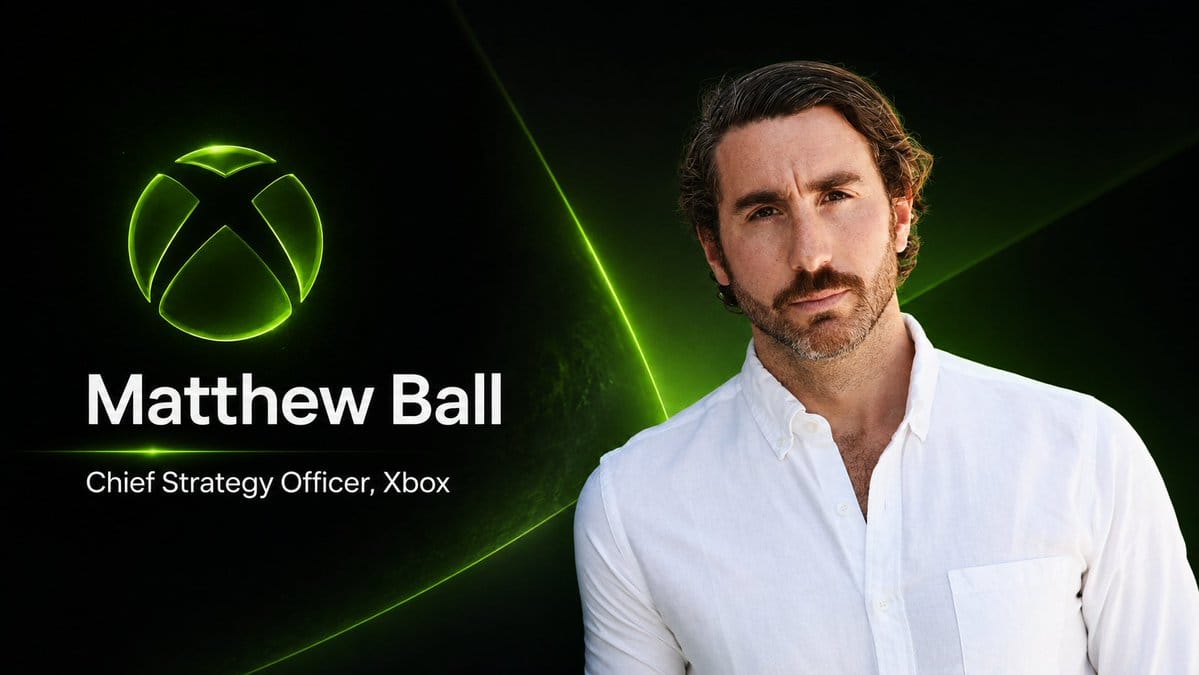
When Microsoft quietly hired the world’s most famous metaverse and gaming analyst to run strategy, it signaled a multi-billion dollar pivot away from local hardware toward an omnipresent cloud ecosystem. Matthew Ball—the venture capitalist and author whose research shaped how Silicon Valley thinks about the future of interactive entertainment—joining Xbox as Chief Strategy Officer represents a $10+ billion strategic repositioning that will fundamentally reshape which games you can play, where you can play them, and how much hardware you’ll need to own. This isn’t a routine executive hire. This is Microsoft placing a $69 billion Activision Blizzard acquisition into the hands of someone whose entire intellectual framework is built around breaking down the walled gardens of traditional gaming platforms. The ripple effects will touch every major player in the industry—from Sony’s PlayStation division to Apple’s App Store to the three billion mobile gamers currently locked out of premium gaming ecosystems.

What Happened: The Executive Shakeup at Xbox
In early 2024, Microsoft announced a significant reorganization of its gaming division that placed Matthew Ball in the newly created role of Chief Strategy Officer for Xbox. Ball, who previously founded and led Ballparks, a venture capital and advisory firm focused on entertainment and technology convergence, brings an outsider’s perspective to an organization that has traditionally been built around hardware sales and exclusive franchises. His appointment came alongside the hiring of a senior Amazon Web Services AI veteran as Chief Technology Officer—a dual hire that signals Microsoft’s intent to deploy two emerging technologies simultaneously: cloud infrastructure and artificial intelligence. The organizational restructuring elevated these strategy and technology roles to report directly to Phil Spencer, Xbox’s Chief, consolidating authority around a forward-looking vision rather than the traditional console-and-Game Pass playbook that has defined the division for the past decade.
The market reacted positively to these announcements, with analyst firms interpreting the moves as evidence that Microsoft is serious about expanding Xbox’s addressable market beyond the 160 million console gamers globally. The timing matters: these hires arrived 18 months after Microsoft closed the $69 billion Activision Blizzard acquisition, the gaming industry’s largest deal ever, giving Xbox control of franchises like Call of Duty, World of Warcraft, and Diablo. The new leadership structure suggests Microsoft is no longer content to optimize Game Pass for console subscribers—the company is building the organizational infrastructure to compete in mobile, cloud, and AI-native gaming. Internal org charts were redrawn to create dedicated teams focused on cloud-native game development, mobile platform strategy, and AI-assisted game design tools. What this means for players: the next generation of Xbox games won’t be designed primarily for a console in your living room, but for a distributed cloud infrastructure that can deliver them anywhere.
Why This Move Happened: The Strategic Motivation
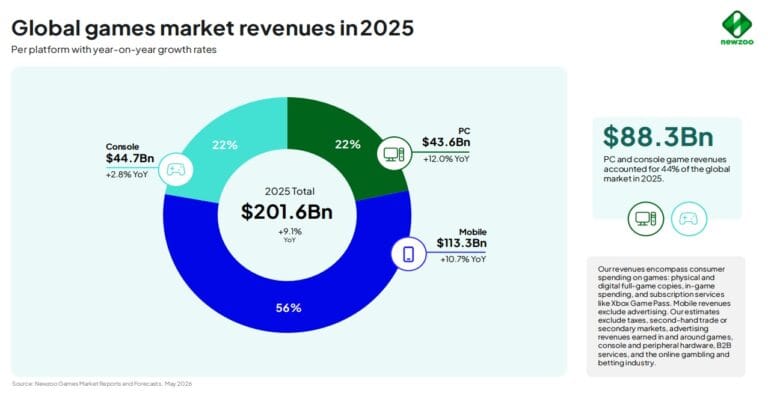
Microsoft faces a brutal mathematical reality: the console gaming market is mature and shrinking as a percentage of total gaming revenue. The global gaming market is worth approximately $184 billion annually, but only 30% of that comes from console and PC gaming. Mobile gaming represents 52% of the market, generating $100+ billion in annual revenue, yet Xbox has virtually no presence in this segment. This gap exists because Apple and Google control the iOS and Android app stores, taking 30% cuts and enforcing rules that make premium gaming distribution nearly impossible for companies like Microsoft. Matthew Ball’s hire signals that Xbox has decided to stop accepting this exclusion. Ball’s entire career has been built on analyzing how technology disrupts entrenched gatekeepers—his research on the metaverse, cloud computing, and platform economics directly addresses this problem. By bringing him into a strategic role, Microsoft is signaling intent to either build alternative distribution channels or bypass the app store gatekeepers entirely through cloud-based gaming delivery.
The Activision Blizzard acquisition amplified this urgency. Microsoft now owns the IP portfolios and development talent to create a genuine alternative to Apple’s app store gaming experience—but only if it can solve the distribution problem. A $69 billion acquisition is worthless if Call of Duty and Diablo remain locked in the console/PC ecosystem while three billion mobile gamers continue spending money on Candy Crush and Honor of Kings. Ball’s strategic framework—which emphasizes platform-agnostic content delivery, ecosystem interoperability, and the economics of reaching underserved markets—directly addresses this gap. The AI hire matters equally: generative AI will become central to reducing game development costs, enabling smaller teams to produce AAA-quality experiences that can be distributed globally. If Microsoft can crack the AI-assisted game development problem, it can afford to take lower margins on mobile platforms while still generating acceptable returns on the Activision portfolio. What this means for players: the games you play three years from now will likely be designed to work seamlessly across your phone, tablet, console, and PC—a technical feat that requires both cloud infrastructure and AI-driven optimization.
Solving the Mobile and Cloud Distribution Bottleneck
Microsoft’s mobile ambitions have failed spectacularly in the past. Windows Phone never gained traction, and Xbox’s mobile game library has been a graveyard of abandoned projects. But the context has changed dramatically. Cloud gaming technology is now mature enough to deliver console-quality games over 5G networks with latency under 100 milliseconds—acceptable for most game genres. Xbox Cloud Gaming, which launched in 2021, now supports over 300 games and has been integrated into Game Pass Ultimate. However, Xbox Cloud Gaming’s reach remains limited because it’s primarily distributed through the Xbox app and web browsers, not through the iOS and Android app stores where 99% of mobile gamers actually spend their time. Matthew Ball’s strategic mandate is almost certainly to solve this distribution bottleneck, either by negotiating deals with Apple and Google to allow cloud gaming apps, or by building a direct-to-consumer platform that bypasses the app stores entirely.
The numbers make this urgent. Apple’s App Store generated approximately $85 billion in revenue in 2023, with Apple taking a 30% cut on in-app purchases and subscriptions. That’s $25.5 billion in annual revenue flowing to Apple from game publishers. If Microsoft can capture even 5% of that market through cloud-based distribution, it represents a $1.3 billion revenue opportunity—more than enough to justify the investment in new leadership and infrastructure. The cloud infrastructure piece is critical: delivering AAA games to three billion mobile devices globally requires massive server capacity distributed across multiple regions with sub-100-millisecond latency. The Amazon veteran hired as CTO has direct experience scaling cloud infrastructure at AWS, which operates 30+ global regions. This hire signals Microsoft’s intent to either build its own competing cloud infrastructure or negotiate preferential terms with Azure to guarantee the capacity needed for a global cloud gaming push. What this means for players: within 24 months, you’ll likely see Xbox cloud games available directly on your iPhone or Android phone without needing to install the Xbox app—a distribution model that could finally make premium gaming accessible on mobile without Apple or Google’s gatekeeping.
The AI Play: Generative AI as a Development Force Multiplier
The hiring of an Amazon AI veteran as Xbox’s Chief Technology Officer is arguably more significant than the Matthew Ball appointment, though it’s received less media attention. This hire signals that Microsoft is placing artificial intelligence at the center of its next-generation game development strategy. The AI opportunity in gaming is multifaceted: generative AI can reduce the cost of creating game assets (art, animation, voice), accelerate NPC behavior design, optimize game performance across heterogeneous hardware (from high-end PCs to budget Android phones), and enable personalized game experiences that adapt to individual player behavior. For Microsoft, AI is a force multiplier on the Activision Blizzard acquisition. Instead of relying on Blizzard’s expensive development teams to create new World of Warcraft content or Call of Duty maps, Microsoft can use AI-assisted tools to dramatically increase content velocity while reducing per-unit development costs. An Amazon veteran brings expertise in scaling AI infrastructure, managing large language models, and integrating AI into consumer-facing products—all critical competencies for building an AI-native gaming platform.
The business case is compelling. AAA game development costs have increased 300% over the past decade, with a major title now requiring $100-200 million in development spending. If AI can reduce this by 30-40%, the savings are enormous: a $150 million game that costs $90-105 million to develop instead generates $45-60 million in incremental profit. Scaled across Microsoft’s entire portfolio—which now includes 37 game studios post-Activision acquisition—the cumulative savings could exceed $500 million annually. Additionally, AI-driven optimization can make cloud gaming significantly more efficient. Games can be dynamically compressed, downsampled, and reoptimized for individual network conditions, dramatically improving the user experience on lower-bandwidth connections. For mobile users in emerging markets where 5G infrastructure is sparse, this AI-driven optimization could be the difference between a playable cloud gaming experience and a frustrating lag-fest. What this means for players: the next generation of Xbox games will feature NPCs with genuinely dynamic behavior (not scripted responses), procedurally generated content that keeps games fresh indefinitely, and cloud optimization that makes premium games playable on budget devices—fundamentally changing what’s possible in interactive entertainment.
Who Wins and Who Loses: Industry Power Shift
This strategic pivot creates clear winners and losers across the gaming industry ecosystem. The most obvious winner is Microsoft itself, which gains the strategic framework and technical leadership to finally crack the mobile gaming market and fully monetize the Activision Blizzard acquisition. By combining Ball’s platform economics expertise with AI-driven development efficiency, Microsoft can afford to take lower margins on mobile platforms while still generating acceptable returns. The second major winner is the broader ecosystem of third-party game publishers and independent developers. If Microsoft successfully opens alternative distribution channels (via cloud gaming or direct-to-consumer platforms), it breaks Apple and Google’s 30% tax on mobile gaming. Publishers like Ubisoft, Electronic Arts, and Take-Two Interactive, which have been frustrated by app store gatekeeping, would gain a new channel to reach mobile gamers without surrendering 30% of revenue. Independent developers gain access to Microsoft’s AI tools, cloud infrastructure, and distribution platform—dramatically lowering the barrier to entry for creating and distributing premium games globally.
The losers are equally clear. Sony PlayStation loses competitive positioning in the cloud and mobile segments, where it has minimal presence. While PlayStation has 160 million active users, that base is almost entirely console-focused. If Xbox successfully converts mobile gamers to cloud-native experiences, Sony’s console-first strategy becomes increasingly vulnerable. Apple and Google face existential pressure to their app store business models. If Microsoft’s cloud gaming platform gains meaningful traction, it demonstrates that alternative distribution is possible—opening the door for other tech giants (Amazon, Meta, even Samsung) to challenge app store gatekeeping. Regulators in the EU, UK, and US are already scrutinizing Apple’s app store policies; Microsoft’s cloud alternative could accelerate regulatory action forcing Apple to open its platform. Traditional console-exclusive publishers face pressure to go multiplatform or lose revenue. If a Call of Duty or World of Warcraft player can access the same game on their phone via cloud, the value of exclusive console versions diminishes. What this means for players: within three years, you’ll see major franchises released simultaneously across console, PC, mobile, and cloud platforms—the era of exclusive console releases is ending.
| Entity | Outcome | Reason |
|---|---|---|
| Microsoft Gaming | Major Winner | Gains strategic framework to monetize $69B Activision acquisition across mobile, cloud, and AI-native gaming. Addressable market expands from 160M console gamers to 3B+ mobile gamers. |
| Third-Party Publishers (EA, Ubisoft, Take-Two) | Moderate Winner | Access to alternative distribution channels breaks Apple/Google 30% app store tax. Cloud gaming enables premium game distribution without gatekeeping. |
| Sony PlayStation | Moderate Loser | Cloud gaming and multiplatform strategy undermine console exclusivity value proposition. Mobile gaming presence remains negligible. |
| Apple & Google | Long-term Loser | Cloud gaming alternative threatens app store gatekeeping. Regulatory pressure increases if Microsoft’s model succeeds. 30% margin under attack. |
| Console Gamers | Major Winner | Access to premium gaming across all devices. No need to buy multiple hardware generations. Game Pass value increases with multiplatform support. |
What This Means for Gamers: Real Impact on Games You Play
The Matthew Ball strategy represents a fundamental reimagining of how you’ll access and play games over the next five years. The most immediate impact is Game Pass evolution. Microsoft has 34 million Game Pass subscribers, generating approximately $2.5 billion in annual recurring revenue. However, Game Pass penetration remains heavily skewed toward console and PC gamers in developed markets. The new strategy positions Game Pass as a cloud-native, device-agnostic subscription service that works identically on your iPhone, Android phone, tablet, console, and PC. This requires significant technical work—building cloud infrastructure that can deliver latency-free gaming globally, developing AI-powered optimization that adapts games to heterogeneous devices, and negotiating distribution agreements with Apple and Google to make the Game Pass app available without the 30% cut. But if Microsoft succeeds, Game Pass becomes available to the 1.4 billion iPhone users and 1.1 billion Android users globally who currently have zero access to premium gaming subscriptions. Even if Microsoft captures 5% of that mobile audience, that’s 128 million new subscribers, potentially doubling Game Pass revenue within five years.
The second major impact is cloud-native game design. Games designed for cloud delivery have fundamentally different technical constraints than console games. A cloud-native game can offload graphics rendering, physics simulation, and AI computation to server-side infrastructure, enabling dramatically more complex game worlds on lower-powered client devices. This means a $200 smartphone can deliver the same visual and gameplay fidelity as a $500 console, because the heavy computational lifting happens in the cloud. Developers like Ninja Theory (owned by Microsoft) and Double Fine (also Microsoft-owned) are already experimenting with cloud-native design, but the new leadership structure signals this will become the default design philosophy for Xbox studios. Games will be built to scale across a spectrum of devices—from flagship consoles to budget smartphones—with cloud optimization handling the distribution. What this means for players: you won’t need to buy a new $500 console every seven years. Your game library will follow you across all your devices, with identical gameplay and graphics fidelity. A game you start on your phone continues on your console without interruption.
The third impact is AI-driven game design and personalization. Generative AI will enable procedurally generated content that keeps games fresh indefinitely. Imagine a World of Warcraft expansion that generates unique quests, NPCs, and dungeon layouts for each player based on their playstyle. Or a Call of Duty campaign where enemy AI adapts in real-time to your skill level, ensuring the game remains challenging but fair. This is technically possible today but prohibitively expensive to implement at scale. With AI-assisted development tools, it becomes standard. Additionally, AI enables true personalization: games that adapt their difficulty, narrative, and pacing to individual player preferences. A casual player might experience a streamlined story with AI-controlled difficulty scaling, while a hardcore player gets the same game with brutal AI and complex mechanics. What this means for players: the games you play will feel custom-built for you, with dynamic difficulty, procedurally generated content, and AI-driven storytelling that adapts to your playstyle in real-time.
The fourth impact is multiplatform releases becoming the norm. Today, Call of Duty releases simultaneously on console and PC but requires separate purchases on each platform. Mobile versions exist but are dumbed-down experiences. The new strategy prioritizes unified releases where you purchase once and play anywhere. This requires cloud infrastructure, AI-driven optimization, and cross-platform progression systems—all of which the new leadership is positioned to build. What this means for players: you’ll stop seeing fragmented game ecosystems. A $60 game purchase grants access on console, PC, mobile (via cloud), and emerging platforms simultaneously, with your progress syncing across all devices. The era of platform-exclusive versions ends.
Market Context: How This Fits the Bigger Industry Picture
Microsoft’s strategic pivot must be understood within the context of the post-Activision Blizzard acquisition gaming industry. The $69 billion deal, completed in October 2023, was the gaming industry’s largest acquisition ever—more than double the previous record ($8.1 billion for ZeniMax Media in 2021). The acquisition gave Microsoft control of 37 game studios, 13,000+ employees, and franchises that generate $10+ billion in annual revenue. However, the deal’s value is heavily dependent on Microsoft’s ability to distribute these franchises to new audiences. Call of Duty, World of Warcraft, and Diablo are mature franchises with declining console/PC audiences; their growth potential lies in mobile and emerging markets. Matthew Ball’s hire signals that Microsoft is finally moving from acquisition mode to integration mode—taking the $69 billion portfolio and restructuring the company to monetize it across new platforms and geographies.
This fits a broader industry trend toward consolidation and platform expansion. Sony’s PlayStation division is struggling with declining console sales (down 30% in 2023), forcing the company to embrace multiplatform releases and mobile expansion. Nintendo, despite strong Switch sales, is exploring mobile gaming partnerships to reach new audiences. Tencent, the world’s largest gaming company by revenue ($37 billion in 2023), has built its dominance by operating across console, PC, mobile, and cloud platforms simultaneously. Microsoft’s strategic pivot acknowledges that the future of gaming isn’t platform-specific—it’s audience-specific. The goal is to reach gamers wherever they are: on console, PC, mobile, cloud, or emerging platforms like AR/VR.
The AI component of this strategy also reflects broader tech industry trends. Every major tech company—OpenAI, Google, Meta, Amazon, Microsoft—is investing heavily in generative AI capabilities. For gaming, AI isn’t a luxury; it’s becoming a competitive necessity. Studios that can leverage AI-assisted development will move faster and cheaper than studios relying on traditional development pipelines. Microsoft’s hire of an Amazon AI veteran signals that Xbox is positioning itself to be the most AI-integrated gaming platform in the industry. This compounds Microsoft’s advantages: Azure cloud infrastructure + Game Pass distribution + AI development tools + Activision Blizzard IP = a platform that no competitor can match on all dimensions simultaneously.
What to Watch: Key Signals in the Months Ahead
Over the next 12-18 months, several concrete signals will indicate whether Microsoft’s strategic pivot is succeeding or stalling. The first critical signal is the launch of a mobile-first gaming platform or store. Matthew Ball’s strategic expertise centers on platform economics and distribution; if he’s truly running strategy, expect announcements about a cloud gaming app store or direct-to-consumer mobile platform within 12 months. This would be a massive competitive move—essentially creating an alternative to Apple’s App Store and Google Play Store specifically for premium games. Watch for partnerships with major publishers (EA, Ubisoft, Take-Two) to distribute their games through this platform. If these partnerships materialize, it signals that publishers see real value in bypassing the 30% app store tax. If partnerships don’t materialize, it suggests the app store gatekeepers have sufficient leverage to prevent defection.
The second signal is the launch of AI-powered game development tools for external developers. Microsoft has significant AI capabilities through its partnership with OpenAI and its own Azure AI services. Watch for announcements about AI tools that enable game developers to rapidly create game assets, generate NPC behavior, or optimize games for cloud delivery. If these tools are made available to third-party developers (not just Microsoft studios), it signals confidence in the AI-native development model and willingness to invest in ecosystem enablement. This would be a powerful competitive advantage: developers using Microsoft’s AI tools would have a cost advantage over competitors using traditional development pipelines, creating network effects that attract more developers to the platform.
The third signal is cloud gaming subscriber growth and engagement metrics. Microsoft will likely report Game Pass subscriber numbers in earnings calls; watch for acceleration in cloud gaming adoption specifically (as opposed to console-based Game Pass). If cloud gaming subscribers grow from single-digit millions to 10+ million within 18 months, it signals the strategy is working. Watch for announcements about cloud gaming latency improvements, game library expansion, and regional availability. Currently, Xbox Cloud Gaming supports only 300 games; if this grows to 500+ games within 12 months, it indicates accelerated developer adoption of cloud-native development.
The fourth signal is organizational restructuring and hiring. Matthew Ball’s appointment signals a shift toward platform economics and distribution strategy. Watch for announcements about new teams focused on cloud infrastructure, mobile partnerships, and AI development tools. If Microsoft hires 500+ engineers specifically for cloud gaming and AI optimization within 12 months, it signals serious capital commitment to the strategy. Conversely, if hiring remains flat or decreases, it suggests the strategy isn’t a true priority.
The fifth signal is partnership announcements with Apple, Google, or telecom providers. The most direct path to mobile gaming distribution is negotiating with Apple and Google to allow cloud gaming apps with revenue-sharing models that work for Microsoft. Watch for announcements about Game Pass availability on iOS or Android through alternative distribution mechanisms (not the app store). Alternatively, watch for partnerships with major telecom providers (Verizon, AT&T, Deutsche Telekom, Orange) to bundle Game Pass with 5G plans. These partnerships would signal that Microsoft has successfully negotiated its way around the app store gatekeeping problem.
The sixth signal is the first major franchise released as a cloud-native multiplatform title. Expect Call of Duty, Diablo, or World of Warcraft to be the test cases. Watch for announcements that the next major expansion or sequel will release simultaneously on console, PC, mobile (via cloud), and emerging platforms. If this happens, it confirms that the cloud infrastructure and AI optimization are mature enough to support multiplatform development. If franchises continue to release as console-exclusive or console-primary titles, it suggests the strategy is encountering technical or market obstacles.
Editor’s Call: Microsoft’s strategic pivot is the single most significant competitive move in gaming since the launch of the Nintendo Switch. If executed successfully, it fundamentally reshapes gaming distribution, breaks the app store gatekeeping model, and positions Microsoft as the dominant platform across all devices and geographies. However, execution risk is substantial—cloud infrastructure at global scale is expensive, AI-driven game development is unproven at AAA quality levels, and Apple/Google have powerful incentives to protect their app store monopolies. The next 18 months will determine whether this is a generational strategic repositioning or an expensive distraction from Microsoft’s core console gaming business. Watch the signals closely.
Frequently Asked Questions
Who is Matthew Ball and why did Xbox hire him as Chief Strategy Officer?
Matthew Ball is a venture capitalist, author, and analyst whose research on the metaverse, cloud computing, and platform economics has shaped how Silicon Valley thinks about entertainment’s future. Xbox hired him as Chief Strategy Officer to provide strategic leadership on cloud gaming expansion, mobile platform distribution, and AI-native game development. Ball’s expertise in platform economics is critical for solving Microsoft’s core challenge: how to distribute the $69 billion Activision Blizzard portfolio to three billion mobile gamers currently locked out of premium gaming by Apple and Google’s app store gatekeeping.
How will the new CTO from Amazon affect Xbox cloud gaming and AI capabilities?
The Amazon veteran hired as Chief Technology Officer brings expertise in scaling cloud infrastructure and managing large language models at AWS. This hire signals Microsoft’s intent to weaponize AI for game development (reducing costs by 30-40%), cloud gaming optimization (enabling premium games on budget devices), and NPC behavior design (making in-game characters genuinely adaptive). Expect announcements about AI-powered game development tools for external developers within 12 months, and accelerated cloud gaming performance improvements that make latency-free gaming possible on lower-bandwidth connections.
Will this leadership change make Xbox games multiplatform and available on iPhone and Android?
The strategic intent is clearly multiplatform distribution, but execution depends on negotiating with Apple and Google to allow cloud gaming apps without the 30% app store cut. Expect the first major multiplatform release (likely Call of Duty or Diablo) within 18-24 months if negotiations succeed. If Apple and Google resist, Microsoft may launch its own cloud gaming platform or partner with telecom providers to distribute Game Pass through 5G networks, bypassing the app stores entirely. Either way, the end goal is identical: premium Xbox games available on every device you own.