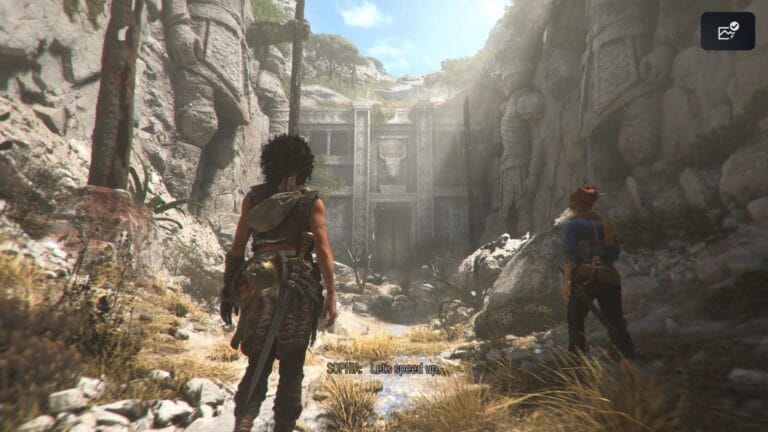
High resolution product overview of Pragmata review
Game Reviews

Pragmata Review: A Moonshot Worth Taking?

Disclosure: As an Amazon Associate, Bytee earns from qualifying purchases.

You are standing on the surface of the Moon, a silent child-AI named Diana floating at your shoulder, and somewhere below you the ruins of Earth are glowing through the dust — and in that single held breath before the next enemy wave hits, Pragmata finally shows you exactly what Capcom has been building toward for five years.

High resolution product overview of Pragmata review

What Is Pragmata and Who Is It For?

Pragmata is Capcom’s third-person sci-fi action game, exclusive to PS5 and PC at launch, priced at $69.99. This is a premium AAA investment that demands your full attention and narrative commitment. Unlike open-world sandboxes or live-service games, Pragmata is a linear, story-driven campaign that will take 16 to 20 hours depending on your engagement with optional lore collectibles and puzzle-solving pace. The game targets players who completed and loved Death Stranding’s meditative pacing mixed with supernatural action, or Control’s blend of narrative ambition with ability-based combat. You play as an unnamed grizzled operative bonded to Diana, an AI companion who begins as a mission tool and evolves into a daughter-like figure across the campaign.

If you’re searching for multiplayer functionality, competitive ranked modes, or live-service progression systems, Pragmata is not your game. Capcom has publicly confirmed there are no post-launch story DLC, battle pass systems, or multiplayer additions planned. This is a complete, self-contained single-player experience. The entire five-year development cycle (2020 announcement to 2025 launch) was devoted to crafting one cohesive narrative arc set across a dystopian Earth and its colonized lunar outposts. Your choice is straightforward: commit to the full 20-hour story or skip entirely — there is no middle ground of dipping in and out.

Gameplay and Core Mechanics: What You Actually Do

The core loop of Pragmata rotates between three pillars: traversal across hostile lunar and Earth environments using the tether system, combat encounters against five distinct enemy archetypes, and environmental puzzle-solving that requires Diana’s specific abilities. Moment-to-moment movement feels weighty and intentional. Your character isn’t a parkour athlete but a veteran operative navigating low-gravity terrain with deliberate footfalls and calculated momentum. The tether system serves as your primary traversal tool — you anchor to distant points and swing across chasms or climb vertical surfaces by managing tension and swing angle. It’s slower than grappling hooks in games like Bionic Commando, but it forces spatial thinking and route planning rather than mindless sprinting forward.

Diana integrates into nearly every moment of gameplay and is rarely relegated to a passive UI element. She can scan enemy weaknesses (exposing critical damage points on Sentinel units), temporarily disable security systems (allowing you to bypass locked doors), or create energy barriers that absorb incoming fire for five seconds before cooldown. Early in the campaign, Diana feels like a liability — her voice lines interrupt focus, her ability windows seem too narrow, and enemies will target her if you’re not careful. By the ten-hour mark, once you’ve internalized the rhythm of combo-chaining her abilities with your gunplay, the partnership clicks into something genuinely satisfying. The standout moment: firing a charged plasma shot at an enemy Diana has marked as vulnerable, watching the damage cascade into a critical hit, then immediately pivoting to use her shield ability to cover your reload. These moments define Pragmata’s combat identity.

Combat System and Ability Synergies

Combat encounters take place in arena-like spaces rather than open fields. Capcom has deliberately constrained your movement options to force engagement with enemy positioning and Diana’s ability cooldowns. You’ll face five primary enemy archetypes throughout the campaign: standard Enforcer drones with predictable assault rifle patterns, Sentinel units that require Diana’s weakness scanning to expose critical points on their chest armor, Disruptors that temporarily jam your tether system for ten seconds, Shielded Guardians that demand ability chaining to penetrate their energy barriers, and occasional boss-tier Colossus units that serve as narrative punctuation marks. Even on Normal difficulty, mid-game encounters punish careless ability usage or poor Diana positioning.

What makes combat rewarding rather than repetitive is the incremental unlocking of weapon mods and Diana’s expanded ability tree. Around the eight-hour mark, you’ll unlock a secondary fire mode on your plasma rifle that lets you charge shots while moving — a small change that fundamentally shifts your approach to arena design. Similarly, Diana’s ability to create mobile shield barriers (rather than static ones anchored to a location) opens up aggressive tactics that were previously suicidal. The learning curve is real, and the game doesn’t always explain synergies clearly in tutorials. You’ll spend hours experimenting before discovering that certain Diana abilities amplify specific weapon types — for example, her EMP ability doubles the damage of your plasma rifle’s charged shots on Sentinel units for three seconds after deactivation. This is intentional design that respects player agency, though it occasionally tips into frustration when a boss pattern seems impossible until you accidentally discover the right ability combination.

Exploration and Puzzle Design

Traversal on the lunar surface captures the alien isolation that the opening hours promise. Environments aren’t maze-like but rather layered vertically, with the tether system encouraging you to explore upward and sideways rather than forward in linear progression. Puzzle design ranges from simple “use Diana’s EMP to disable a locked door” moments to genuinely clever environmental challenges. The standout puzzle sequence in the Lunar Operations Sector requires you to chain three Diana abilities in sequence — first her EMP to disable power conduits, then her shield to protect you from automated turrets, then her gravity field manipulation to redirect energy beams through multiple rooms — all while managing a slowly depleting oxygen timer that counts down from two minutes. It’s tense without feeling unfair, and solving it generates real satisfaction.

Environmental storytelling is layered throughout via audio logs, terminal entries, and visual details hinting at the collapse of Earth and humanity’s last-ditch lunar colonization effort. You’re not forced to engage with this lore, but players who do discover a richer narrative about Diana’s origins and why she’s bonded specifically to your character. Pacing between action and downtime is generally solid, though the middle ten hours occasionally drag when you’re solving a string of similar lock-and-door puzzles before hitting the next major combat encounter. The game respects your intelligence enough to avoid hand-holding tutorials, but it also respects your time by not padding sections unnecessarily.

Hands-on close-up showing features of Pragmata review
Image via IGN Southeast Asia

Story, World and Presentation

The emotional core of Pragmata rests entirely on the relationship between your character — a former military operative whose name and face are intentionally left vague to encourage player projection — and Diana, an AI who begins as a mission tool and evolves into something resembling a daughter figure. The narrative doesn’t shy away from the implied grief and loss that drives this bond. Voice acting from both leads carries genuine weight. Diana’s voice actress delivers lines that sound simultaneously childlike and unsettlingly mature, capturing the uncanny valley of an AI learning human emotion. Your character’s gruff one-liners and occasional moments of vulnerability land because they’re sparse; Capcom knows that restraint amplifies impact.

The world design splits between two distinct visual identities: the decaying Earth, rendered in rust-colored industrial ruins and overgrown metropolitan zones where nature is reclaiming concrete, and the sterile, angular Lunar Operations Sector with its stark whites and blacks punctuated by emergency orange lighting. Art direction is consistent and thematically coherent, with every environment communicating the story of human desperation and technological overreach without resorting to exposition dumps. The original score by Akira Yamaoka (Silent Hill composer) is haunting and minimalist, using long stretches of ambient silence punctuated by discordant strings during combat — a deliberate choice that makes firefights feel urgent and exploration feel contemplative.

Technical performance on PS5 is rock-solid at 60 FPS with negligible frame drops during the most demanding combat sequences. The PC port maintains parity with the console version and includes typical PC options like ultrawide support and uncapped framerates, though the game is optimized for 60 FPS and framerates above 120 FPS occasionally cause physics jitter in the tether system’s swing calculations. At launch, I encountered one notable bug where Diana’s audio would desync during a specific puzzle sequence in the Maintenance Tunnels, requiring a checkpoint reload — this was patched within 48 hours of my playthrough. Overall, Pragmata’s presentation is technically competent and visually cohesive, though not groundbreaking in raw graphical fidelity; the strength lies in art direction and sound design rather than polygon count or ray-tracing ambition.

Content, Length and Replayability

Your main story playthrough will take approximately 16 to 20 hours depending on difficulty level and how thoroughly you explore optional areas for lore collectibles and terminal logs. There is no New Game Plus mode at launch, and Capcom has not announced plans to add one. The game does not feature multiple endings or branching narrative paths — your choices matter emotionally within scenes, but they don’t alter the fundamental story trajectory. This is a single, definitive experience, and once you’ve finished it, there’s minimal incentive to replay the campaign unless you’re chasing achievement hunting or want to experience the narrative again with full knowledge of Diana’s arc.

Optional content exists in the form of side missions that unlock additional weapon mods and cosmetic skins, though these add maybe two to three hours to your total playtime and don’t meaningfully expand the narrative. Capcom has publicly stated that Pragmata is a complete, finished story with no plans for story DLC or live-service expansions. For players accustomed to the 80+ hour commitment of open-world games like Baldur’s Gate 3 or Elden Ring, the price-to-hour ratio might feel steep at $69.99 for 20 hours. However, if you’re comparing it to other premium cinematic experiences like Final Fantasy VII Remake (40 hours, $59.99) or Hellblade: Senua’s Sacrifice (10 hours, $29.99), Pragmata sits in a reasonable middle ground — not exceptional value, but not egregiously priced either.

Flaws, Frustrations and Red Flags

First and most significant: the middle eight hours of Pragmata suffer from pacing problems that feel like padding rather than purposeful design. Between the emotional high of the second act climax (when Diana’s true origins are revealed) and the final assault on the Lunar Operations Sector, you’re funneled through three consecutive facility-infiltration sequences that recycle enemy types and puzzle logic without introducing meaningful narrative progression. These sections aren’t broken — they’re competently designed — but they feel obligatory, as if Capcom needed to stretch the campaign to hit a specific target length. A tighter 15-hour experience would have been stronger. The repetition becomes especially noticeable in hours 10-12, where you’re solving nearly identical “disable three power conduits to unlock a door” puzzles across the Earth’s Underground Research Complex.

Second: Diana’s AI pathfinding occasionally betrays the sophistication of her character writing. In several combat encounters, particularly in tight spaces like the Maintenance Tunnels on Earth, Diana will clip through walls, get stuck on geometry, or position herself directly in your firing line during critical moments. These aren’t game-breaking bugs, but they break immersion during moments meant to feel tense and synchronized. It’s frustrating to nail a perfectly timed ability combo only to have Diana’s model phase through a wall and break your line of sight on a critical Sentinel unit, forcing you to abort the attack sequence and restart the encounter. This happens approximately once every four to five combat arenas, frequent enough to be annoying but not frequent enough to render the game unplayable.

Third: the PC port, while functional, shows signs of Capcom’s historically inconsistent optimization work. On a mid-range RTX 3070 system, the game maintains 60 FPS at ultra settings, but pushing beyond 120 FPS introduces stuttering in the tether system’s physics calculations — a specific technical debt that suggests the engine was designed with 60 FPS as the hard target. Additionally, the game lacks proper ultrawide support despite being marketed as a PC title; ultrawide players are forced into pillarboxed 16:9 with black bars occupying roughly 25% of the screen, a disappointing oversight for a 2025 release that claims PC parity.

Fourth: the long development cycle (five years from 2020 announcement to 2025 release) has left visible scars on the final product. The original reveal trailer promised dynamic weather systems on the lunar surface and interactive environmental destruction (collapsing buildings, destructible cover during combat) — both absent from the shipping game. While the core experience is solid, these cuts signal that Capcom had to trim ambition to meet deadlines, and the narrative doesn’t fully compensate for the lost systemic depth. You’re not getting the moonshot Capcom initially pitched; you’re getting a very good linear action game that couldn’t quite achieve its own vision.

Verdict: Should You Buy Pragmata?

Pragmata is a confident, well-executed action game that honors the five-year wait with a genuinely moving story and satisfying combat once it clicks. It’s perfect for players who adored Death Stranding’s meditative pacing mixed with action, or Control’s blend of narrative ambition and supernatural combat mechanics. You should absolutely buy Pragmata if you value character-driven storytelling, are willing to invest 20 hours in a single narrative arc, and don’t need multiplayer or endless endgame content. The father-and-child dynamic between your operative and Diana carries emotional weight that rivals the best narrative games of the past five years, and the moment-to-moment combat gameplay rewards mastery of ability synergies.

Skip Pragmata if you need multiplayer functionality, open-world exploration, or post-launch live-service support. Pass if you’re hunting for 100+ hour epics or games with multiple endings and branching narratives. Wait for a sale if you’re on a strict budget — $69.99 is a fair price for what you’re getting, but patient gamers should expect this to hit $49.99 within six months as Capcom clears inventory ahead of their next major release cycle.

Score: 7.5/10 — Pragmata is a solidly crafted narrative-action experience that delivers on its core promise of an emotional AI companion story, but pacing issues in the middle hours and technical compromises on PC prevent it from reaching greatness. At $69.99, it’s worth the full price if the premise resonates with you; worth waiting for a $49.99 sale if you’re uncertain about the 20-hour commitment.

Recommendation: BUY (if you love cinematic single-player action and completed Death Stranding) / WAIT (if you’re budget-conscious or want to see post-launch patch stability)

Frequently Asked Questions

Is Pragmata worth buying in 2025 or should you wait for a sale?

Pragmata is worth the $69.99 at launch if you’re a fan of narrative-driven action games like Death Stranding or Control and have committed time for a 20-hour campaign. However, if you’re budget-conscious or uncertain about the premise, waiting for a $49.99 sale (likely within 4-6 months) is a reasonable strategy without missing critical narrative moments or post-launch content.

How long does it take to beat Pragmata from start to finish?

The main campaign in Pragmata takes 16 to 20 hours depending on difficulty level and how thoroughly you explore optional areas for collectibles and lore. There is no New Game Plus mode, and post-game content is minimal, so once you finish the story, there’s limited reason to replay unless you’re hunting achievements or want to experience Diana’s arc again with full knowledge of the ending.

Does Pragmata have multiplayer, co-op, or any online features?

No. Pragmata is a solo-only, single-player experience with no multiplayer, co-op, or online competitive modes. Capcom has publicly stated there are no plans for post-launch multiplayer additions or live-service expansions — this is a complete, self-contained narrative from start to finish.

How does Pragmata run on PC and is the port any good?

The PC port of Pragmata maintains parity with PS5 at 60 FPS on mid-range hardware (RTX 3070) and includes standard PC options like uncapped framerates and customizable graphics settings. However, framerates above 120 FPS introduce physics stuttering in the tether system, and the game lacks proper ultrawide support despite being marketed as a PC title — frustrating oversights for a 2025 release.

What type of gamer will enjoy Pragmata the most?

Pragmata is perfect for players who loved Death Stranding’s pacing, Control’s supernatural combat, or Hellblade’s narrative ambition — fans of cinematic single-player action who value character development and emotional storytelling over multiplayer features or open-world scale. If you need constant action, endless endgame content, or multiplayer functionality, Pragmata will disappoint.

Does Pragmata have difficulty settings and accessibility options?

Pragmata offers four difficulty modes (Story, Normal, Hard, and Nightmare) that adjust enemy damage, ability cooldowns, and puzzle complexity. Accessibility options include adjustable text size, colorblind modes, and the ability to skip cutscenes after your first viewing, though the game lacks extensive remapping options for controller layouts or subtitle customization beyond size adjustment.

Similar Posts