Supercell Metacore Acquisition: What It Means for Gaming
Disclosure: As an Amazon Associate, Bytee earns from qualifying purchases.
When Supercell converts its massive financial backing into full ownership of Metacore this September, it locks in one of the decade’s biggest casual mobile power plays and brings the multimillion-dollar Merge Mansion empire entirely under its wing. What began as a strategic $180 million credit line and minority equity position has evolved into a full-scale buyout that reshapes the Scandinavian development landscape. With Metacore generating upwards of $150 million in annual gross player spend and commanding a global team of over 180 developers across Helsinki and Berlin, this transaction solidifies a massive shift in how mid-core titans hedge their bets against a volatile mobile market.
What Happened: The Deal, the Numbers, and the Timeline
The formal Supercell Metacore acquisition marks the culmination of a multi-year financial escalation between two of Helsinki’s premier gaming powerhouses. Supercell, which previously held an early majority investment and extended an aggregate $180 million credit line to fuel Metacore’s aggressive user acquisition campaigns, has agreed to acquire the remaining outstanding private equity stakes. While exact final transaction terms remain under standard non-disclosure terms, Wall Street and European venture benchmarks value the consolidated enterprise north of $850 million based on a 4.5x to 5.5x trailing twelve-month revenue multiple on Metacore’s premier catalog.
The transaction is slated for formal closing by late September 2026, pending final regulatory sign-offs from European antitrust authorities and the Finnish Competition and Consumer Authority. Given that Supercell operated as the primary minority backer and primary lender since Metacore’s 2020 rebrand from Everywear Games, regulatory friction remains negligible. The conversion of existing debt facilities into full equity equity gives Supercell 100% operational governance, absorbing all intellectual property, engineering assets, and proprietary live-operations telemetry platforms.
This buyout eliminates Metacore’s outstanding debt obligations while giving Supercell clean book access to a title that has sustained over 50 million lifetime downloads. For industry watchers, the move signifies Supercell executing a playbook it rarely deploys: buying an established live-service winner rather than spending years iterating and killing internal prototypes that fail to achieve $1 billion run rates.
What this means for players: Expect zero downtime or abrupt restructuring for Merge Mansion in 2026, but anticipate faster client updates and expanded production values as Metacore shifts from managing debt service to tapping into Supercell’s multi-billion-dollar treasury balance sheet.
Why This Deal Happened: Strategic Motivation
Supercell built its legacy on mid-core dominance through genre-defining blockbusters like Clash of Clans, Brawl Stars, and Clash Royale. However, sustaining single-title live services in an aging mid-core market presents diminishing returns. By integrating Metacore, Supercell secures an immediate, highly lucrative foothold in the high-retention casual puzzle sector without compromising its notoriously ruthless internal greenlight process, which has canceled dozens of internal projects over the past decade.
Metacore brings a best-in-class capability that Supercell historically struggled to master: narrative-driven casual live-ops. Merge Mansion succeeded not merely on its core merge-2 mechanics, but on narrative hooks, cliffhanger storytelling, and viral live-action marketing campaigns featuring Hollywood talent like Kathy Bates and Pedro Pascal. This narrative layer creates sticky, long-term retention curves that generate stable, recurring average revenue per daily active user (ARPDAU) ranging between $0.40 and $0.65—figures that rival dedicated mid-core titles while targeting a much broader demographic.
Furthermore, the transaction serves as a structural shield against ongoing platform privacy headwinds. Ever since Apple implemented App Tracking Transparency (ATT) and Google phased in Privacy Sandbox protocols, customer acquisition costs (CAC) for mobile studios have escalated by over 35%. Owning Metacore gives Supercell direct access to an expansive, first-party casual audience network. Cross-pollinating data across Supercell’s 250 million monthly active users allows both studios to bypass third-party ad networks, driving down acquisition costs across both casual and mid-core portfolios.
What this means for players: Metacore’s distinct cinematic storytelling style is here to stay, but with the backing of Supercell’s centralized data infrastructure, future seasonal puzzle updates will arrive with more intricate narrative branches and fewer predatory ad placements.
Who Wins and Who Loses: Industry Power Shift
The total consolidation of Metacore alters competitive balances across the global casual gaming sector. Supercell’s parent conglomerate, Tencent Holdings, secures even greater indirect leverage over Western mobile consumer spending, compounding its market presence alongside holdings in Epic Games, Riot Games, and Miniclip. Meanwhile, pure-play casual publishers like Playrix (Gardenscapes), Dream Games (Royal Match), and King (Candy Crush) now face a unified competitor armed with unrivaled capital reserves and marketing infrastructure.
| Entity | Outcome | Reason |
|---|---|---|
| Supercell & Tencent | Win | Instantly captures top-tier casual puzzle market share and hedges mid-core portfolio volatility. |
| Metacore Studio | Win | Clears credit facilities, secures long-term R&D funding, and retains operational “cell” autonomy. |
| Rival Casual Publishers | Lose | Face aggressive ad-spend competition and consolidated cross-promotion networks from Helsinki. |
| Mobile Gamers | Win | Benefit from higher production values, Supercell ID cross-perks, and stabilized live-ops roadmaps. |
Within the regional ecosystem, the deal establishes Helsinki as an unassailable super-hub for mobile engineering. Rather than stripping Metacore for parts, Supercell plans to preserve Metacore’s independent operational model—mirroring the decentralized “cell” structure that defines Supercell’s own studio culture. Metacore’s executive leadership will maintain autonomous creative direction over their 180+ developers across Finland and Germany, minimizing the brain drain that often plagues post-acquisition studio integrations.
What this means for players: You will not see Metacore stripped down or converted into a support studio for Clash of Clans; your favorite merge games will keep their creative identities while gaining technical reliability.
What This Means for Gamers: Real Impact on Games You Play
For the millions of daily active players logging into Merge Mansion, the immediate upside of this acquisition will be technical and administrative. The most noticeable near-term change will be the full integration of Supercell ID. This gives players seamless cloud-save management, frictionless device switching across iOS and Android, and access to Supercell’s web-store loyalty programs, where direct-to-consumer purchases typically yield 10% to 15% more in-game gems and energy compared to standard in-app purchases.
On the content roadmap, Metacore gains access to Supercell’s world-class server architecture and anti-fraud pipelines, allowing for richer cooperative events, guild systems, and seasonal mini-games within the merge framework. While direct thematic crossovers might sound jarring, subtle cross-promotional activations—such as exclusive Brawl Stars-themed cosmetic decor for the Boulton estate or Merge Mansion easter eggs hidden inside Supercell titles—are virtually guaranteed to drive cross-engagement across both player bases.
Beyond existing titles, this acquisition accelerates Metacore’s unannounced pipeline. The studio has spent over two years incubating experimental prototypes in its Berlin office, attempting to merge deep character progression with casual gameplay. Backed by Supercell’s patience and multi-year runway, Metacore can now launch ambitious new IPs without the existential pressure of turning an immediate profit in month one.
What this means for players: Look for Supercell ID login prompts inside Merge Mansion by late 2026, offering exclusive free resources and cross-game cosmetic unlocks for connecting your accounts.
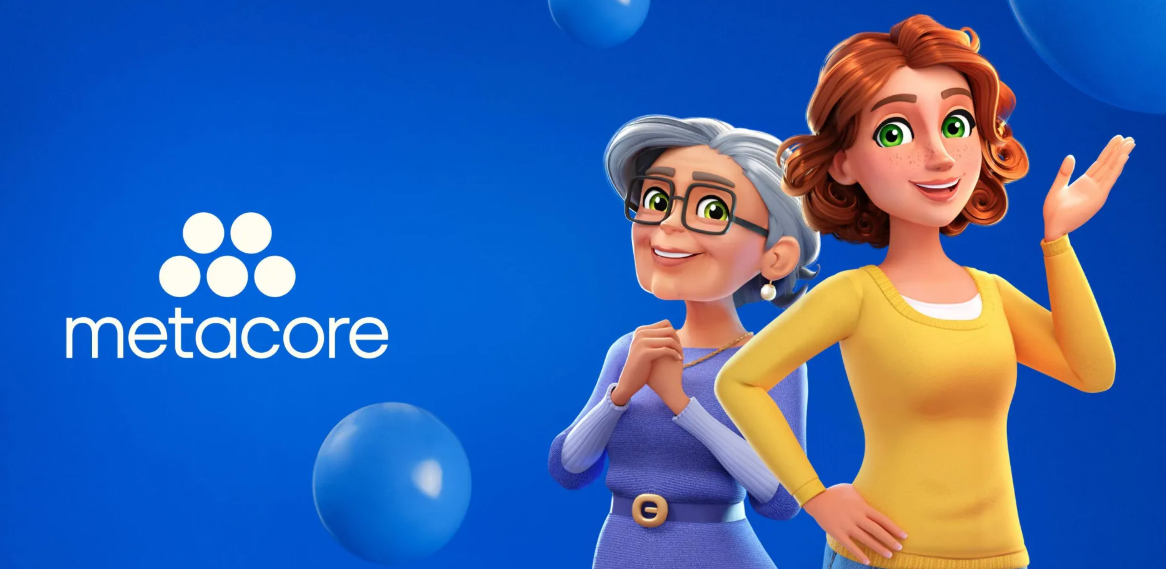
Market Context: How This Fits the Bigger Industry Picture
The Supercell Metacore acquisition reflects a broader structural realignment across the $100+ billion mobile gaming market in 2026. Venture-backed mobile gaming startups have faced a severe funding winter over the past 24 months, with late-stage venture capital drying up by roughly 40% compared to previous peak cycles. As a result, mid-sized publishers with single breakout hits can no longer sustain standalone growth simply by raising mezzanine debt or leaning on third-party venture capital.
- Take-Two Interactive / Zynga (2022): $12.7 Billion — Solidified AAA publishers acquiring massive casual/mobile footprints to generate reliable annual operating cash flow.
- Savvy Games Group / Scopely (2023): $4.9 Billion — Highlighted the premium value placed on studios mastering modern casual live-ops monetization (Monopoly GO!).
- Playtika / SuperPlay (2024): Up to $1.95 Billion — Demonstrated continuous consolidation in the casual puzzle and merge mechanics sector.
Strategic acquirers are prioritizing proven, live-service cash-flow generators over speculative development bets. High-interest rates and rising platform service fees have made raw profitability the primary metric for corporate M&A. By acquiring a profitable entity whose operational economics Supercell already audited for half a decade, this deal represents a low-risk, high-conviction deployment of corporate cash reserves.
What this means for players: The era of thousands of VC-funded clone games on the App Store is winding down, leaving a market dominated by highly polished, heavily funded live-service ecosystems that update continuously over 5 to 10-year lifespans.
What to Watch: Key Signals in the Months Ahead
As the deal approaches its formal closing in late September 2026, industry analysts and players should track several operational catalysts to evaluate the success of the integration:
First, monitor leadership retention milestones at Metacore over the next 12 to 18 months. The ongoing commitment of Metacore’s core creative leads in Helsinki and Berlin will signal whether Supercell’s promise of creative autonomy remains intact. Any sudden executive departures would indicate friction between corporate financial targets and Metacore’s narrative ambitions.
Second, keep an eye on performance marketing spend. If Metacore initiates another multi-million-dollar celebrity marketing blitz in Q4 2026, it will confirm that Supercell has fully unlocked its ad-buying power to scale Merge Mansion into top-grossing territory globally. Finally, watch for the official announcement of Metacore’s second major global release, which will serve as the ultimate litmus test for the studio’s ability to replicate its merge formula under full corporate ownership.
Editor’s Call: The Supercell Metacore acquisition is an undeniably smart, protective consolidation that secures Supercell’s long-term financial resilience while guaranteeing casual mobile gamers higher production values and stability for years to come.
Frequently Asked Questions
Will the Supercell Metacore acquisition change Merge Mansion gameplay or monetization?
The core gameplay and story-driven merge mechanics of Merge Mansion will remain intact without aggressive structural monetization overhauls. Players can expect technical enhancements, faster content releases, and Supercell ID integration rather than intrusive paywalls.
Why did Supercell choose to fully acquire Metacore now?
Supercell moved to secure full ownership to diversify beyond its aging mid-core catalog and gain Metacore’s proven narrative casual audience data. Converting its historical $180 million credit line into full equity allows Supercell to capture 100% of Metacore’s steady, profitable cash flows amid escalating mobile user acquisition costs.
Will Metacore remain an independent studio inside Supercell?
Yes, Metacore will retain creative and operational autonomy across its Helsinki and Berlin offices, operating under Supercell’s decentralized studio model. Supercell has a proven track record of letting acquired and invested studios maintain their unique culture and development roadmaps.