Nvidia RTX 3060 Comeback: 2026 Specs & Value Review – Worth It?
Disclosure: As an Amazon Associate, Bytee earns from qualifying purchases.
The GPU market is in turmoil, and Nvidia knows it. With the RTX 5090 commanding jaw-dropping prices and mid-range options becoming increasingly scarce, whispers of an RTX 3060 comeback in 2026 have ignited genuine hope among budget-conscious gamers and content creators alike. What’s more intriguing—and frankly alarming—is the abrupt shelving of the rumored RTX 5050 9GB, a move that suggests Nvidia’s roadmap has shifted dramatically. As someone who’s spent years tracking GPU launches, market trends, and real-world gaming performance, I’m convinced this development deserves serious attention. Let’s break down what’s happening, what it means for your wallet, and whether you should wait or buy now.
The RTX 3060 Comeback: Market Reality Check
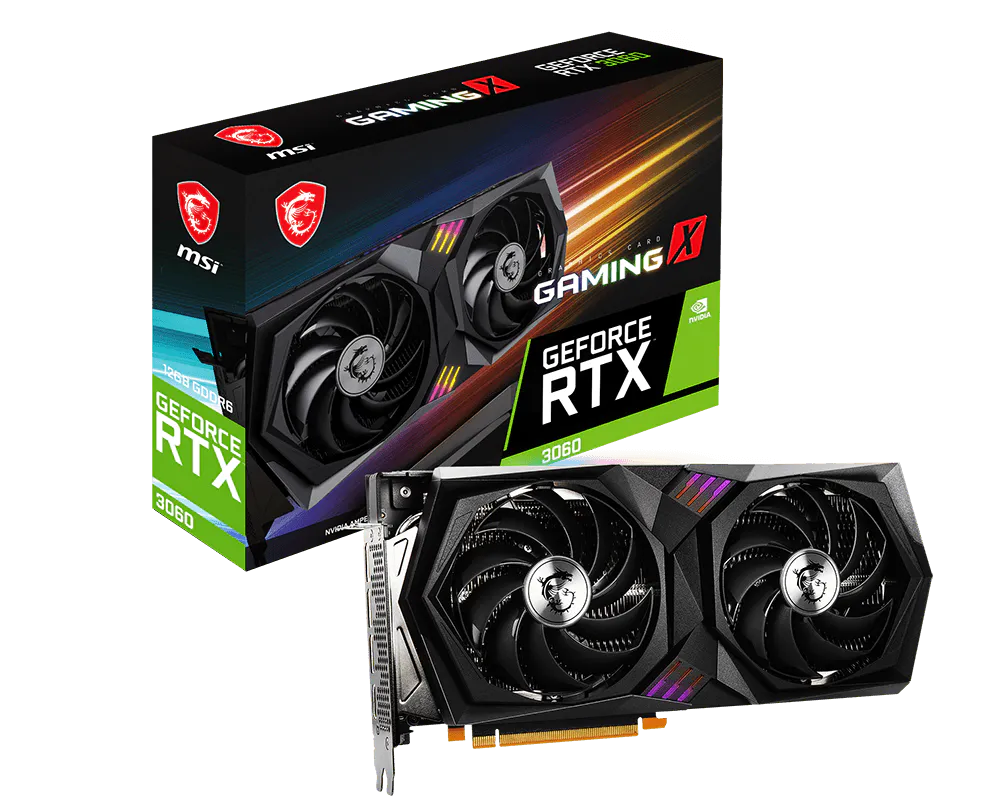
First, let’s establish what we’re actually discussing. The Nvidia RTX 3060—a 12GB card from the Ampere generation (launched in early 2021)—was never a flagship gaming beast. It delivered respectable 1080p and 1440p performance, made waves in CUDA workloads and AI acceleration, and became the de facto choice for creators who needed more VRAM without bleeding money. Then the crypto boom happened, prices skyrocketed to $800+, and the card became a punchline.
Now, with current GPU pricing absolutely insane and memory shortages biting into availability, Nvidia appears to be considering a 2026 reintroduction of the RTX 3060 architecture—potentially refreshed with minor tweaks but fundamentally the same silicon. This isn’t some visionary move; it’s a pragmatic response to market dysfunction.
Why the RTX 5050 9GB Got Shelved
The rumored RTX 5050 9GB was supposed to be Nvidia’s answer to budget gamers—a sub-$200 entry point into Blackwell. But here’s the problem: if Nvidia reintroduces the RTX 3060 at a similar price point, the RTX 5050 becomes redundant. More importantly, cannibalizing your own product stack is bad business, unless the margins on the older chip are superior or the production capacity for the newer chip is constrained.
My take? This reeks of supply-chain reality. Nvidia likely discovered that manufacturing mature Ampere nodes is cheaper and faster than ramping up Blackwell production at scale. By reviving the RTX 3060, they can flood the sub-$250 market, stabilize GPU pricing, and buy time for their newer architecture to mature. The RTX 5050 cancellation isn’t a sign of weakness—it’s a calculated business decision.
Real-World Gaming Performance: What You’re Actually Getting
Let’s talk specifics. The RTX 3060 with 12GB of VRAM sits at a particular performance tier that remains surprisingly relevant in 2025-2026:
- 1080p Gaming: Smooth 60+ fps on nearly all modern titles at high settings. Cyberpunk 2077, Baldur’s Gate 3, and Dragon’s Dogma 2 run at 50-75 fps on high/ultra with DLSS enabled. This is the card’s sweet spot.
- 1440p Gaming: Competent 45-60 fps territory. You’ll need to dial back ray tracing or enable DLSS 3 (Frame Generation not available on RTX 3060, but DLSS 2 Super Resolution works beautifully). Expect 50-65 fps in demanding games.
- 4K Gaming: Don’t bother unless you’re running esports titles or older AAA games. The RTX 3060 isn’t 4K-capable in 2026’s game library.
- VRAM Advantage: 12GB is a genuine differentiator. Games like Star Wars Outlaws, Indiana Jones and the Great Circle, and upcoming Unreal Engine 5 titles benefit from that extra memory, especially at higher resolutions with texture-heavy mods.
Compared to the RTX 4060 (8GB), the 3060 is marginally slower in pure rasterization but significantly better in CUDA workloads and memory-bound scenarios. If you’re a streamer, content creator, or 3D artist, the extra VRAM justifies the card’s existence entirely.
The Bigger Picture: GPU Pricing & Market Stabilization
Here’s what concerns me as a hardware reviewer: the current GPU market is broken. The RTX 5080 costs $999. The RTX 5070 Ti sits at $799. Meanwhile, the RTX 4070 Super (essentially last-gen) is still $599. There’s no coherent value ladder, and consumers are getting fleeced.
An RTX 3060 comeback at $200-$250 would be transformative. Suddenly, gamers on a budget have a legitimate option. Streamers can afford dual-GPU setups. Small studios can buy multiple cards for render farms without mortgaging their offices. The economic multiplier effect of affordable hardware is real.
That said, nvidia’s supply and pricing strategy remains deeply protective of flagship margins. Don’t expect the RTX 3060 relaunch to happen at $200—it’ll likely debut at $249-$279, slightly higher than original MSRP but lower than current market rates for used cards.
Should You Buy an RTX 3060 Now, or Wait for 2026?
This is the million-dollar question. Here’s my honest assessment:
Buy Now If:
- You need a card for content creation (streaming, video editing, 3D rendering). The VRAM and CUDA performance justify current used pricing ($250-$350).
- You game exclusively at 1080p or 1440p and want a five-year upgrade path. The RTX 3060 is still capable.
- You’re building a secondary PC or streaming rig. Used RTX 3060 cards are plentiful and stable.
- Your current GPU is dying or missing. Don’t wait if you’re without a card.
Wait for 2026 If:
- You’re a pure gamer with a working GPU from the RTX 2080 generation or newer. Patience pays here.
- You can tolerate integrated graphics or a placeholder GPU for 6-12 months. The RTX 3060 comeback pricing will be worth the wait.
- You’re optimistic about Blackwell architecture maturation. By late 2026, RTX 5060 or RTX 5070 pricing might normalize, offering better performance per dollar than a resurrected Ampere chip.
Alternatives & Competitive Positioning
Let’s be clear: the RTX 3060 isn’t the only game in town. Here’s how it stacks up against realistic competitors in 2026:
- RTX 4060 (8GB): Newer architecture, but 4GB less VRAM and marginally slower gaming performance. Better power efficiency. If you’re gaming only, the 4060 might edge ahead, but the 3060’s VRAM advantage is significant.
- RTX 5060 (if it launches): This is the real wildcard. If Nvidia does release an official Blackwell RTX 5060, it would likely outperform both the 3060 and 4060 while using less power. But availability and pricing are unknowns.
- AMD Radeon RX 7600: Cheaper, weaker, and memory-starved at 8GB. The 3060 is meaningfully faster for only $30-$50 more.
- Intel Arc A770 (8GB): Competitive in rasterization, but driver maturity and ray-tracing performance lag behind Nvidia. Not recommended unless you’re committed to Intel’s platform.
Software, Driver Support & Longevity
Nvidia’s driver ecosystem is unmatched. The RTX 3060 receives driver updates consistently, supports the full gamut of DLSS 2 features, and benefits from ongoing CUDA optimization. You’re not buying a legacy card—you’re buying into a well-supported platform.
Power consumption is another win: the RTX 3060 uses 170W TDP, making it efficient enough for 450-500W PSUs. In contrast, newer cards demand 250-450W, inflating system cost. For budget builders, this matters.
The Verdict: Is the RTX 3060 Comeback Worth Anticipating?
Yes, but with caveats. The RTX 3060’s return in 2026 would be a net positive for the market—it would inject affordable, capable hardware into a price segment currently dominated by mediocre cards or aggressive upsells. However, don’t expect revolutionary pricing or performance. Nvidia will price it competitively but profitably, likely at $249-$299 MSRP.
For gamers, the RTX 3060 is a solid 1440p card that remains relevant. For creators, it’s a legitimate workstation option. For budget builders in 2026, it’ll be a blessing compared to current alternatives.
The shelving of the RTX 5050 9GB signals that Nvidia’s roadmap is fluid and market-responsive—a refreshing acknowledgment that not every SKU needs to ship if market conditions don’t support it. This pragmatism, if genuine, suggests the company is finally thinking about affordability alongside profits.
FAQ: Your RTX 3060 Questions Answered
Q: Will the RTX 3060 comeback price be under $250?
A: Unlikely. Expect $249-$279 MSRP, mirroring original launch but below current used-market rates. Retailers will probably charge $289-$319 initially.
Q: Is the RTX 3060 good for streaming + gaming simultaneously?
A: Absolutely. The 12GB VRAM and decent CUDA performance make it ideal for dual-encoding or gaming while streaming at 1080p 60fps. Better than the RTX 4060.
Q: Will my RTX 3060 be supported in 2030?
A: Yes. Nvidia historically supports Ampere through 2027-2028 minimum. Driver updates will continue, though new feature rollouts (like DLSS 4) may skip older cards.
Q: Should I buy a used RTX 3060 now or wait for a new one in 2026?
A: If the used price is under $250, buy now. If it’s $300+, wait. Warranty and freshness matter—a new 2026 launch card beats a used 2021 card, even at similar prices.
Q: Does the RTX 3060 work on Linux and Mac?
A: Linux: Excellent support via NVIDIA drivers. Mac: No official support. Nvidia ended Mac driver support after Kepler generation.
Q: How does RTX 3060 VRAM compare to RTX 4070’s 12GB?
A: Same capacity, different bandwidth. The RTX 4070’s GDDR6X memory is faster, but both handle modern games identically. For raw VRAM capacity, they’re equal.
Q: Is the RTX 3060 a good upgrade from RTX 2060?
A: Yes. Expect 40-50% performance uplift and double the VRAM. Massive generational jump.
Q: Will AI features like DLSS 3 Frame Generation work on the RTX 3060?
A: No. Frame Generation requires Ada architecture (RTX 40-series or newer). DLSS 2 Super Resolution works perfectly, though.
Final Thoughts
The RTX 3060 comeback is a pragmatic market move, not a technological breakthrough. But pragmatism is exactly what the GPU market needs right now. If Nvidia follows through with a 2026 launch at reasonable pricing, budget gamers and creators will finally have a respectable option that doesn’t require selling a kidney. That’s worth celebrating—and worth waiting for, if you can afford the patience.