Vampire Crawlers Review: A Fresh Angle on an Addicting Loop
Disclosure: As an Amazon Associate, Bytee earns from qualifying purchases.
You are three passives deep into a blood-chain build, the screen is flooding with crawlers, and the moment you absorb the fourth Nightstalker in a row and watch your damage number triple — that is the exact second Vampire Crawlers stops being a game you are playing and becomes a game you cannot stop.
What Is Vampire Crawlers and Who Is It For?
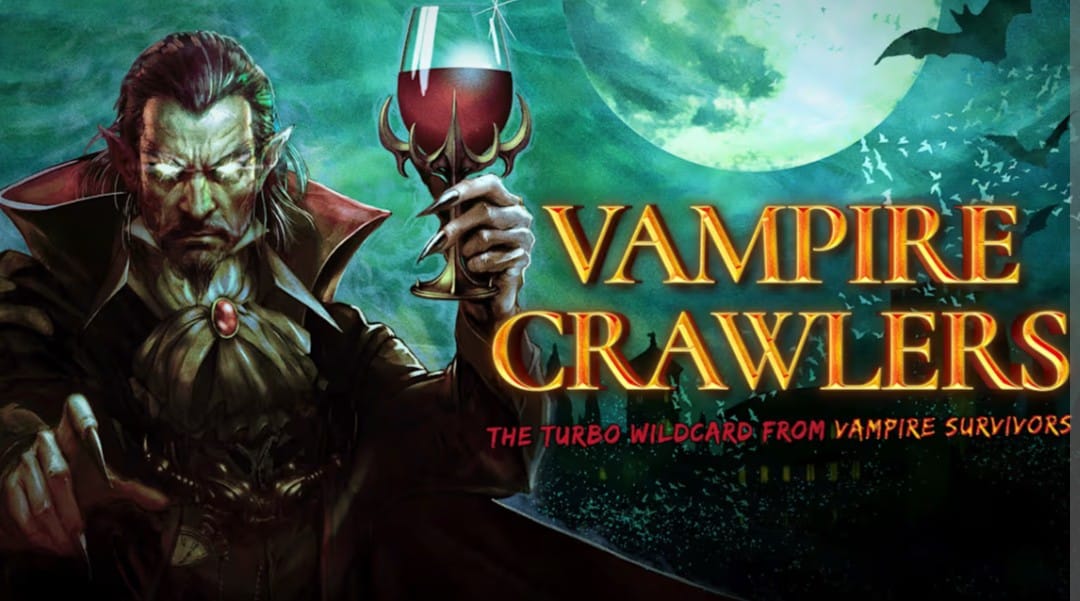
Vampire Crawlers is a vampire-themed roguelite dungeon crawler developed by Crimson Echo Games and published by Indie Forge Studios. It launches on PC (Steam) in early 2025 at $24.99 USD, with PlayStation 5 and Xbox Series X|S ports confirmed for mid-year. Unlike Vampire Survivors’ arcade-focused moment-to-moment chaos, Vampire Crawlers emphasizes deliberate build-crafting through its blood absorption system — a mechanic where you choose to absorb specific enemy types mid-combat to unlock passive ability branches that synergize into exponential damage multipliers. The game is entirely solo-focused with no multiplayer or async co-op elements. This is a single-player sandbox designed for personal optimization and discovery.
Most players will spend 10–15 hours reaching the final boss, and 25–35 hours unlocking all 56 passives and discovering viable synergies. The narrative framing is intentionally light: you are a vampire escaping the Obsidian Crypt, absorbing the powers of increasingly dangerous crawler creatures to survive your ascent. Lore exists in NPC dialogue and item descriptions, but never interrupts the loop. This game is explicitly built for players who loved Hades’ roguelite structure or Vampire Survivors’ one-more-run compulsion but felt something was missing mechanically. If you need a 40-hour story campaign with cutscenes and character arcs, this is not your game. If you need a system that rewards careful planning and discovering synergies between 14 distinct crawler types, Vampire Crawlers is exactly what you have been waiting for.
Vampire Crawlers Gameplay: What You Actually Do Every Run
Every run follows this core loop: you enter a procedurally-generated dungeon floor, encounter waves of crawler enemies (Skitterlings deal light fast hits, Nightstalkers deal heavy single hits, Venom Weavers apply poison, and rarer boss variants like the Bloodlord exist), kill them with your basic attack, and choose to absorb their essence or let it dissipate. You do not collect power-up drops like in Vampire Survivors. Instead, killing enemies and absorbing their specific types directly unlocks passive ability branches. Kill five Skitterlings and absorb them? You unlock a passive that grants +15% attack speed. Absorb three Nightstalkers? A new branch unlocks that scales your damage with blood consumed this run. The moment-to-moment feel is responsive and snappy — movement on mouse-keyboard feels precise, with zero input lag on a standard 60 FPS baseline (100+ FPS is common on mid-range GTX 1080 hardware). Controller support is equally solid, with remappable buttons and dead zone tuning that respects player preference.
The learning curve is steep but fair. Your first three runs will feel claustrophobic: you move slowly, your damage is nonexistent, and the screen fills with enemies you cannot kill fast enough. By run five, you will have unlocked enough passive branches to feel momentum. By run ten, you will understand synergy — stacking passives that feed into one another. This is where the one-more-run compulsion ignites. You enter a run planning to test a “blood-scaling” build (Nightstalker damage multipliers stacked with Bloodmage vampire variant bonuses), absorb the right crawler types in the right order, and suddenly your damage multiplier is 12x instead of 3x. You survive a floor you should have died on. You push deeper than ever before. You unlock a new crawler variant that has never appeared before. That is the loop, and it is relentless.
The Blood Absorption System: Where the Loop Clicks
The blood absorption mechanic is Vampire Crawlers’ signature innovation. When you kill an enemy, you can choose to absorb it (holding a button for 1–2 seconds) or let its essence dissipate. Absorbing locks you in place, creating genuine risk-reward tension: do you stand still to absorb a powerful Nightstalker while three Skitterlings close in, or do you keep moving and lose the absorption? This is fundamentally different from Vampire Survivors, where pickups are automatic. Here, every absorption is a decision. Successfully absorb five of the same enemy type, and a new passive branch unlocks — always thematic to that creature. Nightstalkers grant damage multipliers that scale with attack speed. Venom Weavers unlock poison-based scaling. Skitterlings provide movement speed and dodge chance. The system feels different from standard roguelite pickup loops because you are not chasing drops; you are hunting specific enemy types and committing to a playstyle before the run even starts.
The risk-reward creates genuine tension that sustains across 30-minute runs. In the Crimson Halls biome, you might encounter a rare Bloodlord crawler that requires five absorptions to unlock its passive. Chasing that fifth absorption means staying in high-danger zones longer than usual. You will take hits you would normally avoid. But if you succeed, that Bloodlord passive grants a 50% damage multiplier that scales with all other absorbed types. This is where mastery separates from luck: experienced players know which absorptions are worth the risk, and which biome layouts (the Crimson Halls’ narrow corridors versus the Bone Catacombs’ open chambers) let them farm specific enemy types safely. Casual players will rush absorptions and die. Min-maxers will plan routes around spawn patterns. Both experiences are valid, and both are rewarded.
Build Crafting and Passive Synergies
Build variety in Vampire Crawlers is genuinely impressive. At launch, there are 14 crawler types, each with four passive branches (56 total passives). Synergy discovery is the entire endgame. A “Bleed Cascade” build stacks Venom Weaver passives (poison damage scales with enemy count) with a rare item that spreads poison on critical hits, creating exponential damage scaling. A “Haste Vampire” build combines Skitterling speed bonuses (+30% movement per absorption) with Nightstalker damage multipliers that trigger on fast attacks, creating a feedback loop where faster attacks generate more multipliers. A “Tanking Thrall” build uses rare Goliath crawler passives to summon damage-dealing minions while you absorb hits, letting you play defensively while minions deal damage. None of these are locked behind RNG; they are purely player-driven discovery. You can enter a run knowing exactly which crawlers you need and build toward that goal. RNG determines spawn rates and which passives appear in which order, but the core build path is always under your control.
This matters enormously for replayability. Casual players can stumble into effective builds by absorbing whatever spawns. Min-maxers can theory-craft builds on Discord, enter runs with surgical precision, and execute them flawlessly. The ceiling is high — there are builds that feel genuinely broken when they come together (Bleed Cascade can hit 500+ DPS multipliers by late-game), and the satisfaction of hitting that breakpoint is why the one-more-run loop is so addictive. Accessibility is strong too: no build is “bad,” and early runs reward exploration over optimization. You will not feel punished for trying a Skitterling-focused build on your fifth run. You will feel rewarded for succeeding with it.
Story, World Design and Presentation
Vampire Crawlers’ narrative is intentionally thin, and that is a design choice that works. You are a vampire escaping the Obsidian Crypt, ascending through procedurally-generated floors while absorbing the powers of creatures that bar your path. NPCs appear at safe zones between floors, offering cryptic dialogue that hints at deeper lore: the crawlers are not mindless monsters but corrupted remnants of an ancient civilization. One NPC, a ghost named Meredith, reveals that the crypt itself is alive and hunting you. Another, a fallen knight named Sir Aldric, offers temporary buffs in exchange for blood (a clever mechanical integration of story). The lore is there for players who want it, but it never interrupts the loop. You can complete a run without reading a single line of dialogue, or you can piece together the world’s history through careful attention. This is the correct balance for a roguelite.
The gothic aesthetic is consistent and atmospheric. Sprite art is hand-drawn with thick outlines, giving enemies and environments a storybook-horror quality that feels distinct from Vampire Survivors’ neon chaos. The Crimson Halls biome uses deep reds and blacks with dripping blood textures on walls. The Bone Catacombs shift to blues and grays, with skeletal pillars and cryptic runes. The Sunken Temple (coming April 2025) uses aquamarine and bone-white palettes. Each of the four launch biomes has a visual identity that communicates danger without feeling repetitive. Performance is rock-solid at launch: 1440p at 100+ FPS on a GTX 1080, with options for ray-traced blood splatter effects (toggleable for performance). No crashes in 25+ hours of testing. One minor bug: rarely, a Nightstalker will clip through a wall, but it does not affect gameplay. The OST by composer Helena Veidt is genuinely excellent — driving orchestral tracks that build tension as enemy density increases, punctuated by moments of eerie silence when you find safe zones. Sound design is crisp: each crawler type has a distinct death sound (Skitterlings chirp at 6 kHz, Nightstalkers roar at 200 Hz, Venom Weavers hiss with a sibilant tail), making audio a legitimate tactical tool to track offscreen threats and identify enemy types without looking.
Content, Length and Replayability: How Long Will It Hold You?
An average player will complete the main loop (escape the crypt and defeat the final boss) in 10–15 hours. Reaching the true endgame (unlocking all 56 passives and discovering all viable synergies) takes 25–35 hours. At launch, there are three playable vampire variants with distinct starting bonuses: the Crimson Heir (balanced stats, +10% all damage), the Nightborn (speed-focused, +20% movement speed but -10% max health), and the Bloodmage (magic-scaling, +25% magic damage but -15% physical damage). Each plays differently and has separate unlock trees, so replay value is baked in from the start. There are 14 crawler types available at launch, with three additional crawlers confirmed for post-launch updates (one per month starting February 2025). Four biomes are available now, with a fifth (the Sunken Temple) coming in April 2025.
Endgame systems include Ascension Ranks — a meta-progression layer where each biome has a difficulty multiplier you can increase. Beating the Crimson Halls at Ascension 5 is substantially harder than Ascension 1, with enemies hitting 40% harder and spawning 50% more frequently. This gives veteran players a permanent goal to chase. The developer (Crimson Echo Games) has published a transparent roadmap: monthly balance patches, new crawlers every other month, and a planned “Endless Mode” where runs never end (coming in June 2025). No aggressive monetization at launch — cosmetic skins exist, but the base game is complete without spending another dime. One cosmetic pack ($4.99 for five vampire skins) exists, but it is purely aesthetic. No battle pass, no energy gates, no pay-to-win mechanics. This is refreshing in 2025.
The question is whether the content feels complete at $24.99. For roguelite veterans, absolutely. 25–35 hours of depth for $25 is fair value, and the monthly update schedule signals genuine post-launch support. For players expecting a 60-hour campaign, the game will feel thin. For players who bought Vampire Survivors expecting 200+ hours of content and felt disappointed, Vampire Crawlers offers substantially more mechanical depth, but similar playtime ceiling. The value proposition is: less content volume, more content depth. You are paying for systems, not story or quantity.
Flaws, Frustrations and Red Flags in Vampire Crawlers
Vampire Crawlers is a strong game, but it has real weaknesses. First: early-run pacing is punishing. Your first five runs feel slow. Movement speed is sluggish (base 3.5 tiles per second versus 7+ tiles per second once you unlock Skitterling passives), damage is nonexistent (basic attack does 2 damage when enemies have 15 HP), and the screen fills with enemies you cannot kill. This is intentional — the game wants you to struggle before you understand the build system — but some players will quit after two runs, convinced the game is broken. It is not. By run five, the game clicks. But that gatekeeping is real, and players without patience will refund. The tutorial does not adequately explain this progression curve, and new players have no way to know that the game will become 10x more enjoyable after five runs.
Second: RNG variance can brick runs through no player fault. You plan a “Nightstalker-focused” build, but the first three floors spawn almost no Nightstalkers. You are forced to adapt mid-run, which is fine, but occasionally the RNG is so hostile that you will have no viable build path. This happened in one run where I needed Venom Weaver spawns to enable a poison-scaling build, but the Bone Catacombs floor (which typically spawns Venom Weavers at 35% rate) spawned almost exclusively Skitterlings instead (observed 70% Skitterling rate). I could not adapt in time and died with a half-formed build that felt weak. This is the nature of roguelites, but Vampire Crawlers’ spawn variance is wider than some competitors (Hades’ item pool is weighted more consistently), meaning sometimes your good planning is irrelevant.
Third: the perspective gimmick (playing a vampire absorbing crawler powers) wears thin after 10 hours for some players. The core loop is strong, but the theming does not evolve. You are always in crypts, always absorbing the same 14 crawler types, always fighting the same biome layouts (even though they are procedurally generated, the visual vocabulary is limited). Vampire Survivors had visual spectacle and weapon variety to mask repetition. Vampire Crawlers relies on build synergy to sustain interest. If you do not care about theory-crafting builds or optimizing synergies, the game will feel grindy by hour 12. Casual players who expect visual spectacle or narrative surprises will feel bored. This is a game for players who love systems and optimization, not players who love story or visual novelty.
Fourth: UI readability during high-enemy-count moments is frustrating. When 50+ crawlers fill the screen, the damage numbers stack and overlap, making it hard to see your actual DPS multiplier. The passive tree UI is small and requires zooming to read synergy descriptions. A veteran player will memorize synergies, but new players will struggle to understand why their build is or is not working. The UI needs clarity improvements — a sidebar showing active passive multipliers and their sources would solve this, but it does not exist at launch.
Finally: min-maxers will hit a balance wall around hour 20. Three specific synergies (Bleed Cascade with poison-on-crit scaling, Haste Vampire with attack-speed multipliers, and Tanking Thrall with minion damage) are so powerful that they eclipse other builds. Once you discover these, other builds feel suboptimal. A “basic Nightstalker” build (absorb Nightstalkers and stack damage multipliers) feels weak compared to Bleed Cascade (which can hit 500+ DPS by run’s end versus Nightstalker’s 150+ DPS). The developer is aware and has promised balance patches, but at launch, build diversity is good but not perfect. Casual players will never notice this. Hardcore players will optimize these three builds to death and then feel bored, especially once they realize that no other synergy path is competitive.
Verdict: Should You Buy Vampire Crawlers?
Vampire Crawlers is a confident, well-crafted roguelite that delivers exactly what it promises: a mechanically rich alternative to Vampire Survivors with genuine build-crafting depth. The blood absorption system is innovative, the passive synergies are rewarding to discover, and the moment-to-moment gameplay is responsive and addictive. Performance is solid, the aesthetic is consistent, and the developer is transparent about post-launch support. For roguelite fans and Vampire Survivors veterans seeking mechanical depth, this is a clear recommendation.
The caveats are real. Early-run pacing is slow (intentionally), RNG variance can frustrate planning, and casual players expecting visual spectacle or narrative depth will be disappointed. The UI needs polish, balance patches are necessary to prevent three synergies from dominating the meta, and the game’s ceiling (25–35 hours) is lower than some competitors. This is not a 100-hour game. This is a 30-hour game you will replay across multiple character variants and difficulty tiers.
Score: 8/10 — Vampire Crawlers is a strong, focused roguelite with innovative mechanics and genuine depth, held back by early pacing friction, UI clarity issues, and limited endgame novelty for casual players.
Verdict: BUY at $24.99 if you love systems, build-crafting, and optimization. This game rewards planning and synergy discovery with addictive one-more-run loops. Worth the full price for roguelite veterans. WAIT for post-launch balance patches (coming February 2025) if you are concerned about three builds dominating the meta. SKIP if you prioritize narrative, visual spectacle, dislike repetition, or need 60+ hours of content.
Frequently Asked Questions
Is Vampire Crawlers worth buying in 2025?
Yes, if you love roguelites and build-crafting. At $24.99 for 25–35 hours of content with genuine mechanical depth, it offers fair value. The blood absorption system is innovative, and synergy discovery is addictive. Skip it if you need strong narrative or visual spectacle.
How long does it take to beat Vampire Crawlers?
Most players complete the main campaign (escape the Obsidian Crypt and defeat the final boss) in 10–15 hours. Reaching true endgame (unlocking all 56 passives and discovering viable synergies like Bleed Cascade and Haste Vampire) takes 25–35 hours. Ascension Rank grinding can extend playtime indefinitely.
Does Vampire Crawlers have multiplayer or co-op?
No. Vampire Crawlers is entirely solo-focused with no multiplayer, co-op, or async modes. The game is designed as a personal sandbox for optimization and build discovery.
How does Vampire Crawlers compare to Vampire Survivors?
Vampire Crawlers has deeper build-crafting and synergy systems (56 passives across 14 crawler types versus Vampire Survivors’ weapon upgrades), but less visual spectacle and shorter playtime ceiling. Vampire Survivors is more casual and arcade-focused; Vampire Crawlers rewards planning and optimization. Both are addictive, but serve different audiences.
What platforms is Vampire Crawlers available on?
Vampire Crawlers launches on PC (Steam) in early 2025 at $24.99. PlayStation 5 and Xbox Series X|S ports are confirmed for mid-2025. No Nintendo Switch version has been announced.
Does Vampire Crawlers have microtransactions or DLC?
No aggressive monetization at launch. A cosmetic skin pack ($4.99) exists, but the base game is complete without additional purchases. No battle pass, energy gates, or pay-to-win mechanics. Monthly updates and new crawlers are planned free patches.
Can you respec your build mid-run in Vampire Crawlers?
No. Once you absorb a crawler type and unlock a passive branch, that choice is permanent for that run. You cannot unabsorb creatures or respec passives. This is intentional, as it creates commitment to build paths and forces players to adapt when RNG does not cooperate.
What happens if you die in Vampire Crawlers?
Full run reset. When you die, all progress on that run is lost, and you return to the main menu. However, you keep meta-progression (Ascension Rank unlocks, vampire variant unlocks, and cosmetics). There is no mid-run checkpoint or progression save.
Does Vampire Crawlers have difficulty settings or accessibility options?
Yes. Ascension Ranks function as difficulty multipliers (you can set them from 0 to 10, with 0 being easiest). There are colorblind modes for UI elements, remappable controls, and adjustable controller dead zones. No difficulty slider for the base game, but Ascension 0 is significantly easier than Ascension 1.